
Loading dispatches...
← Return to NewsroomPolitics
ASI survey uncovers 25 inscriptions, ancient rock art in Nallamala Tiger Reserve

Ancient rock art discovered on a rock shelter near Alatam along the banks of the Krishna River in the Nallamala Tiger Reserve Forest, Andhra Pradesh, by Epigraphy Branch of the Archaeological Survey of India (ASI), on Saturday (June 13). | Speaking to The Hindu, during a field visit, on Saturday (June 13) Director (Epigraphy), ASI, Mysuru, K. Munirathnam Reddy said that in an ongoing survey the teams had in the last three days documented and copied 25 inscriptions dating from the 2nd century CE to the 16th century CE. The inscriptions belong to several prominent dynasties, including the Satavahanas, Eastern Chalukyas, Kalyani Chalukyas, Potapi Cholas, Kakatiyas, Reddy rulers and the Vijayanagara Empire.The survey team explored remote locations in the Nallamala Tiger Reserve and the Yerragondapalem region. On the first day (June 11, 2026), eight inscriptions were copied from villages such as Gangaram Penta, Meetonta, Palitla, Ponnalabavi and Jillalapadugu. These inscriptions, written in Telugu, date from the 7th to the 16th centuries CE.On the second day (June 12, 2026), the team documented 10 inscriptions belonging to the Kalyani Chalukya, Potapi Chola, Kakatiya and Vijayanagara periods, written in Kannada and Telugu scripts and dating between the 11th and 16th centuries CE.The third day (June 13, 2026) yielded seven more inscriptions, including rare Satavahana records written in Prakrit language and Brahmi script. The newly documented inscriptions also include records of the Eastern Chalukya, Reddy and Vijayanagara dynasties. Ancient rock art discovered on a rock shelter near Alatam along the banks of the Krishna River in the Nallamala Tiger Reserve Forest, Andhra Pradesh, by Epigraphy Branch of the Archaeological Survey of India (ASI), on Saturday (June 13). | Preliminary assessments suggest that the megalithic and early historic paintings date back to around 1500 BCE, indicating human activity in the region more than 3,500 years ago.Mr. Reddy expressed gratitude to the Government of Andhra Pradesh, Deputy Chief Minister K. Pawan Kalyan, and the Forest authorities for extending support to the survey team operating in the challenging terrain of the reserve forest.The discoveries are expected to contribute significantly to the understanding of Andhra Pradesh’s ancient history, inscriptions and cultural heritage. Published - June 13, 2026 04:50 pm IST
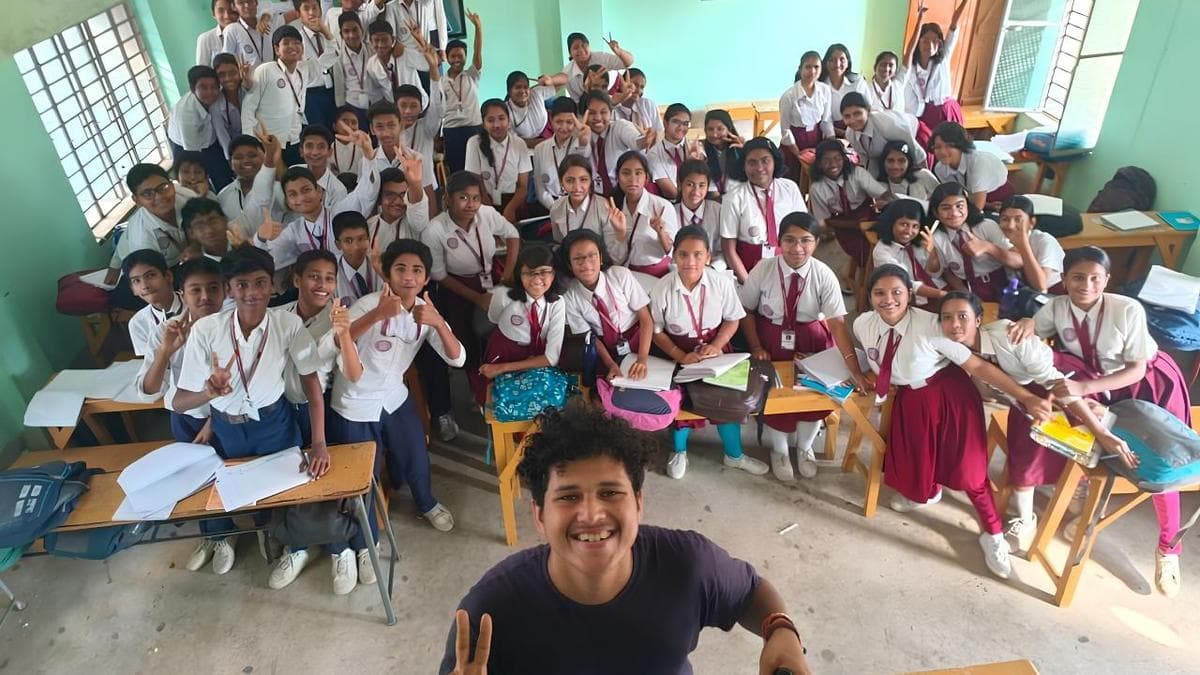
As Ayan Banerjee stepped into Nellore in Andhra Pradesh on Wednesday night, the 24-year-old climate and animal welfare activist marked a significant milestone in an unusual journey that has taken him across 2,417 kilometres of India’s coastline on foot.Ayan, who was named PETA India’s Volunteer of the Year in 2020 at the age of 18, completed 100 days on the road on June 10 as part of the Karuna Padayatra, a 7,000-kilometre walk that began in the Sundarbans of West Bengal on March 3. Travelling without a vehicle and largely sustained through community support, he aims to trace a geographical V-shaped route through nine States and four Union Territories before reaching Gujarat.The padayatra is neither political nor commercial. Instead, it is an attempt to bring attention to climate sustainability, environmental awareness, compassionate living and the welfare of animals and communities.“Walking is slow, but that is precisely why it works,” says Ayan. “It allows me to reach places that are often missed and spend time listening to people.”Along the route, he conducted environmental awareness sessions at more than 12 schools, distributed over 2,000 organic vegetable seed packets in rural communities and fed stray animals, particularly cows and dogs, using his own resources. He now hopes to distribute more than 9,000 seeds along the way as he reaches Chennai in the next leg of the journey. Ayan Banerjee, a 24-year-old activist who is walking across 7,000-km across India's coastline, carrying stories of environmental distress, kindness and grassroots action. | There, Banerjee partnered with the Icha Foundation, a social welfare organisation working with children and vulnerable communities. During his short stay there, he introduced the concept of adopting plant-based meals twice a week at the foundation, a step that Ayan believes promotes both compassion and sustainable living.“Small changes are often more effective than grand declarations. If communities can adopt even a few sustainable practices, the impact accumulates over time,” he says.The Andhra Pradesh stretch of the journey also exposed him to concerns surrounding aquaculture and its effects on local ecosystems. During his interactions with farmers and residents in Krishna district and neighbouring regions, Ayan says he repeatedly heard accounts of changing water quality, soil degradation and pressures on traditional livelihoods.“People who live beside waterbodies and work the land have a clear understanding of what is happening around them. Their observations deserve to be heard,” he says.Water has emerged as a recurring concern throughout the journey. From the Sundarbans to coastal Andhra Pradesh, access to safe drinking water surfaced repeatedly in conversations. Ayan Banerjee, a 24-year-old activist who is walking across 7,000-km across India's coastline, carrying stories of environmental distress, kindness and grassroots action. | I came across people collecting water from leaking roadside pipelines. Similar worries about water quality have appeared in different forms across several regions,” he says.Ayan’s daily routine often involves walking between 30 and 50 kilometres. For the first 50 days, he travelled without any organised support team, visiting schools and communities independently across West Bengal and Odisha. Today, a small outreach and social media team helps document the journey, while accommodation is usually arranged through local residents.“I stay in people’s homes as I travel. I do not accept money from individuals. What I encounter instead is generosity, hospitality and a willingness to participate in positive action,” he says.To commemorate the completion of 100 days on the road, Ayan has launched the Day 100 Challeng
Sampath Kantimahanti educating a farmer on snakes as part of his project Snake Speek in Srikakulam district of Andhra Pradesh. | ‘Learning to Coexist with Snakes’, developed under the project Snake Speek by wildlife enthusiast Sampath Kantimahanti, received an honourable mention and was recognised among the 50 entries globally from over 2,300 submissions across 104 countries.The recognition has brought renewed attention to the project’s ongoing efforts to reduce fear, myths and human-snake conflict through awareness programmes, rescue support and educational outreach in rural Andhra Pradesh.Snake Speek began as an awareness initiative aimed at changing public perception towards snakes, particularly in regions where snake encounters are common and often result in panic, unnecessary killing of snakes or unsafe rescue attempts. Over the years, the initiative has conducted awareness sessions among rural communities and students, focusing on coexistence, snake identification, first aid awareness and responsible wildlife practices.While a proposed scientific snakebite analysis survey covering regions such as Palakonda, Seethampeta, Odisha border areas of the Eastern Ghats in coastal Andhra Pradesh and Selakui in Dehradun, Uttarakhand, was appreciated during the Slingshot Challenge evaluation process, funding support for the project has not yet been approved due to certain limitations in evaluating smaller-scale proposals.Despite this, the team plans to continue strengthening its grassroots conservation efforts.“At present, the project mainly continues through conservation strategies that focus on reducing fear and myths surrounding snakes while promoting coexistence through awareness programmes, educational content and rescue support. We are gradually seeing a positive impact,” says Sampath.The initiative is now planning to expand its activities further by introducing rescue training programmes, scientific publication awareness sessions and research-oriented educational workshops for students. These programmes are expected to be guided by professors from DBS Global University and doctoral fellows associated with the project.According to Sampath, one of the major goals is to encourage scientific curiosity and responsible conservation practices among young students and communities living close to forested landscapes.Conservationists point out that awareness-based approaches are becoming increasingly important in regions where human-wildlife interactions are rising due to habitat pressure and expanding settlements. Published - June 11, 2026 09:54 am IST


Discussion (0)