
Loading dispatches...
← Return to Newsroomgeneral
With Justice Mohana’s appointment, breaking the legal glass ceiling — and why the SC needs a gender quota
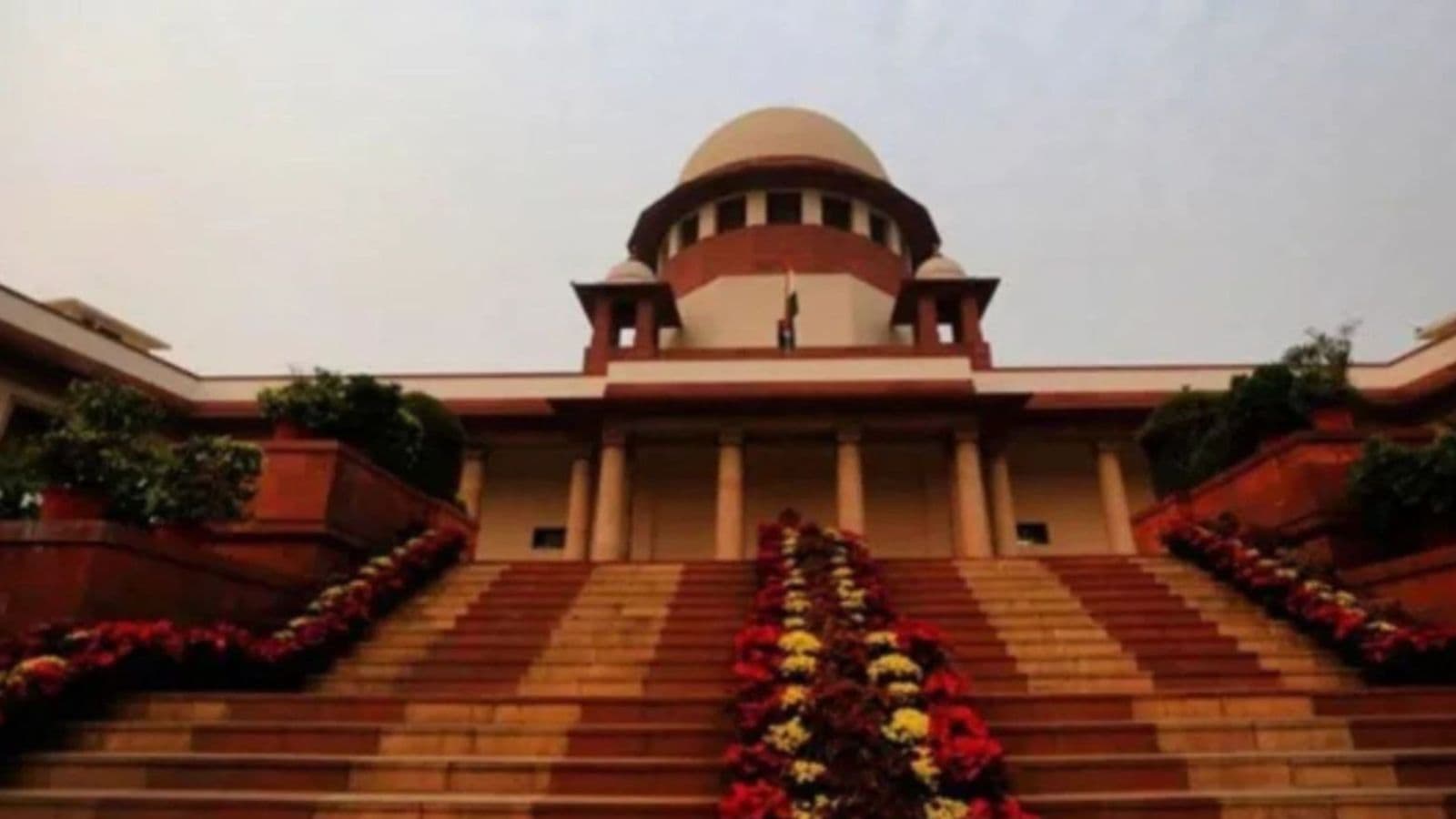
Measures have to be taken for equal representation of women in India’s Supreme Court. 4 min readJun 17, 2026 06:26 PM IST First published on: Jun 17, 2026 at 06:26 PM IST June 2 was a proud and emotional day for women lawyers as we witnessed the appointment of Justice V Mohana, only the second woman from the Bar to be appointed directly to the Supreme Court. The battle for women in India to reach the higher echelons in the legal profession has been anything but easy. For women lawyers to become judges of the Supreme Court of India is a glass ceiling that has not been shattered yet. The Supreme Court has appointed nine male judges directly from the Bar. They all had long tenures with Justice S M Sikri and Justice U U Lalit becoming Chief Justices, and current appointees Justice P S Narasimha and Justice K V Viswanathan also due to become Chief Justices. Justice Indu Malhotra, who was the first woman lawyer directly appointed to the Supreme Court in 2018, had a tenure of less than three years, due to which she did not even become part of the Collegium. Jurisdictions the world over are bringing structural constitutional reforms to ensure gender equality in their highest courts. In 2014, Belgium passed an amendment modifying Article 34(5) of the Special Act of 6 January 1989 concerning its constitutional court. This amendment introduced a gender quota mandating that at least one-third of the 12 judges must belong to each sex. Till the Court reached the composition of one-third women judges, it was mandated that after every two appointees who are men, the third appointment would have to be of a woman. The Belgian constitutional court also has linguistic and professional quotas for judges.In South Africa, Section 174 (2) of the Constitution mandates that the judiciary must reflect the racial and gender composition of South Africa. Presently, the South African constitutional court has six women out of 11 judges, making it one of the first women-majority constitutional courts anywhere in the world, and it has a woman Chief Justice. Quotas for representation are not new. Even in our Supreme Court, appointments of judges are made keeping in mind the representation from different high courts. All the recent appointments of male judges were made based on such representation. Then why not a quota to ensure 33.3 per cent gender representation? Even with the appointment of Justice Mohana, the percentage of women in our Supreme Court is a woeful 5.4 per cent, with only two women judges out of 37. Meanwhile, the proportion of women judges in the most progressive Supreme Courts is moving towards 50 per cent and ensuring at least 33.3 per cent women judges. 54.5 per cent of the judges of the Constitutional Court of South Africa are women; 50 per cent of the judges in Canada, Belgium, and Germany’s top courts are women; in the US SC, 44.4 per cent are women judges, Australia is at 42.85 per cent, and France at 33.33 per cent. Singapore falls below the 33 per cent mark at around 24 per cent, and Nepal and the UK fare even lower at roughly 17 per cent each. Measures have to be taken for equal representation of women in India’s Supreme Court. This needs the targeted inclusion of women from the Bar, from minority faiths, and from SC/ST and OBC communities. Ideally, an amendment to Articles 124 and 217 of the Constitution would be required to direct that appointments of judges to the SC and HCs should reflect the gender and caste composition of the country. Till this is done, the SC needs to introduce a stated written policy to have 33.3 per cent women on the Court, which will direct targeted appointments. We can adopt the easy strategy used in Belgium, that after every two appointments of male judges in the Court, the next appointment must be of a woman till we reach 33.3 per cent. While we take pride in Justice Mohana’s appointment, we have to work towards getting an equal number of women judges on the Supreme Court of our country and build a ro
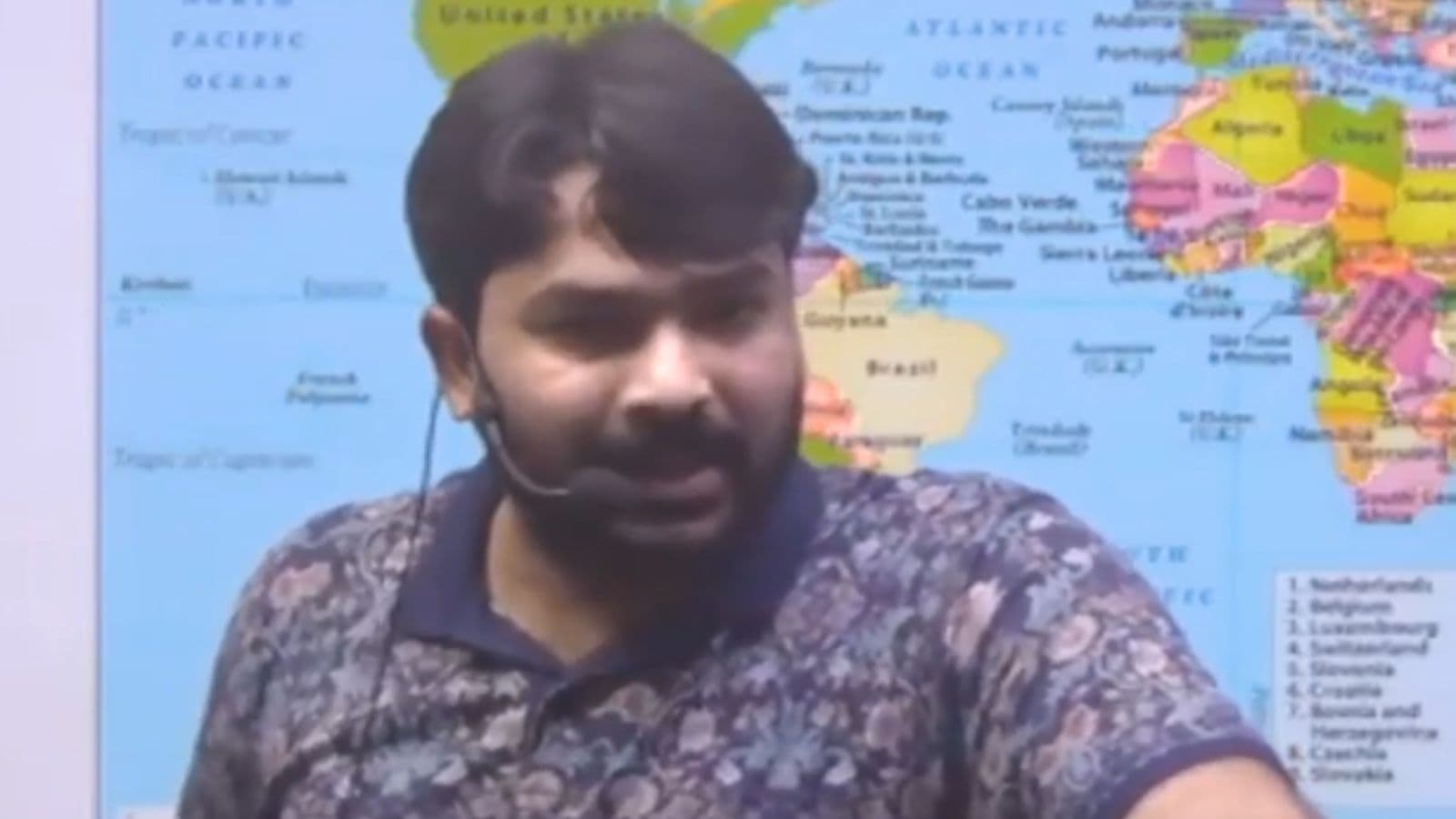
Raushan Anand of the Gyan Bindu classes was granted bail by the Patna High Court. (PC: YT/Raushan Anand) A Patna court on Monday granted bail to Raushan Anand, director of Gyan Bindu Coaching Institute, in connection with the June 2 violence and vandalism outside Khan Global Studies in Patna’s Musallahpur Haat area. The institute is run by Faisal Khan, popularly called Khan Sir. Anand was arrested on June 3 and remained in judicial custody thereafter. His earlier bail application was declined by a lower court on June 9, which took into account the claims of an organised attack on the institute, injury report on a security guard and his criminal antecedents.In the fresh hearing, a sessions court granted him bail, allowing his release from Beur Jail. The case arises from an FIR lodged by KGS manager Kanhaiya Kumar Singh, which alleged that on the night of June 2, a group of 15-20 persons pelted stones at the institute premises, assaulted security guard Chun Chun, damaged property, and threatened to “blow up the institute within two days”. The FIR named Anand, his brother Prince Yadav, along with others. Police arrested Anand and two others, Abhishek and Gaurav, the next day. Advocate Aditya Singh, part of Anand’s legal team, told The Indian Express on Monday that the defence argued there was no material to establish the necessary legal ingredients under Section 109 (attempt to murder) of the Bharatiya Nyaya Sanhita (BNS), which forms a key charge in the case against his client. “While Section 109 is non-bailable, its requirements were not made out in the present facts, and the other sections invoked in the FIR were bailable in nature,” he said.Story continues below this ad Singh also questioned the prosecution’s interpretation of events, stating that the injured guard was not exclusively attached to Khan’s coaching institute but was a common security guard for the premises. Referring to the sequence of allegations, he said that “statements made by Khan Sir after the incident, including claims related to firing, contributed to a pre-planned narrative around the case”. The defence also submitted that “Anand’s previous cases largely related to student protests, including movements linked to Bihar Public Service Commission (BPSC) and police recruitment examinations, except for one earlier coaching-related dispute in 2021 that was filed by Khan Sir”. The violence on June 2 triggered two FIRs and counter-allegations, with police also booking Khan after looking at CCTV footage and recording the statements of two security guards.Story continues below this ad The guards were arrested after allegedly stating that they had opened fire in the air on Khan’s instructions during the chaos outside the institute. Khan was granted interim protection from arrest by a Patna court on June 9 after hearing his anticipatory bail plea, which is scheduled for hearing on June 20 before the district court. On Sunday, Prince Yadav, named as an accused in the FIR and the brother of Raushan Anand, was found dead at a hotel in Biratnagar in Nepal. Nepal police had said he was declared dead on arrival at a hospital after complaining of uneasiness, and the cause of death is under investigation. Himanshu Harsh is a Correspondent with The Indian Express, currently leading on-the-ground coverage in Bihar. With a reporting career rooted in the complexities of the National Capital Region (NCR), Himanshu specializes in the critical intersection of law, crime, and civic governance. Professional Expertise & Credentials An alumnus of the prestigious Indian Institute of Mass Communication (IIMC), Delhi, Himanshu brings a rigorous academic foundation to his investigative work. His expertise is characterized by a "ground-up" reporting style, most notably demonstrated during his extensive coverage of the 2024 Lok Sabha elections, where he analyzed shifting political landscapes and grassroots sentiment. Specialized Beats Himansh
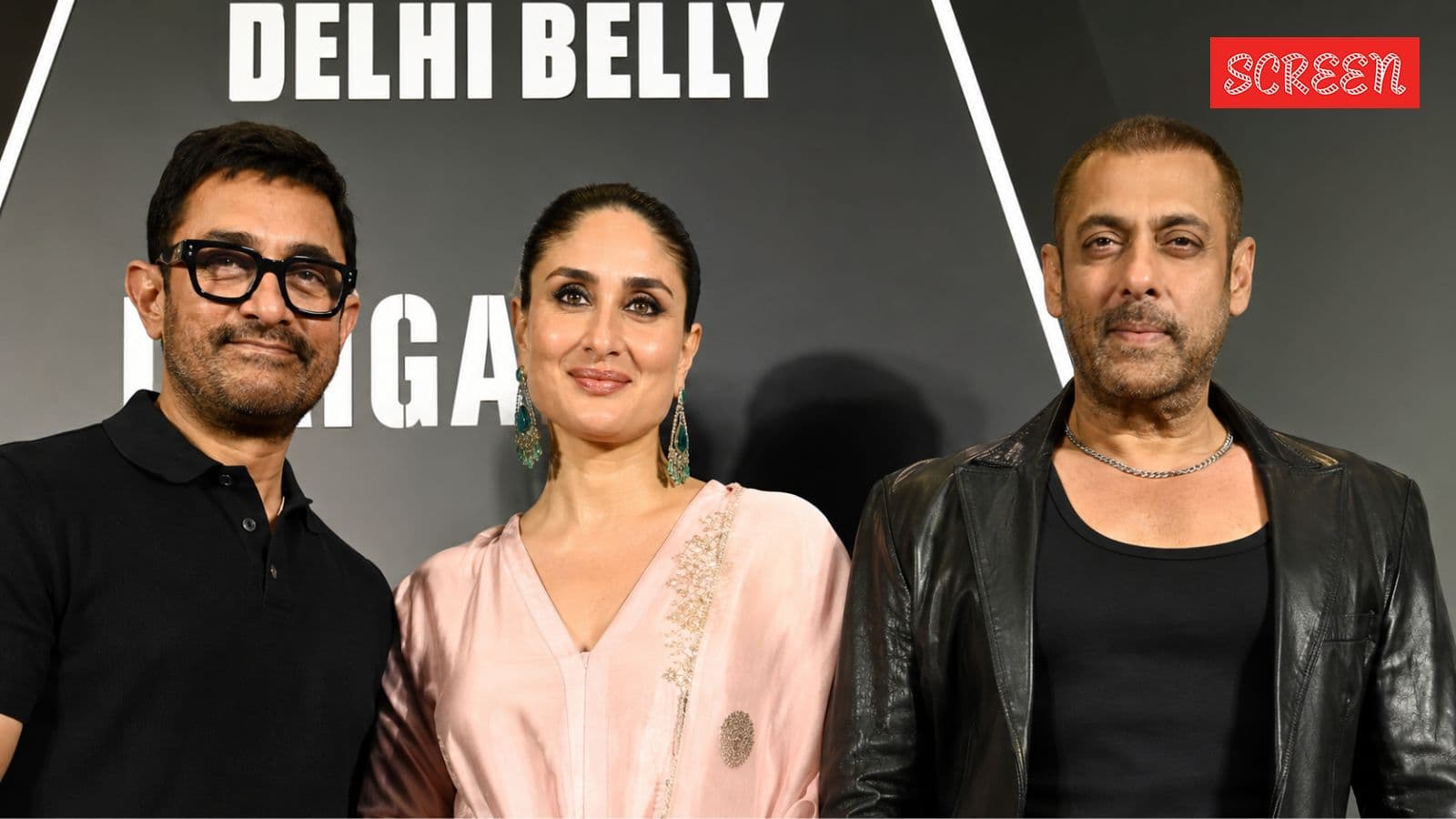
New DelhiJun 14, 2026 09:42 AM IST Kareena Kapoor, Salman khan at Aamir Khan event.Aamir Khan’s debut production Lagaan is all set to complete 25 years on June 15, and the celebrations have already begun in style. Ahead of the milestone, the actor hosted a grand reunion in Mumbai on June 13, bringing together members of the cast and crew of the Oscar-nominated movie, along with several Bollywood celebrities. While the event was attended by stars such as Juhi Chawla, Imran Khan and Kareena Kapoor, it was Salman Khan who grabbed everyone’s attention. The superstar arrived sporting a fresh look, featuring a neatly trimmed hairstyle and an all-black outfit paired with a silver chain. He confidently posed for the paparazzi before being joined by his Bajrangi Bhaijaan co-star Kareena Kapoor, who looked elegant in a soft pink churidar. The two happily posed together for photographs. Host Aamir Khan later joined them, warmly welcoming Salman. The two superstars exchanged hugs, smiles and posed together, much to the delight of photographers and fans alike. The celebration also saw the presence of Juhi Chawla and her husband Jay Mehta, along with Sophie Choudry, Vir Das, Sunil Grover, Zoya Akhtar and Shenaz Treasurywala. Aamir Khan’s son Junaid Khan attended the event, while actor Imran Khan arrived with his girlfriend Lekha Washington. Aamir’s sisters, Nikhat Khan and Farhat Khan, were also present for the special evening. His daughter Ira Khan attended with her husband Nupur Shikhare. Several members of the Lagaan cast, including Rajendra Nath Zutshi, Yashpal Sharma, Aditya Lakhia and Akhilendra Mishra, were seen at the reunion. Filmmakers Rajkumar Hirani, Ashutosh Gowariker and his wife Sunita Gowariker, also joined the celebrations.Story continues below this ad Apart from the star-studded guest list, the evening turned into a family affair for Aamir Khan. The actor posed with his fiancée Gauri Spratt, whom he is reportedly set to marry on July 4. The event also saw the presence of Kiran Rao and their son Azad Rao Khan, making the silver jubilee celebration even more special.
New DelhiJun 11, 2026 04:53 PM IST NCDRC was dealing with plea regarding investigation of Salman Khan's signature in consumer case. (File Photo)The National Consumer Disputes Redressal Commission (NCDRC) has stayed further proceedings before the district consumer commission regarding the investigation of the genuineness of Salman Khan’s signature involving a consumer complaint against Kamla Kant and Company LLP. A bench of Justice A P Sahi (president) and member Bharatkumar Pandya was dealing with a plea of Kamla Kant and Company LLP challenging the district consumer body order that directed the state forensic science laboratory to investigate respondent Salman Khan’s signatures and directed him to personally appear at the stage of evidence and submit an affidavit affirming his signatures.“In view of what has been urged and noticed by us here, as also the orders passed by the High Court of Rajasthan, it would be appropriate to issue notice to the respondent/complainant calling upon him to answer this appeal,” the court said on June 10. The bench listed the matter for June 22 for the next hearing. Order of investigation of Salman Khan’s signature Kamla Kant and Company LLP filed an appeal before the NCDRC challenging the final judgment and order dated March 30, passed by the State Consumer Disputes Redressal Commission (SCDRC) in a revision petition filed by the appellant against the order dated December 26, 2025 passed by the District Consumer Disputes Redressal Commission (DCDRC) directing the State FSL (Forensic Science Laboratory) to investigate Salman Khan’s signatures and directing him to personally appear at the stage of evidence and submit an affidavit affirming his signatures. It submitted that the SCDRC failed to exercise its jurisdiction correctly by ignoring provisions of the Consumer Protection Act, 2019. Arguments of parties Counsel for the petitioner pointed out that this perversity and inconsistency clearly indicate that the said unlawful process is being adopted by recording such orders only with a view to maintaining a complaint which was otherwise not maintainable. It was argued that the same district commission has entertained the complaint giving rise to the present controversy and has been filed by the very same complainant.Story continues below this ad They submitted that, as a matter of fact, the complainant Indra Mohan Singh “Honey” and his colleague Mr. Yogendra Singh Badiyal are involved in similar matters, thereby converting the consumer courts into an instrument of harassment, and as such, this matter also requires interference. It was further argued that, as a matter of fact, the complainant Indra Mohan Singh “Honey” and his colleague Yogendra Singh Badiyal are involved in similar matters, thereby converting the consumer courts into an instrument of harassment, and as such, this matter also requires interference. DSK Legal team, advocates Parag Khandhar, Partner, Chandrima Mitra, Partner, Tapan Radkar, and Zara Dhanbhoora, were representing Salman Khan. Jagriti Rai works with The Indian Express, where she writes from the vital intersection of law, gender, and society. Working on a dedicated legal desk, she focuses on translating complex legal frameworks into relatable narratives, exploring how the judiciary and legislative shifts empower and shape the consciousness of citizens in their daily lives. Expertise Socio-Legal Specialization: Jagriti brings a critical, human-centric perspective to modern social debates. Her work focuses on how legal developments impact gender rights, marginalized communities, and individual liberties. Diverse Editorial Background: With over 4 years of experience in digital and mainstream media, she has developed a versatile reporting style. Her previous tenures at high-traffic platforms like The Lallantop and Dainik Bhaskar provided her with deep insights into the information needs of a diverse Indian audience. Academic Foundations: Post-Graduate in Jou


Discussion (0)