
Loading dispatches...
← Return to Newsroomgeneral
Expert Explains Why Israel’s operations in Lebanon wont address its long-term security concerns
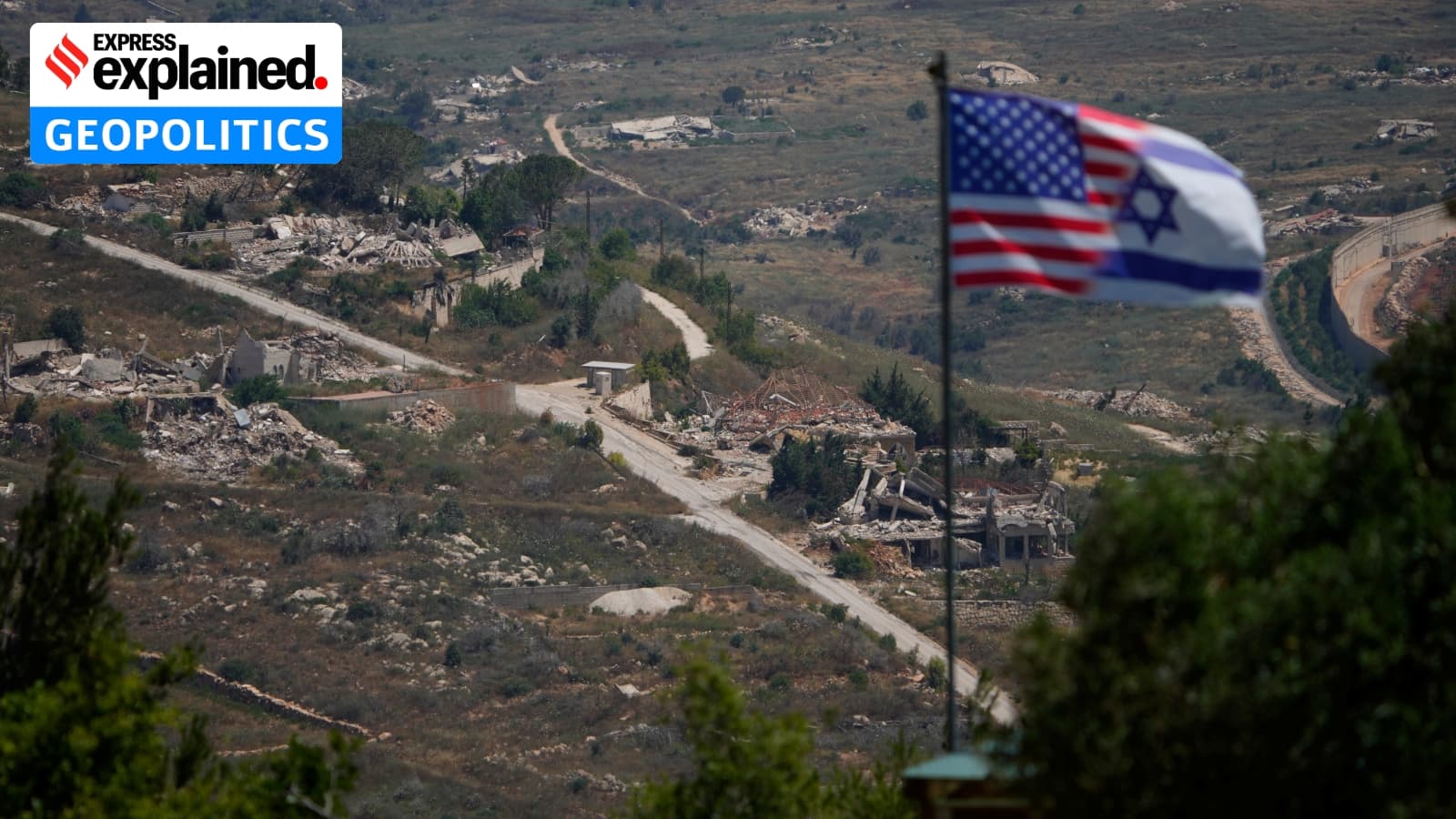
In the 14-point Memorandum of Understanding (MoU) signed between US and Iran on June 17, the first clause explicitly mentioned a ceasefire in Lebanon to end hostilities on all fronts. But Israel’s continuing operations in Lebanon led Iran to shut the Strait of Hormuz barely two days after it was opened, blaming the US for the breach of agreement. The moot question is why Israel persists, considering it can threaten to jeopardise the negotiations currently under way between Washington and Tehran in Switzerland.The answer perhaps lies in Israel’s strategic calculus, as it perceives the southern Lebanon frontier as an existential threat, given its volatility owing to the complex convergence of geography, ideology, proxy networks, and regional power dynamics.Israel’s challenge Lebanon’s strategic importance for Israel is linked to the rise of the militant group Hezbollah after the 1982 Israeli invasion of southern Lebanon (which lies north of Israel). Hezbollah, formed as an Iran-backed resistance movement, gradually transformed into one of the most powerful non-state actors (NSA) in the region. In 2000, after the Israel Defense Forces (IDF) withdrew from Lebanon, Hezbollah continued to consolidate itself. In the 2006 Israeli-Hezbollah skirmish that lasted over a month, the proxy outfit successfully took on a technologically superior conventional military force by resorting to asymmetric warfare. Hezbollah’s emergence has fundamentally altered the equation on Israel’s northern border and IDF’s traditional doctrine of deterrence has been undermined. It jumped into the Israel-Hamas war in Gaza — ongoing since October 2023 — as a “support front”, widening the scope of conflict. It was the most serious escalation since the 2006 clash. Despite the intermittent ceasefires, the skirmishes have continued with varying intensity. The latest ceasefire was brokered by the US on June 19, but the shooting has continued. For Israel, the challenge is to prevent its northern border from emerging as a permanent threat, with Hezbollah well entrenched in southern Lebanon. Currently, the strength of Hezbollah is estimated to be between 20,000 to 50,000, which could swell to 100,000 with reservists. The outfit is highly trained with a large stockpile of rockets, missiles, and drones. It has created an elaborate ecosystem consisting of underground tunnels and surveillance systems in the close proximity of the Israeli population centres, rendering Israel’s northern frontier highly vulnerable. Strategic objective Today, Israel’s crucial problem is the model Hezbollah represents as an Iranian frontline post — part of Tehran’s Axis of Resistance strategy, which stretches from Iraq and Syria to Yemen. Given the broader Israel-Iran contest, Hezbollah has turned southern Lebanon into a lethal battlefield. So, Israel’s central concern is that withdrawal without dismantling Hezbollah’s military infrastructure would imply leaving its northern border vulnerable to a serious threat.Story continues below this ad To ward off persistent border threats, the states have often resorted to creating buffer zones. Israel’s presence in southern Lebanon reflects this doctrinal mindset, evident from the IDF’s efforts to create a zone south of the Litani River (which flows from central to southern Lebanon) free of Hezbollah presence. It is broadly in sync with the principles of UN Security Council Resolution 1701, which had ended the 2006 conflict. It had the provision of creating a demilitarised zone between the Israel-Lebanon border and the Litani River. Since the mechanism failed to control Hezbollah’s expansionist design, Israelis now want to physically control the sensitive belt. A woman collects her belongings from her destroyed house following a ceasefire between Israel and Hezbollah in the village of Maifadoun, southern Lebanon, on June 22, 2026. Photo: AP/PTIIsrael’s Lebanon challenge is not purely military. Beirut’s competing power centres have created political in
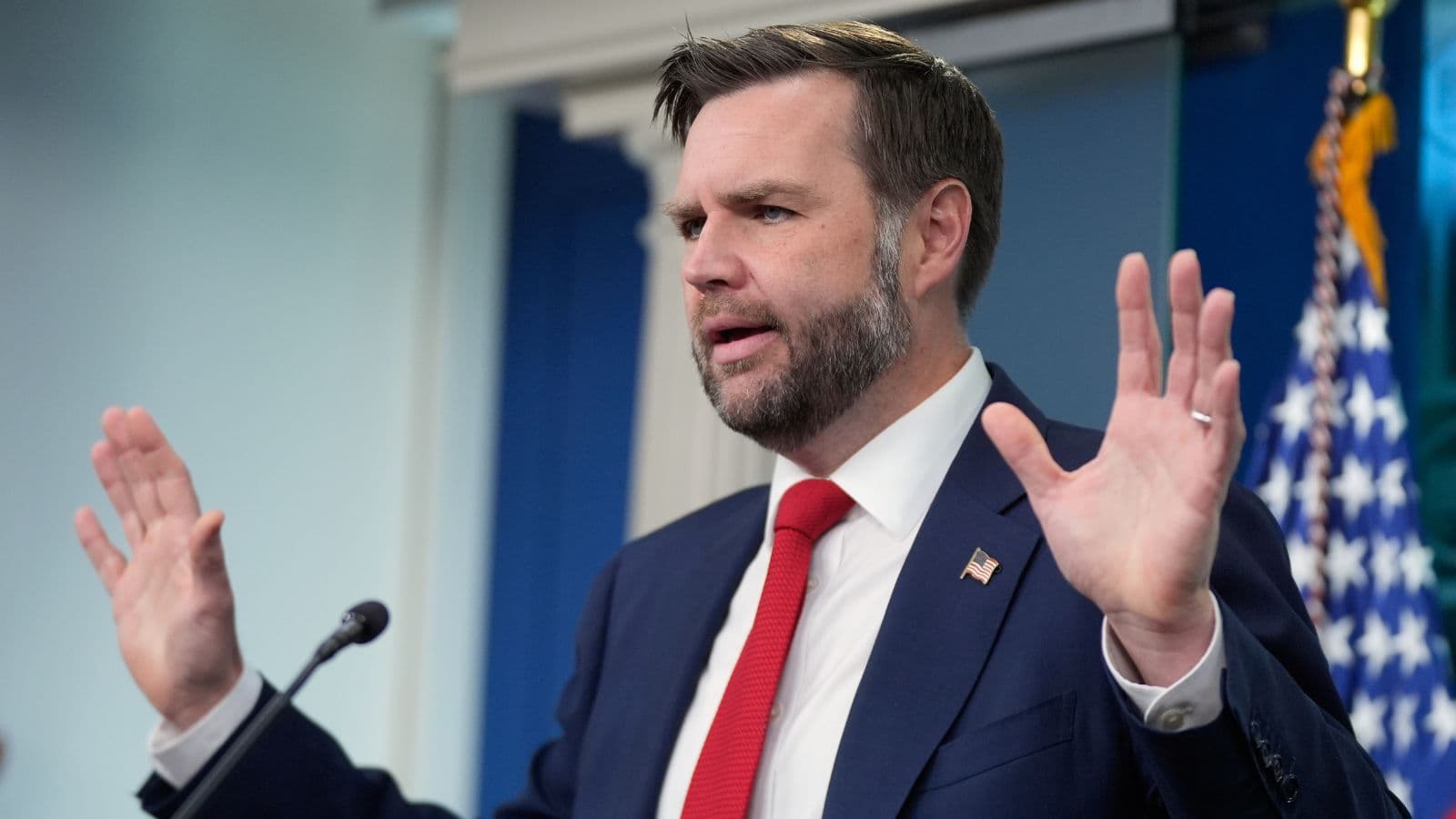
NewsWorldJD Vance tells Israel it cannot kill its way to security, backs Iran deal JD Vance said he hoped future negotiations would produce a commitment preventing Iran from developing missiles capable of threatening the broader region. 4 min readJun 19, 2026 05:19 AM IST First published on: Jun 19, 2026 at 05:19 AM IST Vice President JD Vance speaks to reporters in the James S. Brady Press Briefing Room at the White House. (Photo: AP) United States Vice President JD Vance on Thursday directed pointed criticism at Israel after senior Israeli ministers rejected the memorandum of understanding (MoU) signed a day earlier by President Donald Trump and Iranian President Masoud Pezeshkian to end the US-Iran war. Speaking in an interview with The New York Times, Vance responded to objections from far-right Israeli ministers Bezalel Smotrich and Itamar Ben-Gvir, who have opposed any agreement that stops short of dismantling Iran’s military and nuclear capabilities entirely.“What is your exact proposal? You’re a country of nine million people. You can’t just kill your way out of solving every single national security problem that you have,” Vance said, according to the newspaper. Vice President JD Vance speaks to reporters in the James S. Brady Press Briefing Room at the White House. (Photo: AP) He called on Israeli officials to allow negotiations to proceed and to give Washington credit for its role as a long-standing partner. What the MoU commits to and what it leaves open The agreement, signed on 17 June, reopens the Strait of Hormuz, lifts the US naval blockade of Iranian ports and commits both parties to ending hostilities across all fronts, including in Lebanon. It also includes immediate sanctions waivers on Iran’s fossil fuel exports and a pledge to establish a $300 billion reconstruction fund, alongside commitments to unfreeze Iranian assets and remove remaining sanctions over time.Story continues below this ad On the nuclear question, the MoU requires Iran to dilute its stockpile of highly enriched uranium in place, but defers all broader questions about its nuclear programme to 60 days of follow-on negotiations. Vance said on Thursday those talks could begin as early as this weekend. The agreement does not address Iran’s ballistic missile programme or its support for armed groups in the region issues that remain central concerns for Israel and hawkish members of the US Congress. Vance said he hoped future negotiations would produce a commitment preventing Iran from developing missiles capable of threatening the broader region, but stepped back from earlier administration pledges to eliminate Iran’s ballistic weapons capacity entirely. “You can’t tell a country, whether Israel or Iran, they’re not allowed to have any self-defence,” he said at a subsequent White House press conference on Thursday. Trump administration frames war as a victory regardless of outcome Vance defended the agreement against criticism from Democratic lawmakers and a number of Republicans, who have argued it yields no concessions from Tehran that could not have been secured through earlier diplomacy.Story continues below this ad Reporters raise their hands to ask a question as Vice President JD Vance speaks to reporters in the James Brady Press Briefing Room at the White House. (Photo: AP) The vice president maintained the war had produced tangible gains for Washington degrading Iran’s nuclear infrastructure, weakening its conventional military and damaging its economy and framed these as durable regardless of whether negotiations succeeded. “If the Iranians don’t change their behaviour, their military and their nuclear programme is still destroyed. If they do change their behaviour, then they are going to have a transformative relationship with the Middle East,” he said. “That’s a win for the American people and for the President of the United States, regardless of which option the Iranians ultimately choose.” Trump, speaking from t
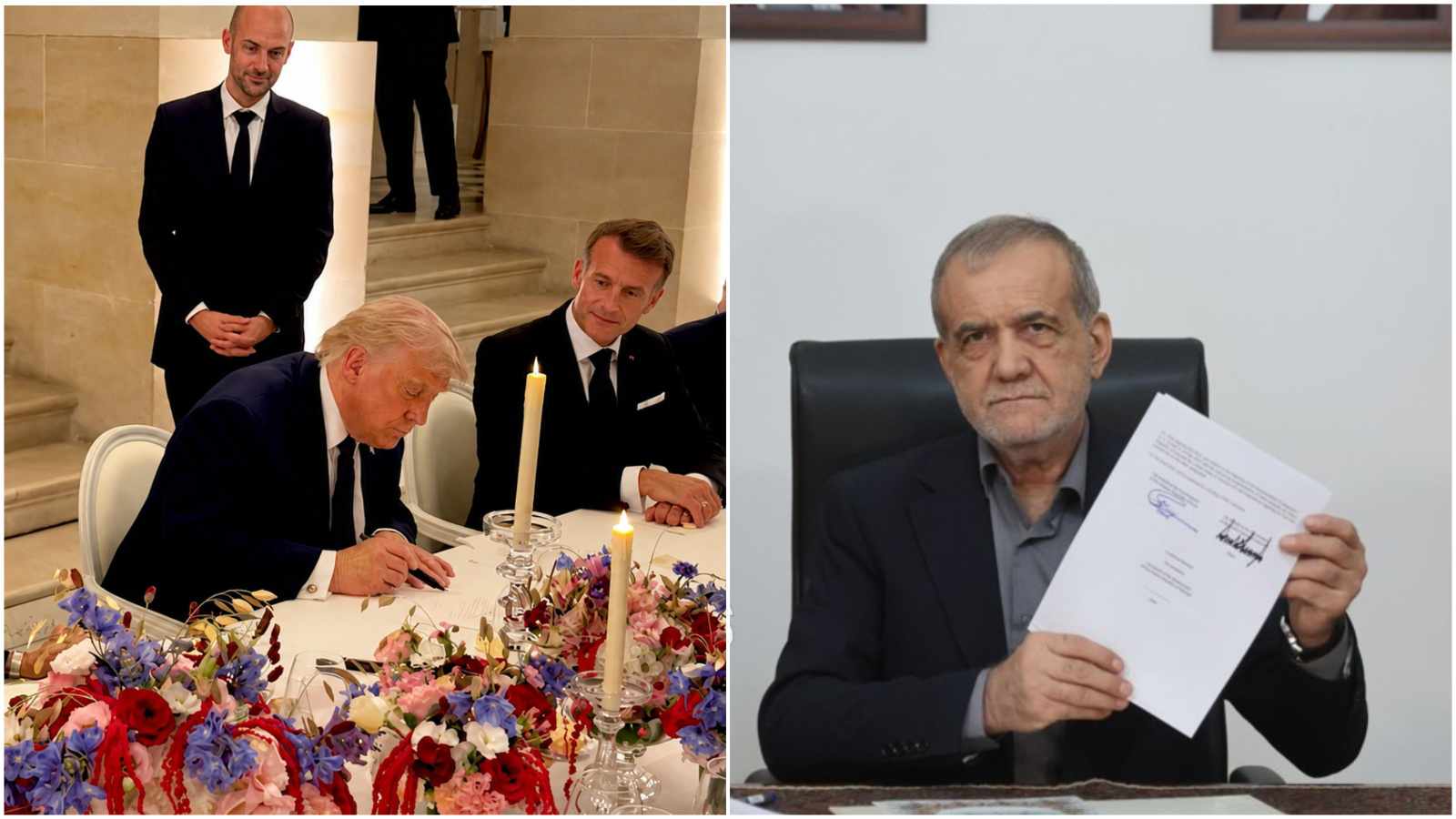
The 14-point Memorandum of Understanding (MoU) — which had been digitally signed last Sunday on US President Donald Trump’s 80th birthday — was again signed by him early Thursday morning, our time, at a Versailles dinner hosted by French President Emmanuel Macron. Though Iran was not represented in Versailles, it also released the text around the same time. This official release came after global media outlets leaked the full text yesterday morning.According to the MoU, a final agreement is to be negotiated within 60 days, extendable by mutual consent; a commitment by Iran that it will never produce nuclear weapons; the US to lift the naval blockade of Iran fully within 30 days (which it has already done); the movement of ships through the Strait of Hormuz to full capacity within 30 days; and the US issuing waivers for exports of Iranian crude oil and other products and services.In addition, Iran and the US, together with their allies (read Israel, though it is not a party to the deal), will permanently and immediately end the war on all fronts, including Lebanon; cease all hostile action or threats of force against each other. The MoU also specifies that both sides will address the fate of enriched material, including Iran’s nuclear needs. The final agreement will be approved through a binding resolution of the UN Security Council. Notably, the MoU does not include specific provisions for discussing the curtailment of Iran’s ballistic missile capabilities or its support for regional proxies. However, these issues could still be raised during the negotiations due to heavy pressure from Republicans, Israel, and the Gulf countries. The MoU primarily restores the status quo ante. Before the commencement of Operation Epic Fury on February 28, the Strait of Hormuz was open for free passage with no US blockade. The US and Iran had just completed the third round of their discussions on nuclear and other issues on February 26, with a tentative fourth round being considered for March 2. The outcome of the recent war is that nuclear negotiations have essentially returned to the starting point, but with one key difference: The US is now waiving sanctions on the export of Iranian oil and allied products, while offering assurances of relief on frozen Iranian assets. Further, during the discussions preceding the US-Israel joint attack on Iran, the US insisted on zero uranium enrichment, while Iran maintained its inherent right to enrich. However, Iran showed a willingness to compromise by offering to transfer its 60 per cent enriched uranium to a third country and suspend enrichment for several years. In the forthcoming 60-day negotiations, Iran is likely to agree to its pre-war concessions, with a significant condition of its own: It will now reject transferring the enriched material abroad, opting instead to down-blend it below 5 per cent while eventually agreeing to a 10-to-15-year enrichment suspension. The key new element is Iran’s explicit declaration that it will never produce nuclear weapons. While this commitment is already implicit in the Nuclear Non-Proliferation Treaty (NPT), to which Iran has been a party since 1970, and has been repeatedly reaffirmed by Tehran — including through an oral fatwa attributed to Ayatollah Ali Khamenei in 2003 — the difference now is that Iran is effectively waiving the NPT’s standard withdrawal clause. Tehran has never given notice to withdraw from the treaty despite enduring major conflicts in June 2025 and in February this year. Another major concession that Iran has managed to secure upfront is a ceasefire in Lebanon, where it suffered immense strategic damage following Israel’s killing of Hezbollah chief Hassan Nasrallah in 2024 and the near-decimation of the group’s military capabilities. While the MoU could be seen as “Advantage Iran”, its conclusion has already brought significant domestic and economic benefits for President Trump. Oil prices, which skyrocketed to $126 per barrel during the
On June 15 (Monday), the US and Iran agreed on the framework of a peace deal that extends the current ceasefire for 60 days.US President Donald Trump announced that he was authorising the immediate removal of the US Naval blockade of Iranian ports. Pakistan PM Shehbaz Sharif simultaneously announced that both sides have declared the immediate and permanent termination of all fronts, including Lebanon, and that the official signing ceremony would be held in Switzerland on June 19.Notably, the US President rescinded an initial announcement of the “toll free opening of the Strait of Hormuz”, stating instead that the Strait would open after the Friday signing. Iran’s Supreme National Security Council subsequently confirmed that a Memorandum of Understanding (MoU) had been reached with Washington. While the full text of the Memorandum is to be published after Friday, the draft reportedly includes, among other clauses, the following: Iran will immediately open the Strait of Hormuz to all commercial vessels while the US Navy will remove its blockade within 30 days of the MoU’s signing. The US (and regional allies) will release $24 billion in Iranian frozen assets, not impose new sanctions on Iran until a final agreement, temporarily waive oil sanctions and negotiate a reconstruction and development plan (reportedly worth $300 billion) for Iran within 60 days of the MoU. The US will militarily withdraw from areas surrounding Iran. And Iran will never acquire nuclear weapons and maintain the status quo on its nuclear programme — that means no further enrichment — pending a final agreement within 60 days of the MoU’s signing. What catalysed the MoU? In the immediate lead up to President Trump’s announcement, Israeli Defence Forces bombed Beirut, prompting Iran to prepare a retaliatory response while Iranian Speaker MB Ghalibaf warned that the US had to fulfill its commitments. Almost immediately after Israel’s strike, Trump stated that the attack “should not have happened”, especially “on a special day when we are so close to a peace deal”, and that there should be no more attacks by Israel anywhere in Lebanon (or by Hezbollah)”.Story continues below this ad A small motorboat passes anchored vessels in the Strait of Hormuz off Bandar Abbas, Iran, Thursday, June 11, 2026. AP/PTI(AP06_11_2026_000304B)Apart from proving that the Lebanon front’s inextricable relationship with Iran’s commitment to the ceasefire had registered in Washington, the Israeli strike evidently forced the Trump White House to announce an immediate lifting of the US naval blockade, instead of the reported 30-day post-MoU timeline. This has been a core Iranian pre-condition for negotiations and one that was consistently denied by US officials across the ceasefire period. In turn, Iran refrained from striking Israel (but did not commit to a full, unqualified opening of the Strait). Even as the MoU is yet to be officially released, two aspects are already clear — that the nuclear deal has been deferred, and that the 60-day period following the MoU will be a litmus test for the Iranian position in particular. Deferring the nuclear question It is now widely acknowledged that the US-Israeli war both failed in its strategic objectives and yielded unprecedented Iranian geopolitical gains which strengthened Iran’s bargaining position vis-à-vis the nuclear question. The MoU, which virtually leaves the nuclear question at the status quo before the war, that is as on February 27, is meant to re-balance the bargaining scales.Story continues below this ad Before the war, the US had two principal instruments of leverage (apart from being the overwhelmingly superior conventional and nuclear force). The first is the historic advantage of comprehensive and targeted sanctions having effectively forced Iran out of the global economic order. The second, more recently secured advantage, is the severe damage caused to Iran’s new nuclear enrichment and processing facilities in Natanz, Isf



Discussion (0)