
Loading dispatches...
← Return to NewsroomPolitics
What does the India-Russia logistics agreement allow? | Explained
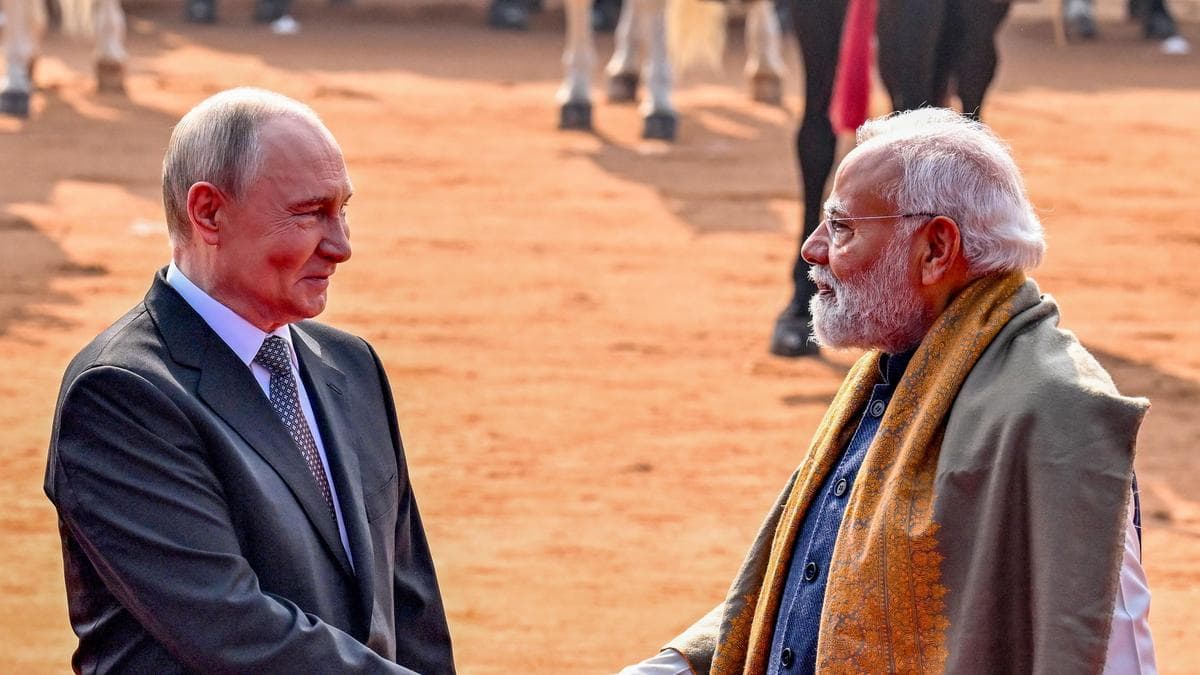
The story so far:The India-Russia bilateral Logistics Support Agreement (LSA), termed the Reciprocal Exchange of Logistics Agreement (RELOS), which had been dragging on for several years, was operationalised in January this year. There was a flutter on social media recently with claims that it allows the stationing of 3,000 Russian troops on Indian soil or vice versa, painting it as a military alliance. However, it is like any LSA, the likes of which India has signed with other countries.What are Logistics Support Agreements?A logistics agreement is a foundational military cooperation agreement between countries for administrative purposes that enables the reciprocal use of each other’s bases and ports for supplies, repair, and fuel. The agreement also stipulates the occasions on which this can be utilised, generally for exercises, joint training, port calls, and Humanitarian Assistance and Disaster Relief situations. As defence cooperation and military-to-military engagement become vital in international relations, the agreement simplifies essential administrative procedures and reduces bureaucracy.For instance, the agreement with the U.S., Logistics Exchange Memorandum of Agreement (LEMOA) signed in 2016, the first such, provides a framework for reciprocal provision of logistic support, supplies and services for activities such as joint exercises, training, or humanitarian assistance and disaster relief. “It does not provide for the establishment of any bases or basing arrangements,” Minister of State for Defence Subhash Bhamre said in a written reply in the Parliament in February 2017.Logistic Support, Supplies, and Services include food, water, billeting, transportation, petroleum, oils, lubricants, clothing, communication services, medical services, storage services, training services, spare parts and components, repair and maintenance services, calibration services, and port services as stated by the Ministry of Defence with respect to the LEMOA.If the hyperbole is to be believed, India and Russia can station troops on each other’s territory, then by convention, it also means that India and the U.S. can do the same under the LEMOA. But that is grossly incorrect, as clarified by the Minister, and is so for any LSA.What are the existing agreements?India has signed a series of logistics support agreements since the LEMOA in 2016. Currently, India has similar agreements with nine countries — the U.S., the U.K., France, Vietnam, Japan, Australia, Singapore, and Russia — concluded on similar lines, which provide logistics support and technical aid. The basic template and purpose for all these remain the same. There is also one with Oman covered under the overarching defence cooperation agreement.The agreement essentially enables militaries to utilise essential services and settle accounts through a streamlined process. It enables faster turnaround times and thereby increases on-station times for ships and aircraft. For instance, during anti-piracy deployments in the Gulf of Aden, Indian Naval ships and also P-8I long-range maritime patrol aircraft have utilized these agreements for quick operational turnaround without having to return home, extending their reach and endurance.In 2020, India invoked the logistics pact to procure high altitude clothing from the U.S. as the standoff between India and China in Eastern Ladakh was at its peak with over 50,000 troops sitting through the winters.The U.K. has also leveraged the LSA, with Royal Navy ships receiving spare parts manufactured by Indian shipyards during visits and ships also undergoing essential maintenance at Indian yards.What is the agreement with Russia?Like other agreements, RELOS defines procedures for supporting military formations, port calls of warships, and the use of airspace and airfield facilities by military aircraft of both countries and the organisation of logistics and technical support of military formations of warships, military aircraft, and other equipme
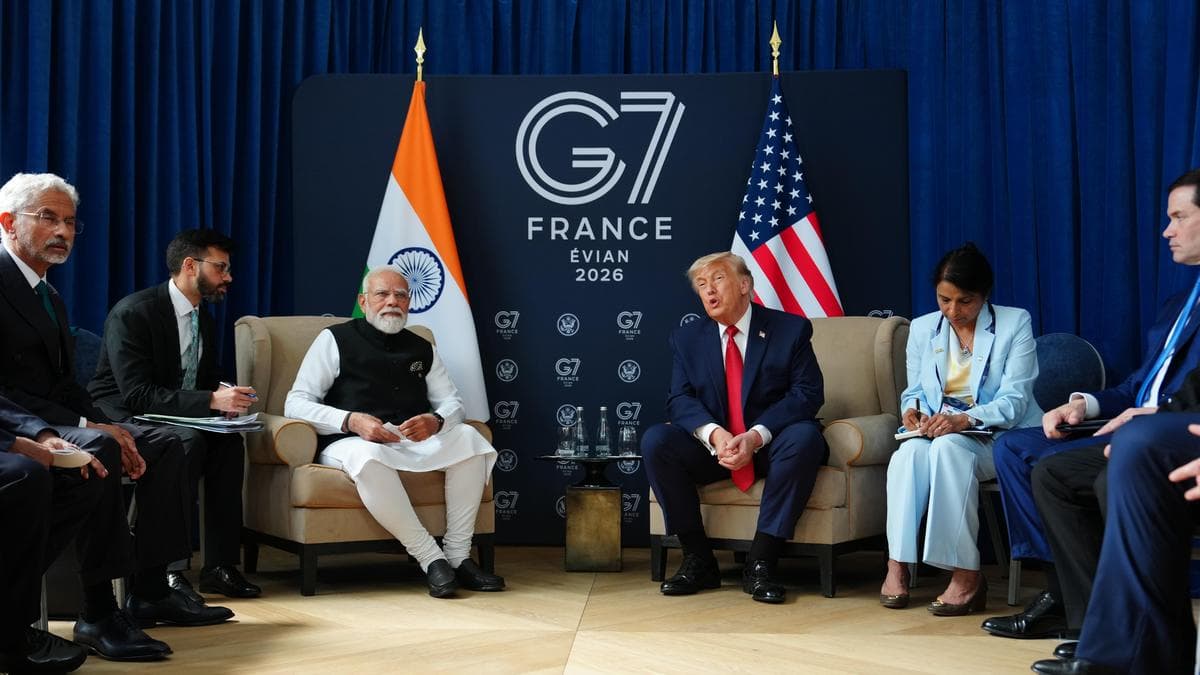
U.S. President Donald Trump meets with India's Prime Minister Narendra Modi on the sidelines of the G7 summit, on June 17, 2026, in Evian-les-Bains, France. | S. President Trump at the start of their bilateral meeting in Evian, France, on the fringes of the G7 Summit.“Mr. President, you are aware across the world, Indian seafarers in the hundreds of thousands are working and performing their duties across global maritime trade routes, including the Strait of Hormuz, and their safety is of utmost importance to us,” Mr. Modi said, referring to the killing of three Indian seafarers in a U.S. strike last week off the coast of Oman.“I’m confident that the issue of seafarers will receive the highest priority during the implementation of this agreement,” Mr. Modi said. The Prime Minister “commended” Mr. Trump for his efforts to restore peace in West Asia and said he was confident this would lead to a long-term peace in the region. The Prime Minister told the President that they both agreed that keeping the Strait of Hormuz open was vital for the world economy.Also Read: G7 Summit Day 2 LIVE updates on June 17, 2026Mr. Trump was asked by a reporter if he had words of condolence for the grieving families of the sailors.“I heard about that. It’s a rough profession. There’s no question about it,” he said, adding, “This has been happening throughout time, but we work together. We love all of those people.”Mr. Trump said Iran would not have a nuclear weapon and that Mr. Modi felt “very strongly” about that as well.The President also dismissed perceptions that the India-U.S. relationship was fraying, saying that as long as he was President, India would have a “great friend” in the White House. He lavished praise on Mr. Modi repeatedly and their friendship, painting a picture at odds with the mounting challenges the relationship has had to weather in recent times, including a protracted trade negotiation, restrictions on skilled migration, the death of Indian sailors, and a closeness with the Pakistan government that has ruffled feathers in New Delhi.Mr. Trump said the U.S. and India were “very close” to finalising a trade deal but that Mr. Modi was a “very tough” negotiator. The two countries announced the finalisation of a deal in February this year but it is yet to be signed, held up partly over changes to U.S. tariff policies and some gaps in the finer details.“He’s the most beautiful looking man. He looks so nice. He’s like an angel, but actually he’s a killer,” Mr. Trump said, praising Mr. Modi. “He’s as tough as they come, but he looks so good. So he gets you by surprise,” he added.Mr. Trump said he appreciated Mr. Modi (i.e., India) investing in the U.S.Asked to speak on the India-U.S. defence relationship, Mr. Trump said that though they did not have a contract, if India were to be attacked “we would be there to help”, stretching out his hand to hold Mr. Modi’s. Mr. Trump suggested he would go to India at some point in the future.Following the meeting, Mr. Modi posted on social media saying the two sides had reviewed U.S.-India cooperation in trade, energy, defence, technology and people-to-people ties. A readout from the government said the two leaders reviewed the progress made under the India–U.S. COMPACT (Catalyzing Opportunities for Military Partnership, Accelerated Commerce and Technology) framework, since their last meeting in February 2025.U.S. Trade Representative in India Next WeekThey also noted “with particular satisfaction the significant progress” made in the trade talks. U.S. Trade Representative Jamieson Greer will visit India next week as per the government in this regard as per the readout. The Prime Minister and President reaffirmed the India-U.S. Comprehensive Global Strategic Partnership , according to the government. Published - June 17, 2026 10:43 pm IST

Home News India Modi is scheduled to attend VivaTech 2026 alongside French President Emmanuel Macron and interact with the Indian community Updated - June 18, 2026 08:55 am IST Prime Minister Narendra Modi receives a warm welcome from members of the Indian diaspora, officials and supporters upon his arrival, in Paris, France. Photo: PMO via PTI. Prime Minister Narendra Modi on Wednesday (June 17, 2026) arrived in Paris and received a warm welcome from members of the Indian diaspora, as he underscored the importance of the India-France partnership for global progress. This marks the final leg of Modi’s two-nation tour to France and Slovakia. According to the Ministry of External Affairs, VivaTech is Europe’s premier technology and innovation event, and India will have the largest national pavilion at this year’s edition, reflecting the growing potential for collaboration between the Indian and European innovation ecosystems.Follow for more updates:June 18, 2026 08:55 PM Modi arrives in Paris, says India-France partnership vital for global progressPrime Minister Narendra Modi arrived in Paris and received a warm welcome from members of the Indian diaspora, as he underscored the importance of the India-France partnership for global progress.The Prime Pinister arrived in Paris on Wednesday local time from the French commune of Evian-Les-Bains, where he attended the G7 Summit, to which India was invited as a guest country.Paris marks the final leg of Modi’s two-nation tour to France and Slovakia.“I arrived in Paris just a short while ago, where I was warmly welcomed by the Indian diaspora. I am proud of their efforts to bring India and France closer together,” Mr. Modi said in a social media post.-PTIJune 18, 2026 08:54 Watch: Prime Minister Narendra Modi receives warm welcome in Paris Published - June 18, 2026 08:54 am IST
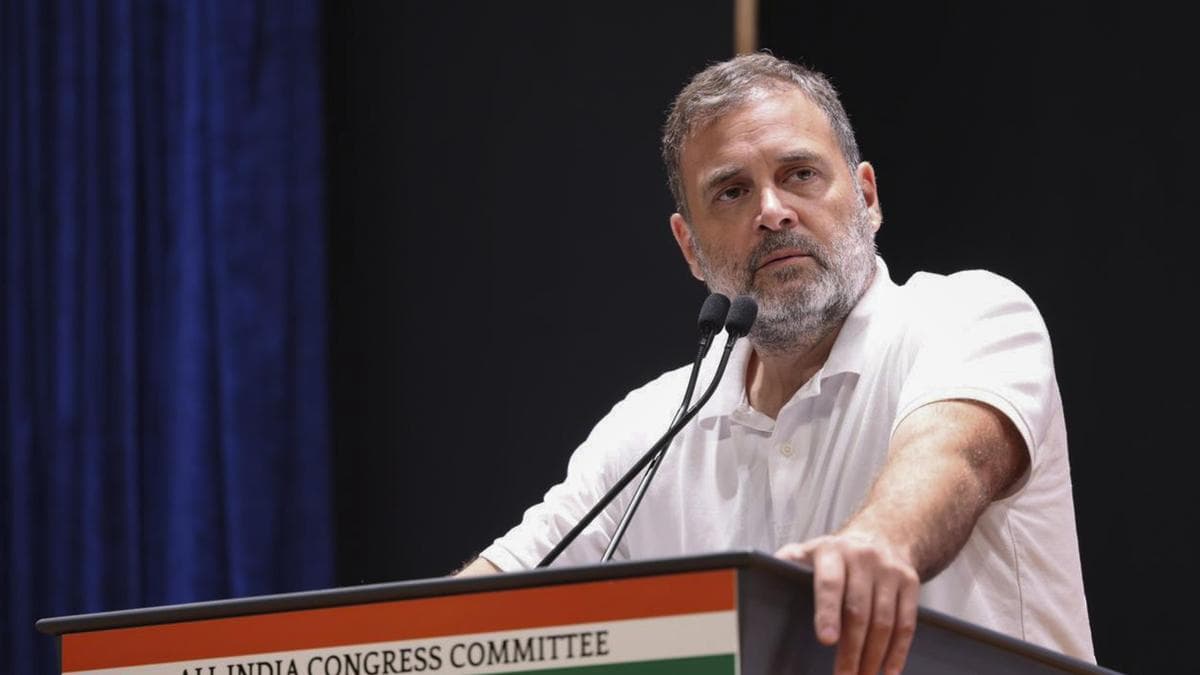
Congress leader Rahul Gandhi on Wednesday (June 17, 2026) slammed the government after it temporarily restricted access to Telegram, saying the “new trick” was akin to putting a lock on the victim’s house instead of catching the thief.Telegram has stopped working for existing users in India after the Centre temporarily restricted access to the messaging app ahead of the June 21 NEET-UG re-examination, but it continues to remain operational through the Virtual Protocol Network (VPN).Google delisted the app on Tuesday (June 16, 2026), and Apple’s Appstore has also removed it now in compliance with the government order to block access to the app.In a post in Hindi on X, Mr. Gandhi said, “Telegram Ban — Modi government’s new trick to stop paper leaks. Meaning, instead of catching the thief, just put a lock on the victim’s door.”“Lakhs of students have been studying on Telegram for years — notes, test series, discussions, preparation. How does snatching that facility become the solution to paper leaks? And it’s not even foolproof – every student in the country knows this, and so does the paper leak mafia. So, who will the next ban be on? WhatsApp?” he said.“On exam day, students will be frisked. Pockets will be cut open with scissors. Question papers will be sent via the Air Force. There won’t be any shortage of theatrics. But not a single strike at the root of the disease — because the paper leak mafia is thriving under this very government’s watch and making the youth weep tears of blood. Modi Ji — drop the theatrics. Strike at the mafia, not the students,” he said.Listen to the “Chhatron ki goonj (echo of students)” — or else the youth of the country know how to claim their rights, Mr. Gandhi said.In another post in Hindi, the leader of the Opposition in the Lok Sabha said he has set out for Kota, but two names are echoing in his heart — Umesh and Riya.“Yesterday, Umesh in Sikar and Riya in Dehradun—both ended their lives under the pressure of Re-NEET. 22- and 23-year-old kids—who were meant to soar in the open skies of their dreams—lost to this unjust system. These deaths are the result of a broken, corrupt system,” he said.“And the ones responsible are the Modi government and Education Minister Dharmendra Pradhan, who, instead of protecting students, have repeatedly shielded paper leaks, exam mismanagement, and the destroyers of futures,” he alleged.“Today, from Kota, we will begin that fight with just one goal—that no child’s dreams shatter like this again, that no parent ever has to lose their child in this way again. Every family’s pain will now echo across the country as the ‘chhatron ki goonj’,” Mr. Gandhi said.Congress general secretary Priyanka Gandhi Vadra said Rahul Gandhi has rightly stated that there is a need to strike not against students, but against mafias.“Today, there are many such things in the country’s education system and the entire examination system will need to be reformed,” she told reporters in New Delhi.The government on Tuesday (June 16, 2026) temporarily restricted access to the Telegram ahead of the NEET-UG 2026 re-examination, with the National Testing Agency (NTA) saying the measure is aimed at tackling cheating rackets and misinformation.NTA Director General Abhishek Singh said the restriction on Telegram till June 22 is part of efforts to ensure that the June 21 retest is conducted without malpractice.“We will not let anything go wrong. We will take all possible actions to ensure that the examination is conducted without any malpractice,” Mr. Singh had told PTI, when asked about the move.Telegram CEO Pavel Durov criticised the restriction on the app in India, saying, “Banning it, even temporarily, is a mistake.” In a post on X, Mr. Durov said, “India’s IT ministry banned Telegram for one week because some users shared leaked exam questions. This punishes 150M+ ordinary Telegram users in India — not the insiders who leaked the exam materials. And the ban hasn’t stopped anything. The leaks just

Telegram founder Pavel Durov has levelled a serious accusation against Reliance, claiming Reliance disrupted access to Telegram for users outside India through a practice known as Border Gateway Protocol (BGP) hijacking.The allegation, made publicly on X platform, has reignited debate around internet infrastructure, platform competition and government regulation. The claims remain unverified, and Reliance has not publicly responded.To understand the significance of the allegation, it is important to understand how the internet works. BGP is often described as the internet’s routing system. Every message sent on Telegram, every file downloaded and every connection established depends on networks around the world knowing where Telegram’s servers are located. BGP acts as the digital map that directs this traffic across thousands of interconnected networks.When functioning normally, BGP ensures data reaches its destination efficiently. However, if a network incorrectly or falsely announces itself as the preferred route for certain internet traffic, that traffic can be redirected, delayed or dropped entirely. This is commonly known as BGP hijacking.In practical terms, users may experience outages, connection failures, slower speeds or complete inability to access a service. For a platform with hundreds of millions of users like Telegram, a routing disruption can have immediate international consequences.Mr. Durov’s allegation suggests that Telegram traffic was intentionally misrouted, affecting users outside India, including in the UAE. Such claims are highly consequential because internet routing incidents can disrupt services across multiple countries within minutes.However, while routing anomalies can often be detected technically, proving deliberate sabotage requires substantial independent verification. At present, no publicly available evidence has conclusively established either the cause or intent behind the alleged disruption.Indian telecom Reliance is sabotaging access to Telegram for millions of users OUTSIDE India (including the UAE) via a rogue method called BGP hijacking.The sabotage seems intentional, as Reliance has ignored multiple reports. This may be part of a competitive war, as…— Pavel Durov (@durov) June 16, 2026India’s temporary banWhat makes the controversy particularly noteworthy is that it comes at a time when Telegram is already facing direct action from the Indian government. On June 16, New Delhi temporarily blocked Telegram nationwide until June 22, citing concerns that organised exam-fraud networks had used the platform to circulate leaked medical entrance examination material and deceive students ahead of the NEET-UG re-examination.Authorities also directed Telegram to disable certain message-editing functions until June 30, arguing that the feature had been used to manipulate timestamps and fabricate evidence related to examination leaks. The restrictions were imposed under Section 69A of the Information Technology Act following recommendations from the National Testing Agency.The government’s position is that the move is temporary and aimed at protecting the integrity of one of India’s most important competitive examinations, taken by more than two million aspiring medical students. Officials argue that Telegram had become a key tool for organised cheating networks and that urgent intervention was necessary ahead of the re-test.Mr. Durov, however, has criticised the ban, arguing that it punishes more than 150 million ordinary Indian users while doing little to stop those responsible for exam leaks. He has maintained that the individuals behind the fraud can simply migrate to alternative platforms, leaving legitimate users and businesses to bear the consequences.At this stage, there is no evidence directly linking Mr. Durov’s allegations against Reliance to the government’s decision to block Telegram. The government’s action is publicly tied to the NEET examination scandal and concerns around exam f
Image used for representational purposes. File | ” This is the first time that a messaging app operating at such a scale is being blocked in India by the Ministry of Electronics and Information Technology, even for a limited period.There are several Telegram groups circulating everything from pirated links to real time news updates from established organisations; the platform has attracted many users with features not typically found on WhatsApp and Signal, such as integrating bots into the platform.A Telegram spokesperson did not immediately respond to a request for comment. While Telegram has taken down groups and content in group chats — which are not end-to-end encrypted on the platform — the platform does not appear to have ever voluntarily disabled access to its services in any country at a government’s request.The NTA emphasised that this blocking was “calibrated and bounded in time,” and that it would be lifted on Monday (June 22, 2026). The agency said that several Telegram groups were advertising fake exam papers for the upcoming NEET exam and defrauding candidates willing to pay for them.“Acting on inputs received continuously from NTA, from State law-enforcement agencies including the police forces of Bihar, Gujarat and Rajasthan, and from its own continuous monitoring of public channels and platforms, the Indian Cyber Crime Coordination Centre (I4C), under the Ministry of Home Affairs, has secured the prompt take-down of a substantial number of Telegram channels, groups and bots whose names and content openly advertised their fraudulent and misleading purpose,” NTA said.Additionally, many groups, the NTA said, were editing past messages with recent exam paper questions, to fake their capabilities in obtaining questions in advance. In separate directions, the IT Ministry said that it had ordered Telegram to disable message editing as well until June 30, to shut off “this avenue of fabrication for the post-examination window in which such artefacts have historically been deployed.”“NTA acknowledges that the access restriction issued by MeitY affects lakhs of citizens who use the Telegram platform for legitimate personal, educational, professional and informational purposes, and sincerely regrets the inconvenience caused to them,” the agency said in its statement. Published - June 16, 2026 11:37 am IST
Discussion (0)