
Loading dispatches...
← Return to NewsroomPolitics
Illegal trade pushes Vembanad’s black clam fishery deeper into crisis

As black clam reserves in the Vembanad Lake continue to shrink, rampant illegal harvesting and unauthorised transportation have emerged as fresh threats to the fragile ecosystem and the livelihoods of thousands of traditional clam workers.With illegal operators increasingly targeting both clam meat and shells, the Fisheries Department has stepped up enforcement, launching a crackdown on unauthorised harvesting and transport by non-licensed persons.Just the other day, Fisheries Department officials intercepted a vehicle carrying around 20 tonnes of clams at Kulasekharamangalam. The consignment, transported from TV Puram near Vaikom without the mandatory permits, was seized and a fine of ₹40,000 was imposed under the Inland Fisheries Act.Under existing rules, a permit issued by the Fisheries Department is mandatory for transporting more than 200 kg of clams, clam shells or clam meat by road or water. Officials said similar action had been taken in previous years against those attempting to transport clams without valid documents.“Only the Lime Shell Cooperative Societies are authorised to store and transport clam shells. Transporting shells without valid transit passes or licences issued by the Fisheries Department is illegal and will invite strict action,” said an official.Even as the department cracks down on illegal transport, licensed clam workers say the biggest threat lies beneath the waters of the lake. They allege that large scale harvesting of juvenile black clams, locally known as Mallikakka, is steadily eroding future clam stocks and pushing traditional harvesters into financial distress.The juvenile clams, measuring less than 20 mm, are being harvested indiscriminately from several parts of the Vembanad Lake. While the meat is sold in local markets, the shells are transported mainly to Namakkal in Tamil Nadu for use as poultry feed.The practice has become particularly alarming because the juvenile clams had been released into the lake by Lime Shell Cooperative Societies using government financial assistance to replenish clam stocks and safeguard the livelihoods of workers. Instead, illegal operators are scooping up these young clams before they mature.According to traditional clam collectors, most of the illegal harvesting takes place after midnight, making enforcement difficult. As mature clam deposits continue to decline, many licensed workers are now forced to travel long distances to harvesting grounds to earn a living.Taking serious note of the situation, the Fisheries Department has decided to intensify night patrols across the lake and step up inspections to curb illegal harvesting and unauthorised transportation of clams and shells.Hundreds of families across the Vembanad Lake basin depend directly on the black clam fishery for their livelihood. The lake produces an average of around 32,000 tonnes of black clams annually, accounting for nearly 70 per cent of the fishery wealth in its brackish water ecosystem. Published - June 30, 2026 07:28 pm IST
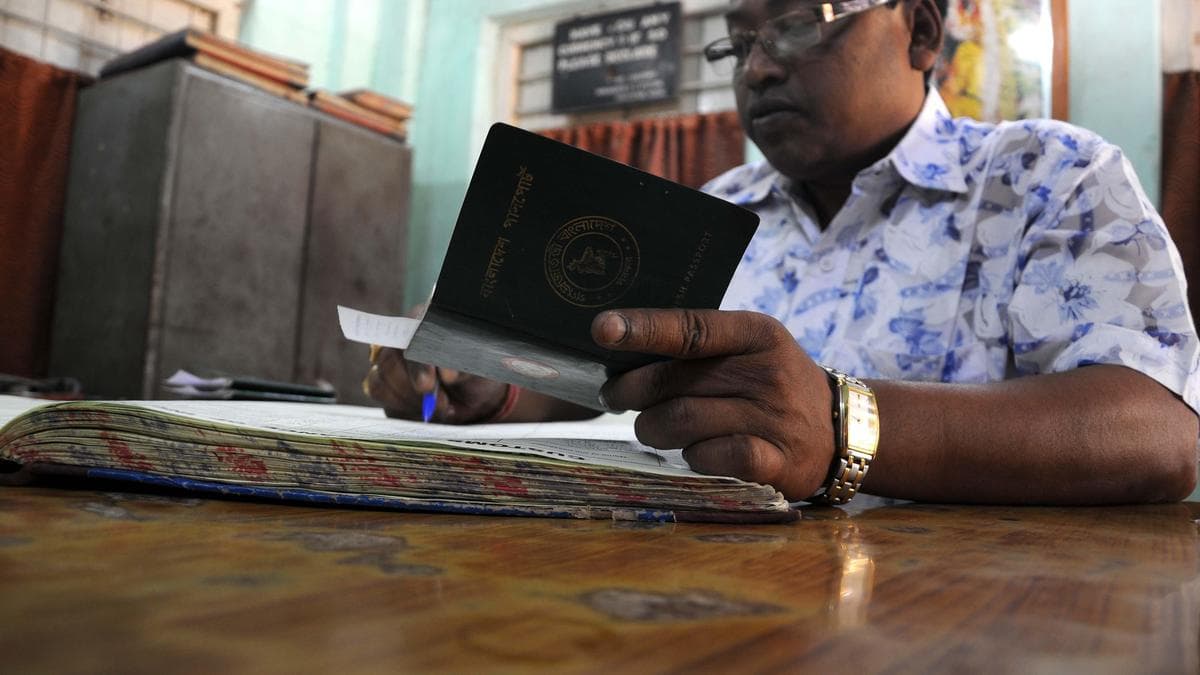
The story so far: The fresh wave of deportation and detention drives targeting undocumented migrants from Bangladesh in several States, including West Bengal, have brought deportation laws to the spotlight. West Bengal Chief Minister Suvendu Adhikari on June 7 said that 4,800 “illegal infiltrators” have been deported to Bangladesh over the past one month. Mr. Adhikari said that “holding centres” have been set up in border districts of the State. He had earlier said that the policy of his government regarding “illegal infiltrators” was to “detect, delete and deport”.The Gujarat police also detained 362 undocumented Bangladeshi migrants and questioned more than 782 suspected foreign nationals during a State-wide crackdown under “Operation Delta Hunt” launched on June 2, 2026.According to Union Home Minister Amit Shah, the Union government had constituted a high-level committee on demographic change and was committed to “identifying and deporting every single infiltrator from the country.” These events, along with Assam Chief Minister Himanta Biswa Sarma’s advocacy of a “pushback” policy for undocumented migrants from Bangladesh and Myanmar, including Rohingyas, have drawn attention on issues of deportation and refugee rights.What is a pushback?Deportation is a formal legal process that typically involves detention, judicial or quasi-judicial proceedings, and coordination with the receiving country’s authorities. In contrast, Pushbacks generally refer to the return of individuals across a border outside the formal deportation process and without the procedural steps ordinarily associated with deportation. Originally,“pushbacks” is a term from European and American border enforcement, implying someone caught mid-crossing and returned.The term “pushback” does not have a statutory definition in Indian law. However, recent government policy by Ministry of Home Affairs (MHA) distinguishes between formal deportation proceedings and the immediate “send back” of Bangladeshi or Myanmarese nationals intercepted at the border. The legality of such pushbacks remains contested, particularly where questions arise regarding nationality verification and procedural safeguards. Police personnel guard a camp where Bangladeshi migrants who allegedly crossed the border illegally are kept for verification before being deported to Bangladesh, at Tentulia village in West Bengal's North 24 Parganas district on May 28, 2026. | The word “illegal migrant” is defined in Section 2(1)(b) of the Citizenship Act, 1955 as a person entering the country without valid documents or overstaying the permitted time in country despite having entered with valid documents.What are the laws around it?In the context of Assam, Section 6A (Assam Accord) of the Act lays down special provisions for persons of Indian origin who entered Assam between January 1, 1966 and March 25, 1971. Even if declared foreigners, such persons may be permitted to register for citizenship after completing a 10-year waiting period from the date of detection. During this interim period, they are disentitled from exercising voting rights but continue to enjoy all other rights of citizenship. Those who entered after March 25, 1971 and are then found to be foreigners and remain liable for expulsion.Foreigners Act 1964 essentially dealt with deportation in India before the Immigration and Foreigners Act, 2025, which repealed the Foreigners Act and other colonial laws.Under the Foreigners (Tribunals) Order, 1964, Foreigners Tribunals were constituted to determine whether an individual was a foreigner. Individuals declared foreigners became liable for expulsion from Indian territory under Section 3(2)(c) of the Foreigners Act, 1946, (now repealed) following a declaration by the Foreigners Tribunal.A saving provision preserves the validity of rules and actions made under the repealed law, ensuring continuity in the law governing identification and deportation,
Anti-encroachment drive carried out by the Forest Department and police to clear alleged illegal settlements on forest land, in Jammu. File | BJP Legislator says ‘residents of Kashmir occupying land illegally in Jammu’, evokes sharp reactions“The early morning action targeted unauthorised commercial units, including dhabas and shops, occupying prime urban land,” the officials said. “Teams of the JDA, in coordination with the district administration, reclaimed half an acre of prime land opposite Mangal Market, behind Vaishnavi Dham and near Jammu railway station,” they said.“The land had been under unauthorised occupation for several years, with a number of dhabas and commercial establishments illegally operated by two individuals,” they added. The occupants had earlier approached the high court seeking regularisation of their possession.Pursuant to the court's directions, the competent authority examined the matter and concluded that the occupation was unauthorised and impermissible under law, following which orders were issued for the removal of the encroachments and restoration of the land to the JDA.“During the operation, more than 30 unauthorised structures were vacated and demolished,” the officials said. They said the encroachments had contributed to persistent traffic congestion in the railway station area owing to heavy vehicular movement and roadside parking, frequently causing bottlenecks for commuters, pedestrians and railway passengers.“Authorities had also repeatedly flagged unlawful activities around the encroached area that affected public safety, while food at the dhabas was being prepared in unhygienic conditions,” they said.JDA vice-chairman Rupesh Kumar said public land is a public trust and must be safeguarded from illegal occupation, underlining the authority's commitment to protecting public assets, planned development and firm action against encroachments affecting urban infrastructure. Published - June 17, 2026 11:51 am IST

Discussion (0)