
Loading dispatches...
← Return to Newsroomgeneral
Explosion heard in Syrias capital Damascus, several injured: Report

New DelhiJul 2, 2026 06:20 PM IST The nature of the blast in Damascus was not immediately clear. (Photo: AP/ Representational) A loud explosion was heard in the Syrian capital, Damascus, on Thursday, according to state-run media. The blast occurred in the Hejaz area of Damascus, Al Jazeera reported, citing the SANA news agency, adding that injuries have been reported.The Anadolu news agency reported the explosion took place inside the cafe near the Palace of Justice in Damascus. The Express Global Desk at indianexpress.com which delivers authoritative, verified, and context-driven coverage of key international developments shaping global politics, policy, and migration trends. The desk focuses on stories with direct relevance for Indian and global audiences, combining breaking news with in-depth explainers and analysis. A major focus area of the desk is US immigration and visa policy, including developments related to student visas, work permits, permanent residency pathways, executive actions, and court rulings. The Global Desk also closely tracks Canada’s immigration, visa, and study policies, covering changes to study permits, post-study work options, permanent residence programmes, and regulatory updates affecting migrants and international students. All reporting from the Global Desk adheres to The Indian Express’ editorial standards, relying on official data, government notifications, court documents, and on-record sources. The desk prioritises clarity, accuracy, and accountability, ensuring readers can navigate complex global systems with confidence. Core Team The Express Global Desk is led by a team of experienced journalists and editors with deep expertise in international affairs and migration policy: Aniruddha Dhar – Senior Assistant Editor with extensive experience in global affairs, international politics, and editorial leadership. Nischai Vats – Deputy Copy Editor specialising in US politics, US visa and immigration policy, and policy-driven international coverage. Mashkoora Khan – Sub-editor focusing on global developments, with a strong emphasis on Canada visa, immigration, and study-related policy coverage. ... Read More Stay updated with the latest - Click here to follow us on Instagram Tags: Damascus explosion

The US Federal Reserve’s Federal Open Market Committee (FOMC) held its benchmark interest rate steady at 3.50-3.75% late on Wednesday, in what was new Fed Chair Kevin Warsh’s first policy meeting and press conference at the helm of the central bank.While the rate remained unchanged for a fourth consecutive meeting, the underlying data and changes announced by Warsh struck a more hawkish note, signalling the possibility of rate hikes later this year.Warsh announced a series of changes, including an end to forward guidance on economic metrics such as inflation and growth. Calling the policy statement “a bit shorter, a bit simpler”, he said providing forward guidance was “not well-suited to the current policy conjuncture”. The policy statement also omitted how each member of the committee voted on the interest rate action. A hawkish stance The central bank’s latest Summary of Economic Projections (SEP) signaled a more hawkish stance compared to the March meeting. Based on the responses of 18 of the 19 officials, excluding Warsh who didn’t vote, the median estimate for the Fed funds rate by the end of 2026 rose to 3.8% from 3.4% in March, signaling that the committee sees at least one rate hike this year. Nine officials forecast at least one rate hike this year, including six who expected multiple hikes. In contrast, the majority of the policymakers had expected at least one rate cut in 2026 in the March SEP, which reduced to only 1 policymaker in the latest document. This comes at a time when the country has seen a strong set of growth and labor data, while inflation has been a consistent pain point, first due to the reciprocal tariffs announced by President Donald Trump last year and now due to the ongoing war in West Asia, which has driven up fuel prices and disrupted supply chains globally. Data from the US Bureau of Labor Statistics released last week showed that retail inflation accelerated to 4.2% in May, crossing the 4% level for the first time in 3 years, and much above the Fed’s 2% upper band for its inflation target. Meanwhile, non-farm payrolls in the country increased for the third straight month in May, while the unemployment rate remained steady, signaling a robust economy and further cementing expectations of a rate hike by the central bank.Story continues below this ad The latest Fed policy led to yields of short-term US treasuries rising to a 16-month high on Wednesday, with the US rate markets putting 72% odds on a rate hike by the central bank by October, according to a Reuters report. Yields, which move inversely to bond prices, rise on expectations of higher interest rates to reflect higher borrowing costs for the government. Effect on Indian market Higher interest rates in the US can potentially lead to foreign outflows from the Indian capital market as higher yields across US treasuries offer attractive returns for foreign investors. Higher bond yields in the US also reduce the attractiveness of Indian bonds for foreign investors. This is at a time when the Indian market has already been crippled by persistent foreign outflows due to headwinds such as high crude oil prices, an uncertain geopolitical environment, a weaker rupee squeezing the returns of foreign investors, and the underperformance of the Indian stock market due to a lack of AI-related opportunities. Foreign institutional investors have pulled out $26.7 billion from the capital markets so far in 2026, already eclipsing the $11.84 billion they had pulled out in the entire 2025. This time around, foreign inflows remain largely dependent on whether a peace deal between the US and Iran will be signed and followed through. Exorbitant fuel prices have crippled the Indian stock market since the start of the war, with crude oil rising as high as $125 a barrel at its peak. Both countries are scheduled to sign a peace deal on Friday.Story continues below this ad The rupee had slipped against the dollar at the open on Thursday after the Fed’s policy d
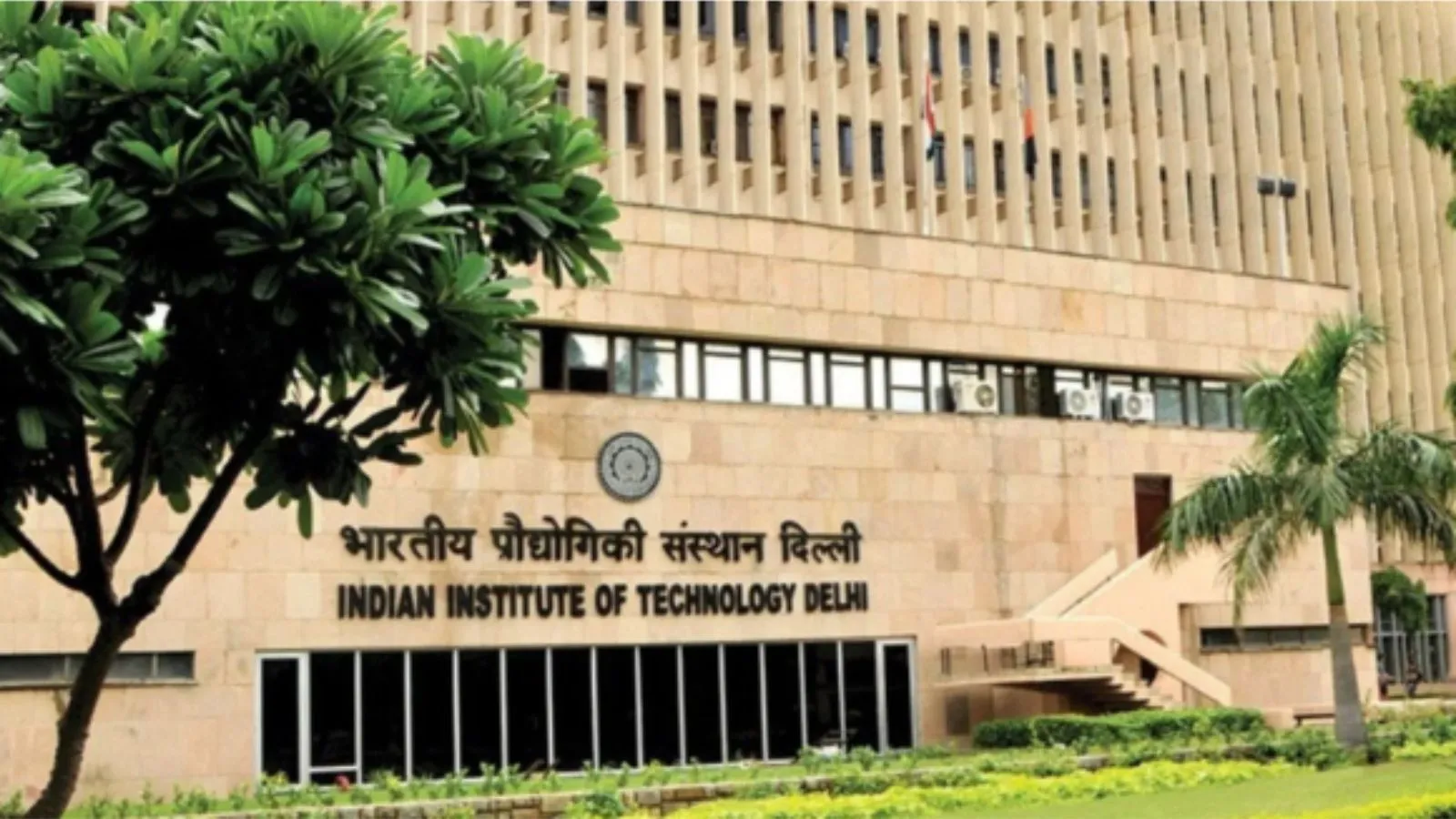
New DelhiJun 18, 2026 10:54 PM IST According to QS, the rise of IIT Delhi has been driven by significant gains in employer reputation, research impact and graduate employability. (File image) For the second year running, IIT Delhi has emerged as India’s highest-ranked institution in the QS World University Rankings, having climbed five places over last year to 118 rank globally, and widening its lead over IIT Bombay, which has slipped to rank 134. The 2027 rank for IIT Delhi is the highest ever achieved by an Indian university, bettering the performance of IIT Bombay in 2025, and caps a remarkable four-year climb of 79 places from 197th in the QS 2024 rankings.According to QS, the rise of IIT Delhi has been driven by significant gains in employer reputation, research impact and graduate employability. The institute has climbed to 39th place globally in Employer Reputation, 60th in Citations per Faculty, and jumped 60 places to rank 280 in Employment Outcomes,” QS Senior Vice President Ben Sowter said. “These two areas are key to IIT-D achieving such an outstanding rank in 2027,” Sowter said. IIT Bombay by contrast declined 25 places in Citations per Faculty, even though it continued to score strongly on employer reputation and academic reputation. But weaker performance on international engagement indicators weighed down its overall ranking. Overall, “Global peers are gaining momentum while institutions across India are improving at a comparatively slower pace,” Sowter said. Administrators at IIT Delhi attributed the improved rank to the fulfilment of broader institutional goals. “Whatever goes on inside the QS algorithm, our job is different,” Somnath Baidya Roy, Dean of Planning at IIT Delhi, told The Indian Express. “We want to be a leader in providing technological education at affordable rates to all our students.”Story continues below this ad Roy said the institute remains focused on attracting talent, improving infrastructure, and strengthening research rather than on ranking indicators. “One of the reasons for our success is that we have continued to attract the best students and faculty. We are a preferred destination for students across India,” he said. In the QS World University Rankings by Subject announced earlier this year, Electrical Engineering, Mechanical Engineering, Computer Science, Chemical Engineering and Civil Engineering at IIT Delhi featured among the world’s top 50 programs. IIT Delhi also retained its position as India’s highest-ranked institution in Engineering and Technology with a global rank of 36. Sustainability, an area in which IIT Delhi remains the highest ranked institution in India, has played a key role over the last two years. Last year, sustainability was identified as a reason for IIT Delhi overtaking IIT Bombay. Roy said IIT Delhi had consciously built sustainability into its institutional framework. “A couple of years back, we decided that IIT Delhi was already doing a lot of activities related to sustainability and we needed to emphasise them. At the time, it was not because sustainability was a metric in rankings,” he said.Story continues below this ad Sustainability efforts emerged from a combination of student demands, institutional priorities, and government regulations, Roy said. “We came up with our sustainability policy and we are acting on our sustainability action plan,” he said. He pointed to green building initiatives, environmental programs and academic units such as Atmospheric Sciences and Civil and Environmental Engineering as examples of the way sustainability had become embedded across the institute. “Most importantly, sustainability is an integral part of our curriculum,” he said. IIT Delhi is also betting on a broader transformation for the coming decade, having begun to implement a revamped curriculum aimed at making education more interdisciplinary while giving students greater flexibility in designing their academic pathways. “We are looking at int
New DelhiJun 18, 2026 03:23 AM IST “We are also working on a new provision under which even family members living on the first or second floor of the slum unit will be eligible for rehabilitation by giving an additional charge," Sood said. Nearly all slum dwellers in the Capital eligible for rehabilitation and priority to relocating them close to the existing slum clusters — these are the highlights of the Delhi Slum and JJ Cluster Rehabilitation and Relocation Policy, 2026, which is set to be notified. A day after Union Home Minister Amit Shah chaired a key meeting and said that the new policy, which replaces Delhi Slum Rehabilitation and Relocation Policy 2015, is ready, Delhi Urban Development Minister Ashish Sood on Wednesday told The Indian Express that the government has extended the cut-off date for slum dwellers eligible for rehabilitation by 10 years, virtually making most slum dwellers in the national capital eligible to get a pucca house. Now, all slum dwellers who live in slums, which existed as on January 1, 2025, will be eligible for rehabilitation under the new policy.The government said the policy will benefit four lakh families, or almost 20 lakh people. “We are also working on a new provision under which even family members living on the first or second floor of the slum unit will be eligible for rehabilitation by giving an additional charge,” Sood said. According to officials, the new policy is expected to make the relocation process smoother. “Earlier, we used to see that half the families in a slum were eligible, while the other half were not, which used to lead to resistance and court cases. The new policy will make everyone eligible, so people will cooperate more,” an official said. Tenders will be issued for slum parcels in Mayur Vihar in East Delhi, Seelampur in Northeast, Sultanpuri in Northwest, Lajpat Nagar in Southeast and Pitampura in Central North districts, as per Shah’s directions to issue tender for rehabilitation of 5 slum clusters under public private partnership (PPP) mode. “Extending the rehabilitation eligibility cut till 2025 is a revolutionary move that will give all slum dwellers in Delhi a pucca house, so that every GenZ in all slums of Delhi can think of a better future. We have also stuck to our promise of Jaha Jhuggi Wahan Makan,” Sood said. Similar to the current policy, he added, slum dwellers will have to pay a sum ranging between Rs 1.12 lakh to Rs 1.41 lakh to get a house. The Indian Express had reported in March that the Delhi government is working on a new slum policy which will extend the eligibility cut-off date from the present January 1, 2015 to January 1, 2025. Progress on relocation Slum rehabilitation in the national capital is currently governed by the Delhi government’s Delhi Slum and Jhuggi Jhopri Rehabilitation and Relocation Policy, 2015, which was brought in by the previous AAP government and subsequently also adopted by the Delhi Development Authority (DDA) for slums on central government lands. The rehabilitation process, however, has progressed at an excruciatingly slow pace over the past decade, with only two in-situ projects — Ashok Vihar and Kalkaji, together providing around 4,700 flats — completed so far, both by DDA. Under the public-private partnership (PPP) model, which the government says it will use, private developers come in to construct housing to rehabilitate slum dwellers on part of the slum land while the remaining land is commercially developed . The underlying rationale is that the developer recovers the cost of building units for slum dwellers by making profits from the ‘free sale’ component. The model was expected to work well since slums are typically located on high-value land in central city areas.Story continues below this ad However, DDA has struggled to attract private developers, who cite small land parcels, difficult locations near drains and railway tracks, and frequent litigation. The only ongoing PPP redevelopment



Discussion (0)