
Loading dispatches...
← Return to Newsroomgeneral
Rain wreaks havoc in north Bengal, CM says normalcy in 4-5 days
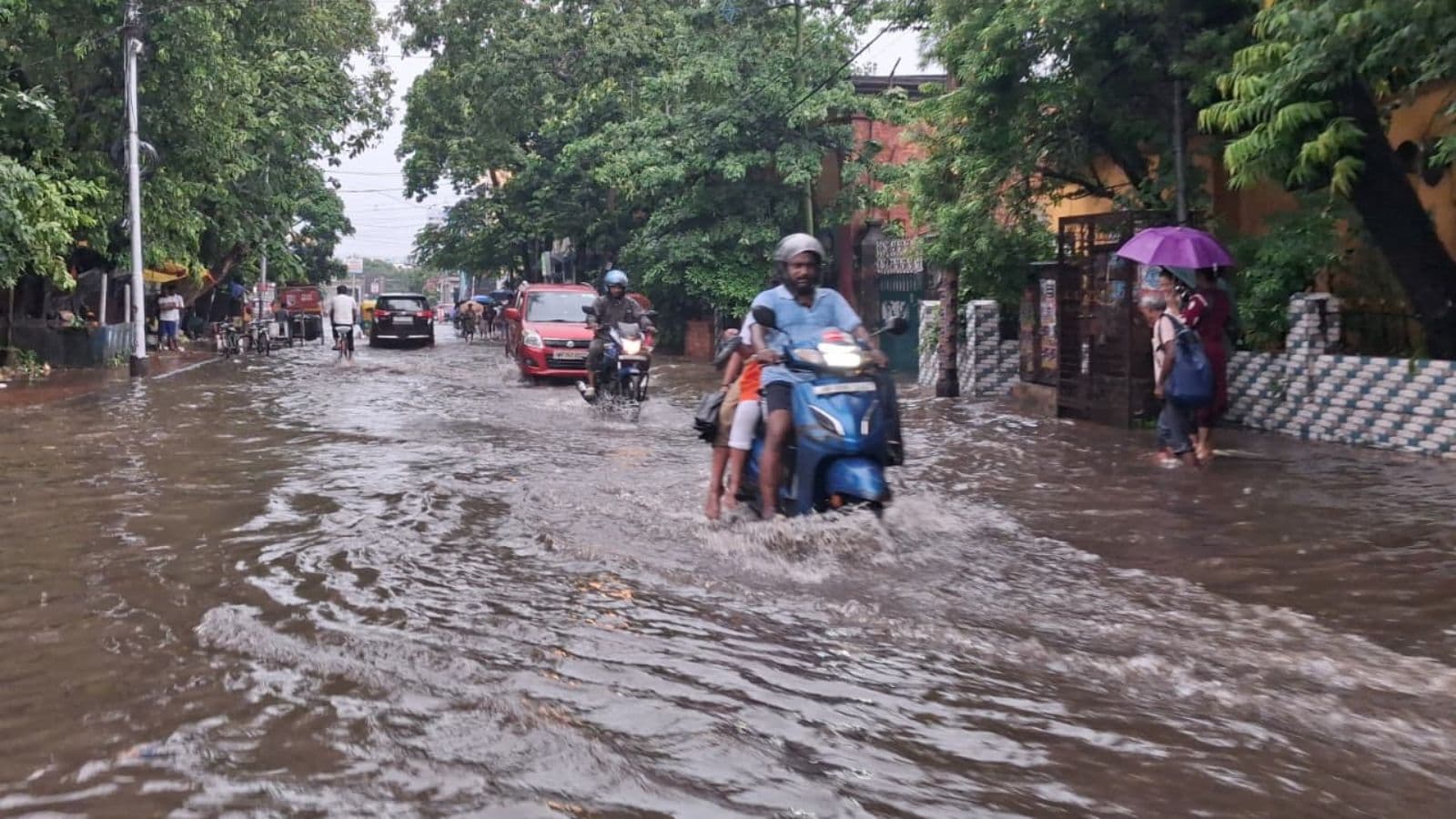
Heavy rainfall across the state on Thursday night, which continued till Friday afternoon, disrupted life in several parts of north Bengal and inundated many areas in Kolkata and adjoining southern districts, causing traffic pangs across the region.Torrential rainfall in neighbouring Bhutan and Sikkim also caused rivers in north Bengal, including the Teesta and Balason, a major tributary of the Mahananda, to flow close to danger levels, officials said.Multiple landslides were reported from areas across the Darjeeling hills, cutting off connectivity between the north Bengal town of Siliguri and various parts of the hills through the NH 110 arterial road. Addressing a press conference on the rain situation in the state, Chief Minister Suvendu Adhikari said the state government was working to restore normalcy which could take up to 4-5 days in some areas of north Bengal. CM orders probe into Balason bridge collapse Speaking at Nabanna on Friday evening, the CM ordered a probe into the collapse of the temporary Dudhia Bridge over Balason River in Darjeeling after the waterbody swelled due to incessant rains Friday. This disrupted vehicular movement between Siliguri and the Mirik subdivision, officials told PTI, adding that the hume pipe structure was constructed as an alternative arrangement following the collapse of the Dudhia iron bridge in October 2025. The collapse of the temporary bridge has triggered a political controversy over the quality of the material used in its construction just eight months ago. The Chief Minister indicated that it will be investigated whether there was any alleged irregularity, negligence or ‘cut money’ or financial corruption behind this incident. The Chief Minister has said that, alongside the investigation, restoring normal movement for the people was now the government’s main priority. Therefore, instructions have been issued to repair the damaged sections as quickly as possible and to introduce alternative travel arrangements.Story continues below this ad Due to the incessant rain, a child reportedly died at a tea garden in Hasimara, Alipurduar. The CM also expressed deep sorrow over the incident, stating that financial assistance has been handed over to the child’s family. ‘North Bengal Administration working round-the-clock’ Speaking at the presser, the CM said, “Heavy rainfall has been continuing in north Bengal, particularly in Kurseong and the hilly region, since last night. As you know, Siliguri and Darjeeling have recorded around 240.6 mm of rainfall, causing significant damage. Several bridges have been washed away, although the river situation remains under control. PWD is working but to bring normalcy, it will take 4-5 days.” The chief minister said there were some minimal landslides in some areas in north Bengal, such as the Mirik block on the Lebong Cart Road, but the debris was cleared and the roads reopened by late Friday afternoon. He said the administration had been active since dawn to take advance measures to deal with the issue, adding that the government was monitoring the situation in the Hills with utmost seriousness. He said the Darjeeling MP, District Magistrate, Irrigation Department and Disaster Management Department were working closely to restore normalcy, adding that so far there were no reports of tourists being stranded in the area.Story continues below this ad Traffic pangs The CM said that vehicular movement has been diverted through alternative routes via Pankhabari and Kurseong due to closure of some roads. Roads in central and north Kolkata, as well as in the Sector V area of Salt Lake, were submerged after the morning downpour, leading to slow-moving traffic and congestion during office hours. Busy thoroughfares like College Street, Amherst Street in the north and Camac Street in the central parts of the city remained waterlogged till long after the morning deluge had let up. Officials of the Kolkata Municipal Corporation (KMC) said reports of waterlogging h
For the last 15 days, Amal Purkait has been without work. Yet every day, he returns to Platform No. 2 of Dum Dum railway station, only to stare at the rubble that once used to be his shop.“Every day when I come here I keep wondering what should I do now? We are third-generation hawkers in the Dum Dum rail station premises. My grandfather started this shop. When he came from Jaynagar, Dum Dum station had no such platform. At that time, he began by selling sweets. My father continued the business and then I did. We used to sell kachodi, samosa and sweets for years. I have been coming to this shop for more than 30 years. At this age what will I do? Is it possible to start a new job now?” Purkait said. Just two shops away, Sumitra Sarkar was standing next to her food kiosk of bread-ghugni. “I am struggling to care of my paralysed husband. There’s no option left for us. He can’t even go for check-ups. Sometimes it feels like there’s no way out of this suffering,” she said. A deep sense of anxiety has gripped hawkers and daily-wage earners across the Dum Dum railway network since the night of May 30, when a coordinated anti-encroachment drive was carried out in the area. Recalling the night, Purkait said, “It happened on May 30 around 11:05 pm, in front of the Metro station. It did not look like they had come to remove hawkers. It felt like they had come for terrorists and criminals. Hawkers are helpless now because the police have been picking them up and filing cases against them. Even hawkers who are simply moving around are getting arrested. We can tell people what happened, but the way it happened cannot be explained. CRPF personnel arrived, along with four cars and a bulldozer. All the exit gates were shut and then they started demolishing our shops. They razed every shop from Platforms 1 to 4, as well as those outside Platform 1.” “We approached the court and fought in the street. We don’t know what awaits us,” he added.Story continues below this ad Just around 10 kilometers away from Dum Dum, a similar eviction drive happened at Sealdah-south railway section. “I have been here for 50 years,” said Manik Bose, whose family set up a shop in 1951, shortly after the Partition of Bengal. “We had hopes when we voted this time. But now they are taking away our means of survival. If this continues, we may have to sit on the roadside and beg,” he said. Amid uncertainty, some of the affected hawkers found themselves leading the protests against the eviction. One such hawker, Utpal Das, said they were even willing to negotiate. “We are ready to pay the Railways for using the land or obtaining proper licenses. We are ready to knock on every door, including the Chief Minister’s Office to find a legitimate solution. But, we can’t agree with hawker eviction,” Das said.Story continues below this ad Meanwhile, for those on the ground, survival has already become precarious. “Right now, we are just sitting with small baskets. But that’s not how business works. We used to have proper shops. Our earnings have almost come to a standstill. If they remove us as if we never existed, where are people like us supposed to go?” Jageshwar Mahato said. In Jadavpur, barely 15 kilometres south of Sealdah, leader of CITU, the trade union affiliated with the CPIM, Sudip Sengupta said a full-fledged hawker eviction drive hasn’t been carried out in the area. “Other forms of eviction took place, including the removal of markets and slums from railway land, which the authorities described as cases of encroachment,” he said, adding, “However, the Railways issued an eviction notice on May 31. After that, we approached the High Court, which issued a stay order on hawker evictions in several areas. Despite that, late on the night of June 7, they came with bulldozers to remove makeshift informal shops.”Story continues below this ad A local hawker of Jadavpur, Chandi Pandit, who fears the same fate, said, “They haven’t reached us yet, but we’ve seen what has happened



Discussion (0)