
Loading dispatches...
← Return to Newsroomgeneral
Knowledge Nugget: Why are the Western Ghats back in headlines?
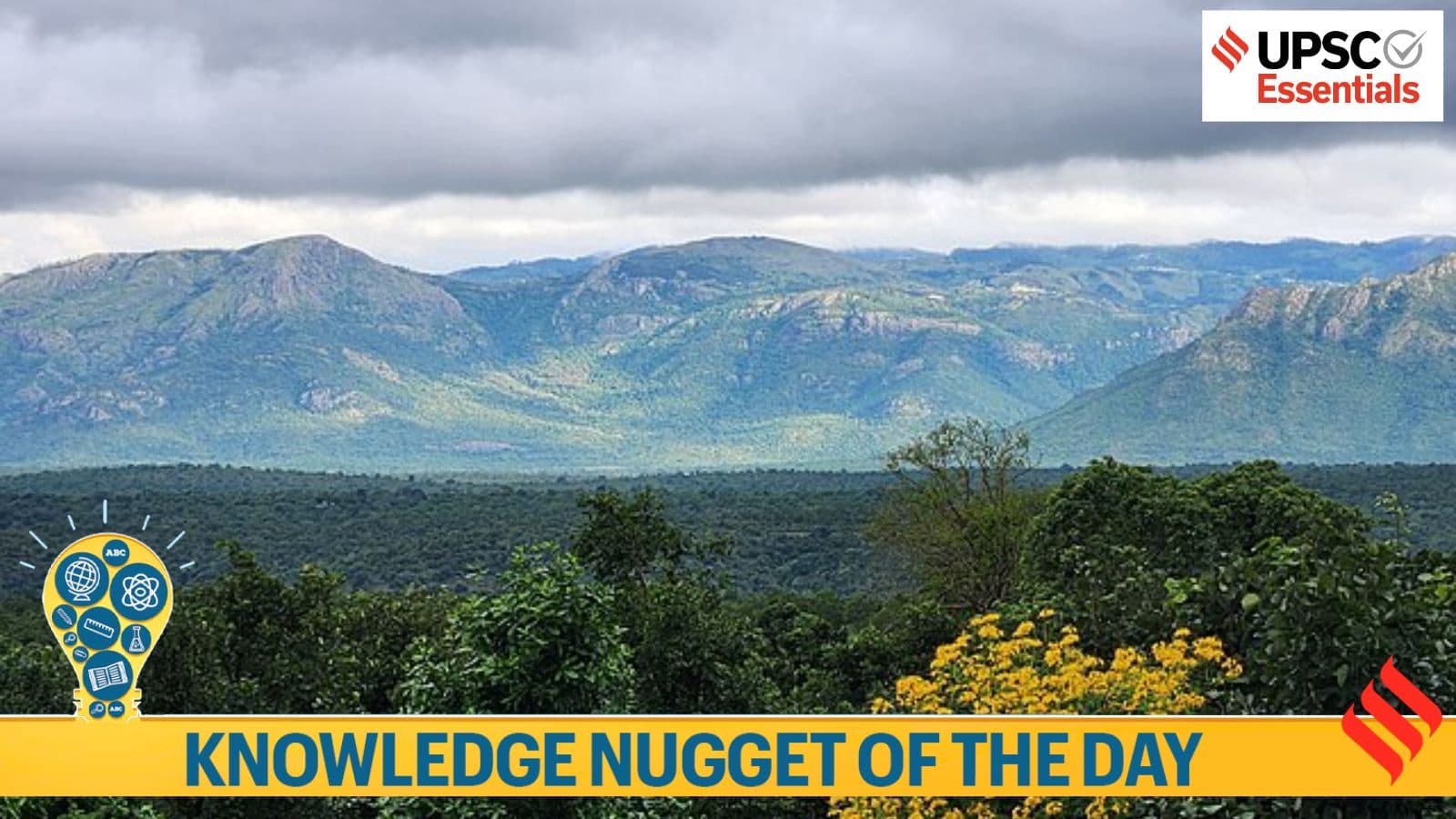
Take a look at the essential events, concepts, terms, quotes, or phenomena every day and brush up your knowledge. Here’s your UPSC Current Affairs knowledge nugget for today on Western Ghats. Twelve years after it issued the first draft notification, the Centre is finally ready to finalise and notify the demarcation of Ecologically Sensitive Areas (ESA) in the Western Ghats region, at least in the three states in which contentious issues have more or less been resolved, The Indian Express has learnt. In this context, let’s know about the Western Ghats and its significance. 1. Over 56,000 square km of land in six states are proposed to be demarcated as ESA, based on the 2013 recommendations of a high-level working group led by former ISRO chairman K Kasturirangan. 2. Activities like new mining and quarrying projects, setting up of thermal power plants, operation of most-polluting red-category of industries, new and expansion projects of buildings and construction with a built-up area of 20,000 square metres or above, are proposed to be completely banned or heavily restricted. 3. The Centre’s original draft notification had come in 2014, and has undergone five revisions since then, but disagreements with the state governments on the areas earmarked for declaration as ESAs within their jurisdictions have not been fully resolved. Even now, the states of Kerala and Karnataka have been holding out. Kerala wants its own area to be further reduced, while Karnataka has been continuing to question the entire exercise. What is ESA? The ESA is buffer areas demarcated around protected areas to minimise the negative impact of anthropogenic activities such as mining, hydropower projects, etc. 4. Gujarat, Goa and Maharashtra are the states where the areas to be demarcated are almost agreed upon, top officials from the Environment Ministry said. Tamil Nadu, the sixth affected state, does not have any major divergences on this issue. Story continues below this ad 5. Though the negotiations with Kerala and Karnataka are continuing, the Centre is learnt to be preparing to notify the ESA in the states where an agreement on this issue has either been achieved, or is close to being finalised. This is different from the previous attempts in which the Centre had issued draft notifications for ESAs in all the states together. 6. A final notification, when it happens, will give more legal teeth for protecting the fragile biodiverse area of the Western Ghats under the Environment Protection Act, 1986, and prohibit activities that threaten the sensitive environment of the region. What is the ecological significance of Western Ghats?



Discussion (0)