
Loading dispatches...
← Return to NewsroomPolitics
Why has India-U.S. trade deal been delayed? | Explained
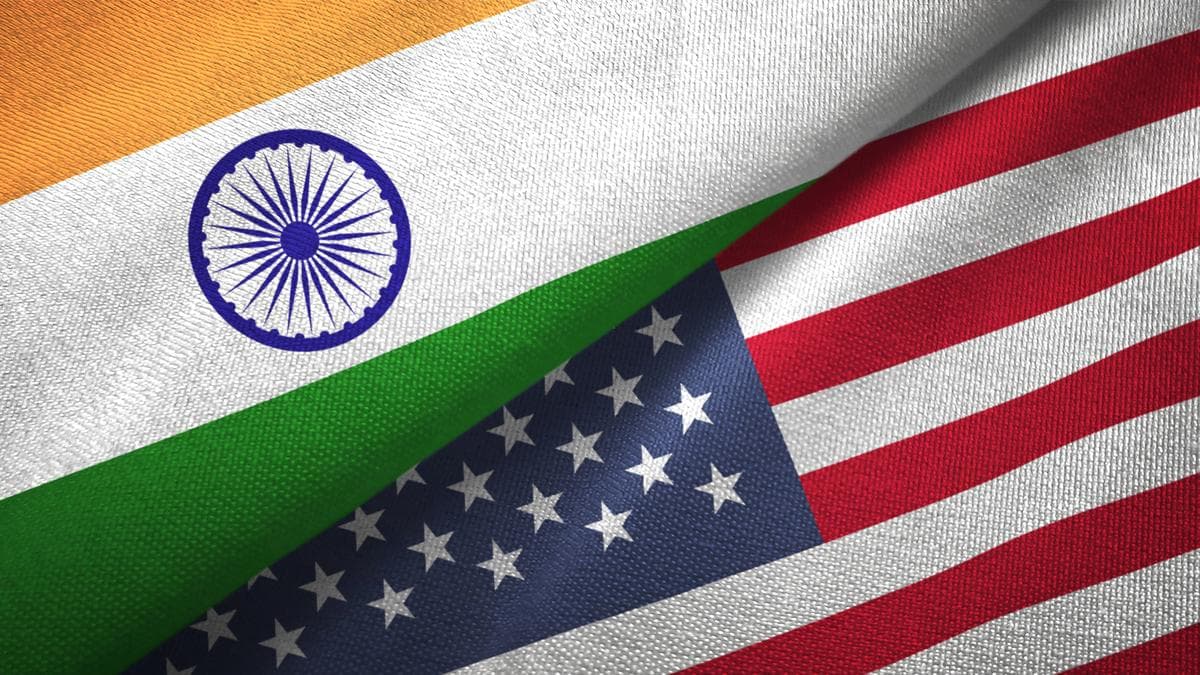
The story so far: India and the U.S. in February 2025 announced that they would work towards a comprehensive Bilateral Trade Agreement (BTA) that was to be finalised by Fall 2025. Then, in February 2026, they signed a framework agreement for an interim trade deal that was to be implemented by April-May 2026. Neither deal has come to pass. The Hindu explains the latest issues that have led to delays.Why was the BTA delayed?Soon after Prime Minister Narendra Modi and U.S. President Donald Trump announced their intentions to complete a BTA in February 2025, it became clear that a comprehensive deal would be elusive. The talk among government officials was about finalising at least the first tranche of the deal by Fall 2025 (September-November 2025).Talks intensified after April 2025 after Mr. Trump first announced his ‘Liberation Day’ reciprocal tariffs and then paused them for 90 days so he could negotiate deals with U.S. trade partners. However, despite several meetings, India and the U.S. could not finalise the first tranche, with key sticking points being India’s reluctance to open up its agricultural and dairy sectors, and its decision to buy oil from Russia.In two successive announcements in late July and early August, Mr. Trump raised tariffs on imports from India to 25% and then to 50%, with the latter hike being a penalty for India’s Russian oil imports. This decision froze negotiations for a few months before matters thawed once again and talks resumed in October.What is the interim deal?Once talks resumed, Mr. Modi and Mr. Trump in February 2026 signed a framework for an interim agreement on trade. This was not a trade deal itself, but the framework along which one could be worked out. At the time, Commerce Minister Piyush Goyal expressed his confidence that the deal would be completed by April, or latest by early May 2026.Under the framework, the U.S. was to reduce total tariffs on Indian imports to 18%, providing it a competitive advantage over its competitors. Both sides also committed to providing each other preferential market access in “sectors of respective interest”.Why has this deal been delayed?Soon after the framework was announced, the U.S. Supreme Court invalidated the reciprocal tariff system itself, saying the law it was based on — the International Emergency Economic Powers Act of the U.S. — did not allow for such tariffs. That removed a major foundation on which the deal negotiations had taken place.Since then, the U.S. has taken several decisions that have further added to the tariff uncertainty.Right after the Supreme Court’s decision, Mr. Trump announced that he would be imposing a flat 10% tariff on imports from all countries under the Trade Act of 1974, which he said authorised him to take action to address the U.S.’ ballooning trade deficit. This tariff was temporary, supposed to last 150 days up to July 24. Mr. Trump said he would raise it to 15%, but never did.The U.S. Court of International Trade deemed these illegal as well, but an appeals court put a stay on that order.What fresh investigations have added more uncertainty?In March, the office of the U.S. Trade Representative (USTR) said it had initiated two investigations under Section 301 of the Trade Act into several of its trade partners that could potentially see further tariffs being imposed on them.The first investigation against 16 economies, including India, was to see whether these economies were using excess manufacturing capacity to export to the U.S. in a manner that was hurting American businesses.The second one, against 60 countries including India, was to look into whether these countries had taken “sufficient steps” to prohibit the import of goods produced with forced labour and how the “failure to eradicate” these practices impacts U.S. workers and businesses.Under the forced labour investigation, the U.S. government in early June proposed to levy a tariff of 12.5% on imports from 54 countries, including India, as they have

The country recycled 2.99 million gross tonnes (GT) of ships in the year, marking a nearly 60% increase from 1.86 million GT in 2024. Representational file image. | The Ministry of Ports, Shipping and Waterways (MoPSW) said that according to the latest report by the UNCTAD, India increased its share of global ship recycling activity to 35.4% in 2025 from 30.1% in 2024.The country recycled 2.99 million gross tonnes (GT) of ships in the year, marking a nearly 60% increase from 1.86 million GT in 2024. The achievement reflects the impact of a series of maritime policy reforms and ease-of-doing-business initiatives undertaken by the government to strengthen the sector, it said.Union Minister of Ports, Shipping and Waterways Sarbananda Sonowal said India’s emergence as the world’s top ship recycling nation demonstrates the success of sustained policy reforms, industry participation, and adherence to international environmental and safety standards.“India’s emergence as the world’s top ship recycling nation reflects the success of sustained policy reforms, industry efforts and adherence to international environmental and safety standards under the visionary leadership of Prime Minister Narendra Modi,” Sonowal said.The MoPSW has introduced several measures to strengthen India’s ship recycling ecosystem.These include the implementation of the Recycling of Ships Act, 2019, which aligns the sector with the Hong Kong International Convention for the Safe and Environmentally Sound Recycling of Ships. India ratified the convention in 2019.The government has also provided ₹53.5 crore in financial assistance to modernise ship recycling yards, enabling 115 facilities to become compliant with international standards. In addition, the Ship-breaking Credit Note Scheme offers incentives to ship owners by allowing them to use credits earned from recycling vessels towards the purchase of new ships built in Indian shipyards.India is also pursuing the inclusion of its recycling facilities in the European Union’s approved list of ship recycling yards. Meanwhile, plans are afoot to nearly double the capacity of the Alang ship recycling yard to about 9 million light displacement tonnes (LDT), further strengthening the country’s position in the global market.With more than 16,000 vessels expected to be recycled worldwide over the next decade, India is well placed to consolidate its leadership in sustainable and environmentally responsible ship recycling. Published - June 23, 2026 01:04 am IST

The Indian government is in talks with the UAE to sell some of its flagship defence systems, including the supersonic cruise missile BrahMos, four Indian sources said, as the Gulf nation steps up arms procurement following the war in the West Asia.The discussions, which have not been previously reported, include the potential sale of India’s air defence system Akashteer, two sources with direct knowledge of the matter told Reuters.“The UAE has shown interest for a number of our weapon systems including BrahMos and Akashteer. The talks between India and UAE are at initial stages and are progressing fast,” said a third source with direct knowledge of the matter.Indian officials and the UAE Foreign Ministry did not respond to requests for comment.BrahMos, jointly developed by India and Russia, is among the world’s fastest cruise missiles and can be launched from land, sea and air platforms, while Akashteer is a fully automated air defence system developed by India’s state-run Bharat Electronics Limited and the Indian Army.The UAE is considering buying defence equipment from India and other sources after the Gulf nation was heavily attacked by Iran during the conflict in West Asia, and as it enhances its ability to respond to emerging threats. It also needs to protect the Strait of Hormuz, a crucial conduit for its energy exports.Earlier this year, the UAE signed a Memorandum of Understanding with South Korea to promote defence cooperation that would be worth more than $35 billion.“A diversified supplier base gives the UAE more strategic autonomy, and closer ties with India have the added benefit of not antagonising the U.S. as the countries remain allies,” Pearl Pandya, South Asia senior analyst at Armed Conflict Location and Event Data, a conflict monitoring group.According to data from the Stockholm International Peace Research Institute (SIPRI), the U.S. was the biggest exporter of arms to the West Asia between 2021 and 2025, supplying 54% of imports, followed by Italy at 12%, and France at 11%.Before clinching any BrahMos sale to the UAE, India would require Russia’s approval, as the 290 km-range missile is jointly developed. One source said this is unlikely to pose a hurdle given Moscow’s close ties with Abu Dhabi.Siemon Wezeman, a senior researcher with SIPRI’s arms transfers programme, said both the BrahMos missile and Akashteer system would potentially serve the UAE’s needs, even if international competition to sell Gulf states arms was increasing and the UAE had experience with other suppliers.India-UAE tiesThe UAE already has the U.S. MGM-168 ATACMS ballistic missile, according to the International Institute for Strategic Studies, which has a maximum range of 300 km. For air defence, it has the sophisticated U.S. THAAD and Patriot systems.Akashteer would help knit together information from other devices to combat an air threat, defence experts said.While India had a track record of reports of arms export deals that did not always bear fruit, Mr. Wezeman said upcoming sales to the UAE and other Gulf states were possible.Closer ties between India and the UAE in recent years have led to a flurry of deals on trade and energy, and a pact to jointly develop military hardware.The talks to sell India’s flagship weapons systems is further evidence of changing alignments in the region, and India sees its deepening partnership as a counter to the recent defence pact between Saudi Arabia and Pakistan, according to two Indian government sources.“The growing ties must also be understood against the backdrop of wider regional geopolitical dynamics, in particular the competition between Riyadh and Abu Dhabi for regional leadership,” Ms. Pandya said.“Expanded defence ties between India and the UAE essentially serve as a form of strategic signalling, allowing both countries to showcase the strength and depth of their partnerships,” she added.India’s defence exports surgeLast year’s four-day war between India and Pakista
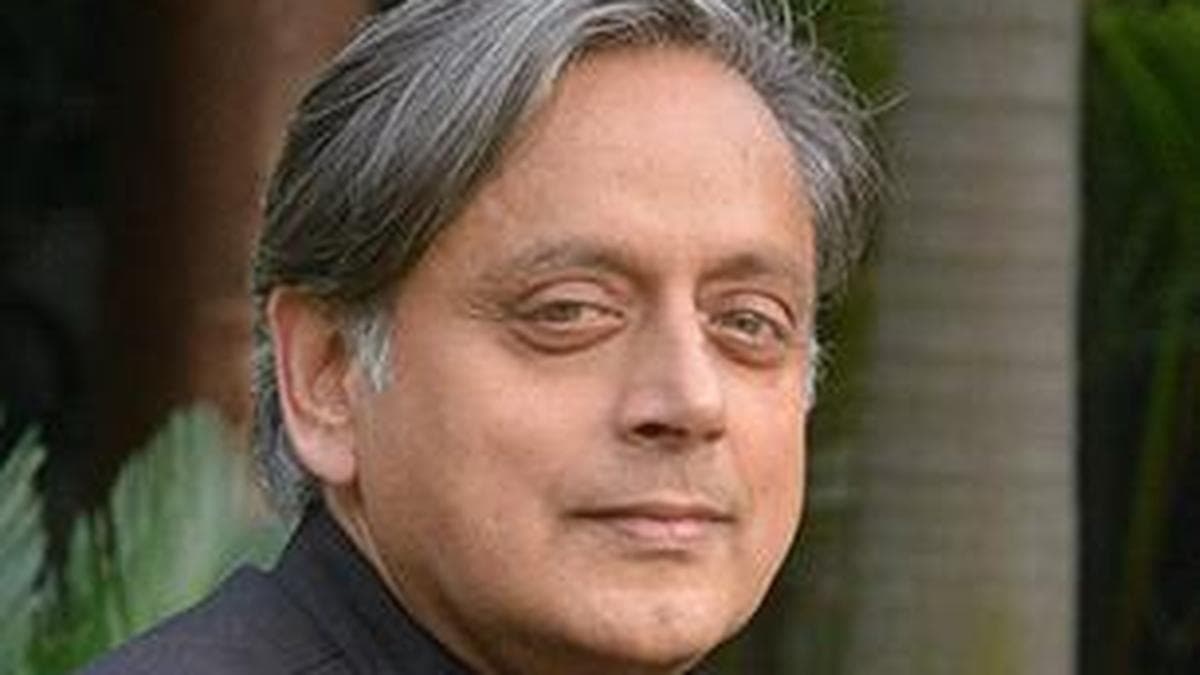
Senior Congress leader Shashi Tharoor's remarks about "encouraging progress towards normalcy" in Jammu and Kashmir, made after a meeting with LG Manoj Sinha, have not gone down well with his party in Jammu.Mr. Tharoor is the Chairman of the Parliamentary Standing Committee on External Affairs which is visiting Jammu and Kashmir."We discussed the situation in the State and the encouraging progress towards normalcy. When I arrived, he was chatting with the President of the Kashmiri Writers' Association and the Women's Organisation — a positive outreach that I welcomed. Many challenges remain, and much remains to be done, but I left the meeting feeling more positive than I have felt for a while," Mr. Tharoor posted on Sunday (June 21, 2026) while sharing a photograph with the Lieutenant Governor in Srinagar.Chief spokesperson of the J-K Pradesh Congress Committee, Ravinder Sharma, took exception to the post by Mr. Tharoor, suggesting he should have met the people of Kashmir. "People of Kashmir, too, were expecting you to meet them to gain a better understanding of the ground realities."At least you could have spared some time to meet your own party workers who have been fighting for the restoration of statehood, which was taken away seven years ago," Mr. Sharma posted on X.Amid the controversy, Mr. Tharoor on Monday (June 22) said the panel is in Jammu and Kashmir, not to evaluate conditions in the Valley, and its focus is limited to matters related to foreign affairs, including India-Pakistan and Sino-Indian relations, and passport services.Heading a 10-member Parliamentary Standing Committee on External Affairs, Mr. Tharoor arrived in Jammu on Sunday (June 21) evening.The panel met senior police officials on Monday (June 22) morning before reviewing the functioning of passport offices and Passport Seva Kendras in the region.Defending his statement, Mr. Tharoor said he had so far only met the Lieutenant Governor and had not interacted with a wider cross-section of people in the Valley.“I have not had a chance to see other things and listen to other people's voices. So I just want to make it very clear, this is not a visit about checking the conditions in Kashmir Valley,” Mr. Tharoor told reporters on the sidelines of the panel’s visit to the passport office here.The Congress leader said the committee is in the Union Territory to study three specific issues — India-Pakistan relations, Sino-Indian relations, and the functioning of passport offices and Passport Seva Kendras.“We're not here to look at domestic matters; it's not our business. We are the External Affairs Committee. That's it all. That's what I have to say,” he said.The parliamentary committee, which also includes MPs Asaduddin Owaisi, Arun Govil, Arvind Ganpat Sawant, Vijay Baghel, K. Laxman, B.S. Mubarak, Vikas Kumar and B.S. Rawat, is scheduled to visit the army headquarters for a briefing and the Jammu border before leaving for Kashmir on Tuesday (June 23). They are also scheduled to visit Ladakh as part of the study tour.Mr. Tharoor said the panel held detailed discussions with officials of the Regional Passport Office, the Ministry of External Affairs, the police and the postal department, with particular focus on delays in passport issuance in Jammu and Kashmir.The members emphasised the need to expedite passport processing and delivery, he said, describing the visit as meaningful. He said the panel would continue its assessment over the next four days before finalising its recommendations, adding that certain improvements in the existing system were required and would be reflected in its report.Earlier, the BJP MP Govil said Jammu and Kashmir has witnessed significant improvements and development over the years.“It [situation] feels very good now. Everything is going well. A tremendous amount of work is being carried out here every day,” he said. Recalling his earlier visits to the region, the actor-turned-politician said, “We have come here before, including a
Image used for representational purposes. File | According to a Lok Sabha bulletin, the Standing Committee on Finance has chosen 'Evolving Economic Conditions in the Country' as an additional subject for detailed examination during the year 2025-26.Parliamentary panels select their subjects soon after they are constituted. But they are at liberty to select additional subjects, keeping in mind evolving circumstances.Indian economy is estimated to have grown at 7.7% in 2025-26 (April-March), with a robust 7.8% growth in the January-March quarter.India's GDP had grown at 7.1% in the 2024-25 fiscal year.However, the RBI estimates GDP growth to slow to 6.6% in the current fiscal year as the ongoing conflict in West Asia pushes up cost of fertiliser and fuel globally. India is a net importer of both crude oil and fertiliser.The committee is likely to seek input from the finance ministry, the Reserve Bank of India (RBI), economists, and other stakeholders before finalising its report containing its observations and recommendations.The examination is expected to cover topics, including economic growth, inflation, employment, investment trends, fiscal management, banking sector developments, trade and the impact of global developments on India.The committee's study assumes significance at a time when India is navigating challenges arising from geopolitical tensions, supply chain disruptions, trade uncertainties and fluctuations in commodity prices, while seeking to sustain high economic growth.For the 2026-27 period, the Standing Committee on Finance, chaired by Bhartruhari Mahtani, has chosen subjects spanning across ministries, including Finance, Corporate Affairs, Planning (NITI Aayog), and Statistics. Published - June 21, 2026 10:51 am IST

Discussion (0)