
Loading dispatches...
← Return to NewsroomPolitics
Japan PM arrives in Delhi; delighted to host you on your first visit to India, says Modi

In this image posted on July 1, 2026, Japanese Prime Minister Sanae Takaichi waves upon her arrival at the airport, in New Delhi. Photo: @takaichi_sanae/X via PTI Photo Japanese Prime Minister Sanae Takaichi arrived in New Delhi on Wednesday (July 1, 2026) on a three-day visit to India, during which she will hold talks with Prime Minister Narendra Modi to strengthen bilateral cooperation across trade, investment, defence and other key sectors.This is Ms. Takaichi's first official visit to India. She is visiting at Mr. Modi's invitation from July 1 to 3 for the 16th India-Japan annual summit, the MEA earlier said.Ms. Takaichi posted on X photos of her arrival in India.Sharing her post, Mr. Modi wrote: "A very warm welcome to India, Prime Minister Sanae Takaichi." "We are delighted to host you on your first visit to India, and I look forward to our wide-ranging discussions tomorrow that will further deepen the India-Japan Special Strategic and Global Partnership. Through our joint efforts, we will continue to advance peace, stability and prosperity in the Indo-Pacific and beyond. @takaichi_sanae," he said.According to a media advisory issued by the MEA on June 30, Ms. Takaichi will meet Mr. Modi at the Hyderabad House on Thursday.Earlier, External Affairs Ministry spokesperson Randhir Jaiswal posted on X about her arrival in Delhi and said her visit marks an important step in taking the bilateral ties forward."Prime Minister Sanae Takaichi! A very warm welcome to Prime Minister Sanae Takaichi of Japan, who arrives in New Delhi on an Official Visit. PM Takaichi was received by MoS @DrJitendraSingh," "The visit marks an important step in taking forward the Special Strategic and Global Partnership between India and Japan," he said.He also shared some photos of her arrival."The Summit will provide an opportunity for both sides to review and strengthen the full spectrum of bilateral cooperation as well as exchange views on regional and global issues of mutual interest," the MEA had said. Published - July 01, 2026 10:57 pm IST

Chennai-headquartered The ePlane Company has completed assembly of its full-scale electric vertical takeoff and landing (eVTOL) aircraft, the e200X, integrating the aircraft’s core subsystems into a single structure. The completed prototype, designated PT-01, moves the e200X from design and simulation into the physical testing phase that precedes flight. The aircraft is designed as one airframe serving three markets: a passenger air taxi, an urban cargo carrier, and an air ambulance.Satya Chakravarthy, Founder of The ePlane Company said, “This announcement is about the reveal of our first full scale working prototype, which we have been putting through ground tests in the last couple of months as just an airframe but have come to the point of fitting the vertical and forward propulsion units as in the full aircraft for further ground testing with them followed by flight tests in the next couple of months—the first time full scale eVTOL is being tested on ground and in flight in India.” This is the first step towards the next two prototypes that would come out towards the end of this year / early part of next year to undergo flight tests towards certification, he added.The company said that a completed full-scale airframe is a decisive stage in any aircraft programme, because it establishes what simulation cannot. It validates that the design can be manufactured at full size, that the tooling and supply chain to build it are in place and functioning, and that the subsystems integrate physically into a single structure. It is the stage that separates designing an aircraft from being able to test one.The e200X will now enter ground testing, in which the structure and onboard systems are subjected to aerodynamic and mechanical loads on specialised equipment at ePlane’s facility, followed by flight testing and the pursuit of Type Certification. According to the company, developing a full-scale eVTOL is among the most demanding challenges in contemporary aerospace, and only a small number of programmes worldwide have carried a design through to a complete, full-scale aircraft. With the e200X, ePlane is among them.The e200X has been designed and assembled at ePlane’s own facilities, with its major systems, the propellers, the airframe structure, the landing gear and the battery pack, developed in-house rather than imported as finished assemblies. In a category where many developers rely on a global supply chain, that vertical integration gives ePlane unusual control over performance, cost and iteration speed.In May 2023, the company received the design organisation approval (DOA) from the DGCA—the first private company to receive it in India. “Next, we applied for the type certification of the propeller and the eVTOL aircraft itself, both of which were accepted—the only private company to have its TC applications accepted (only company, public or private to have the propeller TC application accepted),” Mr. Chakravarthy said. He added: “We expect the propeller TC to be obtained by the end of this year (the only company to get this in this part of the world apparently), and the aircraft TC by next year end or a couple of months later perhaps. So, we have been progressing all along.”When asked about the challenges pertaining to vertiports and charging infrastructure in India, Mr. Chakravarthy said: “We have the distinction of being the most compact-footprint eVTOL in the world, so we can use existing helipads in and around a city as vertiports, to start with, before new vertiports are developed. The charging infrastructure required for us is the same as that used for long distance electric buses and trucks, so that exists too. The only remaining challenge is locating the existing chargers at the existing helipads.” Published - June 25, 2026 01:48 am IST
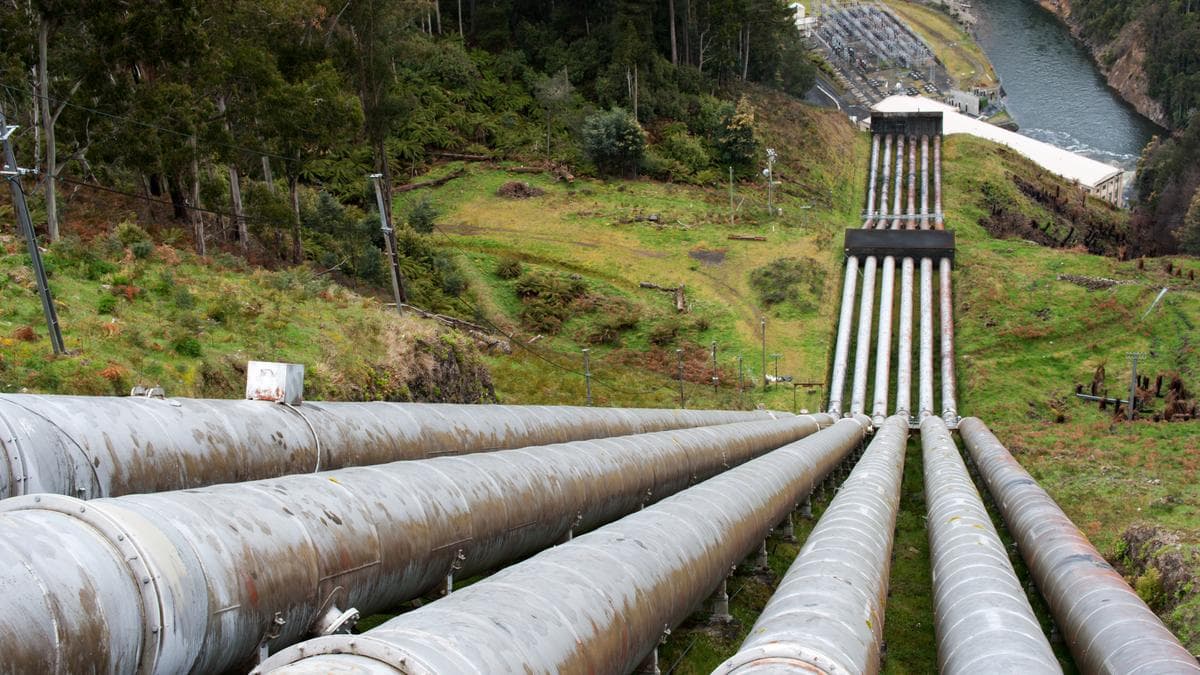
India is targeting 100 gigawatts of pumped storage capacity by 2035-36, but it is nowhere near what China is pursuing, the 2026 Global Hydropower Outlook said.The International Hydropower Association (IHA) released the outlook on Wednesday (June 24, 2026), highlighting China-led East Asia’s continued leadership in global hydropower development.According to the IHA report, India topped the chart among Central and South Asian countries by adding 4,267 megawatts of hydropower in 2025, followed by Nepal with 468 MW, Israel with 344 MW, the United Arab Emirates with 250 MW, and Pakistan with 156 MW. India also had the highest installed capacity with 56,336 MW, ahead of Russia with 54,361 MW and Iran with 13,295 MW.Power play: On hydropower projects and the environment However, China’s dominance in global hydropower development grew in 2025 when it began construction on the Yarlung Zangbo River Hydropower Project. The IHA outlook says the Yarlung Zangbo project would generate roughly three times more electricity than the Three Gorges Dam, which has an installed capacity of 22500 MW.The Yarlung Zangbo, also called Yarlung Tsangpo, flows into India as the Siang River in Arunachal Pradesh before meeting two others in Assam to form the Brahmaputra. India is pushing the 11,000 MW Siang Upper Multipurpose Project in Arunachal Pradesh as a defensive countermeasure against the 60,000 MW Yarlung Tsangpo project in Tibet’s Medog County.India justifies the proposed Siang mega-dam as a strategic buffer to regulate water flow, prevent sudden Chinese water diversions, and mitigate downstream flood risks.Asian power demandThe IHA outlook says growth in Asia is driven by rapid renewable energy deployment, rising electricity demand, and increasing investment in long-duration energy storage and regional grid integration.The East Asia and Pacific region generated 1,854 TWh (terawatt-hour) of electricity from hydropower in 2025 and added 14 GW of new hydropower capacity, including 7,605 MW of pumped storage. The total installed hydropower capacity now stands at 590 GW, with pumped storage accounting for 106 GW.Often referred to as a ‘water battery’, pumped storage capacity surpassed 200 GW globally, cementing its status as the world’s largest source of long-duration energy storage. A “record-breaking” 11.7 GW of pumped storage was added in 2025.The IHA report cites India’s Central Electricity Authority (CEA) as saying that the country has a pumped-storage potential of 288 GW, one of the largest opportunities globally. “The CEA has outlined a roadmap targeting 100GW of pumped storage capacity by 2035-36,” the report adds.“China remains the leading contributor in global hydropower development, accounting for more than 40% of worldwide hydropower capacity additions in 2025. More than 300 GW of hydropower is currently under construction in the country, including 217.5 GW of pumped storage,” the IHA outlook says.“This reflects a strategic shift from capacity expansion alone towards system-level value: strengthening grid flexibility, reliability, energy security, and hydro-wind-solar-storage integration,” it says.Geopolitical tensionsIHA president Malcolm Turnbull says countries are increasingly focusing on long-duration storage and resilient domestic power generation due to geopolitical tensions disrupting energy imports.“As electricity systems become more dependent on variable renewables, and geopolitical tensions make reliance on imports more challenging, countries are increasingly recognising the importance of flexibility, long-duration storage and resilient domestic generation. Hydropower and pumped storage are uniquely positioned to provide these services at scale,” he said.IHA’s chief executive officer, Eddie Rich, notes the rapid acceleration of pumped storage across the globe. “Record additions, expanding pipelines, and growing policy support all point to a recognition that the clean energy transition cannot succeed without large-scale flexibility

Veteran American pianist Chad Lawson describes his latest album, Awakening: The Stillness Within, as an attempt to hold hope, grief and memory within what he calls stillness.To realise that vision, Chad collaborated with flautist Rasika Shekar, sitar maestro Purbayan Chatterjee, singer Nush Lewis and sound healer Paayal Lal on the nine-track album. Produced by Vedam Records in collaboration with Decca Records, a British-American record label, it blends Western classical compositions with Indian cadences, mantras and healing frequencies. In doing so, it taps into the booming wellness music genre, rooted in Indian musical traditions and gaining increasing global attention. Chad Lawson | So much of what the rest of the world now calls wellness music grew out of traditions that have been alive in India for centuries,” says Chad, who has previously topped the Billboard Top Classical Albums chart with his interpretations of Frédéric Chopin’s works.So, is wellness music a fact or a fad?“Music definitely has a calming effect. From infants lulled to sleep to older adults, music is not limited by age or demographic. It is a powerful auditory stimulus, a biological phenomenon rather than merely a socio-cultural one,” says psychologist Shantala Hegde, faculty-in-charge of the Music Cognition Lab, which advances research in music cognition and neuromusicology, and additional professor of Neuropsychology at the National Institute of Mental Health and Neurosciences (NIMHANS), Bengaluru.Shantala points out that Indian psychology is deeply intertwined with philosophy, yoga and Ayurveda. The latter two were conceived with general wellness in mind, with mental health seen as a by-product.“Similarly, certain forms of music were designed with wellness in mind. Psychologists understand that some ragas evoke peacefulness and devotion rather than serve as a cure,” she says.However, Hegde adds that existing research remains contradictory and the evidence is insufficient to prescribe music as an intervention. “Background music can influence cognitive function, attention and processing speed, but it may not benefit everyone,” she says.Growth of wellness labelsDevraj Sanyal, chairman and CEO, India and South Asia, Universal Music Group, says, “A few years ago, we started hearing about mental health issues more than ever before,” adding that this led to the formation of Vedam Records in September 2024. The label delves into the Vedas and India’s traditional wellness practices, such as yoga, while classifying wellness music into five verticals — yoga, meditation, focus, sleep, and chakra balancing.In May 2025, Vedam Records collaborated with Apple Music to launch Sound Therapy, releasing music for focus, relaxation, and sleep — blending songs with sound waves to attain the desired results. Featured artistes include Imagine Dragons, Katy Perry, Kacey Musgraves, Ludovico Einaudi, AURORA, Jhené Aiko, Chelsea Cutler, and Jeremy Zucker.“The top search keywords from a wellness perspective are focus and study, followed by guided meditations and yoga/chakra music. The last one is sleep,” says Devraj. Frequency music is another genre on the rise, he says, referring to music that uses precisely calibrated sound frequencies such as binaural beats, white noise, and so on. These claim to stimulate the brain’s rhythmic patterns, creating an environment of auditory balance. According to Devraj Sanyal, the top search keywords from a wellness perspective are focus and study, followed by guided meditations and yoga/chakra music | “We observed a requirement, for instance, during the exam season, when we saw our music and videos being streamed. There was a huge upswing in focus and calming music. Every single song has a specific intent, and every genre has a
Discussion (0)