
Loading dispatches...
← Return to NewsroomWorld
Iran must pledge to stop shooting at ships in Strait of Hormuz, US officials say

Meanwhile, a delegation from Qatar travelled to Iran on Friday for talks aimed at defusing tensions and easing navigation through the Strait of Hormuz - the vital waterway where some 20% of the world's oil and liquefied natural gas passes.Trump wrote in a post on Truth Social earlier on Friday: "The Islamic Republic of Iran has asked us to continue 'talks.' "We have agreed to do so, but the United States has stated to them, in no uncertain terms, that the Cease Fire is OVER!" It is not clear when those talks will be held. Vice-President JD Vance, Secretary of State Marco Rubio, as well as special US envoys Steve Witkoff and Trump's son-in-law Jared Kushner, are expected to oversee negotiations for the US. According to Iranian media, Araghchi is in Oman for talks with Omani officials. A US official said American technical teams would not be present in Oman, but would be in touch with the Omanis and Qataris as developments occurred.In the early hours of Saturday, Trump also responded to reports that Iran had plans to assassinate him. The US would "completely decimate and destroy all areas" of the country in retaliation to such an attack, he said.The Wall Street Journal and other US media reported this week that Israel had shared intelligence with Washington that Iran had recently devised a plan to assassinate the US president.However, Trump denied that Tehran had made a fresh plan or that Israel was the source of any intelligence. He told the New York Post in an interview that he had been "No. 1 [on Iran's kill list] for a long time".There were also open calls for Trump's death at the funeral of Iran's late Supreme leader Ayatollah Ali Khamenei, who was killed in an Israeli strike on his residence in Tehran on 28 February.On Saturday, his son and successor, Mojtaba Khamenei, released a written message that said vengeance for his father's killing was "inevitable".The "matter depends neither on my personal existence nor on that of other officials. Whether we are present or not, it will come to pass," Khamenei said.
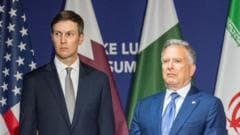
The memorandum of understanding (MoU) brokered by Pakistan and Qatar less than two weeks ago committed the countries to halt military operations on all fronts, including Lebanon, and immediately reopen the Strait of Hormuz, through which about 20% of global oil and gas shipments pass.They also gave themselves at least 60 days to reach a final deal that covers Iran's nuclear programme, US sanctions and a permanent truce.Pakistani and Qatari mediators said encouraging progress was made at the first round of talks held in Switzerland a week ago, which US Vice-President JD Vance and Iran's Parliamentary Speaker Mohammed Bagher Ghalibaf attended.They also said a "communication line" had been formed to enable the safe passage of commercial vessels through the Strait of Hormuz.But that failed to prevent the recent exchanges of strikes, which began when Iran attacked a cargo ship on Thursday following efforts to open Oman's territorial waters to both inbound and outbound traffic on the southern side of the strait. Iran had warned vessels that the only route was through its own waters on the northern side.On Sunday night, a US official said both sides would "stand down for now", and that vessels could "move freely" in and around the strait. Technical talks would also "continue on all areas of the MoU", the official added.The next day, Iran's deputy foreign minister and lead technical negotiator, Kazem Gharibabadi, denied that there were plans for technical talks this week.US President Donald Trump responded by saying that Iran had requested a meeting in Qatar's capital on Tuesday, and White House Press Secretary Karoline Leavitt announced that Witkoff and Kushner would fly to Doha for "high-level meetings".On Tuesday, Qatar's foreign ministry spokesman told a news conference that the two US envoys had arrived in Doha for talks with mediators but not Iranian officials."The talks will be around all regional issues which are of concern, including, of course, the negotiations with Iran, but also including Lebanon and other files in the region," he said."So, they are not here for direct negotiations with the Iranians or related meetings."He added: "To the best of my knowledge, there are no direct meetings scheduled between the two parties in the coming days."A senior Trump administration official told the BBC's US partner CBS News that very positive conversations had been held between Witkoff, Kushner and regional leaders.CBS reported the official as saying good progress in technical talks continues.Ansari confirmed that technical talks between lower-ranking officials would continue this week and could later be elevated to a senior level."We have a track on the nuclear side. We have a track on the economic and state performance issue. We have a track on security and the regional security," he added.Iranian Foreign Ministry spokesman Esmail Baqai told a news conference in Tehran that Iranian officials were likely to hold talks with mediators in Doha on Wednesday to discuss implementation of provisions in the MoU, including one concerning the release of Iranian assets frozen under US sanctions."No meeting at any level with the American side has been scheduled for the coming days," he added.Ansari said the release of $6bn (£4.5bn) of the $12bn in frozen Iranian assets held in Qatar depended on progress in talks between the US and Iran that had not yet happened.Baqai also said that Iran would "do whatever is necessary to safeguard its interests" over the Strait of Hormuz and implement related provisions in the MoU.

NewsFeedIranian President Masoud Pezeshkian arrived in Pakistan on Tuesday for talks with mediators seeking a permanent end to the US-Israeli war on Iran. The visit comes as mediators continue efforts to advance a new peace deal, with Pakistani Prime Minister Shehbaz Sharif saying Iran’s ballistic missile programme was not discussed and was never part of the negotiations.Published On 23 Jun 2026

Pakistan hosts Iranian President Masoud Pezeshkian after mediating the breakthrough US-Iran negotiations in Switzerland.Islamabad, Pakistan – Iranian President Masoud Pezeshkian has alanded in Pakistan for a state visit – his first overseas trip since the United States and Israel launched strikes on Iran on February 28.His Pakistani counterpart Asif Ali Zardari, Prime Minister Shehbaz Sharif, and Deputy Prime Minister and Foreign Minister Ishaq Dar received the Iranian leader at a military base near capital Islamabad on Tuesday.Recommended Stories list of 4 itemslist 1 of 4Why Iran’s President Pezeshkian is heading to Pakistan after US talkslist 2 of 4What are the key outcomes of the Iran-US talks, what next?list 3 of 4Marco Rubio heads to Middle East to address Iran MoU, Hormuzlist 4 of 4Qatar’s PM tells Al Jazeera progress made in US-Iran talksend of listDuring his day-long visit, Pezeshkian, who is accompanied by a high-level delegation that includes ministers and senior officials, will hold talks with Sharif, and is also expected to meet with Zardari.According to Pakistan’s Ministry of Foreign Affairs, Senate Chairman Yousaf Raza Gilani, National Assembly Speaker Ayaz Sadiq, and Deputy Prime Minister and Foreign Minister Ishaq Dar will also call on the Iranian leader.“During the visit, the two sides will review the full spectrum of bilateral relations and explore new avenues to further deepen cooperation across diverse sectors, including trade, energy, border security, people-to-people exchanges, and regional connectivity,” the ministry said in a statement on Monday.Pezeshkian’s visit follows the crucial first round of talks between the United States and Iran, mediated by Pakistan and Qatar, in the Swiss city of Bürgenstock to end the war on Iran.As part of the agreement, the US will release $12bn in frozen Iranian funds. The US has also announced a temporary easing of international sanctions on Iran, allowing it to sell its oil and petrochemicals until August 21. The talks concluded with a 60-day roadmap towards a final deal.It is Pezeshkian’s second visit to Pakistan as president. His first, in August 2025, came days after the 12-day Iran-Israel war, and was also his first overseas trip following that conflict.The visit is widely viewed as an expression of gratitude for Pakistan’s role in brokering the Islamabad Memorandum of Understanding, signed on June 18 by US President Donald Trump and Pezeshkian, with Prime Minister Sharif signing the document as a mediator.The Islamabad MoU launched the formal diplomatic process now under way in Switzerland.“The visit will also provide an important opportunity to discuss ongoing diplomatic engagements following the signing of the Islamabad Memorandum of Understanding, as well as regional and international developments of mutual interest,” Pakistan’s Ministry of Foreign Affairs said in its statement.
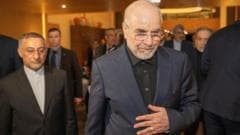
The US-Iran talks began on Sunday, after last week's agreement to reach a deal in 60 days.Late Sunday night, the US diplomat said discussions were focused on "clarifying some of the confusing messaging from Iran" on the re-opening of the Strait of Hormuz, enforcing the ceasefire in southern Lebanon and "elements" of a nuclear deal.Earlier, Trump had threatened to attack Iran if it did not stop Hezbollah amid continued clashes with Israel in Lebanon. Iran dismissed the warning, saying it was prepared to fight.The US diplomat said both delegations, who are meeting in the Swiss city Lucerne, would use "today's work as a starting point for ongoing technical talks going forward".Last week's initial agreement includes a commitment to reach a final deal within 60 days, as well as an end to fighting on "all fronts" - including in Lebanon - and the reopening of the Strait of Hormuz.However, there has since been an upsurge in fighting between Hezbollah and Israeli forces in southern Lebanon, and Israeli air strikes that the health ministry says have killed dozens of Lebanese including women and children.That escalation led the US to declare a new ceasefire between Israel and Hezbollah on Friday. Continued clashes and air strikes prompted Iran on Saturday to announce it had shut the Strait of Hormuz - though tracking data shows vessels have continued to pass through it.As the talks in Lucerne between the US and Iranian delegations began, Trump posted that Iran "must immediately stop their highly paid PROXIES in Lebanon from causing trouble" and threatened to "hit Iran very hard again" if they did not.Iran's lead negotiator Mohammad Bagher Ghalibaf responded by saying: "Don't they think that if their threats had any effect, they wouldn't be in this desperate situation today?... No matter how much they talk, it is we who take action."On Sunday, fighting was reported to have diminished but Israeli Prime Minister Benjamin Netanyahu insisted that the Israeli military would remain in southern Lebanon for as long as is necessary to protect northern Israel.Hezbollah leader Naim Qassem has rejected any Israeli military presence in southern Lebanon and said Hezbollah would defend itself.Speaking before the talks at the Swiss resort of Bürgenstock, US lead negotiator Vice-President JD Vance said Trump had asked negotiators to "turn over a new leaf". He added that if Iran's leadership was willing to give up being a "driver of regional instability" and its "nuclear weapons ambitions for the longer term", then the US "is willing to fundamentally transform our relationship with that country".Iran has insisted its nuclear programme is peaceful.Vance was joined by Trump's son-in-law Jared Kushner and special envoy Steve Witkoff. Ghaibaf was accompanied by Iran's Foreign Minister Abbas Araghchi.Also in Switzerland were Pakistan's prime minister and army chief and the Qatari prime minister. Pakistan has acted as a mediator throughout the war and hosted a previous round of negotiations between the US and Iran. Qatar has also mediated and late on Sunday Qatari Prime Minister Sheikh Mohammed bin Abdul Rahman Al Thani said he welcomed the continuation of US-Iran talks.ReutersJD Vance said Trump had asked negotiators to "turn over a new leaf"Under the deal, Iran was to reopen the Strait of Hormuz, the key shipping channel through which 20% of the world's oil and natural gas travels. Its effective closure had driven up fuel prices and disrupted the global economy. The US also agreed to lift a military blockade on ships going to and from Iranian ports.The initia
Live updates: US-Iran talks stall after Trump threatens Tehran’s delegation CNN Trump and Iran's negotiator trade warnings as talks held in Switzerland BBC Vance heads abroad for Iran negotiations, and a cheating scandal hits India: Weekend Rundown NBC News Trump threatens Iran with fresh strikes as Vance leads peace talks in Switzerland CNBC Trump threatens Iran over Hormuz as JD Vance holds peace talks The Washington Post
S. and Iran launch direct negotiations in Switzerland Axios Vance lands in Switzerland to help kick off new round of Iran talks Fox News Vance meets top Iranian officials as U.S. looks to prod Iran to 'turn over a new leaf' PBS



Discussion (0)