
Loading dispatches...
← Return to NewsroomWorld
China slaps export controls on dozens of Japanese entities

China’s Ministry of Commerce says measures are a response to Tokyo’s ‘new militarism’.China has slapped export controls on dozens of Japanese entities over Japan’s alleged “militarism”, Beijing’s latest economic salvo in a months-long feud with Tokyo.China’s Ministry of Commerce said on Monday that it added 20 organisations to its blacklist of entities barred from receiving dual-use items with potential military applications, citing national security and non-proliferation concerns.Recommended Stories list of 4 itemslist 1 of 4Putin says Ukraine proposed halt to deep strikeslist 2 of 4Venezuelans angry with government as time runs out to rescue survivorslist 3 of 4Australian man charged with murder after Thai girl’s body found in suitcaselist 4 of 4Oil prices rise as US, Iranian strikes threaten Strait of Hormuz reopeningend of listThe blacklisted entities include the state-affiliated National Institute for Defense Studies, Naval Systems Research Center and Ground Systems Research Center, as well as firms Mitsubishi Precision, MHI Logitech, and Kawajyu Gifu ManufacturingThe Commerce Ministry also added 20 organisations, including Mitsui E&S, Terra Drone and Hitachi Advanced Systems, to its watch list of entities that are required to submit a risk assessment and a written assurance that their exports will not contribute to Japan’s military capabilities.China’s move is “entirely legitimate, reasonable, and lawful”, and does not affect “normal China-Japan economic and trade exchanges”, a Commerce Ministry spokesperson said.“Regrettably, for some time now, Japan has shown no remorse; instead, it has gone further down the wrong path, accelerating its push towards ‘new militarism,’ speeding up ‘remilitarisation,’ deploying offensive weapons, and launching offensive missiles overseas,” the spokesperson said.Minoru Kihara, Japan’s chief cabinet secretary, urged Beijing to revoke the measures, calling such moves “unacceptable”.The latest export controls come after Beijing in February added 20 Japanese entities to its blacklist and 20 others to its monitoring list amid an escalating spat over self-governing Taiwan.China and Japan have long had an uneasy relationship due to historical and territorial disputes, but their ties took a sharp turn for the worse late last year after Japanese Prime Minister Sanae Takaichi suggested that Tokyo could militarily intervene if China attempted to take control of Taiwan.Takaichi’s remarks that a Chinese invasion could justify Japan exercising the right of collective self-defence under its anti-militarist constitution enraged Beijing, which considers Taiwan an integral part of its territory that must be “reunified” with the Chinese mainland.Takaichi has made national defence a priority of her administration since winning the leadership of the conservative Liberal Democratic Party and taking office in October, raising military spending to 2 percent of gross domestic product (GDP) and pushing to amend the pacifist clause of the country’s war-renouncing constitution.
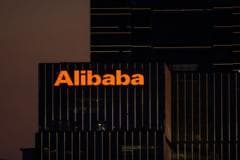
E-commerce giant Alibaba has launched a high-stakes legal challenge against the US government, suing to get off a Pentagon blacklist that claims it is linked to the Chinese military. The US Department of Defense (DoD) has said that because Alibaba complies with Chinese technology regulators, it is effectively an arm of the military. In the lawsuit filed in a California federal court Alibaba pushed back, claiming the determinations "have no basis in fact or law".The challenge comes after the Pentagon recently expanded its blacklist of companies it will not be able to do business with from the end of the month to include massive tech names like Baidu, BYD, and Nio.The defence department put Alibaba on the blacklist, saying the firm was a "military-civil fusion contributor to the Chinese defence industrial base" because of its regulatory ties to Beijing. But Alibaba countered the argument, saying none of the members of its independent board had any military affiliation.Every multinational operating in China - including American firms - must follow the exact same local rules, it noted. Its platforms, Alibaba said, are built for retail and cloud computing, not weapons or intelligence. "Alibaba is not a Chinese military company nor part of any military-civil fusion strategy," the company told the BBC."The decision to place Alibaba on the 1260H list is arbitrary and capricious, and we are filing a lawsuit against the Department of War to demand removal from the list," it added.While the blacklist does not freeze finances immediately, it triggers a brutal operational penalty on 30 June. Starting next week, the Pentagon is legally banned from doing business with any blacklisted firm. Crucially, the law also extends to any US contractor that shares a lobbyist or law firm with a blacklisted entity. In Alibaba's case, the company argues that this restriction creates a functional blockade, forcing its long-term American advisers to sever ties to protect their own lucrative defence contracts. The rule effectively strips the company of its political and legal voice in Washington at the exact moment it needs to defend itself. According to the complaint, Alibaba had previously asked to meet with the agency to address the Chinese military affiliation concerns, which included presenting evidence of its US economic contributions. However, the tech giant says that even after its submissions, the agency did not raise any concerns with the firm nor did it request additional information. Rather, it "designated Alibaba without notice or a fair hearing", the compliant notes. The DoD declined to comment on the matter, telling the BBC, "We do not comment on ongoing litigation".
The U.S. and Chinese flag at the Great Hall of the People prior to the state dinner of President Donald Trump and Chinese President Xi Jinping on May 14, 2026, in Beijing. Mark Schiefelbein/AP hide caption toggle caption Mark Schiefelbein/AP BEIJING — China on Monday announced sanctions on 10 American military-related companies in response to a recent U.S. move that bars some leading Chinese tech companies from defense contracts. The Commerce Ministry said that Chinese companies would be blocked from exporting "dual-use" items to the 10 companies, which include military drone makers and some involved in rare earth mining. Dual use refers to goods that can have military as well as non-military applications. The ministry said the export ban was both to safeguard China's national security and in response to what it called the U.S. government's "wrongful expansion of its so-called List of Chinese Military Companies." Separately, the Finance Ministry said that government entities would be prohibited from buying products from 46 American companies including multiple units of Lockheed Martin, Raytheon and General Dynamics. A brief statement did not give any reason for the prohibition. Earlier this month, the U.S. Defense Department added several tech companies including Alibaba and Baidu to its list of firms that it says have links to the Chinese military. Baidu said the suggestion that it is a military company is "totally baseless." The designation prevents them from getting U.S. military contracts. The Commerce Ministry said at the time that the American sanctions run counter to the consensus that Chinese leader Xi Jinping and U.S. President Donald Trump reached during Trump's visit to China in May. In Monday's announcement, the ministry said that companies or individuals in third countries are prohibited from transferring dual-use items from China to the sanctioned American firms. It also said that Chinese companies could apply for export approval for goods that are "genuinely necessary." The 10 companies are AVEOX in Simi Valley, California; Red Cat Holdings and Teal Drones, both in South Salt Lake, Utah; IMSAR in Springville, Utah; Jaia Robotics in Bristol, Rhode Island; Ball Aerospace & Technologies in Broomfield, Colorado; Oshkosh Defense in Oshkosh, Wisconsin; L3Harris Maritime Services in Norfolk, Virginia; MP Materials in Las Vegas; and USA Rare Earth in Stillwater, Oklahoma.



Discussion (0)