
Loading dispatches...
← Return to NewsroomPolitics
Science should reach society with integrity and transparency: Soumya Swaminathan

Dr. Soumya Swaminathan said that while India celebrates scientific excellence, it alone is not enough and that our science must also become increasingly relevant. File | Soumya Swaminathan, Chairperson of the M.S. Swaminathan Research Foundation (MSSRF). She was virtually delivering the convocation address at the Indian Institute of Science (IISc), Bengaluru, on Friday (July 10, 2026).“The challenge before us is not only to produce good science or better science but to ensure that science reaches society with integrity, transparency and compassion. When you see your work actually improving the lives, livelihood, and wellbeing of communities, particularly those who are not so well off and who are vulnerable, gives great deal of satisfaction,” she said.Dr. Swaminathan said that today’s scientific discoveries and breakthroughs are increasingly emerging from collaboration. The most important discoveries of the future are not going to come from within disciplines, but rather at their intersection, she added.“Science and the types of discoveries, the nature of discovery I would say is also changing, it is no longer a single scientist working alone in a lab with he or she making discoveries. Today’s breakthroughs increasingly emerge from collaboration. A climate scientist needs an economist and an engineer needs a biologist, a physician needs a data scientist, an ecologist needs Artificial Intelligence (AI), policy makers need behavioural scientists,” she said.Dr. Swaminathan added that while India celebrates scientific excellence, it alone is not enough and that our science must also become increasingly relevant.“It (scientific excellence) has to be relevant to cleaner air, children’s nutrition, sustainable agriculture, resilient cities, affordable healthcare, biodiversity conservation, and to equitable growth. So in a way the method of scientific success is not only residing in academic journals where we all publish but also where lives actually change,” she added.During her address, she also had a word of caution to the graduating students about the importance of ethics as technology becomes more and more powerful.“AI as we all know raises a lot of questions about fairness, exclusion, privacy and accountability. Genomics also raises questions about data privacy and how genomics is being used particularly with experiments that are used in pathogens, to create pathogens with different kinds of properties or infact to tweak the human genome. They can do immense good but can also be used for purposes which are ethically questionable,” Dr. Swaminathan said.A total of 1,452 PhD and Master’s students, and 118 undergraduate students received their degrees at the convocation. Medals were also conferred upon 82 students for their academic excellence.IISc offers PhD and Integrated PhD programmes in various disciplines, several Master’s programmes [MTech, Joint MTech, MTech (Online), MTech (Res), MDes, MMgmt, MS, MSc (Chemical Sciences), MSc (Life Sciences), MSc (Physics), MEngg], and undergraduate programmes (four-year Bachelor of Science (Research) and Bachelor of Technology). Published - July 10, 2026 03:27 pm IST

Placement drives conducted at seven Advanced Technology Centres (ATCs), upgraded from existing Industrial Training Institutes (ITIs), across Telangana have so far resulted in 506 students securing jobs with leading companies.The ATCs were upgraded in partnership with Tata Technologies at a cost of ₹2,324 crore and impart Industry 4.0 skills in robotics, CNC machining, electric vehicles, digital manufacturing and advanced simulation.The Utnoor ATC in Adilabad recorded the strongest performance with 99 of 100 participating students placed in companies including Tata Motors, Schneider Electric, Apple, Eicher and Orient.The hiring drive at Warangal, involving over 90 companies such as ITC Limited, L&T and Bharat Dynamics Limited, saw 122 ATC and 138 ITI students selected out of 298 participants. At Government ITI, Sanathnagar, Hyderabad, Medha Servo Drives selected 13 of 96 students, while a drive in Nizamabad saw 44 placements in firms including L&T, Tata STRIVE and Apollo Pharmacy.Chief Minister A. Revanth Reddy’s government started 65 ATCs Statewide, with over 11,000 students enrolled in long-term programmes. The Chief Minister had also announced a ₹2,000 monthly scholarship from the next academic year, along with apprenticeship opportunities with the Telangana State Road Transport Corporation.Officials said 4,750 candidates have enrolled with the Telangana Overseas Manpower Company (TOMCOM) for overseas job opportunities, with an emphasis on emerging markets such as Germany, Japan, South Korea, Russia and Taiwan, beyond conventional destinations like the United States. Published - July 09, 2026 09:55 pm IST

A group of students from the United States with farmers during a study tour at MK Puram village near Kuppam in Chittoor district on Wednesday. | The students interacted with farmers in M.K. Puram village of Shanthipuram mandal and Cheldiganipalli and Pedaganuru villages in Ramakuppam mandal. Farmers explained various cultivation practices, crop management techniques, and the preparation and application of Jeevamrutham, Ghanajeevamrutham and other cow-based natural farming formulations.The visiting students toured the fields to observe natural farming practices first-hand and exchanged views with farmers on their experiences and the benefits of the cultivation method.Agricultural Market Committee, Kuppam, Chairman V. Raju, who attended the programme, highlighted the State government’s efforts to expand natural farming and outlined the objectives of the Swarna Kuppam initiative. He said the initiative aimed to improve soil health, enhance farmers’ incomes and promote sustainable agriculture.Officials of the Agricultural Market Committee, APCNF staff, Farmer-Master Trainers, field functionaries and resource persons accompanied the visiting team. Published - July 08, 2026 08:48 pm IST
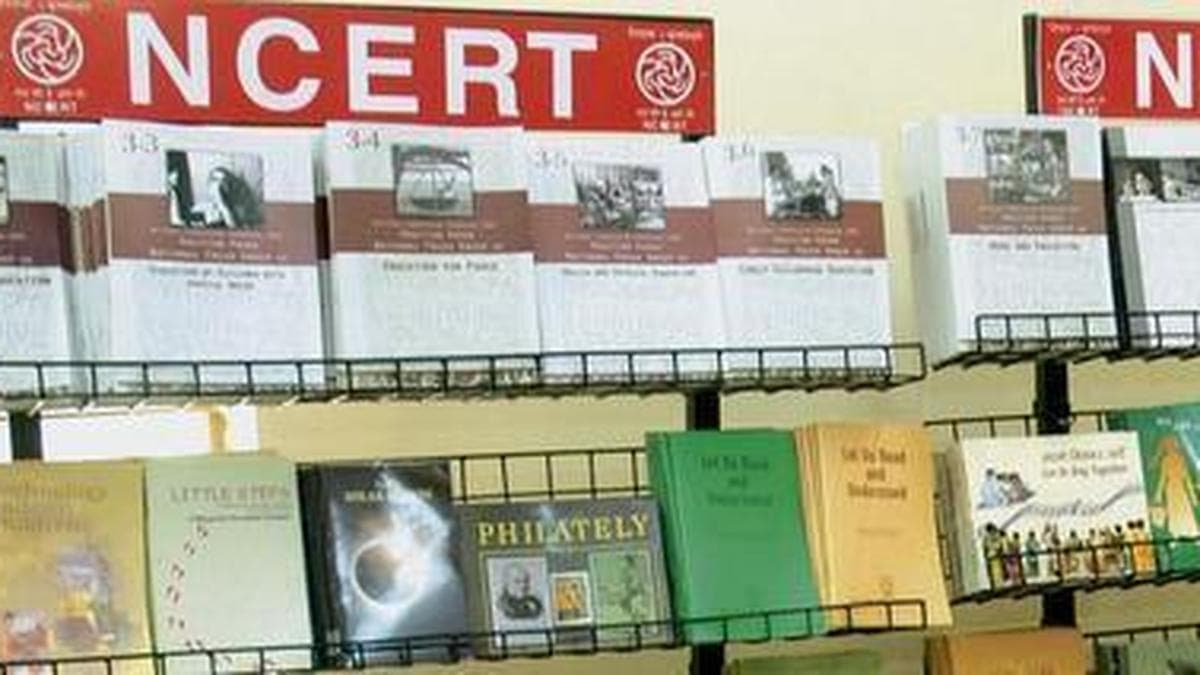
After the Supreme Court’s intervention, the physical and digital copies of the textbook were withdrawn and the NCERT issued an apology. File. | Months after it stoked a controversy for allegedly defaming the judiciary, the NCERT has released a revised Class 8 Social Science textbook — "Exploring Society: India and Beyond" — dropping the disputed portions.The controversial portions along with references to judicial backlog and two major court verdicts have been dropped while fresh material on Public Interest Litigation (PIL), tribunals and alternative dispute resolution mechanisms has been added in the revised textbook.However, these are not the only changes in the revised textbook.In the chapter titled "Citizenship: Rights and Duties", the textbook says, "discrimination is mistreating any person or group because of their caste, religion, ethnicity, disability, race, physical appearance, gender, sexuality, or economic background. This is not only unethical, but also legally prohibited"."Children from economically disadvantaged families can face prejudice and unequal treatment, alongside discrimination based on appearance, gender, sexuality or other personal characteristics," it said.The revision comes after the definition of discrimination became a subject of intense public debate following the Centre's UGC (Promotion of Equity in Higher Education Institutions) Regulations, 2026.The UGC notified regulations define discrimination as unfair or biased treatment on the grounds of religion, race, caste, gender, place of birth or disability. However, they do not explicitly include economic background or economic disadvantage as a protected category.In February, a controversy broke out over the National Council of Educational Research and Training's (NCERT) Class 8 Social Science textbook, which included a section on "Corruption in the judiciary" in a chapter.After the Supreme Court's intervention, the physical and digital copies of the textbook were withdrawn and the NCERT issued an apology.The top court imposed a "complete blanket ban" on any further publication, reprinting or digital dissemination of the said textbook, saying it contained "offending" content on corruption in the judiciary.The revised textbook states in its acknowledgements that it has been published pursuant to the review process undertaken "in compliance with the directions of the Hon'ble Supreme Court of India" in suo motu writ petition (civil) no. 1/2. Published - July 08, 2026 06:09 pm IST
Higher education curricula in the State requires added focus on research-oriented content to make teachers – and through them, the students – more research-informed and boost their employability attributes, Lakshmi Narayanan, Chancellor, KREA University and Managing Trustee, Chennai Mathematical Institute, said on Tuesday.“Research-oriented content and information have to come on board in order to drive invention. Progressively, we will create a mindset among the faculty, who will be a lot more research-oriented,” Mr. Narayanan said, delivering the keynote address at Uyarkalvi Uraiyadalgal – Dialogues on Higher Education organised in Chennai by the Tamil Nadu State Council for Higher Education (TNSCHE). “That will clearly rub off on the students, who will come out of colleges with a curious and an inquisitive mind to ask questions that have not been asked before.”Giving an example of the ICT Academy model, Mr. Narayanan dwelt upon bridging the gap between urban institutions and rural ones by bringing faculty from rural institutions to urban centres to interact with various industries, including IT and manufacturing. Attendance and performance of students removed since the faculty were able to relate to what was happening in the industry, he said. The number of students joining the IT industry from Tier II and Tier III institutions were more than those from Tier I colleges.“That was an inflection point where we demonstrated that this kind of a model is able to work. I believe this is something that we can replicate for higher education,” Mr. Narayanan added. Encouraging students to take up studies outside the curriculum, especially soft skills, would go a long way in improving their employability.P. Viswanathan, Higher Education Minister, said that the last Economic Survey had stated that over 50% of engineering graduates were not employable, which was a matter of concern. Some other national surveys pointed at an even darker picture showing that employability was as low as 8%, he said. While Tamil Nadu, with a gross enrolment ratio of 50%, fared better than other States, the quality of education provided was no better. “Graduate employability must remain at the very centre of our curriculum reforms,” Mr. Viswanathan said.V. Arun Roy, Higher Education Secretary, said that low employability directly points to serious flaws in the way the curriculum has been designed; it perhaps failed in imparting skills, knowledge, and attributes that the new job market demanded.M.P. Vijayakumar, Vice Chairperson, TANSCHE, and R. Kanimozhi, Member Secretary, TANSCHE, spoke while P. Ponnaiah, Commissioner of Collegiate Education, and P. Rathinasamy, Director of Technical Education, participated. Published - July 08, 2026 12:54 am IST

NSS volunteers with their Yuva Apada Mitra certificates at an event in Vizianagaram. | Rajya Lakshmi on Monday said that National Service Scheme (NSS) training programme would ensure overall development of students and make them ready to respond quickly during natural calamities and other emergency issues. She attended as the chief guest the valedictory function of ‘ NSS-Yuva Apada Mitra’ training programme organised at SITAM College for 100 students of various colleges in Vizianagaram district.Along with SITAM Director Majji Sasibhusana Rao and Andhra Pradesh State NSS coordinator M. Sudhakar, She distributed ‘Yuva Apada Mitra’ certificates to volunteers and urged them to train other students in extending help to the needy during floods, cyclones and other natural calamities.Dr. Sasibhusana Rao said that NSS volunteers were trained in providing help quickly to patients and victims of fire mishaps. He asked students to attend orientation classes and train others in crisis management. He highlighted that NSS volunteers would get priority in campus selections. Mr. .Sudhakar added that all colleges and schools have been requested to establish NSS wings in their respective educational institutions. Published - July 06, 2026 08:57 pm IST
The current batches of classes 7, 8, and 9 who have already taken two foreign languages would continue with the same with one additional native Indian Language (Bhartiya Bhasha), revised guidelines issued by Central Board of Secondary Education (CBSE) said.In a circular issued in May, CBSE had stated that students in Class 9 too will have to adopt three language policy where two of three languages they learn should be native to India. Following this, parents of students who were learning foreign languages like French, German, Japanese, Spanish and so on and were asked to switch mid session had protested at the abrupt switch.Union Minister of Education Dharmendra Pradhan had stated last week that students in Class 7, 8, 9 who have taken foreign languages could continue their studies in their respective selected options.The current batch of class ten will not have to follow the new language policy, the education board stated.The current batches studying in class 7, 8, 9 would not be required to give board examination in third language when they progress to Class 10, the statement further added.The grade appropriate resource material would be made available in a time bound manner.The National Education Policy 2020 recommends learning three languages, with at least two o fthe three languages being native to India.“While CBSE aims to equip learners with competence in multiple Bhartiya Bhashas (native Indian languages) and promote the vibrancy of language learning, it is equally committed to ensuring that the process of learning and growth remains balanced,” CBSE said in its press statement on Monday (June 29, 2026).Further, the introduction of the third language (R3) in Secondary Stage (Class 9 and Class 10, is an extension of language learning from the Middle Stage (Classes 6 to 8).In pursuance of the above objectives, it is considered necessary to issue guidelines regarding the implementation of the Language Policy in CBSE-affiliated schools with effect from the Academic Session 2026–27.CBSE has reiterated that there will be no change for students who are in Class X during 2026–27, and they will continue with the old system of two languages. No third language is required to be taken by this batch.Every student in Class 9 would study three languages. Out of these three languages, at least two would be Bhartiya Bhashas. Examples of Bhartiya Bhashas: Hindi, Sanskrit, Tamil, Telugu, Kannada, Malayalam, Marathi, Bengali, Punjabi, Gujarati, Odia, Assamese, etc.Examples of non-native languages are English, French, German, Arabic, Spanish, etc. The following situations will help clarify the doubts, if any, in the minds of students in Class IX, CBSE has stated.Situation 1: You already study two Bhartiya Bhashas. Example: Hindi + TamilYou can choose as your third language:Another Bhartiya BhashaORA non-native language such as English or French.Situation 2: You study one Bhartiya Bhasha and one non-native languageExample: Tamil + EnglishYou can choose any Bhartiya Bhasha as third language (R3).Situation 3: You study two non-native languagesExample: English + FrenchAs a special one-time relaxation for students who are already in Class IX during 2026-27, you may continue with those two non-native languages and need to add one Bhartiya Bhasha as your third language (R3).For Class nine, the third language (R3) will be assessed by your school through an internal school-based assessment only. There will be no CBSE Board examination for this third language when this batch progresses to Class X 2027-28, CBSE has stated.CBSE and NCERT will provide grade-appropriate learning resources to help students learn the third language, the press release states.“For students who are in Class VII or VIII in 2026-27, when you reach Class IX and X, you will continue studying three languages, with two of them being Bhartiya Bhashas.There is relaxation for the current batch of Class 7 (2026-27) and Class 8 (2026-27), the students who have already selected and start

Congress leader Rahul Gandhi. File | In a post on X in Hindi, Mr. Gandhi said it is not the fruit of hard work that students get but the punishment for daring to dream."One thing I want to say to every young person in this country — today, in this nation, it's not the fruit of hard work that you get, but punishment for daring to dream.TET paper leak case: Maharashtra Education Minister must resign, says Youth Congress; holds protest"Every paper leak, every cancelled exam, every stalled recruitment — these aren't just failures of the system, but blows struck against the dreams of millions," he said in his post."I know you're exhausted. You're angry. But remember this — when the government refuses to listen, you have to raise your voice louder."That's why I'm calling on all of you — June 17, Kota. Students' Echo. Let's come together and become a roar that can't be ignored. Starting from Kota — then reaching every corner of the country," the Leader of Opposition in the Lok Sabha said.Mr. Gandhi assured the youth that this is a fight for their future and he stands with them.The Congress has announced that the first phase of a nationwide campaign against paper leaks and examination irregularities will begin with Mr. Gandhi addressing a series of student conventions. The first such address will be in Kota on June 17, 2026.The movement will seek to unite students beyond political affiliations and provide a platform for affected youth to share their experiences and demand accountability for "repeated examination failures and paper leak scandals", the party has said.Mr. Gandhi will address a series of large student conventions starting with Kota (June 17, 2026), Allahabad (July 10, 2026), Patna (July 11, 2026) and Delhi (July 14, 2026), bringing together students, aspirants, youth organisations, educators and all those directly affected by the alleged examination scandals.The campaign will highlight the hardships faced by millions of young Indians whose futures are being repeatedly jeopardised by paper leaks, rising examination costs and the government's "failure" to ensure a fair and transparent recruitment and education system, the Congress has said.As part of this nationwide campaign, the party will reiterate Mr. Gandhi's call to mobilise students through extensive outreach by the National Students' Union of India (NSUI), Youth Congress, Pradesh Congress Committees, District Congress Committees and local units across the country. Published - June 15, 2026 06:57 pm IST
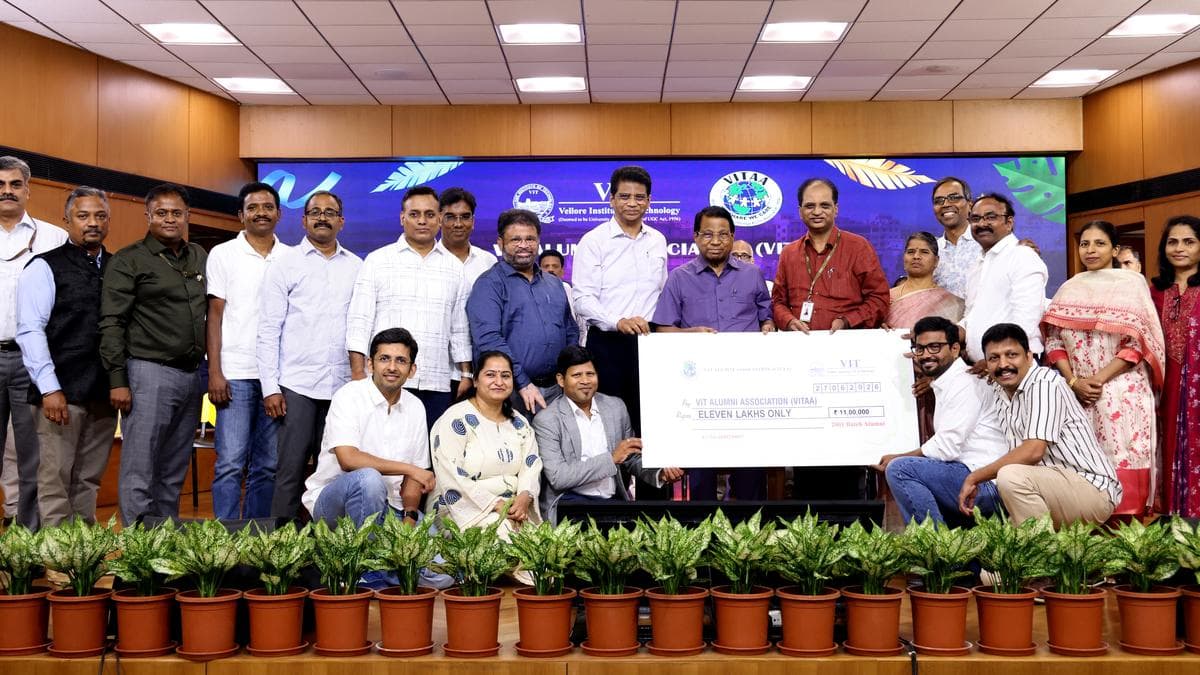
The 2001 batch alumni contributed ₹11 lakh to the STARS programme at VIT. | Viswanathan, founder and Chancellor, VIT.Presiding over the alumni reunion of the 2001 batch of B.E and B.Tech students, which was organised by VIT at its campus here, he said that education remains the lone tool that can bring change in the economic condition of the country. It can make a developing country a developed one. “No nation can progress without education. Through its STARS (Support The Advancement of Rural Students) initiative, VIT provides free education to meritorious students, who are poor, in government schools,” he said.The Chancellor highlighted the contribution of the Indian diaspora to the growth of the country in terms of remittance. He said that Indians working abroad remit around ₹12 lakh crore to the country annually, providing a major boost to the national economy. “Alumni should financially support special schemes and initiatives that provide free education for poor students. The culture of contributing to education should be encouraged,” he said.On the occasion, the 2001 batch alumni contributed ₹11 lakh to the STARS programme. Mementos were also presented to the alumni in the presence of Sankar Viswanathan and Sekar Viswanathan, vice-presidents of VIT. Published - June 28, 2026 12:15 am IST
A view of the Supreme Court. | A Bench comprising Justices S.V.N. Bhatti and Vipul M. Pancholi was informed by Solicitor General Tushar Mehta, appearing for the Centre and the CBSE, that a new policy had been formulated to address the concerns of similarly placed students affected by the cancellation of examinations in Gulf countries owing to the regional conflict.Mr. Mehta submitted that the policy, notified on June 21, includes a separate assessment formula for private candidates appearing for the board examinations.The top court was hearing a petition filed by a private candidate, Pransu Jigarkumar Patel, seeking declaration of the result of his Class XI improvement examination, which was suspended due to the conflict.Regular vs private candidatesMr. Mehta informed the Bench that while both regular and private candidates had been affected by the cancellation of examinations, evaluating private candidates posed a challenge because they did not have school-based assessment records, such as periodic tests, half-yearly examinations and pre-board assessments, that could be used for evaluation.The law officer submitted that the CBSE had, on June 21, notified a separate assessment policy for such candidates. Under the scheme, marks in subjects for which examinations could not be conducted would be computed by assigning a 40% weightage to theory marks obtained in the Class X board examination and a 60% weightage to theory marks secured in the Class XII board examination. He pointed out that for assessing a Class X student’s performance, the average of the candidate’s three highest-scoring subjects would be taken and normalised against the maximum marks prescribed for each subject.Mr. Patel had appeared as a private candidate for the 2026 Class XII improvement examinations in physics, chemistry, mathematics, English and computer science in Saudi Arabia. However, after the CBSE cancelled certain Class XII examinations in several West Asian countries on March 15 amid the U.S.-Israel-Iran conflict, he was able to appear only for the physics and chemistry papers.The CBSE subsequently issued a notification titled ‘Assessment scheme for declaration of results of Class XII in West Asian countries’ on March 27 to facilitate the declaration of results for students affected by the cancellations. Under the scheme, marks for the cancelled papers were to be derived from school assessments, including the “best of the three marks obtained in quarterly, half-yearly and pre-board examinations”.While the Board declared the results on May 13, Mr. Patel claimed that his result had been withheld and that his status was reflected as “RL” (Result Later), prompting him to approach the top court.He contended that his academic records were available with the school and could have been relied upon for assessment, and that the refusal to do so was adversely affecting his plans to pursue higher studies.On Monday, Mr. Mehta informed the Bench that Mr. Patel’s result, computed under the new policy, had already been emailed to him and would also be made available through his DigiLocker account. He added that candidates dissatisfied with the results would have the option of appearing in the next regular examination.Availing re-evaluationThe counsel appearing for Mr. Patel, while acknowledging that the result had been declared, urged the court to grant him liberty to seek copies of his answer scripts and avail of re-evaluation in accordance with the applicable CBSE regulations.Justice Bhatti, however, pointed out that no such relief had been sought in the petition. He observed that courts generally exercise restraint in examination-related disputes and noted that the

Discussion (0)