
Loading dispatches...
← Return to Newsroomgeneral
Varanasi to get two elevated highway corridors as Cabinet clears projects worth Rs 25,446 cr to ease congestion
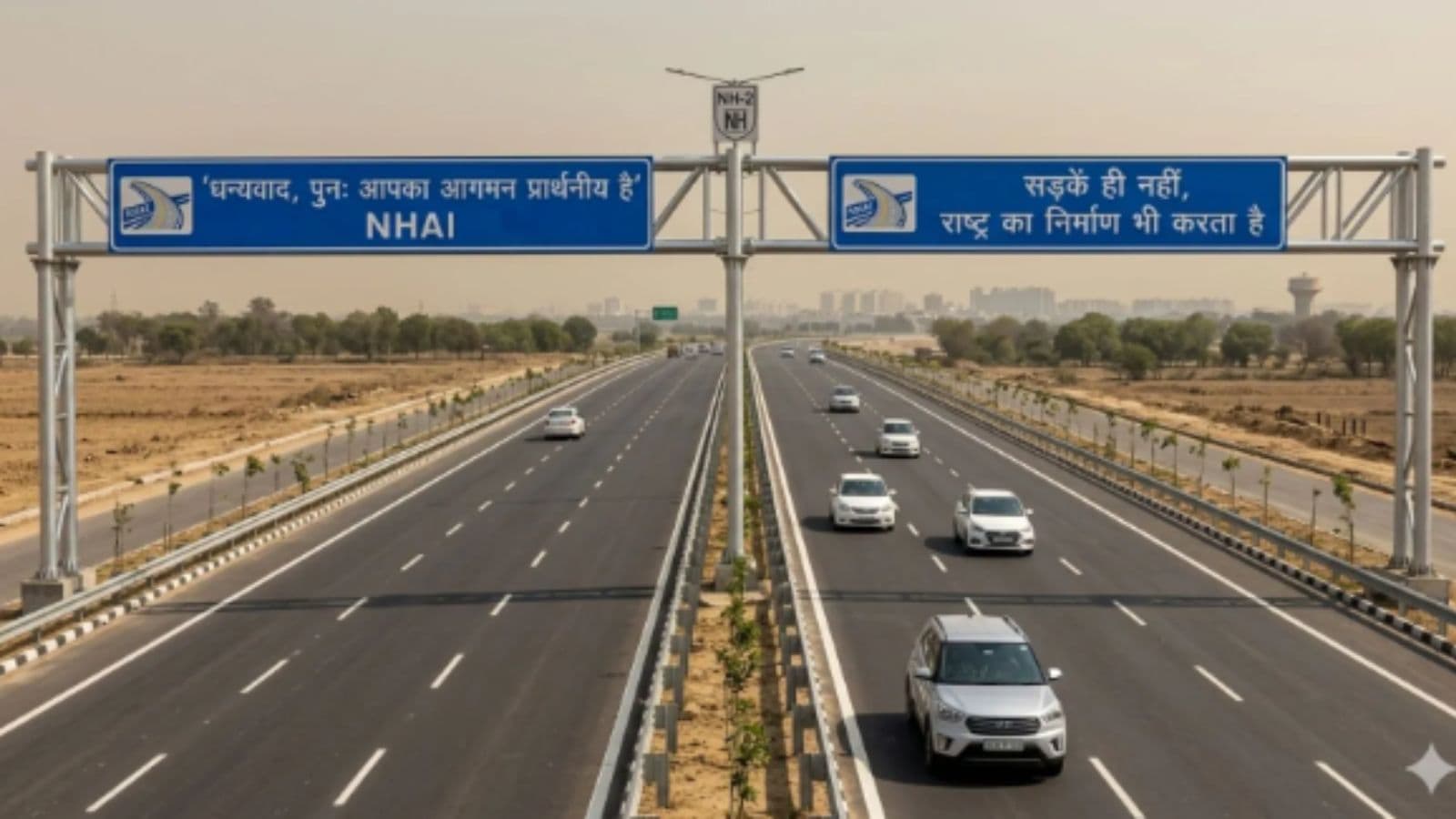
Varanasi receives around 15 crore tourists annually, placing immense pressure on the city's mobility system and increasing traffic congestion. The Union Cabinet on Wednesday approved the construction of two elevated highway corridors worth Rs 25,446 crore along the rivers Varuna and Ganga in Varanasi. The projects come amid mounting congestion in the city, exacerbated by the government’s push to promote religious tourism. Varanasi receives around 15 crore tourists annually, placing immense pressure on the city’s mobility system and increasing traffic congestion.The Cabinet approved the development of a 43-km link corridor connecting NH-31 and Varanasi ring road along the river Varuna and 46-km link corridor between NH-19 and Varanasi ring road along the river Ganga. The projects will be developed under the hybrid annuity mode (HAM). The corridor is a major component of the Varanasi Decongestion Plan. The Varuna river project will have a 6/4-lane predominantly elevated corridor with a design speed of 80-100 kmph, including main carriageway, flyovers, loops, ramps and service roads. Officials said this will reduce travel time between NH-31 to Kashi railway station from 40 minutes to 20 minutes. The Ganga river project will have a 6-lane elevated main carriageway with an iconic 910 m cable-stayed bridge across the river, a 1.32 km extradosed foot over bridge-cum-major bridge with a travelator providing pedestrian connectivity to the Kashi Vishwanath Temple, a Rail Over Bridge across the proposed Malviya Bridge, loops, ramps, link roads and service roads. The corridor has been conceived to decongest the road network of Varanasi and Chandauli by providing connection between NH-19, Varanasi Ring Road (NH-135B), Ramnagar, BHU and other key centres. Reduction in travel time; Odisha, Jharkhand projects get Cabinet nod The project will decongest the NH-19 (Prayagraj-Varanasi), traffic from BHU-Ramnagar and NH-35 (Varanasi-Mirzapur) by diverting traffic away from the densely developed urban core. The officials said it will also reduce the average travel time across project influence areas from 60 minutes to about 20 minutes, with a design speed of 80-100 kmph.Story continues below this ad The Cabinet also approved two Railways infrastructure projects — namely doubling of 74-km Paradeep-Haridaspur line in Odisha and quadrupling of 71-km Rajkharsawan-Dangoaposi line in Jharkhand. The Paradeep-Haridaspur line connects the Paradeep port to Howrah-Chennai high density route at Haridaspur, and further to Talcher coal fields, iron ore mines and steel plants. These are among the country’s busiest freight corridors, transporting commodities such as coal, iron ore, dolomite, limestone and gypsum. According to the officials, the multitracking works will increase the freight traffic by 44 mtpa. Dheeraj Mishra is a Principal Correspondent with the Business Bureau of The Indian Express. He plays a critical role in covering India's massive infrastructure sectors, providing in-depth reporting on the connectivity lifelines of the nation. Expertise & Focus Areas: Mishra’s journalism is focused on two of the country's most capital-intensive and public-facing ministries: Ministry of Railways: Tracking the operations, safety, and development of India's vast railway network. Ministry of Road Transport & Highways: Covering policy decisions, infrastructure projects, and highway development. What sets Mishra apart is his rigorous use of the Right to Information (RTI) Actas a primary tool for news gathering. By relying on official data and government records, he ensures a high degree of accuracy and trustworthiness in his reporting. This data-driven approach has resulted in numerous impactful reports that hold public institutions accountable and bring transparency to government operations. Find all stories by Dheeraj Mishra here ... Read More Stay updated with the latest - Click here to follow us on Instagram
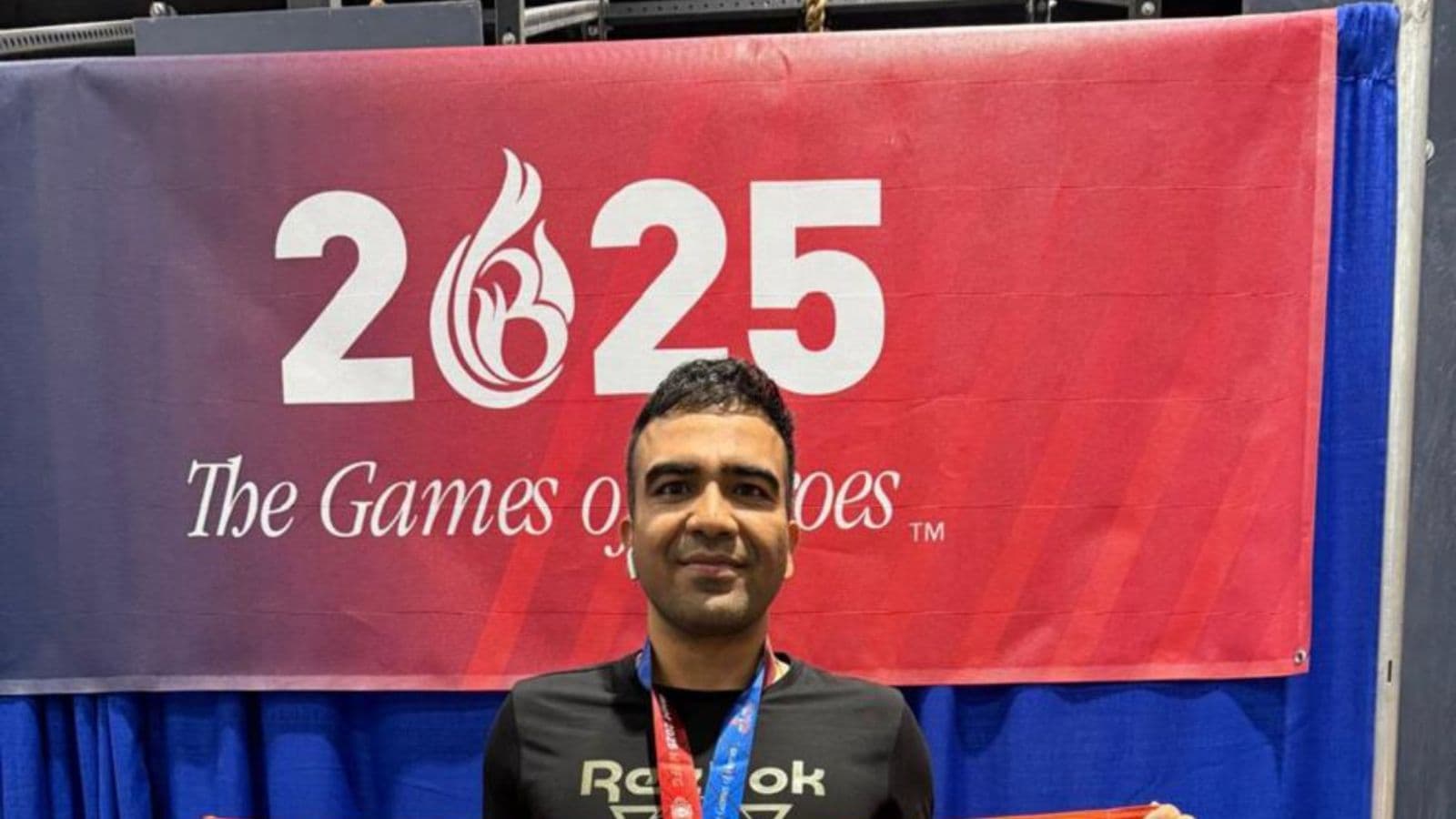
New DelhiJul 3, 2026 12:24 PM IST Deepak Gahlawat allegedly demanded Rs 3 crore from Raja in the Rs 5,000-crore counterfeit medicine racket in Puducherry. (Express Photo) On Wednesday, the Central Bureau of Investigation (CBI) arrested a 2012-batch Haryana cadre IPS officer, Deepak Gahlawat, for his alleged involvement in a multi-crore bribery scandal. Gahlawat, who is currently serving as a Regional Director with the Directorate General of Civil Aviation (DGCA), had allegedly demanded Rs 3 crore to settle or “fix” an ongoing CBI investigation. The case he allegedly promised to fix was a Rs 5,000-crore counterfeit medicine manufacturing and distribution racket running out of Puducherry.What is the ‘bribery’ case about? The roots of the alleged bribery scandal trace back to last year in Puducherry. Following coordinated raids by local police and the CB-CID, authorities uncovered underground setups manufacturing massive quantities of spurious and adulterated medicines. Huge stockpiles of raw chemical materials, packaging components, and finished counterfeit drug packages mimicking major pharmaceutical brands were seized. N Raja, a prominent Puducherry-based businessman, was arrested in the case in December last year. The Puducherry Police later found several politicians were allegedly involved, and the investigation was transferred to the CBI. When the CBI began turning up the heat, Raja allegedly began seeking backchannels to influence senior investigators and get “relief” in the case. The probe agency busted this alleged secondary criminal network of intermediaries and public servants in June.Story continues below this ad Who are the accused? On June 8, the CBI registered an FIR against Raja; Pradeep Kumar Singh, an inspector with the Delhi Police Crime Branch’s Southern Range; and Rajkumar who is alleged to have acted as an intermediary. Earlier, the CBI had arrested the accused Delhi Police Inspector along with six other private persons, which led to the recovery of approximately Rs 25 lakh of trap amount and Rs 90 lakh, along with other incriminating documents, a CBI spokesperson had said. As per the agency, this is their role: -Inspector Pradeep allegedly acted as a conduit and assured Raja that the CBI investigation in the counterfeit drugs “scam” could be modified favourably through high-level internal contacts.Story continues below this ad -Gahlawat was accused of allegedly hatching a conspiracy in his office to facilitate the payments and getting in touch with other public servants who could “help” the accused persons. -Rajkumar operated as an alleged middleman between the Delhi Police Inspector and the hawala dealers. What are the allegations? According to the CBI’s submissions in a Delhi court, Gahlawat held a meeting with other co-accused persons in his office on May 14. It was argued by the agency that Gahlawat allegedly demanded Rs 50 lakh as part of illegal gratification from Raja for “exercising his personal influence over a public servant posted in CBI to secure favourable relief”. The agency claimed that a demand of Rs 3 crore was made from accused Raja, out of which Rs 1 crore advance tranche was delivered. The CBI claimed this money, which was allegedly arranged through hawala transactions, has been recovered.Story continues below this ad The agency claimed the payment was allegedly received through Pradeep, through a hawala operator. Rs 25 lakh was allegedly kept at Pradeep’s house. During trap proceedings on June 8, Pradeep and Rajkumar were apprehended with the money. Where does the investigation stand right now? The CBI had sought custody of Gahlawat. In its remand papers, it claimed that he needed to be confronted with suspicious transactions and that his custody was needed for unearthing the larger conspiracy by ascertaining the role of other co-accused persons. A Delhi court Wednesday granted a day’s custody. But during the hearing, the court asked the CBI why it didn’t question Gahlawat
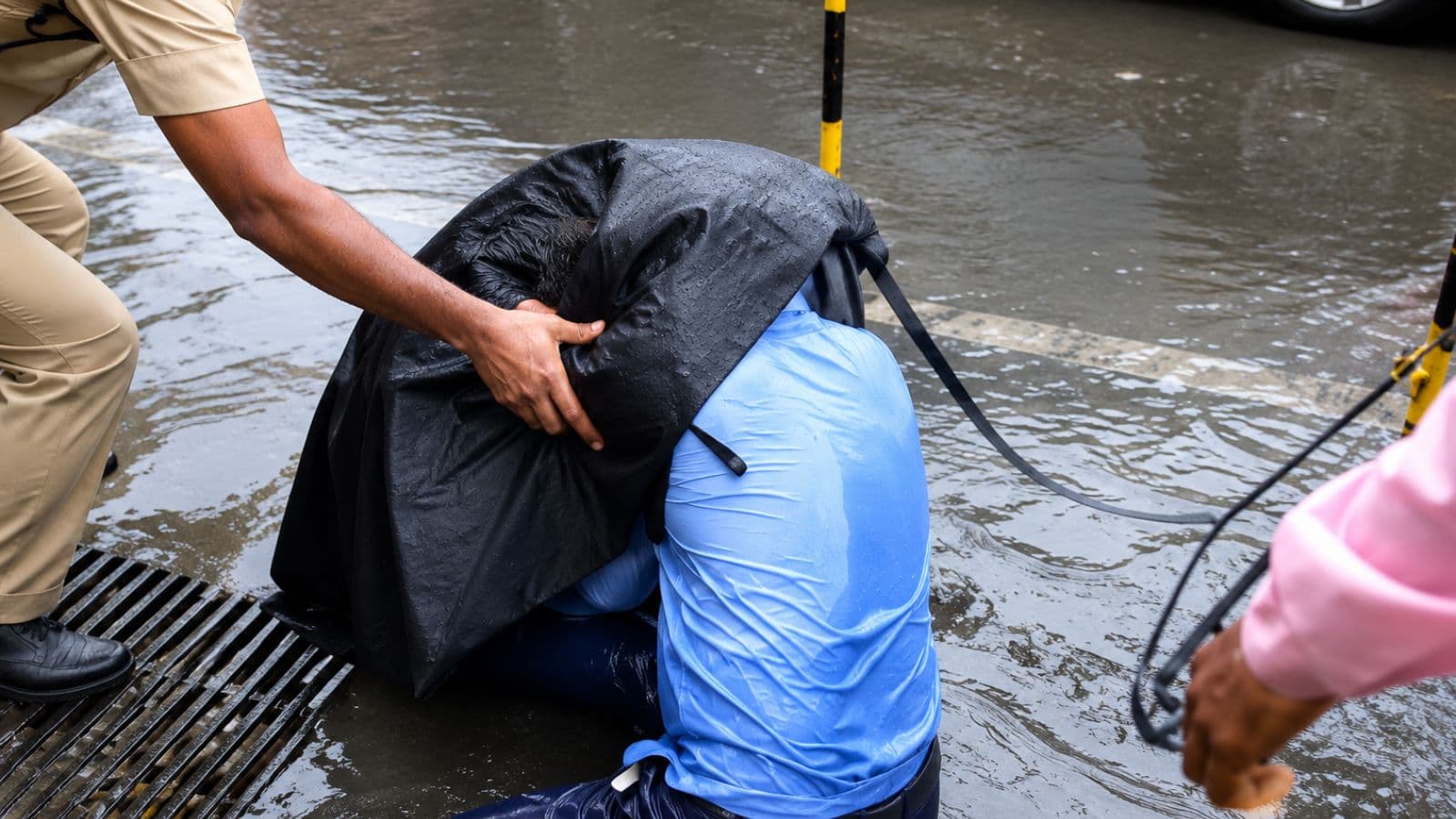
As Mayor Ritu Tawde reviewed flood-control measures at Gandhi Market, the civic official accompanying the inspection team fell into an open manhole. (Ai-enhanced screen grab) A civic official fell into an open manhole during Mumbai Mayor Ritu Tawde’s inspection of waterlogged areas in Gandhi Market Wednesday, an incident captured on camera and quickly sparking political attacks over the city’s monsoon preparedness. Heavy rainfall battered Mumbai overnight, with several pockets recording over 200 mm in eight hours, leading to submerged streets and major traffic disruptions across low-lying areas.As Mayor Ritu Tawde reviewed flood-control measures at Gandhi Market, the civic official accompanying the inspection team fell into an open manhole concealed by accumulated rainwater on the adjoining road. He was rescued within moments by police and other civic staff present at the spot. “There was an open manhole, and the footpath and the adjoining area were barricaded. The man tried to approach the footpath where the mayor was standing by removing the barricades and fell into the manhole,” a spokesperson of the mayor’s office told the Indian Express. A civic body official said the man sustained no injuries in the incident. ‘Inaction and corruption’ Meanwhile, videos and photographs of the incident surfaced on social media. Kishori Pednekar, Shiv Sena (UBT) corporator and Leader of Opposition in BMC, criticised the civic administration for carrying out incomplete desilting work.Story continues below this ad “For more than a decade, the BJP has been in power in the state as well as in BMC; they were in an alliance with us (the undivided Shiv Sena). Major projects like BRIMSTOWAD were carried out to curb waterlogging. Even during the July 2005 floods, Mumbai stood still and here, after the first spell of rains, the city is submerged under water,” Pednekar said. “The city-wide waterlogging recorded on Wednesday is the direct result of incomplete desilting work. The administration should wake up now and complete the balance work that is remaining,” she added. Refuting this, Mayor Tawde accused Pednekar of “holding press conferences from home”. “Work doesn’t get done by sitting at home. You have to get wet in the rain. You have to come out. You have to be on the road,” she said. Posting a video of the incident, Congress MP from Mumbai Varsha Gaikwad also criticised Tawde. महापौर महोदया, विरोधकांनी रस्त्यावर उतरून काम करावं असं सांगण्यापूर्वी आपल्या समोर खड्ड्यात पडलेल्या त्या नागरिकाकडे एकदा पाहा. तो माणूस तुमच्या निष्क्रियतेच्या, भ्रष्टाचाराच्या खड्ड्यात पडलेला आहे. हा अपघात नाही, तर तुमचा भ्रष्टाचार रंगेहाथ पकडला गेला आहे. pic.twitter.com/STqxL9uhcT — Prof. Varsha Eknath Gaikwad (@VarshaEGaikwad) June 24, 2026 “Madam Mayor, before telling protesters to come out onto the streets and work, take a look at the citizen who has fallen in a manhole right in front of you. The person has fallen into the hole because of your inaction and corruption. This is not an accident. But your corruption is being caught red handed,” Gaikwad wrote in her post. © The Indian Express Pvt Ltd Pratip Acharya is a seasoned journalist based in Mumbai reporting for The Indian Express. With a career spanning over a decade, his work demonstrates strong Expertise and Authority in critical urban issues, civic affairs, and electoral politics across Eastern and Western India. Expertise & Authority Current Role: Journalist, The Indian Express (IE), reporting from Mumbai. Core Authority: Pratip's reporting focuses sharply on local democracy and development, specializing in: Urban Governance and Civic Affairs: Providing in-depth analysis of municipal decision-making, city planning, and local infrastructure, essential for informed urban reporting. City Politics and Environment: Covering the political dynamics of Mumbai and surrounding areas, alongside critical environmental challenges impacting the metro region. Electoral C
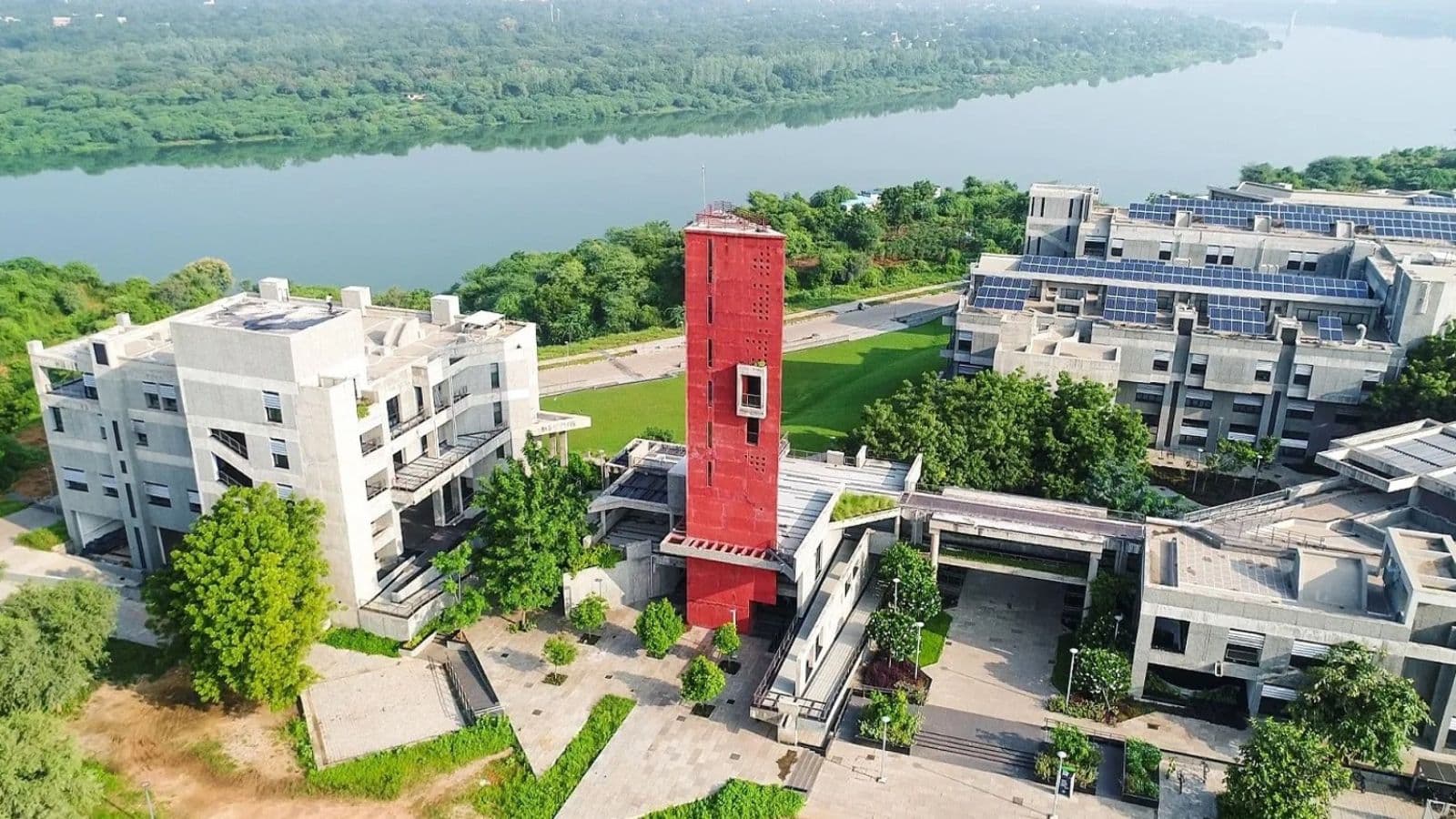
AT TIMES, presence of greening or increase in greening is considered part of efforts towards urban cooling. The increasing trend of lawns in farmhouses or landscaping in residential buildings is seen as attempts to increase the green cover in cities.However, in a recent study conducted by the Indian Institute of Technology Gandhinagar (IITGN), researchers found that it is the convergence of three elements – greening, the leaf area index and photosynthetic activity. The study shows that while urban greening remains essential to reduce heat stress, cities need smarter and more climate-responsive planning to ensure that tree cover delivers maximum cooling benefits.A lawn, a palm-lined street, a park with large shade trees and a dense plantation in a narrow humid lane may all appear as “green cover”, but they can affect heat stress quite differently. The study highlights that Indian cities need integrated urban cooling strategies where shade trees, parks, roadside plantations, open spaces and ventilation corridors are planned together. In humid and dense neighbourhoods, factors such as species selection, canopy spacing, pruning, irrigation and street geometry could all influence how effectively greenery reduces heat stress. Last month, these findings were published in the Nature Communications, a peer-reviewed, open-access journal from Nature Portfolio that publishes high-quality research across the natural sciences, engineering, and related fields. The paper was authored by Angana Borah, Adrija Datta, Ashish S Kumar, Raviraj Dave and Udit Bhatia from IIT Gandhinagar. The study analysed 138 Indian cities between 2003 and 2020 across tropical savanna, semi-arid steppe and humid subtropical climates and found that the cooling benefits of vegetation can vary significantly depending on humidity, canopy density, urban compactness and airflow conditions. Within each climate class, cities were further divided into high- and low-population-density tiers, using the class specific median as the cutoff. “Sometimes we end up confusing the presence of greening or increase in greening with an increase in efforts towards urban cooling. Greening is essential for climate adaptation and shade gives people immediate relief but our study shows that one-size-fits-all plantation targets miss part of the problem. Cities need greening strategies that are designed for shade, moisture and ventilation together. Efforts to green cities for cooling are succeeding unevenly because the same vegetation that cools surfaces can also intensify how hot the air feels,” said the Corresponding Author of the study Udit Bhatia, Associate Professor, Department of Civil Engineering, IIT Gandhinagar.Story continues below this ad Regarding Ahmedabad, Prof Bhatia explained, “Broad-canopied trees such as neem, karanj, siris or tamarind can provide strong shade and cooling; but in a humid coastal street, very dense planting of high-transpiring trees such as peepal, banyan, jamun or rain tree would need proper spacing and ventilation, otherwise the added moisture may increase felt heat.” The greening was inferred by the green cover observed from satellite while the leaf area index Prof Bhatia said, “Essentially also talks about what is the density of canopy and most importantly and often overlook part is the photosynthetic activity which can have a cooling or a reversal of cooling, depending upon the humidity condition. The landscapes where we are essentially focusing on just greening without the shade or photosynthetic effect may in turn actually have a counterintuitive effect towards cooling as law green areas for example may end up increasing the humidity without shade effects. This is not to be confused with that greening is not needed but mindful greening that balances the photosynthetic activities with local climatology is important.” ‘Vegetation moderates urban heat through two primary pathways: shading which reduces the absorption of solar radiation by built surfaces, an
With Simhastha Kumbh 2028 on the horizon, Ujjain is witnessing an accelerated push in road infrastructure and urban development, with several highway projects entering execution and long-term policy measures on new housing and satellite townships beginning to take shape on the ground.On the back of multiple projects moving from planning to execution, the city is entering a high-investment phase — both public and private. Land prices are going up across Ujjain. Areas along key highway corridors and urban expansion zones are witnessing higher valuations and strong investor interest.Sources in the revenue department said that Indore and Ujjain recorded a major surge in property registrations in 2024. Local real estate players say the combination of infrastructure upgrades and favourable policies under the new masterplan is likely to sustain upward pressure on land prices in the run-up to 2028. While Chief Minister Mohan Yadav has announced several road projects in and around the holy city, Ujjain District Collector Roushan Singh listed “over half a dozen” highway projects — new construction or lane expansion — to improve connectivity to Garoth, Jhalawar, Nagda, Badnawar, Indore and Bhopal. “Another 15-20 internal road widening works are lined up,” he said, without providing specific coordinates of the projects. To get a sense of the scale of the development works, The Indian Express gleaned details available in public records and spoke to a number of state officials on the ground. The major highway projects — either greenfield or expansion — in and around Ujjain are Ujjain–Jhalawar 4-laning upgrade, Ujjain–Garoth greenfield corridor, Ujjain–Nagda 6-laning upgrade, Ujjain–Jaora greenfield highway, Ujjain–Indore 6-laning, Ujjain–Badnawar 4-laning, Ujjain–Dewas-Bhopal expansion, and Ujjain–Maksi 4-laning upgrade. Madhya Pradesh Chief Minister Mohan Yadav addresses the inauguration of projects in Indore on Friday. (Twitter/ Mohan Yadav)The four-lane upgrade of the Ujjain–Jhalawar corridor has moved into the construction phase and is expected to improve connectivity with Rajasthan and reduce travel time for both freight and pilgrimage traffic.Story continues below this ad Work has begun for the upgradation of the Ujjain–Nagda road, which connects major industrial clusters in the region. While a six-lane expansion is yet to be finalised, capacity augmentation is being taken up in phases to cater to rising traffic. The Ujjain–Jaora greenfield highway, planned to link with the Delhi–Mumbai Expressway, has entered the land acquisition stage. However, resistance from farmers over compensation has emerged as a challenge, raising concerns over timelines. A key regional link, the proposed Ujjain–Garoth greenfield highway (NH-148NG) is still in the early stages, with land acquisition and statutory clearances underway in parts. Connectivity on existing corridors has also improved. The Ujjain–Indore route, among the busiest in the region, is now largely six-laned and fully operational as a key economic link. The Ujjain–Badnawar road is also undergoing four-lane expansion, with most stretches completed and the remaining sections nearing completion.Story continues below this ad The Ujjain–Bhopal route via Dewas is operational but is being widened in phases to handle increasing traffic, particularly during peak pilgrimage periods. In addition, a four-lane project on the Ujjain–Maksi road has been sanctioned and is expected to enter the construction phase soon. Within the city, major arterial routes, including Indore Road, Dewas Road, Agar Road and Nagda Road, are being upgraded. The works focus on expanding carriageways, redesigning junctions and easing congestion along routes leading to key temples and ghats. Other major focus areas are development of major ghats — such as Triveni and Mangalnath — along the 30-km Shipra riverfront, critical infrastructure including more than 14 river bridges and flyovers, 30-km Kanh diversion project to channel
Discussion (0)