
Loading dispatches...
← Return to NewsroomWorld
How Ebola became the deadliest outbreak in DR Congo’s history

Bunia, Democratic Republic of the Congo – When three members of his hospital team died within days of treating the same patient, Dr Richard Lokudu suspected Ebola had been spreading before authorities detected the outbreak.The patient had arrived at Mongbwalu General Hospital in Ituri Province for surgery in early April, weeks before the Democratic Republic of the Congo (DRC) officially declared an Ebola outbreak.“Before the outbreak was declared, we discovered at the hospital that there was a patient who had been admitted on 2 April and who was due to undergo surgery performed by our team on 7 April,” Lokudu told Al Jazeera.“Almost a month later, we recorded the deaths of the surgical assistant, the anaesthetist, and a member of the post-operative care team.”The deaths were among the first warning signs of an Ebola outbreak that would become the deadliest in the DRC’s history.Three months after authorities declared the outbreak, more than 4,900 confirmed cases have been recorded, and more than 2,300 people have died, according to health authorities and international agencies.The death toll has surpassed the previous record set during the 2018–2020 Ebola outbreak, caused by the Zaire strain, which killed 2,299 people.The current outbreak is caused by Bundibugyo virus disease (BVD), a rare form of Ebola first identified in Uganda in 2007. Unlike the Zaire strain, for which vaccines and some treatments have been developed, there are currently no licensed vaccines or specific approved therapies for Bundibugyo.Health workers are relying on early detection, supportive care, infection-prevention measures, and community engagement to limit transmission.The World Health Organization (WHO) says the outbreak was first identified in Ituri Province and later spread to other areas. The agency has warned that armed conflict, population movement, and delays in identifying cases have complicated efforts to contain the virus.A hygienist works at an Ebola treatment centre in Bunia, Ituri Province, Democratic Republic of the Congo [Prosper Heri Ngorora/Al Jazeera]For people living in affected communities, the figures represent personal losses.“Only God can spare us from this disaster,” says Furaha Gisèle, 35, whose uncle died of Ebola in Rwampara, about 10km (6.2 miles) from Bunia, the capital of Ituri Province.“Coping with insecurity, poor governance, and poverty all at once is difficult, and I fear we will also suffer from this deadly epidemic.”Health officials say transmission was already taking place before the outbreak was officially declared on May 15. By the time authorities identified the virus, it had spread through communities, allowing chains of infection to grow before response teams were fully deployed.WHO said the outbreak was initially concentrated in Mongbwalu Health Zone in Ituri before expanding to other provinces.Racing against transmissionThe DRC has recorded Ebola outbreaks since 1976, and has developed extensive experience responding to the disease.But in Ituri, health workers say experience alone cannot overcome the challenges they face: conflict, difficult terrain, delayed detection, and mistrust among some communities.Congolese authorities have acknowledged that delays in identifying cases contributed to the spread of the virus.Professor Pierre Akilimali, head of the DRC’s Ebola response, says laboratory capacity has expanded in Ituri since the outbreak hit.“When we first started, we didn’t have any laboratories. Today, we have more than 12 laboratories here in Ituri Province,” he told Al Jazeera.He said reliance on laboratory facilities outside the province slowed confirmation of cases during the early stages of the outbreak.Conflict and mistrustIn Ituri, Ebola response teams are operating in a province that has endured decades of armed conflict.Armed groups have fought for influence and control over mineral-rich areas, making movement difficult and limiting access to some communities.The Africa Centres for Disease Cont
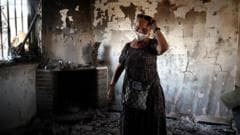
However, some 300 of the evacuees remained on Wednesday morning and Mayor José Julián Gregorio told Europa Press that they would receive "the same level of care as on the first day".Although no fatalities have been reported in the fires surrounding Madrid and in Castellón on the east coast, authorities in the southern city of Seville say a woman, who was badly burned in the Los Gallardos fire in Almería earlier this month, has died of her injuries in hospital.Fourteen people died in the Almería fires, including UK and Belgian nationals as well as US, French and Spanish citizens.Figure caption, The race to stop the French woodland fires in their tracksFires are also burning in neighbouring Portugal, in the north-easte
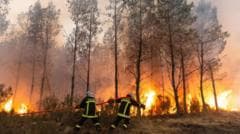
Chris De Abreu, who is from Kent but works in France and has a flat in Bordeaux, described how "over the weekend the city was engulfed in smoke with the sun disappearing behind", with an "orange-like filter" over the city.Though De Abreu said he is less concerned about his flat which lies on the other side of the river, he "can see a number of people worried about what is to come".Elsewhere, Rachel Hanberry told BBC Radio 5 Live that her beachfront home in Biscarrosse Plage, which lies about 63km (40 miles) from Bordeaux, is located next to the town's evacuation point. "Everyone came here on Thursday night," she said. "People had nowhere to go. We offered our home to people."The community there has "lost so much", she added. "The stress and trauma that you feel as someone living here is immense." About 700km away, in Cotignac in the south-east of France, Jo Barnes and her family returned to their home on Saturday, having evacuated for four days after a fire rapidly moved towards their property. "A wall of orange flames came roaring up over the hill," Barnes said. "On Friday afternoon, the fire came back to our area... within 10 metres of the back of our house, we have a gas tank here, it was all very dramatic." Though the surrounding hillside was blackened and charred, the town of Cotignac was undamaged and the Barnes' family home left intact. In the central Madrid region of Spain, where more than 27,000 hectares (66,000 acres) have burnt, residents have faced similar ordeals. "Everyone had to get out of the village quickly, it was a critical situation and people were scared," Olga Congacha told AFP news agency.She and her husband did not take much: "[We] left with all that we could grab, our important documents, some clothes".In the eastern Castellón province, Ricardo Pozo told AFP that he had "never seen a fire this intense before". "I've seen major fires, but on television. Nothing like this, here and now." Maria Garcia, who lives in Betxí - also in the Castellón province - described to Reuters how the fires had put life on pause for those who evacuated: "You can't go out to work, you can't go about your daily life." "You can see the mountains you've known your whole life burning," she added.The wildfires have also upended plans for holidaymakers. James Hillier had been visiting his son in the seaside community of Lacanau about 42 km (26 miles) east of Bordeaux in the Gironde department."The whole town got consumed by smoke," he told the BBC. "There was ash falling from the sky and I noticed a big lump of it landed on my hand."He and his wife left the town for Bordeaux on Saturday, but found that in the city "the air was acrid - it stung your eyes and people were wearing masks". They have since left to go to somewhere in the north of the France instead. Sarah from Hertfordshire realised that her family would have to cut their week-long holiday in Bordeaux short because of the smoke. "We sealed all the apartment up, but it still had a really strong smell of smoke everywhere. It was quite worrying," she said.She then warned her sister-in-law Georgia, whose family had been due to join them in the Bordeaux region in Lacanau, not to come. Georgia booked to stay in another region instead.Georgia said she has not been able to secure a refund from her accommodation operator because the fire had not yet reached Lacanau at the time of cancellation. "If we don't find a solution with them we currently stand to lose over £3,500," Georgia added.

Cases surged by 1,000 in just just 10 days as outbreak continues to spread across five provinces.The number of people infected with Ebola in the Democratic Republic of the Congo has risen to 3,200, including 1,405 deaths, according to government data.The data was released on Sunday as medics struggle to contain the DRC’s 17th Ebola outbreak, with infections surging by about 1,000 in just 10 days.Recommended Stories list of 3 itemslist 1 of 3Ebola deaths in DRC surge past 1,300 as virus ‘spreading like a wildfire’list 2 of 3‘There’s no salary’: DRC health workers tell of hardship as Ebola spreadslist 3 of 3Ebola death toll in DR Congo surpasses 1,000end of listThe outbreak, declared on May 15, is caused by the Bundibugyo strain of the Ebola virus, for which there is no approved vaccine or treatment.The World Health Organization said nearly 90 percent of cases have been reported in the northeastern province of Ituri, which borders South Sudan and Uganda.The United Nations agency says the virus is in five provinces, including two new provinces where it has spread recently.“In many cases the humanitarian community wants to help, but the real challenge is getting there”, said Hedley Tah of the UN Humanitarian Air Service (UNHAS), which flies medics and response teams to crisis front lines.In addition to moving aid workers to stricken areas, Tah added that UNHAS is “moving samples for lab testing to ensure traceability can continue”.Authorities said that improved detection and testing had helped identify more infections.The outbreak could last several more months, and strikes by healthcare workers demanding unpaid wages have disrupted response efforts in some hospitals.Ebola, which spreads through contact with bodily fluids and causes hemorrhagic fever, has killed more than 15,000 people across Africa over the past 50 years.Scientists are racing to develop vaccines and treatments against the Bundibugyo strain, with Oxford University saying on Friday that the first volunteer group had received an experimental vaccine targeting the strain.Several other candidate vaccines are being fast-tracked for clinical trials, while two potential treatments are also under development.

BBC Weather says a large area of high pressure is currently building from the Azores towards Portugal and Spain and that by the weekend, heat is forecast to climb across France and southern Britain.And as Europe braces for sweltering conditions, millions of Americans celebrating the July Fourth holiday weekend are already being affected by prolonged extreme heat and high humidity in parts of the central and eastern US.Climate change is driving up temperatures around the world - but particularly in Europe. It is the fastest warming continent, heating up twice as fast as the global average, according to the Copernicus climate service.This is causing increased summer heatwaves, greater pressure on Europe's water supply, and more intense wildfires.This summer's record-breaking temperatures have already proved particularly deadly. Belgium recorded 1,222 excess deaths during the heatwave – 39% more than usual – with almost half being people aged 85 and over.The country's health ministry said the number of deaths during a heatwave was "unprecedented".In France, the number of deaths recorded between 22 and 28 June increased by 2,025 - nearly 30%, the Public Health France agency announced on Friday. Deaths rose by 62% in the Paris region alone.The French health ministry said the figure was likely an "underestimate" and mortality would "therefore be higher than these initial figures".Drowning deaths soared during the heatwave, with French Interior Minister Laurent Nuñez saying on Saturday that 72 people had died by drowning since 18 June.Meanwhile, unprecedented heat in the Netherlands last week led to about 480 excess deaths, Dutch authorities said on Thursday - most of whom were aged 80 and older. Temperatures reached almost 40C in parts of the country, with most of the deaths reported in the south and east of the Netherlands where temperatures were highest. While the Netherlands is expecting a cooler week ahead, hot weather is predicted again over the weekend elsewhere.Temperatures are forecast to reach 40C in the south of France, with peaks of 36C to 37C expected around Bordeaux, Toulouse and Agen.Météo-France has issued red alerts for Friday and Saturday for forest fires in the southern part of the country, warning that weather conditions meant the risk of an outbreak was "very high" compared to summer norms.On Thursday, Prime Minister Sebastien Lecornu said nearly 7,000 fires had broken out since the start of the summer season, with about 8,700 hectares burned so far.Nearly 3,000 people were evacuated after a wildfire ignited in the town of Sainte-Marie-la-Mer and spread to Canet-en-Roussillon on Thursday.
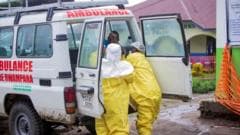
A trial of potential treatments for the strain of virus behind the current deadly Ebola outbreak in the Democratic Republic of Congo (DRC) has begun, the World Health Organization (WHO) has announced. The first patient has been enrolled in the DRC, WHO chief Tedros Adhanom Ghebreyesus said on Thursday. More than 1,400 cases and 438 deaths have been confirmed in the DRC alone, according to the WHO. There are currently no approved vaccines or treatments for the Bundibugyo virus strain of the disease, which is highly infectious. The current trial is sponsored by the WHO, and is being co-ordinated by scientists at the Institut National de Recherche Biomédicale in DRC, the Institute of Tropical Medicine in Belgium, and the University of Oxford in the UK. Speaking to reporters from the WHO headquarters in Geneva on Thursday, Tedros said: "The clinical trial of two therapeutics began, with the enrolment of the first patient. "Even without approved therapeutics, people are recovering from this disease, but of course, we could save many more lives with safe and effective therapeutics in our toolkit," the WHO head said.The current outbreak of Ebola in the DRC and Uganda began in May, and has been declared a public health emergency by the WHO. According to WHO data, there have been 1,406 confirmed cases in DRC, with 301 suspected cases and 438 deaths, as of 30 June. There have also been 20 confirmed cases in Uganda, leading to two deaths, and one confirmed case in France, as of 1 July. The disease is caused by a virus which attack's the body's immune systems and organs. It normally infects animals, typically fruit bats, but outbreaks among humans can sometimes start when people handle infected animals. People usually only become contagious after developing symptoms, and it takes two to 21 days for symptoms to appear. They come on suddenly and start like flu or malaria with fever, headache and tiredness.Vaccines must be developed for each individual species of Ebola, of which there are six, but only three are known to cause outbreaks.

France has recorded its hottest day since records began in 1947, its national weather agency says, breaking a record set on Tuesday as an early summer heatwave grips western Europe.The national temperature indicator - an average of day and night temperatures across dozens of locations - hit 30C, up from 29.8C a day earlier.More than half the country remains under a red heat alert with tens of thousands of homes in the west without power. The temperature in Paris and many other areas broke 40C on Wednesday.It comes as a searing European heatwave continues to cause deaths and disruption, particularly in France, Spain and Italy.Climate change is driving up temperatures around the world - but particularly in Europe. It is the fastest warming continent, heating up twice as fast as the global average, according to the Copernicus climate service, external.This is causing increased summer heatwaves, greater pressure on Europe's water supply, and more intense wildfires.The heatwave spread to other parts of western Europe on Wednesday, with an orange alert for dangerous weather in place for parts of the Netherlands.A rare red heat alert is in place for parts of the UK, with June records breaking on Wednesday as the English county of Hampshire recorded 36.1C. Temperatures could hit 38C on Thursday, forecasters say.Meanwhile, Météo-France recorded provisional maximum temperatures across the country that "remained relatively stable compared to the previous day". Highs ranged from 39C to 42C across much of western France, with 43C recorded in the Poitou-Charentes-Val de Loire region, slightly lower than the 44.3C seen in Pissos on Tuesday.Overnight, minimum temperatures had exceeded 28C in the Vendée region and over 25C in Paris.Sights in the French capital Paris have also been impacted by the hot weather.The world's most visited museum, the Louvre, said it would close its doors earlier this week. The Louvre said its historic building "remains fragile, external and is not sufficiently adapted to climate change", adding that the "build-up of heat is at its highest at the end of the day, and intensified by the volume of visitors".The Eiffel Tower also closed earlier than usual on Tuesday and was to do so again on Wednesday.Among those who died in heatwave-related drownings was a six-year-old child who had gone to an unsupervised beach with his parents in Bègles, Gironde on Tuesday evening.A 17-year-old girl also drowned while swimming in a prohibited area of the Marne river in Champs-sur-Marne, on the outskirts of Paris.Several drownings have also been reported in Germany, including that of a 26-year-old man who died after going into the Danube River near Regensburg in Bavaria on Tuesday evening. Emergency services spent hours searching for the Syrian man, who could not swim, using a helicopter and boats. Attempts to resuscitate him after he was found some hours later were unsuccessful. Temperatures were expected to reach 37C on Wednesday in Germany, and people are being warned not to underestimate the dangers of swimming.There are also fears of drought in some regions. In Brandenburg, Hesse and North Rhine-Westphalia, authorities are urging people to use water sparingly, German newspaper Die Welt reports. Barbecue bans have also been introduced in cities including Stuttgart and Freiburg in Baden-Württemberg, local media report.While Spain has experienced baking heat over the last few days, temperatures were expected to start falling on the Iberian peninsula on Wednesday.But red heat alerts remain in place for parts of northern Spain, with a maximum temperature of 42C possible in parts of the Basque country, forecaster Aemet said.Spain's state meteorological agency said the country recorded its highest daily average temperatures in June since at least 1950, with Tuesday's average of 28.17C breaking the previous 2025 record of 28.01C.In Italy, meanwhile, 16 provincial capitals are now under red heat alerts, with Latina added to the list on W
France has confirmed its first case of Ebola - a doctor who had returned from a humanitarian mission in the Democratic Republic of Congo.The doctor was "immediately admitted to a specialised facility" and is in a stable condition, the French health ministry said on Wednesday.DR Congo announced an Ebola outbreak last month, but experts believe the virus had been circulating for weeks previously.More than 260 people are confirmed to have died from the virus in the central African country, while 1,000 people have been infected.This is a breaking news story - more to follow



Discussion (0)