What is the ‘Emergency Chapter’ row? Why NCERT added the ‘dark deeds’ to Class 9 textbooks | All you need to know


As crude oil prices fall to around $70 per barrel, the Centre has indicated it may ask airlines to revisit surge charges if aviation fuel prices remain stable.

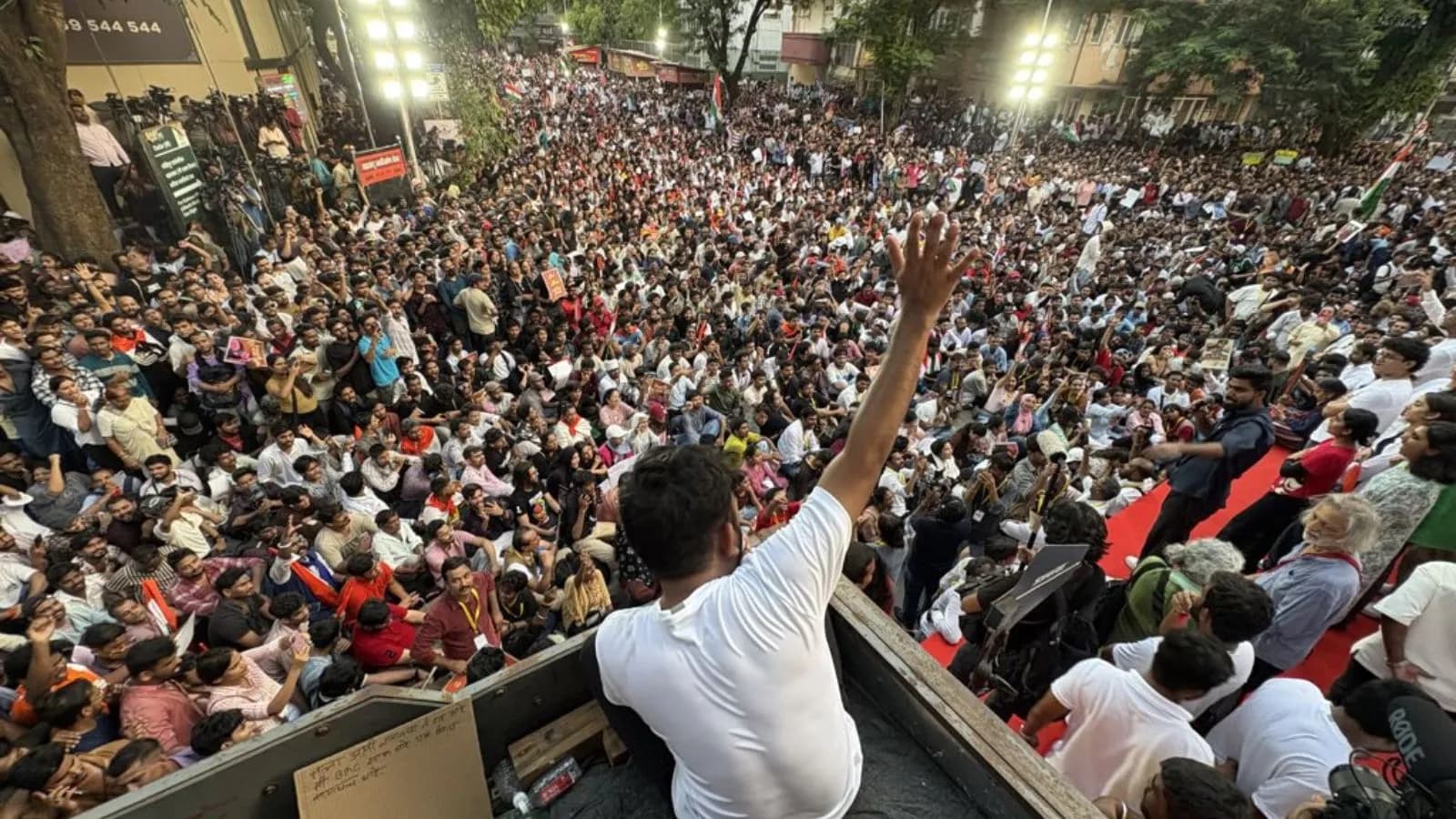
Nearly 50 years after the Emergency was declared in India, the National Council of Educational Research and Training (NCERT) has introduced the subject in a Class 9 textbook for the first time, describing it as one of the most significant challenges faced by Indian democracy, during which most fundamental rights were suspended.The topic features in the newly developed Social Science textbook, Understanding Society: India and Beyond, under a chapter that explores the strengths and challenges of India's democratic system.An NCERT official confirmed to ANI that this marks the first inclusion of a dedicated section on the Emergency in a Class 9 textbook.Here's what NCERT's added section readsThe inclusion marks a significant addition to the school curriculum, coming as the country recently observed 50 years since the declaration of the Emergency in 1975."One of the major challenges to democracy in India was recorded when an Emergency was imposed in 1975-77. In the early 1970s, public dissatisfaction with the government led by Indira Gandhi was growing. Rising unemployment, inflation, and allegations of misgovernance led to widespread protests," the section reads."In June 1975, a National Emergency was imposed by the government on the grounds of internal disturbance. During this period, a majority of Fundamental Rights were suspended, the press was censored, and numerous political leaders and activists were arrested. Democratic institutions came under severe strain, and citizens' freedom was restricted," it added.The book also highlighted the role of Jayaprakash Narayan in the movement against the Emergency."Mass movements led by Jayaprakash Narayan -a political leader and socialist thinker, popularly known as Lok Nayak-mobilised students and citizens, especially in Bihar and Gujarat. The Emergency was lifted in 1977, and general elections were held, allowing people to express their will through the ballot. The defeat of the ruling government demonstrated the strength of Indian democracy and highlighted the importance of Democracy," read the book.What did Pradhan say?Union Education Minister Dharmendra Pradhan on Thursday praised the decision of the National Council of Educational Research and Training (NCERT) to include a section on the Emergency in Class IX textbooks. He said it is important for future generations to understand the dark chapter of that period so that such situations are never repeated, ANI reported.Here's what Pradhan saidSpeaking to reporters, Pradhan said, “This is correct. NCERT has done the right thing. Future generations should know and understand the dark deeds of the Emergency so that such a situation does not arise again. That is why NCERT brought it to the forefront. NCERT did a good job…”The NCERT has, for the first time, introduced the topic in a Class 9 textbook, presenting it as "one of the major challenges," as the majority of fundamental rights were suspended.The Emergency section forms part of a broader discussion on challenges facing democratic systems. Alongside the Emergency, the textbook discusses issues such as fake news, misinformation, damaging public property, violation of public rules, poverty, regionalism, social discrimination and gender inequality as challenges to democratic practice.Apologise to young people: Rahul GandhiCongress leader Rahul Gandhi on Thursday hit out at Education Minister Dharmendra Pradhan for his "terrorist" remark against protesting students, saying he must immediately apologise to crores of young people in this country and resign for his "failures".The Leader of Opposition in the Lok Sabha said labelling anyone who questions the government as a "traitor" is the BJP's politics.In a post in Hindi on X, Gandhi said, "Intoxicated by the arrogance of power, the Modi government has reached a point where the Education Minister labels students demanding their rights, fair examinations, and a secure future as 'terrorists'.""Just think about it: the person whose failures
As crude oil prices fall to around $70 per barrel, the Centre has indicated it may ask airlines to revisit surge charges if aviation fuel prices remain stable. However, the government says any decision on lowering airfare-related costs will depend on whether the decline in fuel prices is sustained.Will Airfares Finally Come Down?(Pixabay)As global crude oil prices retreat towards pre-conflict levels, the Centre has hinted at the possibility of lower airfares in the future by asking airlines to review fuel-related surcharges if the decline in aviation turbine fuel (ATF) prices is sustained.Speaking to reporters on Thursday, Union Civil Aviation Minister K Ram Mohan Naidu said the government is closely monitoring ATF prices and is in discussions with airlines to assess whether the recent fall in fuel costs represents a lasting trend or only a temporary correction.Airfares had risen sharply in recent months after global crude oil benchmarks surged past the $100-per-barrel mark, pushing up ATF prices and prompting airlines to impose additional fare components and surge charges.Now, with crude prices hovering around $70 per barrel, questions have emerged over whether travellers can expect cheaper flight tickets in the coming months.What Union Minister said?Addressing these concerns, the minister said the government would first evaluate whether the reduction in fuel prices remains consistent before initiating discussions on lowering additional airfare charges."Secondly, now that we are seeing prices coming down, we still have to see if this is a long-term reduction or if it is sudden, and we are talking to the airlines on this," the minister said.Naidu noted that the past few months had been particularly significant for India's aviation industry, making it important to avoid premature decisions based on short-term fluctuations in crude oil prices."The last 4 months have been very important for the airlines... Once we are clear that price stability will continue for a long time, we will talk to them and work towards reducing the surge charges or the extra prices we are seeing right now," Naidu told news agency ANI.At present, aviation turbine fuel prices are revised every fortnight in line with movements in international crude oil prices. Since fuel accounts for a substantial share of airline operating costs, any sustained decline in ATF prices has the potential to reduce pressure on carriers and eventually influence ticket pricing.The minister also highlighted the Centre's efforts to shield the aviation sector from volatility arising out of geopolitical tensions in West Asia."In the case of ATF, we have also provided a price stabilisation fund of
₹10,000 crore."He added:"So you can see how important the Indian government is considering this issue right now."According to the government, a
₹10,000 crore price stabilisation fund has been created to support airlines during periods of financial stress linked to the ongoing West Asia crisis.Apart from the stabilisation fund, the Centre has introduced a series of measures aimed at easing the financial burden on airlines. These include capping ATF prices for domestic scheduled operators, reducing airport charges and extending assistance under the Emergency Credit Linkage Scheme.While the government's remarks have raised hopes of lower airfares, no immediate reduction has been announced. Officials indicated that any move to review surge charges would depend on whether aviation fuel prices remain stable over a longer period.For now, the Centre continues to monitor developments in the global oil market while consulting airlines before taking any decision on fare-related components.About the AuthorAnjali ThakurAnjali Thakur is a Senior Assistant Editor with Mint, reporting on trending news, entertainment and health, with a focus on stories driving digital conversations. Her work involves spotting early signals across news cycles and social media, sharpening stories for SEO and Google Discover
Discussion (0)