
Loading dispatches...
← Return to Newsroomgeneral
BJP Has No "Sharam" Or "Dharam": Akhilesh Yadav On Ram Temple Theft Row

New Delhi: The arrest of eight people -- most of them employees of the Ayodhya Ram temple -- for siphoning of funds from offerings has given a huge opening to the Opposition, which has sharpened its attack on the government. Today, it was the turn of Samajwadi Party chief Akhilesh Yadav, who accused the BJP of having no "Sharam (shame)" or "dharam (religion)". He questioned how the perpetrators and the investigators can belong to the same side and underscored the allegation that some of the offerings reached as far as Karnataka."The government itself has accepted this fact, that such an incident has occurred there," Akhilesh Yadav told NDTV in an exclusive interview today. "And after the SIT's report, the things that are coming to the forefront - the SIT itself is accepting that by turning off the CCTV, the offerings that came in have been subjected to a scam on a massive scale," he said."So, this tampering with faith, this play with our devotion, the people of India and Sanatani people can never accept this. I have even gone so far as to say that our religion, our society is such that if they turn off the CCTV, turn off the lights, and no one watches, then those who took away the offerings can place them back. At least open a way for them," he added.Asked if he considers the temple trust or the Chief Minister guilty, Yadav said, "I cannot say who is guilty. I am in the Opposition, so I won't label someone guilty".But the biggest question, he said, was how the Chief Minister, is was trying to set a world record on visits to the site and talks regularly of law and order, "did not even have a system in place that can inform them of such a massive theft ".There are more questions. If the "SIT is investigating the Trust, who did you submit the report to?" he said."The biggest question is also this - if you have conducted an investigation, who formed the SIT? Who formed the SIT and who was the investigation handed over to? Will there be an investigation into the SIT as well? What organisation will be there to investigate the SIT then?" he added. The issue of siphoning of donations was flagged first by Akhilesh Yadav's Samajwadi Party after which the Shri Ram Janmabhoomi Teerth Kshetra Trust had asked the government to order an investigation.The government subsequently ordered an inquiry by a Special Information Team, comprising Lucknow Divisional Commissioner Vijay Vishwas Pant, Inspector General of Police Kiran S and Finance Department Special Secretary Neel Ratan. The team submitted a preliminary report to the government on Tuesday. Later last week, eight people were arrested and two temple office bearers -- general secretary Champat Rai and trustee Anil Mishra -- submitted their resignations, taking moral responsibility for the theft. The Ram temple has been receiving huge donations since its inauguration in January 2024. During the FY2024-25, the Trust reported earnings of nearly Rs 327 crore, said the latest annual report that was issued last September. This included Rs 153 crore in donations and Rs 173 crore in interest income.Chief Minister Yogi Adityanath has said that no one will be allowed to play with people's faith and warned of strict action against anyone found guilty.
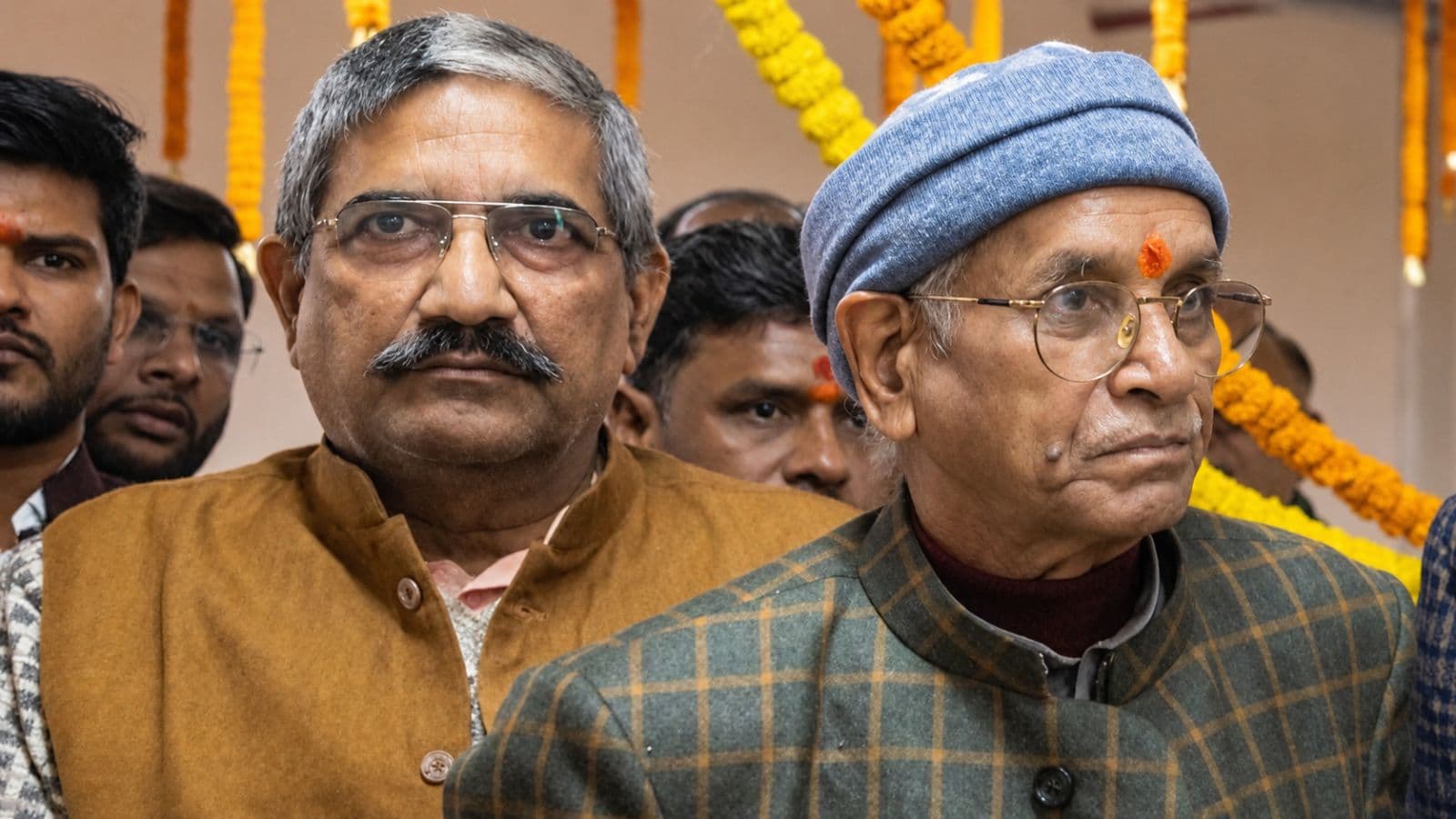
New DelhiUpdated: Jun 27, 2026 08:29 PM IST Trustee Anil Mishra (left) and general secretary Champat Rai (right) are under pressure amid the controversy. (Express photo)As police in Ayodhya began making recoveries and widened the probe into the alleged theft and embezzlement of funds and valuables donated to the Ram temple, the Shri Ram Janmbhoomi Teerth Kshetra Trust announced Saturday it had received the resignation letters of Trust general secretary Champat Rai and trustee Anil Mishra. The Trust said a decision on the resignation letters would be taken at its next meeting.Rai’s former driver Ram Shankar Yadav alias Tinnu Yadav is one of the eight men arrested for the alleged theft of temple donations. Currently in judicial custody, the arrested men will be produced before a Prevention of Corruption Act court Monday. Police have so far recovered Rs 79.80 lakh from seven of the eight accused. An unsigned statement in Hindi by Trust treasurer Govind Dev Giri, posted on X by the Trust, said, “The Trust has received resignation letters from the General Secretary of Shri Ram Janmabhoomi Teerth Kshetra (Trust), Champat Rai, and Trustee Anil Mishra. The Trust will consider these in its upcoming meeting.” “We are shocked, hurt and extremely saddened by the incidents in the Shri Ram temple (Ayodhya) heard during the past few days. Serving here as representatives of all Rambhakts and Ramsevaks, we are committed to get a fair investigation done and assure the Rambhakts,” it said. “The Trust assures those devotees who personally handed over silver bricks, ornaments, and other items to the Trust officials as offerings to Lord Shri Ram are safely available with proper records.” “Regarding the money received from the donation boxes in the temple, the Trust has lodged an FIR on the basis of the interim report handed over by the SIT constituted by the UP Government following the request of the Trust and legal action is being taken,” it stated.Story continues below this ad “We assure everyone that no such unfortunate situation will ever arise in the future. We will insist that the accused face the strongest legal punishment. We will not let anti-social, irreligious and selfish elements succeed in their attempts to defame Sanatan Dharma,” the statement said. “We believe that these clouds will clear, the darkness will disappear, the truth-light of the sun will shine, and the powerful stream of Rambhakti will continue to flow uninterrupted,” the Trust stated. After the Trust was constituted in 2020, Champat Rai took the lead in management of the temple. He used to coordinate with the construction committee and the construction agency. His word was considered final, be it on the management of temple affairs, appointment of staff, distribution of assignments, duty of priests and internal security of the premises. Trustee Anil Mishra was also actively involved in the management of the Ram temple. He came into national limelight after he and his wife performed rituals as ‘Pradhan Yajman’ (main hosts) during the January 2024 consecration of the temple idol.
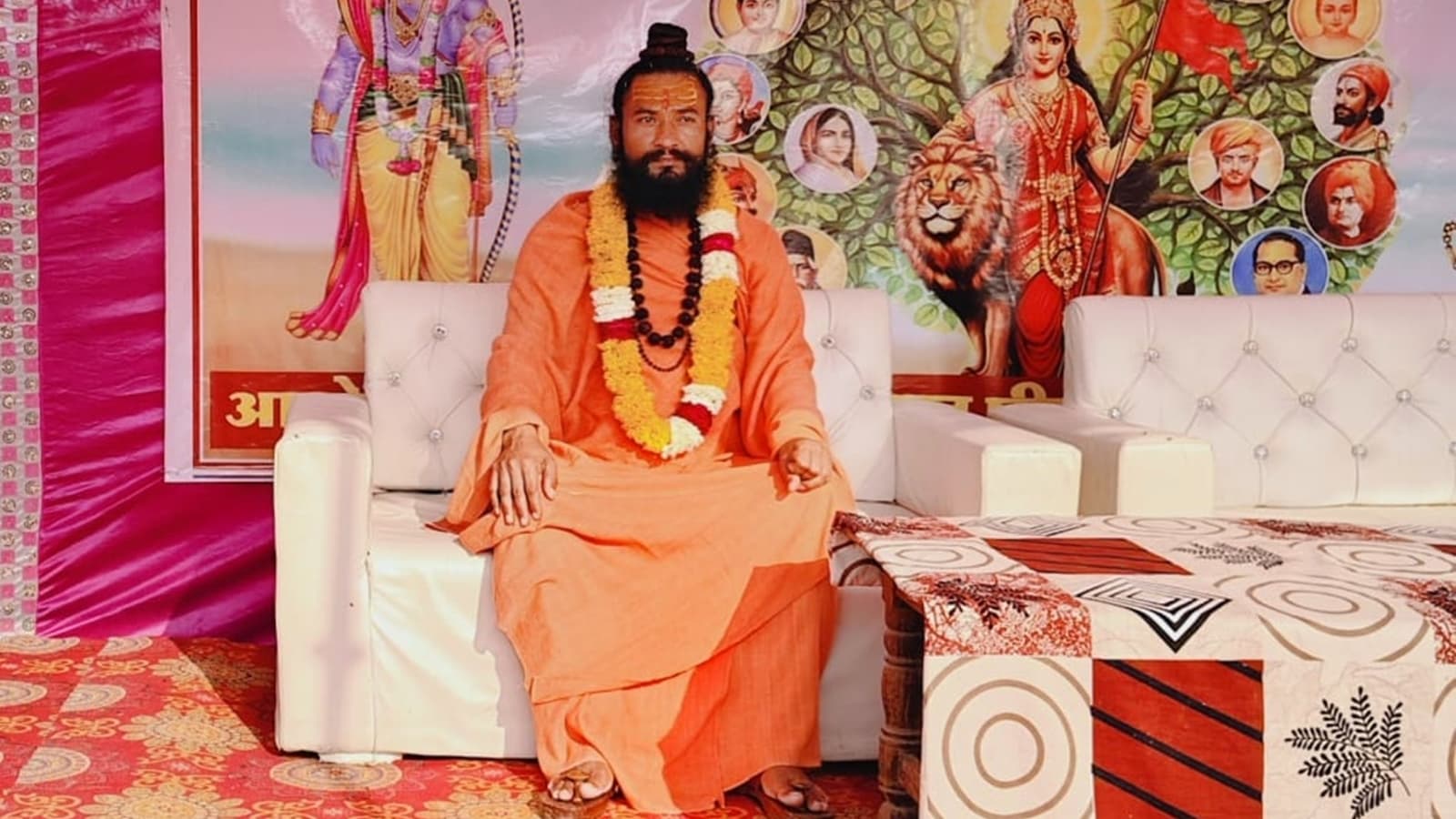
Behind the killing of Devanand Maharaj, the chief priest of Kota’s Chandresal Math, who was stabbed 26 times outside his residence earlier this month, may lie a battle for control of the 10th-century Math, its trust and 345 bighas of land – shaped by a complex interplay of caste, faith, power and money.Among the eight arrested for the June 5 murder of Devanand, 35, are another Math priest, Nandan Ban, and a Kota-based lawyer, Santosh Kumar Rai. Four people, including a minor, were hired to carry out the murder, says the Station House Officer of Borkheda Police Station, Anil Tailor, who is investigating the case.Investigators and trust members talk of an escalating dispute between Devanand and Rai, who represented the trust in a civil dispute over nominations to the Math body that controls the shrine and its vast properties. Devanand’s family says that five months before he was killed, he received death threats, asking him to leave the Math. “These recordings have been given to police,” his brother Budhraj Gurjar says. A view of Chandresal temple in Kota, Rajasthan. (Express photo Parul Kulshrestha)Born Dev Shankar Poswal in Rajwana village of Rajasthan’s Sawai Madhopur district, and married at the age of 15 in 2006, Devanand had left home in 2018 and announced renunciation of the world. He was earlier affiliated with the Juna Akhada, which is part of the Dashnam Sanyasi monastic order as the Chandresal Math. What’s different is that while the Math follows the Ban Panth, a scholar-ascetic tradition, Juna Akhada follows the Giri Panth, a warrior-ascetic tradition. Fissures followed as shifting between the two orders is traditionally not permitted. “When he joined, a lot of people had objections,” admits Brijmohan, 70, a member of the Chandresal Mahadev Mandir Trust. Alongside the sectarian differences, there were also caste undercurrents, with a section of the trustees accusing Devanand of “favouring” his members of his own Gurjar community. A trust member says: “Gurjars wanted him to take charge of the Math so that their possession of the land would remain secure.”Story continues below this ad But it wasn’t until 2024, when Devanand allegedly began “consolidating power”, that the dispute took its present form. At the heart of it were 345 bighas, or 215 acres, of disputed temple land. A view of Chandresal temple in Kota, Rajasthan. (Express photo: Parul Kulshrestha)All about the land Investigators and trust members say the dispute dates back nearly half a century, when the then mahant, Sharavan Ban, decided to sell 500 bighas of temple land, much of which passed into private hands. In 1998, after discovering that donated land had been alienated, residents of nearby villages filed a civil suit to recover 345 of the 500 bighas they had managed to trace. In 2003, while court proceedings were underway, residents approached the state government to register a trust – a move that shifted control of the Math’s assets away from the mahant, leaving him only as caretaker and manager. Sharavan Ban’s family argued at the time that the land was their private property.Story continues below this ad In 2016, after years of hearings, the court held that the properties belonged to the Math. However, says a trust member, “the court appointed a receiver until the property dispute and all related appeals were finally disposed of”. The member says the court also held that 270 of the 345 bighas were agricultural land, and would be auctioned off every year by the tehsildar, with the money deposited in a bank account. “This now amounts to Rs 4 crore. This money too has become a point of dispute,” says the member. The order was challenged before the court of the Additional District Judge-I, where the matter remains pending. The last hearing was on May 27. A view of Chandresal temple in Kota, Rajasthan. (Express photo Parul Kulshrestha)A fresh turnStory continues below this ad Earlier this year, Rai entered the picture, at a time when the Math was alrea
The petitioner also admitted during the hearing that the allegations in the PIL were founded entirely on newspaper reports and social media posts. THE GUJARAT High Court (HC) on Thursday dismissed a Public Interest Litigation (PIL) concerning the Somnath Temple, holding that it was based on unverified claims sourced from newspaper reports and social media posts and imposed exemplary costs of Rs 2 lakh on the petitioner. A Division Bench comprising Chief Justice Sunita Agarwal and Justice D N Ray accepted the State government’s contention that the petition was devoid of merit and amounted to an abuse of the PIL jurisdiction.The petitioner, Vilas Tukaram Kharat, a resident of Maharashtra, had sought disclosure of an alleged archaeological survey purportedly conducted beneath the Somnath Temple by the Archaeological Survey of India (ASI) and IIT Gandhinagar. During the hearing, Government Pleader G H Virk, appearing for the State, argued that the petition was a “publicity litigation” intended to embroil the Shree Somnath Trust – one of the respondents to the petition – in an “unwarranted” controversy. He also pointed out factual inaccuracies in the pleadings, including the petitioner’s reliance on a purported “Shree Somnath Trust Act, 1955”, although no such legislation exists. The Bench questioned the petitioner on why he had invoked the court’s PIL jurisdiction without first approaching the competent authorities to obtain the information sought. The court further noted that although Kharat claimed to represent an NGO, Sanatan Dhamm, he had neither disclosed his occupation nor produced any material to establish his association with the organisation. The petitioner also admitted during the hearing that the allegations in the PIL were founded entirely on newspaper reports and social media posts. Observing that such petitions undermine the credibility of genuine public interest litigation, the HC dismissed the plea and imposed costs of Rs 2 lakh on the petitioner.
Discussion (0)