
Loading dispatches...
← Return to NewsroomPolitics
2016 gutkha scam: Complete trial within three months, orders Madras High Court
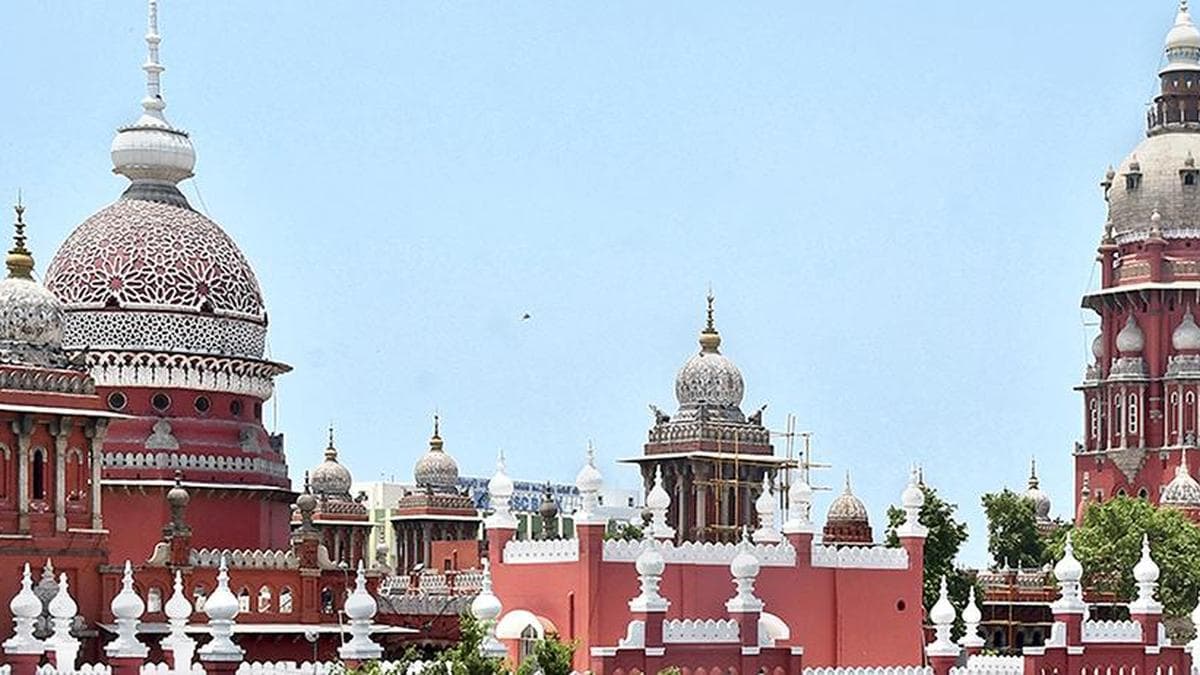
Madras High Court. File | Pichumani The Madras High Court has directed a Special Court for MP/MLA cases in Chennai to complete, within three months, the trial in the 2016 illegal gutkha sale case pending against former AIADMK Ministers C. Vijayabaskar (now with the Tamilaga Vettri Kazhagam) and B.V. Ramana; former Directors General of Police T.K. Rajendran and S. George; and 23 others.Justice G.K. Ilanthiraiyan issued the direction while dismissing a petition filed by Mr. George, who insisted on being furnished with copies of the statements of all prosecution witnesses whom the Central Bureau of Investigation (CBI) intends to examine during the trial.The accused had approached the High Court after the special court rejected his request on December 17, 2025. He sought a direction to the prosecution either to furnish him with the statements of all prosecution witnesses or not to examine any witness whose statement had not been furnished to him.Justice Ilanthiraiyan pointed out that the prosecution had not recorded the statements of all 278 witnesses in the case under Section 161(3) of the Code of Criminal Procedure and had therefore furnished the accused with only those statements that had been recorded by the investigating agency.The CBI had chosen to record the statements of about 150 witnesses, and the copies of those statements had been promptly shared with the accused. The statements of around 120 witnesses had not been recorded, as those individuals were intended only to speak about the documents annexed to the charge sheet and nothing more.Observing that an accused could complain of denial of fair trial only if he/she had not been furnished with copies of statements that had been recorded by the prosecution, the judge said, the accused, on the other hand, could not compel the prosecution to necessarily record the statements of all witnesses if it chooses not to do so.“Hence, the trial court (special court for MP/MLA cases) has rightly rejected the memo filed by the petitioner. This court finds no illegality or infirmity in the order passed by the trial court. However, the petitioner is at liberty to raise the said ground as a defence before the trial court in accordance with law. The trial court is directed to proceed with the trial and complete the same, within a period of twelve weeks from the date of receipt of a copy of this order,” Justice Ilanthiraiyan concluded.The alleged manufacture, distribution, and sale of gutkha, despite it being a banned substance in Tamil Nadu, had come to light in July 2016 when the Income Tax department had recovered certain incriminating documents during a search-and-seizure operation carried out at a private industry for tax evasion. Published - July 04, 2026 05:57 pm IST
The Kerala High Court has informed the State government that the Law Secretary and the Cabinet Secretary will have to appear before the court unless “satisfactory progress” is made in the finalisation of the draft Kerala Prohibition of Ragging (Amendment) Bill.The Division Bench of Chief Justice Soumen Sen and Justice C. Jayachandran recently observed that the State was unable to inform the court the current status of the draft Bill, and that it had not yet been placed before the Cabinet for approval, despite specific directions in this regard.Upon the court’s request, the Election Commission of India had approved a Cabinet meeting to finalise the draft Bill during the State Legislative Assembly elections. After the formation of the new State government, three weeks were given to the State to take steps on the draft Bill on June 10. The court observed that the matter has been pending for more than a year. The petition was filed by the Kerala State Legal Services Authority to combat the “increasing brutality and violence in ragging” in educational institutions across the State, by strengthening the Kerala Prohibition of Ragging Act, 1998. The draft Bill had proposed constituting anti-ragging committees, squads and mentoring cells in all educational institutions, in addition to anti-ragging cells at police stations. Upon receiving information or complaint, the head of the institution should, within 24 hours, determine whether a prima facie case is made out to register an FIR and act accordingly. The anti-ragging committee should include faculty members, non-teaching staff, senior students and freshers, parents, representatives of civic and police administration, local media, and NGOs involved in youth affairs, led by the head of the institution. Published - July 02, 2026 04:24 pm IST
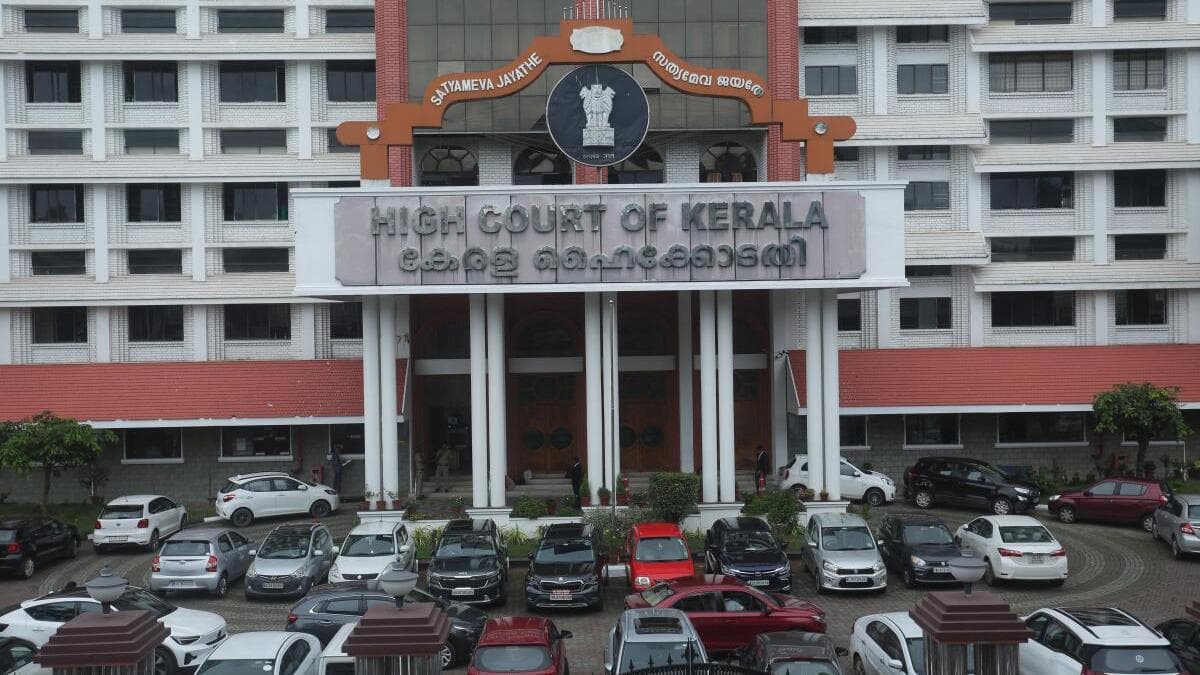
The High Court observed that once the anticipatory bail plea was filed in Madhya Pradesh, the court did not possess any further jurisdiction in the matter. | A Single Bench of Justice Kauser Edappagath was informed by the State of Madhya Pradesh that the anticipatory bail plea moved by Mr. Khan had been dismissed by a Special Judge under the Protection of Children from Sexual Offences (POCSO) Act in Mandleshwar, Madhya Pradesh.The High Court observed that once the anticipatory bail plea was filed in Madhya Pradesh, the court did not possess any further jurisdiction in the matter.Earlier, controversy erupted over the interfaith marriage between Mr. Khan and the woman after her family had accused him of engaging in “love jihad” and filed charges alleging kidnapping, offences under the SC/ST law, and child marriage.The National Commission for Scheduled Tribes had also launched a probe into the actual age of the woman after her father had alleged that she was a minor at the time of the marriage. Published - July 02, 2026 02:51 pm IST
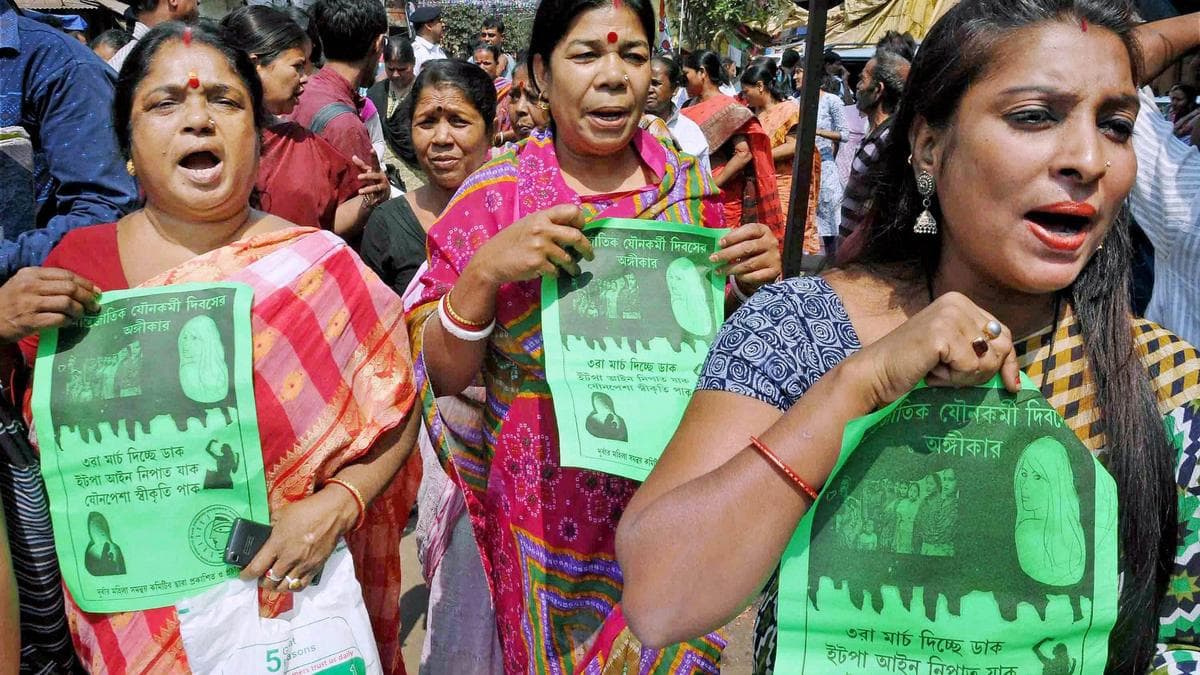
Sex workers participate in a rally on the occasion of International Sex Worker Rights Day at Sonagachi (India's largest Red Light area), in Kolkata. File | DMSC, which has emerged from the Sonagachi Project, a community-led HIV intervention receiving international recognition for its success in reducing HIV transmission while promoting the collective empowerment of sex workers, emphasised that trafficking and consensual adult sex work are distinct realities. Welcoming the judgment delivered by the Supreme Court of India on May 29 in Prajwala vs Union of India, DMSC said in a statement, "DMSC has long argued that conflating trafficking with sex work obscures the lived realities of both trafficked persons and adult women who voluntarily engage in sex work. Such conflation often leads to ineffective interventions, violations of rights, and misplaced policy responses. The Court's recognition that the rights and dignity of trafficking victims and those of voluntary adult sex workers must both be protected is therefore a welcome and progressive development.”"Drawing upon the principles articulated in the 2022 Budhadev Karmaskar judgment, in which DMSC was a party, the Supreme Court has acknowledged that while victims of trafficking have a right to protection and rehabilitation, such rehabilitation cannot be imposed through coercive rescue, detention, or institutionalisation of consenting adults,” the statement added. “The requirement that authorities undertake meaningful inquiries regarding age, consent, and individual circumstances before intervention is an important safeguard against arbitrary actions that have often caused further trauma and disruption in the lives of adult sex workers.”A Bench of Justices J.B. Pardiwala and R. Mahadevan, while hearing a plea by the Senior Advocate Aparna Bhat for the preparation of a 'Victim Protection Plan', upheld the consent of the adult sex workers as the primary consideration for their rehabilitation. Rejecting the paternalistic assumptions under Section 17 of the Immoral Traffic (Prevention) Act, 1956 (ITPA), the court also observed, "Such a one-size-fits-all approach fails to account for the diverse realities of those brought before magistrates. It is the victim's life, liberty, and future that the order will determine, and thus it would be incongruous to hold that all of this can be decided without any regard for what the victim wants."The apex court said a threshold inquiry must be conducted by the magistrate when an adult person is produced before him under Section 17, to determine whether the individual is an adult and in the prostitution business voluntarily. The inquiry must also determine whether she is willing to be rehabilitated in protective custody. "DMSC is particularly encouraged by the Victim Protection Plan outlined by the Court. Several of its principles resonate with the work of DMSC's Self-Regulatory Boards, which have for many years sought to identify minors and trafficked persons, assess individual circumstances, and ensure that all decisions affecting their lives are guided by consent, dignity, and respect for agency," the statement said. The organisation said, "While we wholeheartedly welcome this pathbreaking judgment, we remain conscious that judicial recognition must be accompanied by effective implementation. We remain committed to working with governments, institutions, civil society organisations, and communities to advance responses that uphold rights, combat trafficking, and promote equality, dignity, and justice for all. The journey towards equality and recognition
A view of Sabarimala Ayyappa temple. | Mr. Potti’s questioning last week assumes legal and political significance, as the SIT is scheduled to submit its latest report in the case to the High Court on Monday, even as the highly undercover investigation continues to rivet public attention and remains an animating factor in Kerala politics. According to officials privy to the investigation, the SIT was reportedly probing whether the previous Travancore Devaswom Board (TDB) administration under the LDF government had cited non-existent defects to dispatch the gold-plated copper panels covering the Dwarapalaka statues flanking the entrance to the sanctum sanctorum to Smart Creations for replating to facilitate the suspected pilferage of gold through an in-house chemical process. They noted that SIT officials were sceptical of the decision’s authenticity, given that the TDB had sent the same gold-plated copper panels to Smart Creations in 2019 for repair and refurbishment. The firm then issued a warranty, guaranteeing that the panels would retain their golden sheen for at least 40 years. The firm also promised to repair or replace the panels free of charge if the warranty failed. The SIT was also reportedly investigating whether there was any prior criminal intention to defraud the public-owned temple by issuing the warranty in Mr. Potti’s name, and entirely omitting TDB, the temple’s statutory custodian, from the agreement.For one, according to officials, Smart Creations had issued a 40-year warranty in Mr Potti’s name, and the allegedly ambiguous wording of the agreement tacitly insulated the firm from legal liability for any physical damage during the repair and electroplating processes.Moreover, the SIT enlisted the help of the National Metallurgical Library under the Centre for Scientific and Industrial Research to compare the original gold covering installed in 1989 with those returned by Smart Creations after electroplating, purportedly to establish a baseline for forensic comparison and possibly to evaluate any “pilferage” of gold.Notably, the SIT had submitted the report in a closed cover to the High Court’s Devaswom Bench, and laboratory findings remain confidential. Additional Director General of Police H. Venkatesh and SIT’s chief investigating officer S. Sasidharan are leading the investigation. Published - June 27, 2026 04:55 pm IST


Discussion (0)