
Loading dispatches...
← Return to NewsroomPolitics
Prasoon Joshi-led study group on promoting Indian cinema | Explained
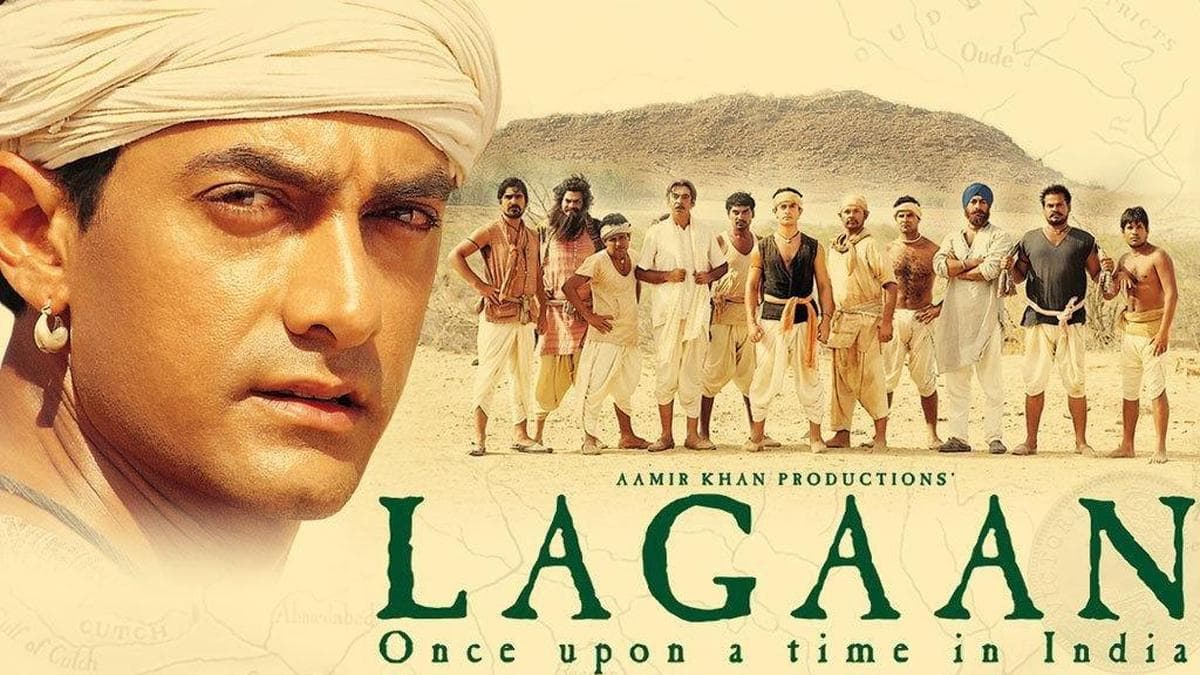
The Oscars have largely not featured a meaningful slate of Indian films in decades, with Lagaan being the last India-submitted film to be nominated at the turn of the century. File The story so far: The Union Ministry of Information and Broadcasting (MIB) on Monday (June 29, 2026) announced two measures to support the Indian film industry. One is a study group led by Prasar Bharati chairperson Prasoon Joshi, the longest-serving chairperson of the Central Board of Film Certification (CBFC), to examine the “opportunities and challenges before Indian cinema”. The other is a model cinema regulation that the Ministry has shared with State governments.What will the study group examine?The study group is likely to examine the Indian film industry’s lackluster global soft power through cinema. While Indian films in multiple languages are released globally, the audience remains largely confined to the diaspora. Some exceptions exist, such as RRR, which benefited from a re-release in North America that performed well enough to earn the film the award for Best Original Song at the 2023 Academy Awards.This exception notwithstanding, the Oscars have largely not featured a meaningful slate of Indian films in decades, with Lagaan being the last India-submitted film to be nominated at the turn of the century. Films such as The Lunchbox and All We Imagine As Light, which enjoyed widespread global critical acclaim, were overlooked by the Film Federation of India (FFI), in favour of lesser-known films that struggled to mount the publicity required to warrant serious awards season consideration.What is on the committee’s agenda?The committee may, for instance, focus on why India has not produced globally resonating media franchises, as the U.S., Japan and other countries have done. The committee is also set to explore the “impact of new technologies on cinema” and suggest how filmmakers can use AI tools. It will also explore financing problems impacting filmmakers and “identify best practices” with State governments for the “long-term growth of Indian cinema”.Censorship is not addressed in the study group’s publicly announced terms of reference, even as CBFC-related issues have delayed releases or otherwise curtailed filmmakers’ creative choices over the last decade.What do the model cinema regulations propose?In a separate intervention, MIB has come up with model State cinema regulations and sent these directly to States. The Ministry declined to provide a copy of the regulations to The Hindu, but, according to a senior official, it is an exhibition industry-focussed document. It looks at how to “streamline exhibitor requirements, such as those for establishing cinema halls,” the official said, adding that the regulations also seek to streamline clearances and no-objection certificates (NOCs). This is an “advisory” document, the official said, as the regulation of cinema halls falls entirely under the purview of State governments.“There are timelines, like three weeks for certain things, ten days for certain things,” the official said. On average, India has a population of hundreds for every cinema seat, compared to a few dozen in developed film markets such as France. Published - July 01, 2026 12:52 pm IST
Jammu and Kashmir Lieutenant Governor Manoj Sinha being presented a memento during a Interfaith Dialogue organised by National Council for Promotion of Urdu Language and Inter-Faith Harmony Foundation of India (IFHFI), in Srinagar. Credit: @OfficeOfLGJandK/X Jammu and Kashmir Lieutenant Governor Manoj Sinha on Saturday (June 27, 2026) said Islam Sufis and scholars — who came to India in the 12th and 13th centuries — learnt the ideals of co-existence from Indian scriptures, and were inspired by the vision of Vedas, Upanishads, Buddhism, and Jainism. “They (Islamic Sufis and scholars) found unique Indian culture rooted in love, spirituality and compassion, and equality. Sufi saints were inspired by the vision of Vedas, Upanishads, Buddhism, and Jainism and they learnt the ideals of co-existence from Indian scriptures,” Mr. Sinha said. He was speaking at the ‘Interfaith Dialogue’ organised by the National Council for Promotion of Urdu Language and Inter-Faith Harmony Foundation of India in Srinagar.Mr. Sinha said numerous repositories of Sanskrit knowledge were translated into Arabic. “Our ancestors prayed, ‘Sarve Bhavantu Sukhinaḥ, Sarve Santu Niramayaḥ’ - may all be happy, may all be free from illness. This prayer is not for one religion or sect but it is a prayer for the welfare of all humanity. I believe this is India’s identity.”He said the world recognises Hinduism Sanatana Dharma “never imposed itself and embraced diversity and coexistence”.“Ancient India built a foundation of respect, giving Christianity, Islam, Judaism and Zoroastrianism freedom to flourish. India’s legacy as an ancient civilisation rooted in mutual respect, where diverse faiths coexist, flourish, and teach the world the wisdom of peace,” Mr. Sinha added.He said in a world facing conflicts and intolerance, the core spirit of Sanatana Dharma and Indian philosophy can serve as a guiding light. “Today, the world may be divided by religion, language, and race, but Indian thought has the unique power to bridge these divides,” the L-G said.Further, he said that India is a living idea that declares humanity should live together as one family. He said the young generation must carry this vision forward, reminding the world that peace is possible through mutual respect.On arrangements ahead of Amarnath yatraMr. Sinha also met with civil society groups, business leaders, and religious heads in Srinagar to discuss the upcoming Amarnath Yatra.He appealed to all sections of the society to actively support and contribute to this sacred journey, which is a true symbol of social harmony and he urged the public to come forward to ensure a memorable spiritual experience for all pilgrims.“Let us unite across all sectors to make this year’s pilgrimage a beacon of faith, unity, and devotion. As pilgrims embark on the sacred journey to Baba Barfani’s cave, let us transform our devotion into compassionate action, making this Yatra a true testament to ultimate experience and human kindness,” he said.The L-G stated that yatra has shaped our faith, culture and identity since time immemorial. “The sacred Yatra reminds us of our eternal bond with Lord Shiva, the symbol of infinite power, knowledge and compassion. Each year pilgrims come from across the country and abroad and they bring not only their prayers but also the hopes and aspirations of all humanity,” he added.He said this is an occasion when Hindus, Muslims, Sikhs, Christians and followers of all faiths in Jammu Kashmir stand together in the cause of human service. “That unity is our greatest strength,” he added.The yatra will begin from July 3 and go on till August 28 this year. Published - June 28, 2026 04:01 am IST

Discussion (0)