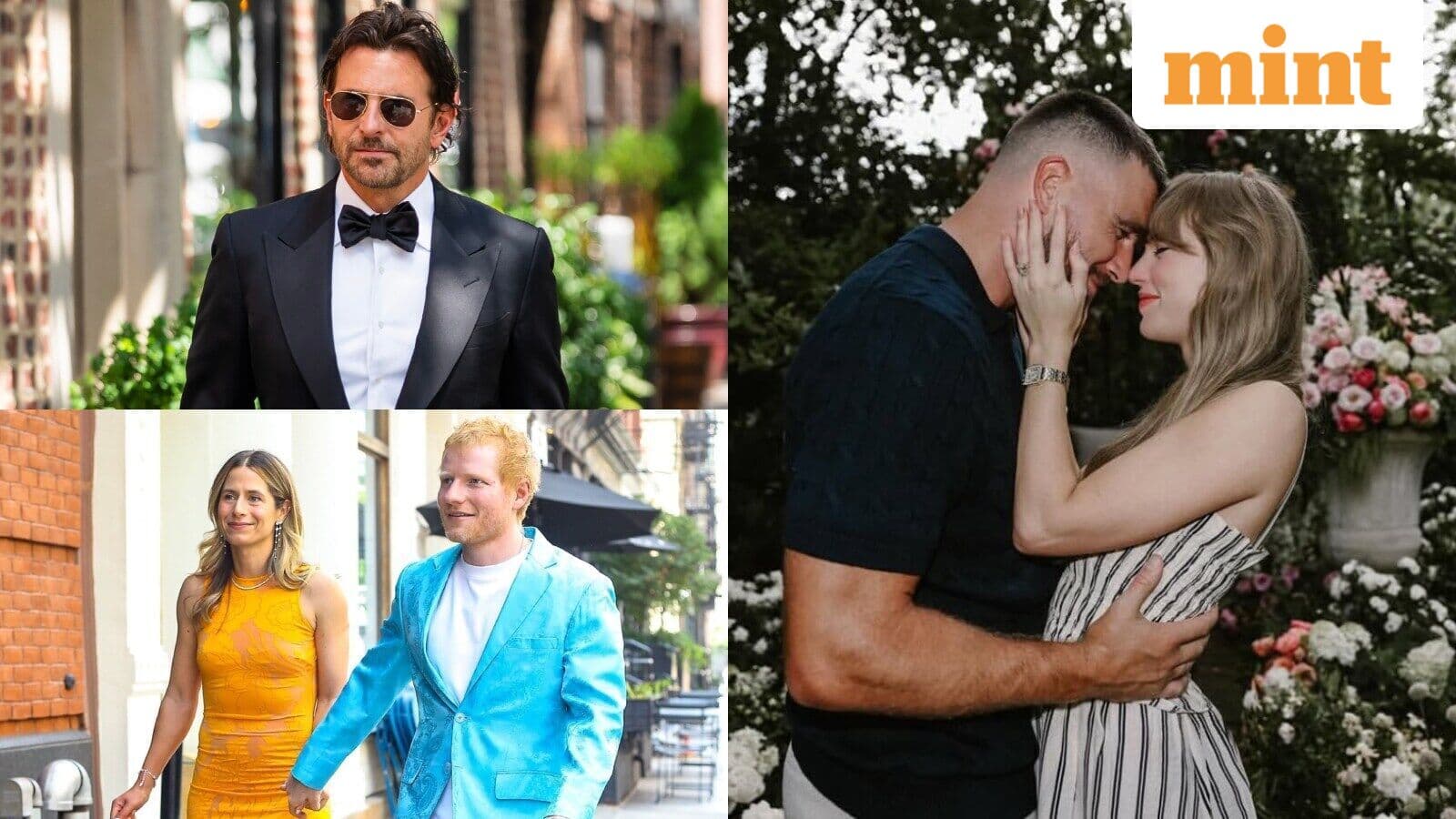
Travis Kelce and Taylor Swift are now husband and wife. The couple got married in New York City on Friday, July 3. Their wedding was confirmed by a “JUST&T MARRIED!” sign on a video screen, which was placed right outside the wedding venue, Madison Square Garden, around 7:30 pm ET.Taylor Swift and Travis KelceAs per the Hollywood Reporter, Swift's longtime publicist, Tree Paine also confirmed the wedding on Friday. The much-awaited wedding saw several celebrities in attendance in New York City.Adam SandlerReportedly, Adam Sandler officiated the wedding ceremony of the pop singer and her NFL tight end partner. It is said that Swift and Kelce skipped bridesmaids and groomsmen. Instead, Austin Swift was Taylor Swift’s man of honour while Jason Kelce was the best man for Travis Kelce.Quick answers to key questions•5 QUESTIONSTaylor Swift and Travis Kelce got married on Friday, July 3, in New York City.Adam Sandler officiated the wedding ceremony for Taylor Swift and Travis Kelce.Austin Swift served as Taylor Swift’s Man of Honor, while Jason Kelce was the Best Man for Travis Kelce.The wedding had tight security with street closures around Madison Square Garden and guests were asked to sign non-disclosure agreements.Taylor Swift wore a custom haute couture gown by Jonathan Anderson for Christian Dior and paired it with Cartier jewelry.Celebs at Taylor Swift and Travis Kelce weddingMany celebrities were spotted arriving at the World’s Most Famous Arena in Midtown Manhattan on Friday, including Selena Gomez, Jack Antonoff, Bradley Cooper and Lena Dunham.View full ImageCelebs at Taylor Swift-Travis Kelce wedding.(AFP/ Getty Images/ X)On the other hand Ed Sheeran, Jessica Chastain, Dakota Johnson, Jason Sudeikis, Benson Boone, Hugh Grant, Kelsea Ballerini, Camila Cabello, Karlie Kloss and Josh Kushner, Ethan Hawke, Zoë Kravitz, Mariska Hargitay and Peter Hermann, the Haim sisters, the Chainsmokers (Alex Pall and Drew Taggart), Erin Andrews, Charissa Thompson, soccer player Abby Wambach and author wife Glennon Doyle, LA Rams quarterback Matthew Stafford and wife Kelly, Nikki Glaser, Ellie Goulding, George Stephanopoulos, Aaron Dessner, Julianne Moore, George Kittle, Eric Stonestreet, San Francisco 49ers' Kyle Juszczyk and wife Kristin, Seattle Seahawks' Cooper Kupp, Graham Norton, Joe Buck and wife Michelle Beisner-Buck, Barbara Corcoran, Jenny Han, Tommy Hilfiger, The Chicks, Sombr, Brad Paisley and Kimberly Williams-Paisley, Saturday Night Live breakout Marcello Hernandez and Jimmy Fallon were spotted at the wedding, as reporter by Hollywood Reporter.Swift’s longtime best friend Abigail Anderson was also among the guests.Several pictures and videos from Madison Square Garden have surfaced online with no sight of the bride and groom.The couple hosted a rehearsal dinner on Thursday night at the Infosys Theater within the Garden. It is believed that it was for about 100 guests.Tight security has been placed owing to the high-profile event with a star-studded guest list. Several streets around the arena were said to be shut to vehicle traffic and, in some cases, even for pedestrian movement.It is believed that guests at the wedding were reportedly asked to sign non-disclosure agreements. No phones were allowed at the event either.What did Taylor Swift wearReportedly, Taylor Swift wore a custom haute couture gown by Jonathan Anderson of Christian Dior for her special day. Travis Kelce, on the other hand, also wore a haute couture look by Anderson for Dior, reports added.Both the bride and groom reportedly wore Christian Louboutin shoes. Taylor Swift opted for Cartier jewelry.Meanwhile, fans across the globe continue to wait for the official pictures from the Taylor Swift and Travis Kelce wedding.A press statement is expected shortly.Reportedly, heavy rain began in the city shortly after Swift and Kelce's wedding was announced.About the AuthorSneha BiswasSneha Biswas specialises in covering entertainment and pop culture, with a specialisatio



Discussion (0)