
Loading dispatches...
← Return to Newsroomgeneral
Why Sukhbir Badal’s reading of Modi’s ‘Akali’ remark has created a storm
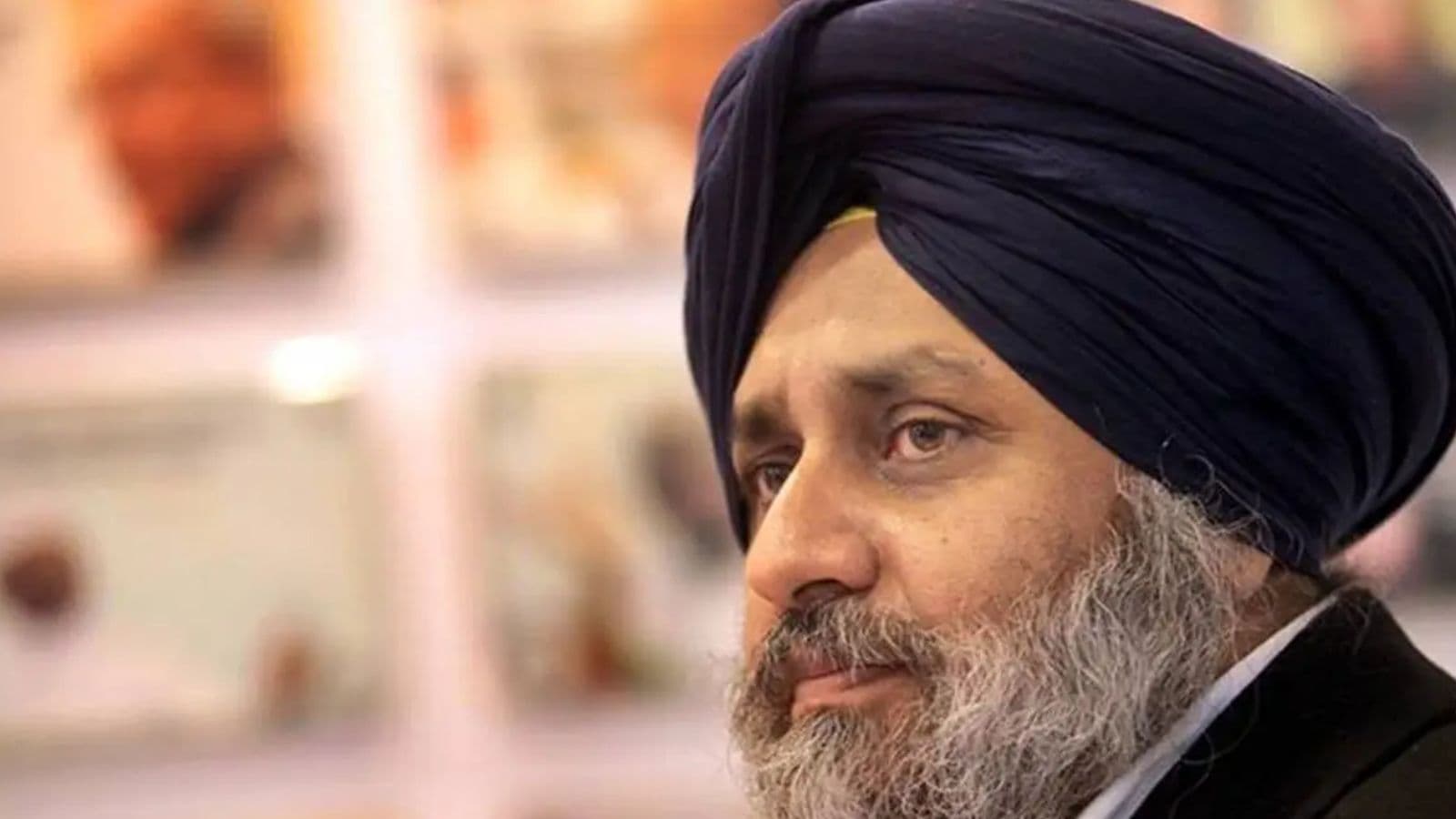
PM Narendra Modi referred to 'Akali Dal' during his Punjab rally, but SAD chief Sukhbir Badal said the remark targeted another Akali faction. (File Photo)Prime Minister Narendra Modi’s recent visit to Punjab was intended to highlight the Centre’s development agenda, with projects worth around ₹5,470 crore inaugurated or dedicated to the state. Yet, much of the political discussion that followed centred not on the projects but on a brief remark the Prime Minister made about the Akali Dal, and more significantly, on how Shiromani Akali Dal (SAD) president Sukhbir Singh Badal interpreted it. While Modi referred simply to “Akali Dal” during his address in Jalandhar, Sukhbir Badal later maintained that the criticism was not aimed at the Shiromani Akali Dal but at another Akali faction. His interpretation has generated considerable discussion because the Prime Minister himself did not distinguish between different Akali groups. What did PM Modi say? Addressing a public rally in Jalandhar, Modi targeted Punjab’s three principal political rivals while projecting the BJP as the state’s only viable alternative. He described the ruling Aam Aadmi Party (AAP) as “kattar beimaan” (utterly dishonest), said the Congress remained trapped in internal power struggles, remarking that “inka to kissa kursi ka hi khatam nahin hota”, and added that “Akali Dal is no different”, alleging that internal selfish interests had prevented it from serving Punjab effectively. At no point did the Prime Minister specify any particular Akali faction. He referred only to “Akali Dal”. Why did Sukhbir Badal’s response attract attention? Rather than treating Modi’s remarks as criticism of the Shiromani Akali Dal, Sukhbir Badal argued publicly that the Prime Minister was referring to Akali Dal Punar Surjit and other splinter Akali factions that have emerged in recent years. That clarification surprised many political observers because Modi himself had made no distinction between the Shiromani Akali Dal and any other Akali outfit. The response immediately prompted a political question: why did the SAD chief seek to distance his party from remarks that appeared to refer to the Akali Dal as a whole? How do political observers view Badal’s statement? Political observers and leaders from both parties suggest more than one explanation. One view is that by declining to interpret Modi’s remarks as a direct attack on the Shiromani Akali Dal, Badal avoided publicly escalating tensions with the BJP, the party’s ally for nearly 25 years. A senior SAD leader said this should not be read as evidence of any behind-the-scenes negotiations but reflected a conscious decision not to further widen the political distance between the former allies. Why does the BJP-SAD relationship still matter? The BJP and the Shiromani Akali Dal shared one of India’s longest-running political alliances before parting ways in 2020. Together, they governed Punjab three times. The BJP traditionally drew support from urban constituencies, traders and sections of the Hindu middle class, while the Shiromani Akali Dal remained dominant across large parts of rural Punjab and among sections of the Sikh electorate. The alliance allowed both parties to expand beyond their individual support bases. What changed after 2020? The alliance collapsed in 2020 after the Shiromani Akali Dal walked out of the National Democratic Alliance (NDA) over the Centre’s three farm laws. Since then, the two parties have fought the 2022 Punjab Assembly election and the 2024 Lok Sabha election separately. Both have faced electoral challenges after the split. The BJP has continued to struggle to expand beyond its traditional urban base into rural Punjab, where the Akali Dal historically maintained strong organisational networks. The Shiromani Akali Dal, meanwhile, has found it difficult to regain political momentum without the BJP’s urban support base. It has also had to contend with anti-incumbency from its previous tenure a
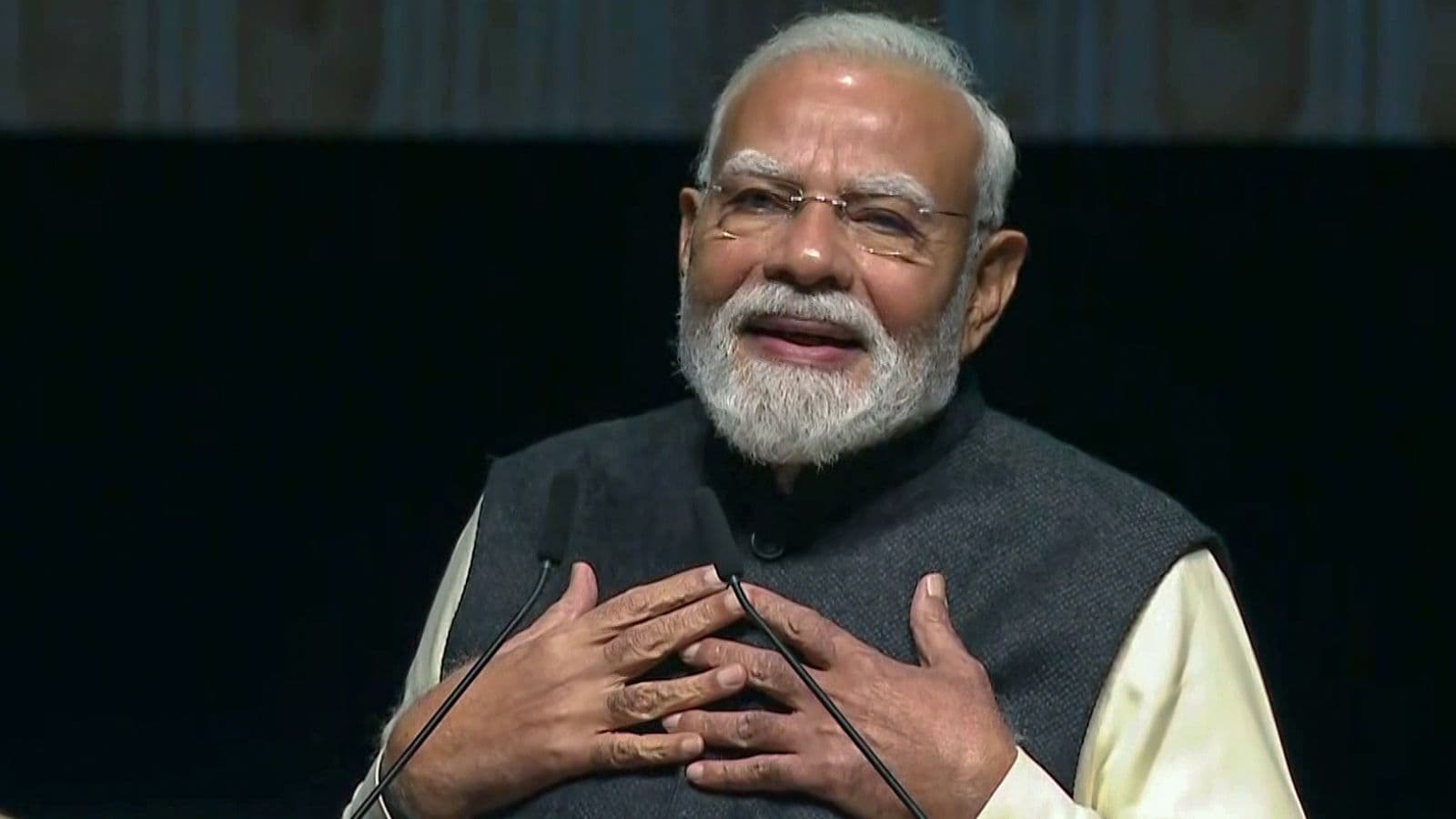
Prime Minister Narendra Modi’s Jalandhar visit on July 17, his single stopover in Punjab in the run-up to the 2027 Assembly elections, especially after the BJP announced going solo, is an important strategic move given that the politics in the Doaba region is dominated by 33.34 per cent (one third) of the state’s Scheduled Caste population, making it electorally crucial for political parties, with Jalandhar being its nucleus.Jalandhar is also home to Dera Sachkhand Ballan, one of the most influential religious centres of the Ravidassia community, which has a significant social and political presence in Doaba. Outreach to the Ravidassia community has increasingly become an important aspect of Punjab’s electoral politics.According to the 2011 Census, of Doaba’s total population of 52.08 lakh, 19.48 lakh (around 37%) are Dalits. Of Doaba’s Dalit pollution, about 11.88 lakh people (around 61%) belong to the Ravidassia community. Also, Doaba is dotted with hundreds of deras. The Doaba region, comprising the districts of Jalandhar, Kapurthala, Hoshiarpur and Shaheed Bhagat Singh Nagar (Nawanshahr), accounts for 23 of Punjab’s 117 Assembly segments and is home to the Ravidassia community’s largest dera (religious place), Dera Sachkhand, at Ballan village in Jalandhar. Of the 23 segments, Doaba has eight constituencies (35 per cent) reserved for SCs, including Adampur, Kartarpur, Jalandhar West, Phillaur (all in Jalandhar), Sham Chaurasi, Chabbewal (in Hoshiarpur), Banga (Nawanshahr), and Phagwara (in Kapurthala). In the 2022 Assembly elections, the Congress won 10 seats in Doaba, AAP 9, while one each went to the SAD, BJP, BSP and an Independent. Currently, the AAP has 12 Doaba seats after winning the Jalandhar South and Chabewal by-elections, and with SAD MLA Dr Sukhwinder Sukhi from the Banga Assembly segment joining the AAP.Story continues below this ad Given this arithmetic, Modi had visited Dera Sachkhand Ballan during the birth anniversary celebrations of Guru Ravidas earlier this year and renamed Adampur Airport in Jalandhar district after Guru Ravidas. Also, the Centre honoured Dera head Sant Niranjan Das with the Padma Shri this year. Although the Dera has traditionally maintained that it does not endorse any political party, leaders across the political spectrum regularly visit the shrine to engage with the community. Adding another layer of political significance to his visit, the Prime Minister will launch a new train service between Jalandhar and Varanasi, to be named “Shri Guru Ravidas Ji Maharaj Express”. Varanasi, regarded as the birthplace of Guru Ravidas, is Modi’s Lok Sabha constituency. Every year, devotees associated with Dera Sachkhand Ballan travel from Jalandhar to Varanasi to mark Guru Ravidas’ birth anniversary, traditionally through the Begumpura Express. BJP leaders see the proposed new train service as symbolically significant in strengthening connectivity with a place of immense religious importance for the Ravidassia community.Story continues below this ad Meanwhile, preparations are in full swing at Jalandhar Cantonment ahead of the Prime Minister’s visit, during which he is likely to inaugurate the renovated 110-year-old Jalandhar Cantonment railway station under the Amrit Bharat Station Scheme for Rs 125 crore. The Prime Minister is also likely to dedicate 75 other renovated railway stations across the country, including four in Punjab, virtually from the Jalandhar Cantonment railway station. According to BJP leaders, the Prime Minister’s helicopter will land at the Punjab Armed Police (PAP) ground in Jalandhar at around 3.50 pm. From there, he will proceed to the nearby Jalandhar cantonment railway station and is expected to remain there until around 4.30 pm. Modi will, meanwhile, address a public rally, which is expected to last for around 40 to 45 minutes, they said, adding that a pandal is being laid close to the railway station for the rally. Railways and administration officials have intensifi

New DelhiJul 12, 2026 05:55 PM IST Priyanka Chopra may be in Hyderabad for a packed shooting schedule, but she still found time for one seasonal indulgence many Indians can relate to: mangoes. The actor recently shared glimpses of herself enjoying juicy Himayat mangoes – a prized Hyderabad variety – on Instagram, posting a tiffin of diced fruit with the caption “Mango season… #himayat #hyderabadimangoes”, followed by another story that simply read “Mango love.”But if you are trying to watch your weight, does mango season mean guilt? Not necessarily, says Dr Aarti Ullal, physician and diabetologist at Gleneagles Hospital, Parel. The issue, she explains, is rarely the fruit itself, but how much of it you eat and what you pair it with. DISCLAIMER: This article is based on information from the public domain and/or the experts we spoke to. Always consult your health practitioner before starting any routine. Eating mangoes the right way Mangoes are high in sugar and calories, so eating large quantities can contribute to excess calorie intake and weight gain. A small serving (like 1 small cup of sliced mango) can be consumed (Image: Unsplash)“Mangoes are high in sugar and calories, so eating large quantities can contribute to excess calorie intake and weight gain,” Dr Ullal tells indianexpress.com. That makes portion control one of the most important factors. A modest serving – roughly a small bowl of sliced mango – is far easier to fit into an otherwise balanced diet than mindlessly polishing off multiple fruits in one sitting. How you consume mango matters too. While a bowl of chopped fruit may seem manageable, mango shakes, smoothies, and juices can quietly pile on calories because liquid forms make it easier to consume much larger quantities without realising it.Story continues below this ad Timing can also make a difference. Dr Ullal points out that eating mango immediately after a heavy, carb-rich meal may push blood sugar levels even higher. Instead, having it as a standalone mid-morning or evening snack may be a more sensible way to enjoy the fruit, since it avoids stacking dessert on top of an already calorie-dense meal. There is also the common internet suggestion of pairing mango with curd or nuts to soften sugar spikes. While that may sound appealing, Dr Ullal urges people with diabetes to be especially cautious. “Diabetics should avoid mangoes. If you wish to have mangoes, then discuss with the doctor and then only have mangoes,” she says. For everyone else, she says mangoes need not be demonised. “Weight gain ultimately depends on your overall diet, portion size, and lifestyle, not just how you eat mangoes.”Story continues below this ad So yes, Priyanka Chopra’s mango moment can absolutely be relatable. The key is enjoying the season mindfully – not treating mangoes like an all-you-can-eat event. DISCLAIMER: This article is based on information from the public domain and/or the experts we spoke to. Always consult your health practitioner before starting any routine.
The part of Haryana where I was born and the corner of Rajasthan where I grew up produce no mango of any note. I like to picture myself, therefore, as a neutral umpire in the debates on best mangoes. (Illustration: C R Sasikumar) 6 min readJun 30, 2026 06:20 AM IST First published on: Jun 30, 2026 at 06:20 AM IST Why did the merciful God create the merciless Indian summer? This theological riddle has only one answer that I know: Mango. God rained heat so that mangoes could get sweeter and juicier. They could also be the answer to the current political dilemma. What to do in the face of the political heatwave that is sweeping across the country, from the Bay of Bengal to the Arabian sea? Have mangoes, of course. And read about mangoes, if you can. And so I did this weekend, devouring a delicate selection of garden mangoes gifted by my friend Faheem Khan while reading Mangifera Indica: A Biography of the Mango, a magnificent book written by another friend, Sopan Joshi. Mango, he insists, “is to Indians what the weather is to the English. The more we talk about it, the more it becomes our mirror. When people talk about the mango, they end up revealing something about themselves. Our mangoes define us.”So let me put my prejudices on the dining table. The part of Haryana where I was born and the corner of Rajasthan where I grew up produce no mango of any note. I like to picture myself, therefore, as a neutral umpire in the debates on best mangoes. In my considered judgement, Alphonso is the most overrated and overpriced mango. Accordingly, I have been the life president of the All India Anti Alfonso Association of India, waiting for its second member. To me, Safaida was created to cater to mango-shake corners. Dashehri is like Lata Mangeshkar, great but predictable. Langda is a notch above and a little naughty, just like Geeta Dutt. And no mango comes anywhere close to the divine Chausa. No simile needed. As I savoured my gift this weekend, I began a rethink. I wondered why I had never tasted Gulab Jamun before. No, I am not shifting this conversation to a halwai shop. I am staying with mangoes, the centre of my universe for three months every year, between May 18 and August 15. In case you are curious about the precise dates, it has to do with an enforced mango fast due to something called gestational diabetes when we were expecting our first baby. As it invariably does, the fast ended with a feast, a mango binge. As it sometimes does, that event turned into an annual ritual. Let me come back to Gulab Jamun, the mango I discovered this weekend. This little green mango, which may pass off for a younger Langda, has a texture and flavour that surpasses its elder brother. You don’t use a knife on it. You just peel it off and sink your teeth in, just as Baburnama recommended five centuries ago. It is grown close to Delhi, in and around Shahjahanpur (not its namesake district but the cluster of 16 villages near Meerut settled by Mughal emperor Shah Jahan’s trusted aide), yet it has not made it to the Delhi mango market. Faheem tells me growers keep it for family consumption. Rataul is another fabulous variety, again from a village close to Delhi. But its famed fragrance is yet to find space on the rehris across the NCT. Ask any friend from Bihar, or any other mango-growing state for that matter, and you hear stories of that fantastic Biju mango they had as a child, something they don’t find any more. Here is a story from my family. My mother spent her childhood in Allahabad, with and among mangoes. When she visited the place after her marriage, she and my father were served cut mangoes on a plate. My mother was both amused and perplexed. She did not know how to eat these. This captures how much has changed in our relationship with mangoes and with ourselves. The story of mango is the story of the triumph of table mangoes over sucking mangoes; of long shelf lives over short ones; of looks over taste; of traders over growers. It is a s


Discussion (0)