
Loading dispatches...
← Return to NewsroomPolitics
What are India’s problems with most Credit Ratings Agencies?
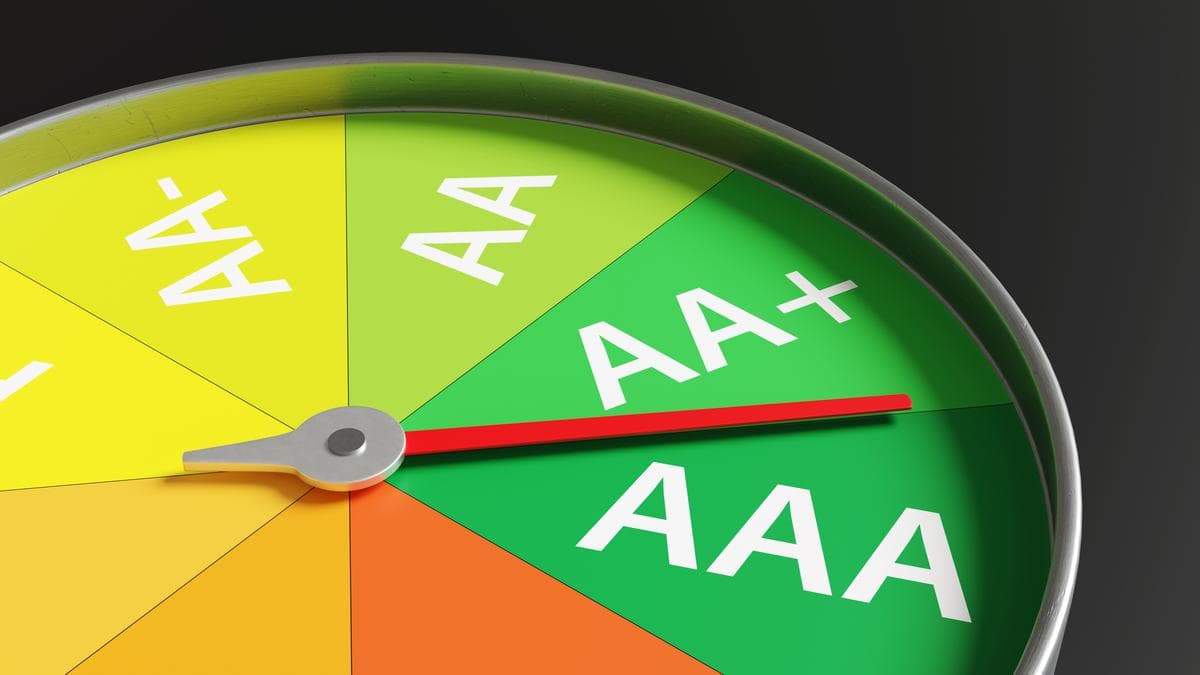
While speaking at a business conference in London last week, Commerce Minister Piyush Goyal questioned the methodologies employed by sovereign ratings agencies in assigning ratings to India, saying they have been “unfair to India”. On the other hand, he praised one ratings agency — CareEdge Ratings — for being “objective”. This is not the first time the Indian government has pointed out its problems with the global sovereign ratings agencies. The Hindu looks into what the issues are.What do the ratings agencies measure?India is rated by seven international sovereign credit rating agencies: Standard and Poor’s (S&P), Moody’s Investors Service, Morningstar DBRS, Fitch Ratings, Japanese Credit Rating Agency (JCRA) and Rating and Investment Information (R&I), and CareEdge Ratings. The three most commonly-accepted global ratings agencies are S&P, Fitch, and Moody’s.Explained | What is a ratings agency and why do they matter?The core role of these agencies is to measure the ability and willingness of an entity to repay its debt. These entities can be companies, municipal corporations, states, and, in the case of sovereign ratings, Central or Union governments.Ratings are assigned on an alphabet scale, with Fitch and S&P assigning AAA to their highest rating and Moody’s assigning Aaa to it. The next lower scales are AA+, AA, AA-, A+, A, and A-, before moving on to the ‘B’ ratings in the same format. The lowest rating is D, implying the entity is in default. Moody’s ratings follow the same pattern, although its letters differ.These ratings are important because they determine the interest rate at which the rated entity can borrow at. If an entity is rated AAA, then that means there is no risk of a default and so that entity can borrow at the lowest interest rates. However, the lower the rating, the lower the perceived ability or willingness to repay debt, and so higher the interest rate to mitigate that risk.Now, ‘ability’ and ‘willingness’ to repay debt are two very different metrics. The ability to repay is a much more quantitative metric, since there are hard numbers that can prove whether a country can repay its debt or not. Willingness to repay is an entirely different matter. It is a more qualitative metric and relies more on opinion rather than hard numbers.How has India been rated so far?India’s ratings by most of the agencies has been at the lowest level of the investment grade ratings. That is, India has consistently been rated just one or two grades above ‘junk’ status, which is when institutions will stop lending money for fear of default. Until recently, these ratings were unchanged for more than a decade and, in some cases, nearly two decades.For example, S&P upgraded India’s long-term sovereign credit rating to ‘BBB’ from ‘BBB-‘ in August 2025, the first upgrade by it in 18 years. Similarly, in 2017, Moody’s upgraded India’s rating to Baa2 (equivalent of BBB) from Baa3, its first upgrade in 13 years.There were a couple of other ratings upgrades in 2025, with Rating and Investment Information in September 2025 upgrading India to BBB+ from ‘BBB’ and Morningstar DBRS in May that year upgrading India to BBB.What are India’s issues with the ratings?Despite the recent upgrades, India’s ratings still remain just above junk grade. During his speech in London, Mr. Goyal pointed out that these agencies “haven’t recognised the India growth story, the strong India fundamentals and the sovereign capabilities… and captured it as much as a rating agency should have done”. Previously, Finance Minister Nirmala Sitharaman has also pointed out the same thing, calling for a reform of the ratings agencies’ methodologies.Even the Economic Survey has taken up this issue. The 2020-21 edition by then Chief Economic Adviser Krishnamurthy Subramanian had an entire chapter dedicated to the matter. In it, he pointed out that this was the first time that the fifth largest economy in the world was assigned such a low rating.He also went on to show th
U.S. Ambassador to India Sergio Gor. File | S.-India trade deal is in its "final steps", with only the last one per cent of negotiations left to be concluded, US Ambassador to India Sergio Gor said on Tuesday (June 30, 2026), expressing confidence that the deal would soon be sealed after nearly 18 months of talks.Addressing the US-India Strategic Partnership Forum Leadership Summit in Washington, Mr. Gor said he was determined to conclude the agreement as it would be beneficial to both nations."We are in the final steps on this deal. Most of this deal is complete. There's a few items that remain on both sides. It's in the last 1% of that deal," he said.The U.S. envoy to India was bullish about the bilateral relationship and cited the personal equation between U.S. President Donald Trump and Prime Minister Narendra Modi which was driving the ties."People ask, why is this taking so long? We've been at this for a year and a half. To put it into perspective, we've been trading for 20 years. So no matter what, once we beat the European deal, I think we're in good shape. But I'm determined to bring this to a close," he said.The U.S. envoy said the President has very fond memories of his visit to India and still continues to talk about it.“His visit last time, it was one of his most remarkable visits that he continues to talk about. He holds it in a very fond place. It's an incredible thing. So I look forward to … having the President visit us back in India,” Mr. Gor said.The Ambassador also announced that the Quad Foreign Ministers are scheduled to meet in the Philippines in about two weeks from now. Published - June 30, 2026 06:53 am IST


Discussion (0)