
Loading dispatches...
← Return to Newsroomgeneral
Ravindra Jadeja: The last man standing from Indias 2015 core

In August 2015, when India landed in Sri Lanka for Virat Kohli’s first full Test series as captain, it felt like the beginning of something new. MS Dhoni had retired from Test cricket months earlier. Ajinkya Rahane, Cheteshwar Pujara, R Ashwin and Rohit Sharma were expected to carry India into the next decade.One name was still yet to become indispensable. Ravindra Jadeja was not part of that tour. He reclaimed his place a few months later, in the home series against South Africa.Fast forward to 2026 and India are back in Sri Lanka, in transition again. This time, almost everyone from that generation is gone. Ashwin retired in 2024. Rohit and Kohli called time in May 2025. Pujara followed a few months later. Rahane is the latest to walk away. Everyone else from that 2015 dressing room has moved on. Ravindra Jadeja simply refused to. (BCCI Photo)Jadeja, somehow, is still standing. “The most important thing is that he’s a multidimensional player. He’ll get you wickets, he’ll bat wherever you send him, No. 4, No. 6, No. 7 or No. 8, and he’ll still score runs. Then, in the field, he’ll produce a run-out or a catch that very few others can. He’s a complete all-rounder. That’s what makes him different from any other cricketer,” Saurashtra head coach Niraj Odedra told The Indian Express. When he returned to the Test side in late 2015, he was viewed largely as India’s premier left-arm spinner. On the raging turner in Mohali against South Africa, or the unresponsive Chennai surface against England in 2016, Jadeja was a relentless wicket-taker who squeezed batsmen with unwavering accuracy. Somewhere along the way, another dimension began to show. His technique tightened, his shot selection improved, his temperament settled into the longer format.Story continues below this ad A maiden Test century against West Indies in Rajkot in 2018 announced the change. A career-best 175 not out against Sri Lanka in Mohali confirmed it. Then a hundred at Edgbaston in 2022, after India had slumped to 98 for 5. Three years later, 516 runs across a five-Test series in England left little doubt his batting belonged at the highest level. Even now, that trust remains. With Shubman Gill unable to bat in the first innings of India’s warm-up against a Sri Lanka Cricket XI this month, Jadeja was pushed up to No. 4, a spot he wasn’t first choice for. He made 63 off 117 balls. Mindset change Odedra puts the biggest change down to something other than technique. “Himself. Nobody else. The biggest change was his mindset. He had to believe that he wasn’t just somebody who could bowl, but a player who could bat as well. He backed himself to such an extent that that’s what made him a better batsman,” he said. “People have this perception that he’s a bowler who can only bowl. But from a very young age, Under-16, Under-19, he always was a very good batsman. When he started playing for the Indian team, he realised that if he didn’t score runs, if he didn’t become a multidimensional player, then he wouldn’t last long like others.” The earliest test came before any of that. In 2005, when Jadeja was sixteen, his mother died of burns from a kitchen fire. He was not at home when it happened. He wanted to give up the game afterwards. What kept him in it was the thought that she hadn’t raised a cricketer for him to walk away from it.Story continues below this ad His father had told him something, years before any of this, back when Jadeja didn’t yet know cricket would become his living. “When I started playing cricket, my father gave me very important advice. At that point, I didn’t even know that I will be playing cricket seriously, forget playing for the country. He told me it’s your performance on the ground that matters,” Jadeja said in a separate interview to this newspaper in 2023. Ground mein perform karo, bus baat khatam, his father had put it. Perform on the field, and the chatter ends there. Recovering from setbacks The setbacks kept coming in different forms. In 201
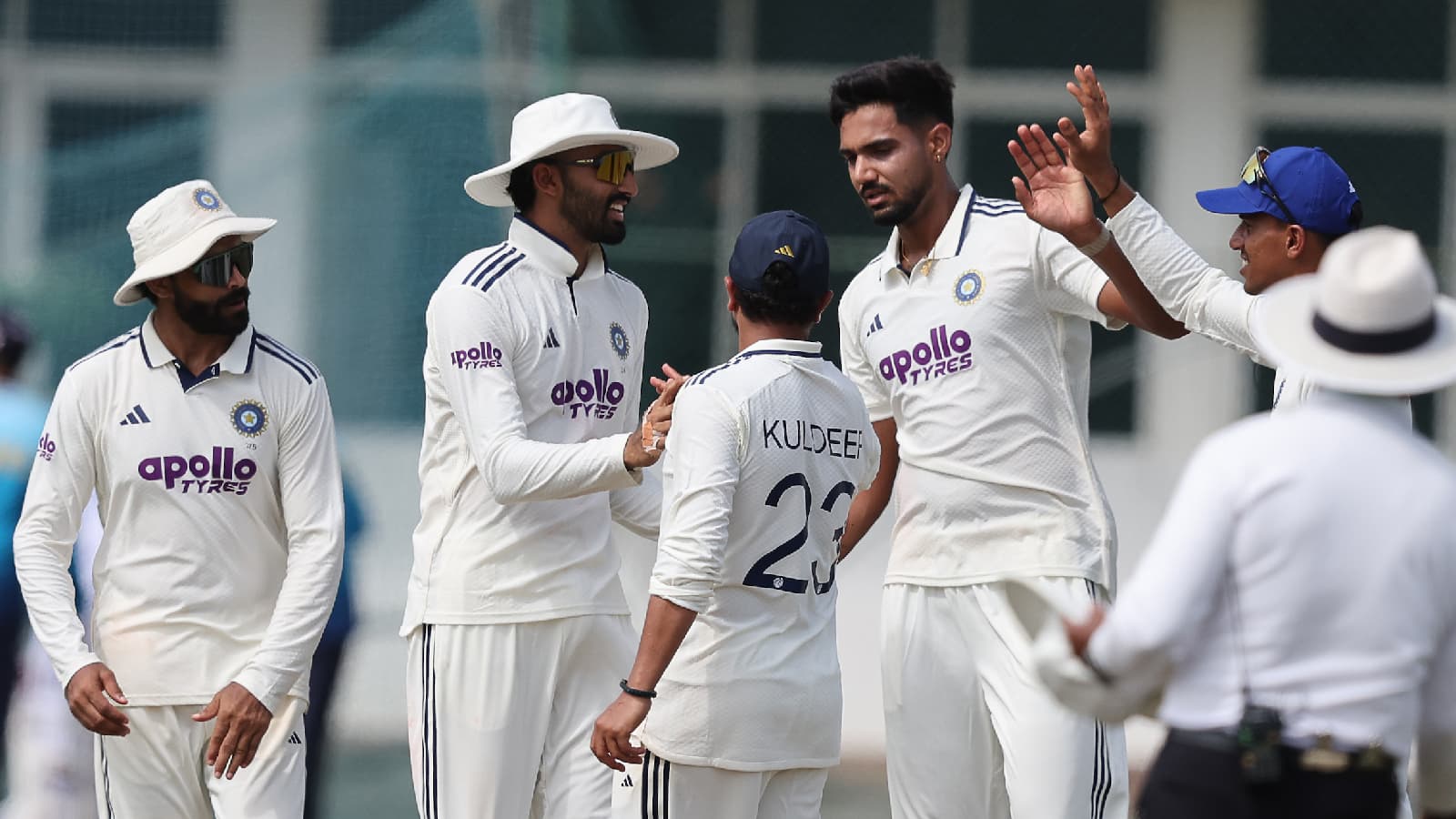
Zaheer Khan has named Gurnoor Brar as India's most promising young pacer. (CREIMAS)With India yet to find able backups for Jasprit Bumrah and Mohammed Siraj, the team management has tested a young crop of fast bowlers over the last two years. India pace legend Zaheer Khan recently opened up about the steady rise of young fast-bowling options and named Punjab pacer Gurnoor Brar as the most promising seamer of all options. The 6-foot-5-inch tall pacer was picked for the Test squad in June despite having featured in only a handful of First-Class matches and limited IPL experience. 3 spot with unbeaten 142The 26-year-old Brar subsequently made his ODI debut against Afghanistan, and has picked up 11 wickets in six matches. Brar also featured in India A’s tour to Sri Lanka last month, picking up a 10-wicket haul in the first match at Galle. “It’s good to see a young crop of fast bowlers coming through that bowl high speeds. I believe Gurnoor Brar is the one who has the ability to have a good and lengthy career. Its good that he has been fast-tracked. Even when I spent some time with him, I could see exciting potential in him. We have to wait and see how his career materialises eventually, but on potential, he has impressed me the most,” the 2011 World Cup-winning Khan said in an interaction with journalist Vimal Kumar. Brar is currently featuring in India’s three-day practice game against Sri Lanka Cricket XI. He picked up three wickets across two innings. A left-handed bat, Brar also chipped in with a quickfire 36 not out off 18 deliveries with four sixes. With Jasprit Bumrah out injured, Brar is in contention for a Test debut next week when India meet Sri Lanka in the first Test at Galle. Besides Brar, Mohammed Siraj, Prasidh Krishna and Auqib Nabi make up India’s pace attack for the two-mach series that begins on August 15.

Updated: Jul 2, 2026 12:58 PM IST India’s first private orbital rocket, Vikram-1, stands fully stacked at Sriharikota for its upcoming 'Mission Aagaman' test flight. (Credit:X/@SkyrootA)Vikram 1, India’s first private orbital rocket is ready for its first test flight under ‘Mission Aagaman’. It is scheduled for launch between July 12- August 4, 2026 from Satish Dhawan Space Centre, Sriharikota. “The vehicle is now fully stacked at India’s historic First Launch Pad (FLP)”, according to a post by Skyroot Aerospace on X. The space tech firm also thanked ISRO and INSPACe for their support in this mission, as the countdown to this new phase in India’s space journey begins. 🚀 Announcing Vikram-1 Test Flight-1: Mission Aagaman, India’s first private orbital rocket launch. 📍 Satish Dhawan Space Centre, Sriharikota 🛰️ 450 km, 60 degree inclination, Low Earth Orbit 📅 Launch Window: July 12 – August 4, 2026 Vehicle is now fully stacked at India’s… pic.twitter.com/mqqJnO5RoI — Skyroot Aerospace (@SkyrootA) July 2, 2026
India need not refuse new GM technologies, but approving them will not, by itself, move the needle. Written by: Keshav Kranthi 5 min readJul 2, 2026 06:20 AM IST First published on: Jul 2, 2026 at 06:20 AM IST The article by Ashok Gulati, Ayushi Gupta, and Ritika Juneja (‘In cotton fields, policy is undoing what science built’, IE, June 8) reads more like an advocacy piece for the seed industry than a balanced analysis of what ails Indian cotton. The authors credit Bt cotton, especially Bollgard-II, for the 88 per cent productivity increase between 2002 and 2013. They then argue that seed price control decisions killed the introduction of new GM events, including BG-II RRFlex and Bollgard-III, causing a decline in production and productivity since 2014-15. Had India continued its earlier trajectory, they claim, production would have reached 65.3 million bales by 2026, implying a productivity of 967 kg/ha. This diagnosis is flawed. The authors appear to believe that GM seed technology alone drove India’s productivity gains, and that approving BG-II RRFlex, Bollgard-III or the seven-gene Thryvon stack would restore that trajectory. Neither premise is supported by evidence. BG-II and BG-III protect crops against bollworm damage; RRFlex enables better weed management. These traits are agronomically useful, but there is no credible evidence from anywhere in the world that any of these traits directly increased yields. Framing GM trait approvals as the primary lever for productivity recovery deflects attention from the agronomic, soil science, breeding and management interventions that are decisive for sustainable yield improvement.The authors compare India’s yields of 441 kg/ha with China’s 2,311 kg/ha and credit technology adoption for the difference. But China grows neither BG-III nor HT cotton nor Thryvon. It deploys exactly the same BG-II, Bt genes as India. The critical difference is that China grows Bt varieties rather than Bt hybrids. The authors also omit a telling counterexample. Turkey has not approved GM cotton, yet its yields rose from 1,100 kg/ha in 1999 to 1,728 kg/ha in 2026. Over the same period, India’s yields rose from 304 kg/ha to 458 kg/ha — they peaked at 566 kg/ha in 2013-14 and then declined. Turkey, without any approved GM variety, now achieves yields nearly four times that of India, whose cotton area is almost entirely planted with GM hybrids. China and Turkey offer compelling evidence that sustained productivity improvement depends on varietal development, agronomic investment and soil health, not trait approvals. Data from the Ministry of Textiles also complicates the authors’ narrative. India’s productivity had already reached 521 kg/ha in 2006 and 554 kg/ha in 2007, when BG-II was approved, but occupied only a negligible share of cotton area, as seed production and distribution had yet to scale. Crediting BG-II with the gains is not defensible. Productivity then declined to 449 kg/ha by 2018, even as BG-II adoption peaked. The productivity gains of 2002-2011 are better explained by a confluence of factors: Effective bollworm control by Bt cotton, hybrid seed adoption surging from 38 per cent to 92 per cent, fertiliser use increasing 2.3-fold, and irrigated area expanding from 2.5 million to 4.4 million hectares. Heavier farmer investment in crop management compounded these gains. Once inputs approached saturation, it was the law of diminishing returns, not seed price policy, that drove decline. The root cause of India’s cotton productivity collapse goes unmentioned in the article. According to FAO, nearly 32 per cent of Indian land is degraded and 25 per cent faces desertification. Soil organic carbon in Indian croplands averages just 0.3-0.6 per cent, far below the globally accepted minimum of 1-1.5 per cent for productive soils, with critically low levels below 0.25 per cent recorded across cotton-growing regions of Rajasthan, Gujarat, Madhya Pradesh and Maharashtra. No technology stack, GM or oth



Discussion (0)