
Loading dispatches...
← Return to Newsroomgeneral
US-Iran War Live Updates: Iran vows crushing response as US hits 80 targets
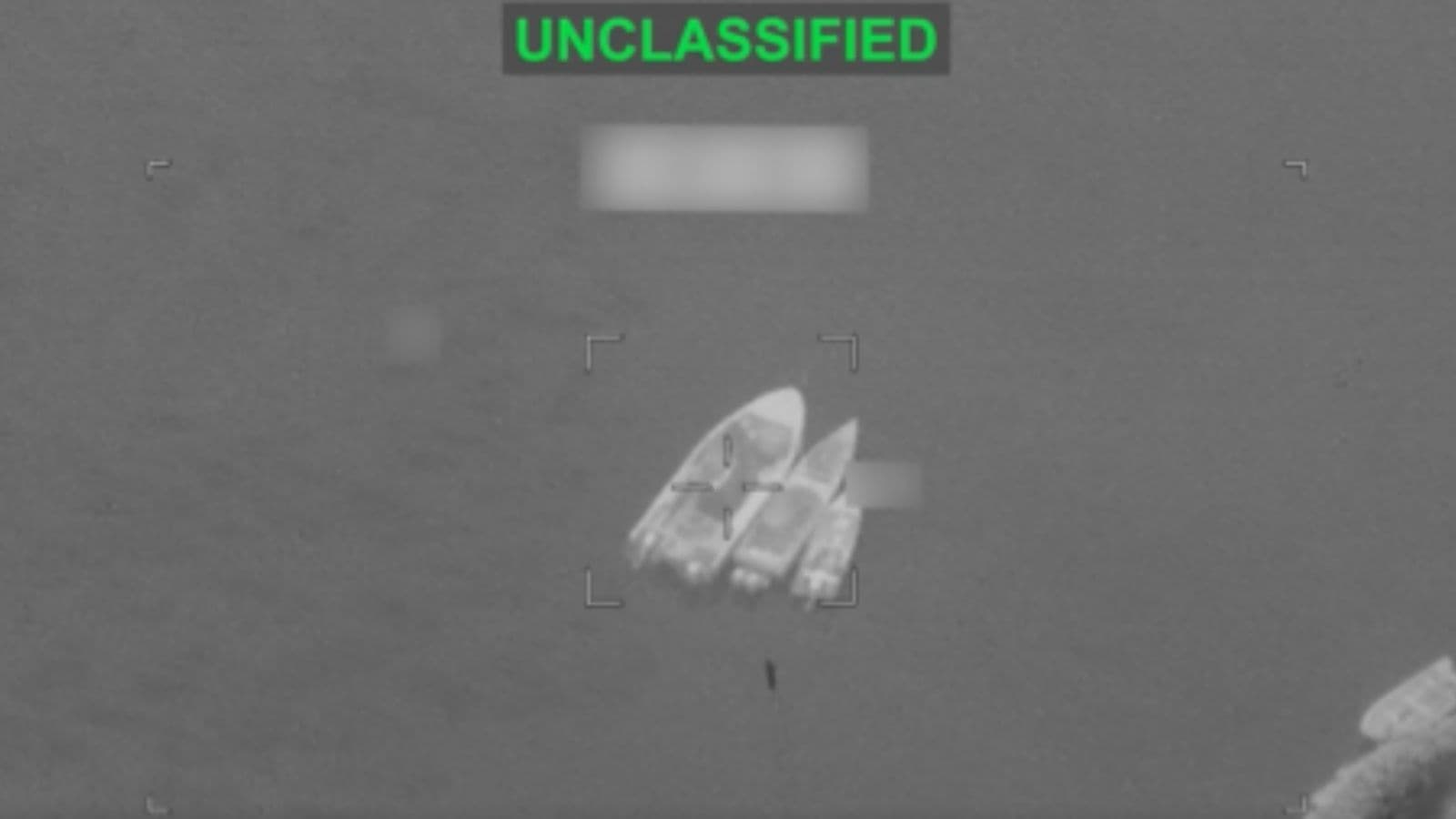
US strikes on Iran resumed after three tankers were hit by projectiles in the Strait of Hormuz. (Photo/X@CENTCOM)US-Iran War Live Updates: The US military on the intervening night of Tuesday and Wednesday launched fresh strikes targeting Iran after three tankers were hit by projectiles in the Strait of Hormuz. Washington also revoked a license allowing Tehran to sell oil, escalating tensions in the region amid an already fragile ceasefire. Iran has said that it will respond in kind. US says over 80 targets hit: The US Central Command said that it hit over 80 targets in Iran, calling the attacks an “immediate response” to the latest strikes by Tehran on commercial ships. The strikes, according to CENTCOM, targeted Iranian air defence systems, command and control networks, coastal radar sites, anti-ship missile capabilities, and more than 60 Islamic Revolutionary Guard Corps small boats in and near Hormuz.Story continues below this ad “U.S. forces struck Iranian air defence systems, command and control networks, coastal radar sites, anti-ship missile capabilities, and more than 60 Islamic Revolutionary Guard Corps small boats in and near the strait (of Hormuz) to degrade Iran’s ability to continue attacking international commerce flowing through the international trade corridor,” it said in a statement. “The unwarranted aggression by Iranian forces is a clear and dangerous violation of the ceasefire and undermines freedom of navigation,” CENTCOM added. Iranian military command vows ‘crushing response’ to US strikes: Iran’s top joint military command, Khatam al-Anbiya Central Headquarters, early on Wednesday (July 8), said that the United States committed a “blatant act of aggression” by targeting parts of southern Iran, further vowing a “crushing response”. It further warned that Tehran will not tolerate US interference in managing the Hormuz. Live UpdatesStay updated with the latest - Click here to follow us on Instagram© IE Online Media Services Pvt Ltd Tags: donald trump US Iran US Iran tensions US Iran ties
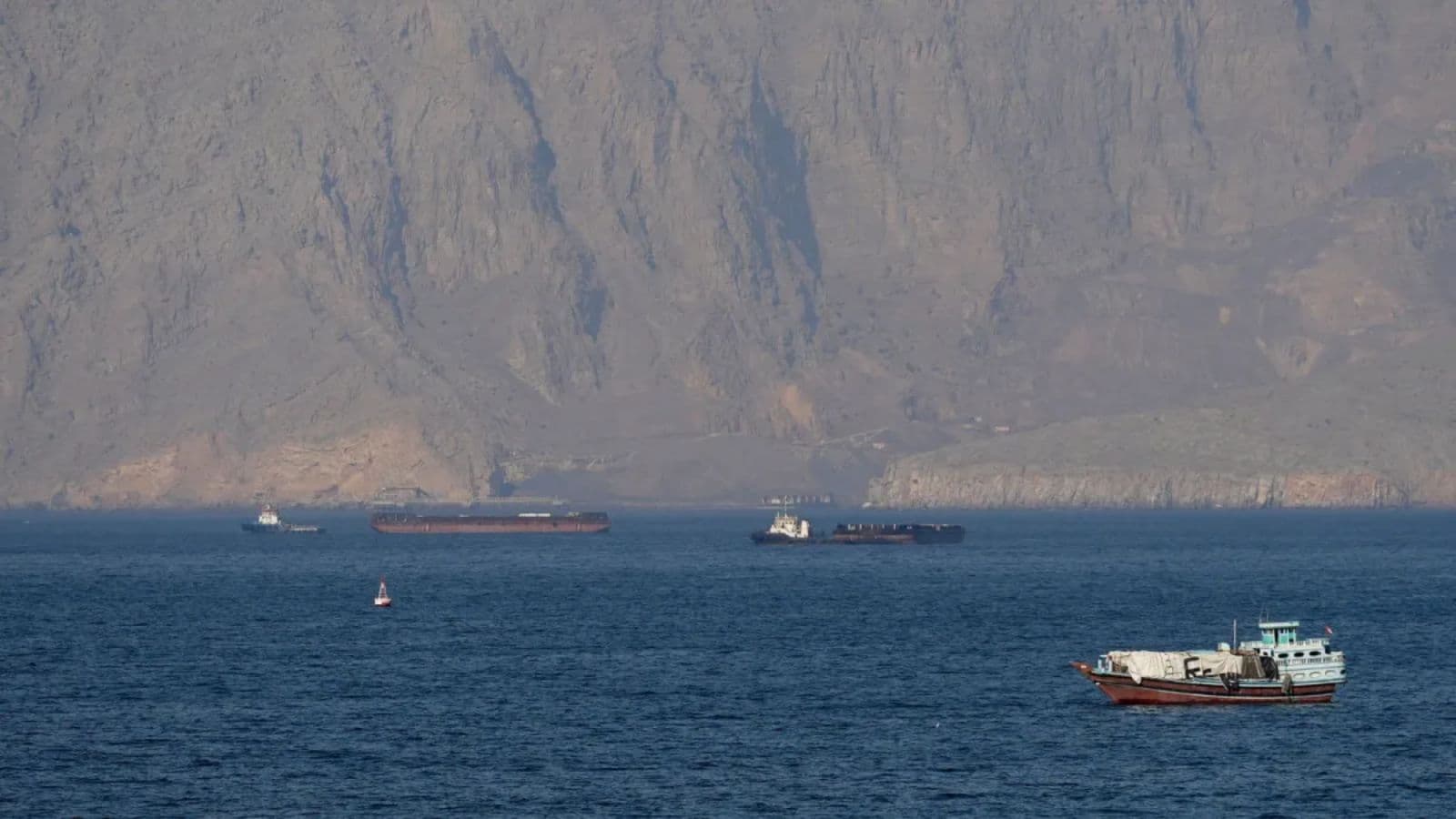
Around one-fifth of the world's traded crude oil and liquefied natural gas moves through the Strait of Hormuz, making any disruption a matter of global economic concern. (File photo) Three commercial tankers came under attack in the Strait of Hormuz on Tuesday, marking a fresh escalation in security risks along one of the world’s busiest transit routes. British maritime authorities said the incidents involved projectiles and a drone, with one vessel catching fire while another suffered structural damage. The United Kingdom Maritime Trade Operations (UKMTO) reported that two tankers were initially struck in separate incidents in and around the Strait of Hormuz. One of the vessels, sailing near the Omani coast, caught fire after being hit, while another sustained structural damage. No casualties were reported in either incident.Later in the day, the UKMTO confirmed that a third commercial tanker had been struck by a drone while transiting the waterway. The agency said the vessel suffered only limited damage, its crew remained unharmed, and it was able to continue its journey. According to Al Jazeera, citing the UKMTO, merchant vessels operating in the area have been advised to maintain heightened vigilance and immediately report any suspicious activity while navigating the strait. The attacks come against the backdrop of friction over navigation through the Strait of Hormuz, a narrow but strategically vital shipping corridor linking the Persian Gulf with the Gulf of Oman. Around one-fifth of the world’s traded crude oil and liquefied natural gas moves through the passage, making any disruption a matter of global economic concern. Iran-linked reports emerge after attack According to the Associated Press (AP), Iranian state television, citing unnamed sources, suggested that Tehran had targeted a liquefied natural gas tanker identified as Al Rekayyat, alleging that the vessel had ignored Iranian warnings while transporting Qatari gas. However, Iranian authorities did not officially acknowledge responsibility for the strike. AP further reported that Qatar condemned the incident, with Foreign Ministry spokesperson Majed Al-Ansari describing the attack as a serious violation of international law and an assault on global energy security. In a post on X, Al-Ansari said Qatar considers Iran legally responsible for the attack.Story continues below this ad Dispute over shipping routes The incidents follow recent warnings from Iran’s military, which has insisted that commercial vessels transiting the Strait of Hormuz use routes authorised by Tehran. Iranian officials have also warned that any interference by US forces in the area would trigger a swift response. However, the AP report said that the Joint Maritime Information Center (JMIC), a multinational body overseen by the US Navy, informed shipping companies on Monday that an expanded navigation route near Oman’s coastline remains open for international traffic. Maritime analytics firm Kpler estimated that more than 100 ships crossed the Strait of Hormuz over the weekend using different navigation routes, underscoring the continued importance of the waterway despite growing security concerns. Diplomatic uncertainty and why Hormuz is strategic The attacks come at a time when negotiations between Iran and the United States remain uncertain.Story continues below this ad Speaking at the White House on Monday, US President Donald Trump said he still preferred a negotiated settlement with Iran but warned that Washington retained significant military options if diplomacy failed. The Strait of Hormuz remains one of the world’s most sensitive maritime chokepoints, serving as the primary gateway for energy exports from major Gulf producers. Any disruption to shipping through the narrow passage has the potential to affect global oil and natural gas markets, making attacks on commercial vessels a matter of international concern. © The Indian Express Pvt Ltd T
In the early hours of a tense morning outside the Strait of Hormuz, near the Fujairah anchorage, a young marine engineer from Kerala looked at the sky and saw missiles streak past, one after another. It lasted a few seconds but it was a sight, she says, she will never forget.Hifa Salim (24) was just months into her dream job, having joined her very first ship in Houston in October 2025, when war broke out in the Persian Gulf, scrapping the ship’s planned cargo run to Kuwait in early March.The vessel was instead directed to drift outside the Strait of Hormuz, near the Fujairah anchorage, and wait. Salim later learned that arriving in the area just 15 hours earlier would have trapped the vessel inside the strait when the situation really deteriorated. It was on one of those drifting mornings, stepping onto the deck for fresh air before her engine room rounds, that she heard a sound from the sky and looked up to see the flashes. “This was the first time I saw missiles in real life. My hands started shivering,” she says. Terrified, she ran below to the mess room and considered asking to sign off. But once there, she found her crewmates eating breakfast, laughing, entirely at ease and something in her perspective shifted. “If my seniors could carry their own fear and still show up for work, so could I,” says Salim. She heard the main engine starting — a small kick ahead for position adjustment. “I heard the starting sound. ‘Tak Tak Tak.’ I hear that sound every time. But that morning it felt different. It felt like the heartbeat of the ship. And that time I realised the ship is alive. We are not alone,” wrote Salim later in an essay published in the magazine of Synergy Marine Group that manages her ship.Story continues below this ad She went down to have a cup of tea with the Second Engineer, the officer she reported to. “He took one look at me and could read that something is not right and when I said that I want to stay on board and be part of the team instead of quitting, he smiled and said in Malayalam, ‘5 saab ippo strong aayi, Vaa namuk oru fuel valve overhaul cheyyam, appo ellam sheryavum’ which translated to ‘5 saab had become strong now. Come, let’s overhaul one fuel valve, then everything will be alright.’ In the middle of uncertainty, those simple words gave me comfort, strength and the confidence to carry on with my work.” As a fifth engineer everyone on board called her “Paanch Saab”, the traditional title for the ship’s youngest engineer. “I liked the name. It made me feel like I belonged, even though I didn’t have a watch yet,” says Salim who also made the decision to not tell her family at home the full extent of what was happening — she didn’t want them to panic. It was only after the ship had safely cleared the area that she learned her parents had been doing the very same thing for her: staying composed on their calls, masking their own fear so she wouldn’t carry the weight of theirs. “We were all trying to protect one another in our own way,” she reflects. Hailing from Edakkazhiyur, a small town in Thrissur district, her close-knit family had always taught her to dream big while staying grounded, she says. She had once dreamed of the Indian Navy, but the engineering side of the Merchant Navy pulled her in, partly because almost no one at home could tell her what the profession even involved.Story continues below this ad “Nobody could tell me what the merchant navy actually was,” she recalls. “This blank space was my spark. I resolved to become the first person from my town to walk that path, so that anyone who came looking for answers afterwards could look at me, and I could show them exactly what’s possible,” she says. With 3.23 lakh sailors (as of 2024), India ranks among the top three global suppliers of seafarers, alongside the Philippines and China, holding approximately 17% of global crew share. Today, nearly one in five seafarers worldwide is Indian. During the Iran war, 13 India-flagged vessels, wi



Discussion (0)