
Loading dispatches...
← Return to Newsroomgeneral
US imposes 10% tariffs on goods imported from India on issue forced labour
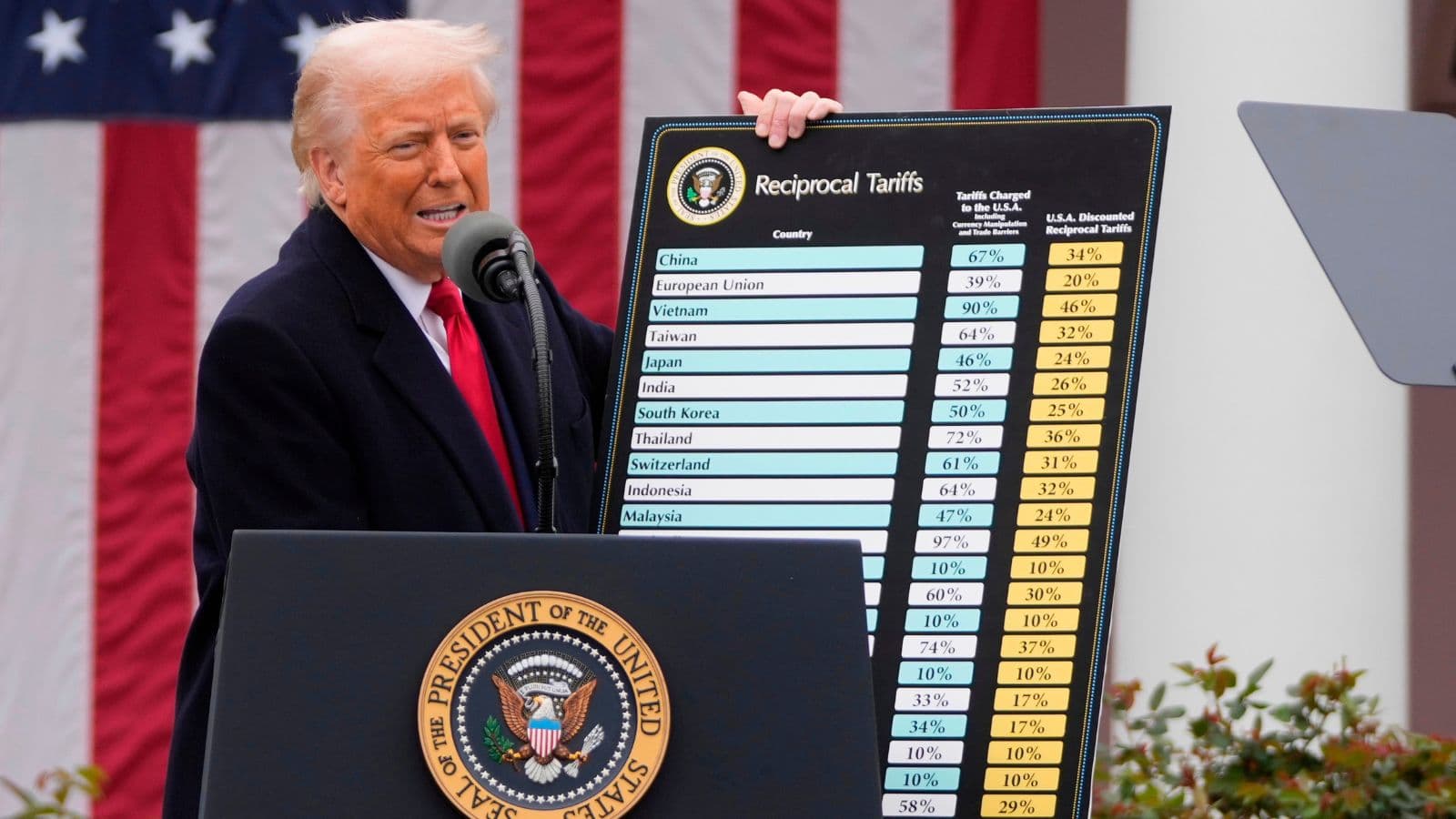
NewsWorldUS imposes 10% tariffs on goods imported from India on issue forced labour The move is the White House's latest effort to restore President Donald Trump's campaign vision of a near-global tariff. 2 min readJul 24, 2026 04:58 AM IST First published on: Jul 24, 2026 at 04:50 AM IST President Donald Trump speaks during an event to announce new tariffs in the Rose Garden at the White House. (Photo: AP) The United States has placed India in a lower 10 per cent tariff category, after the country was initially considered for a steeper 12.5 per cent rate. The lower rate followed what officials called constructive talks with Washington on labour practices. The Office of the US Trade Representative (USTR) announced tariffs of 10 to 12.5 per cent on 60 economies on Thursday, directed by President Donald Trump, over what it called inadequate steps to ban the import of goods made with forced labour. India is among 17 economies placed in the lower 10 per cent band, alongside the UK, Canada, Indonesia, Bangladesh and Mexico. The USTR said the 10 per cent rate applies to economies that either ban forced labour imports, have committed to doing so through a reciprocal trade agreement, or have a partial ban already in place. The countries in this band include Argentina, Bangladesh, Cambodia, Canada, Ecuador, El Salvador, Guatemala, Honduras, India, Indonesia, Jordan, Malaysia, Mexico, Pakistan, Sri Lanka, Trinidad and Tobago, and the UK, according to the USTR statement. What did the US say about the move USTR Ambassador Jamieson Greer said decades of moral pressure had failed to remove forced labour from global supply chains, and added, “it’s well past time for our trading partners to do the same.” referring to the US’s own long-standing ban. He also welcomed countries that had acted quickly to adopt similar bans. Which countries faced the higher tariff? Products from the European Union, Taiwan, Japan, South Korea and Switzerland will face a 10 or 12.5 per cent rate on top of existing duties, while all other economies investigated face the full 12.5 per cent rate, according to the USTR statement. The new tariffs take effect from Friday.Story continues below this ad The USTR opened investigations into 60 economies in March under Section 301 of the Trade Act of 1974, followed by talks with more than 45 governments and public hearings. The agency said it reviewed over 1,600 written comments before deciding on the new rates. The move follows a US Supreme Court ruling earlier this year that many tariffs imposed under emergency powers were unlawful, pushing the administration to pursue other legal routes for its trade agenda. (With inputs from agencies) The Express Global Desk at indianexpress.com which delivers authoritative, verified, and context-driven coverage of key international developments shaping global politics, policy, and migration trends. The desk focuses on stories with direct relevance for Indian and global audiences, combining breaking news with in-depth explainers and analysis. A major focus area of the desk is US immigration and visa policy, including developments related to student visas, work permits, permanent residency pathways, executive actions, and court rulings. The Global Desk also closely tracks Canada’s immigration, visa, and study policies, covering changes to study permits, post-study work options, permanent residence programmes, and regulatory updates affecting migrants and international students. All reporting from the Global Desk adheres to The Indian Express’ editorial standards, relying on official data, government notifications, court documents, and on-record sources. The desk prioritises clarity, accuracy, and accountability, ensuring readers can navigate complex global systems with confidence. Core Team The Express Global Desk is led by a team of experienced journalists and editors with deep expertise in international affairs and migration policy: Aniruddha Dhar – Senior Assistant Ed
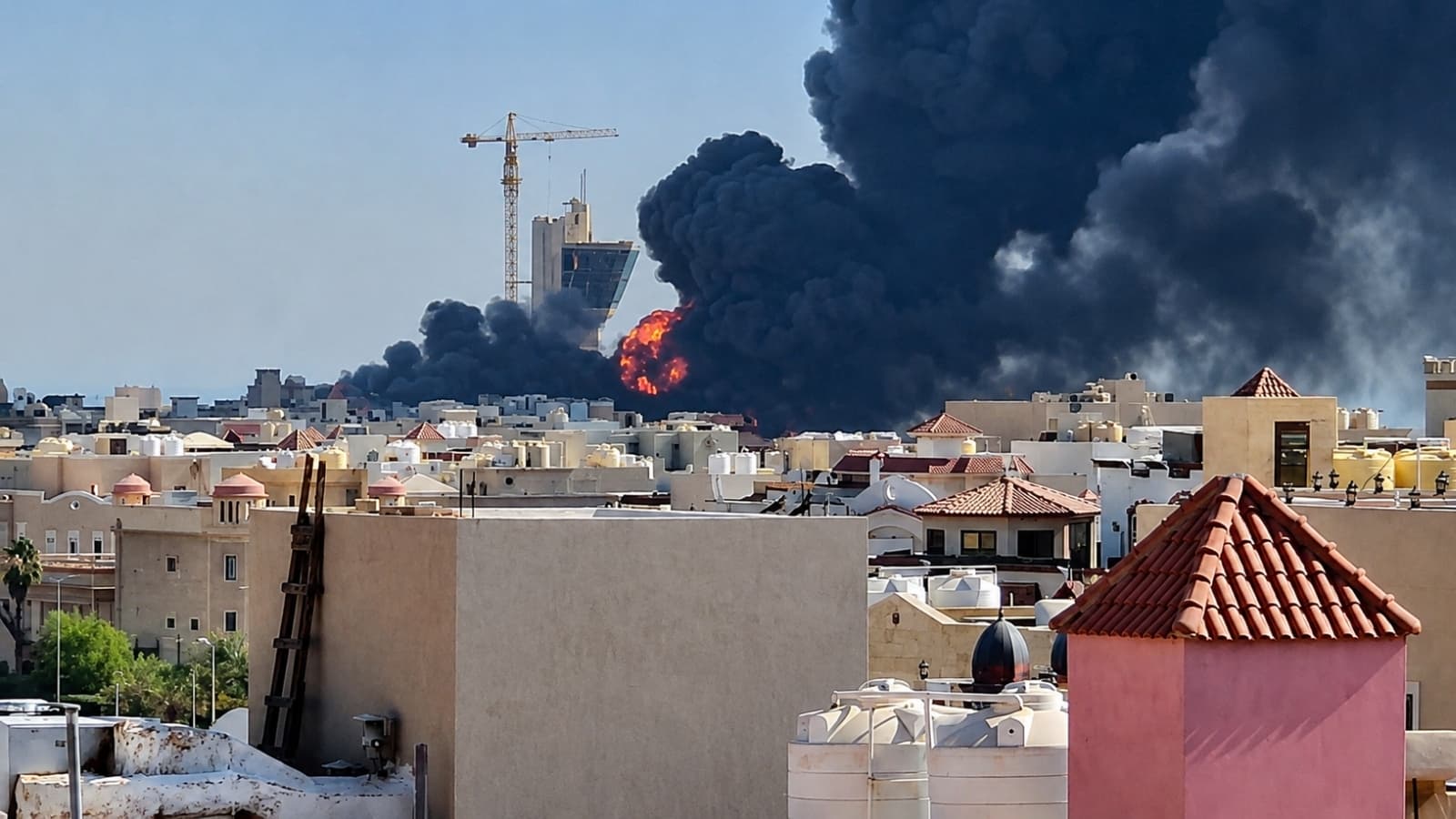
Smoke billows near the oil facility in Mangaf, Kuwait. (REUTERS/Image enhanced using AI)Iran sent IRGC commanders, military advisers and missile- and drone-related equipment to Yemen this month, according to four sources, in a move that suggests Tehran is seeking to strengthen the Houthis’ ability to threaten Red Sea shipping. Four sources familiar with the matter — including two Iranian sources, Yemen’s information minister and a regional security analyst — said Iran transferred the personnel and military equipment on a Mahan Air flight from Tehran to Yemen on July 13, a development not previously reported.The two Iranian sources told Reuters that between 10 and 21 Islamic Revolutionary Guard Corps (IRGC) personnel, including senior commanders, were aboard the flight. The plane was originally bound for the Houthi-controlled capital, Sanaa, but diverted to the Red Sea port city of Hodeidah after the airport came under attack by the Saudi-backed Yemeni government. “The IRGC commanders travelled there to support Houthi operations and provide training on new missile systems,” one source said, adding that Iran also sent gold on the aircraft to fund Houthi activities. The two Iranian sources spoke on condition of anonymity because of security concerns. The deployment offers fresh evidence of Iran’s efforts to bolster the Houthis, who have been fighting a civil war against the Saudi-backed, internationally recognised Yemeni government for more than a decade and have launched missile and drone attacks on Gulf neighbours.Story continues below this ad Iran’s foreign ministry was not immediately available for comment. Tehran has repeatedly denied providing the Houthis with missile capabilities. Abdel Rahman al-Ahnomi, a Houthi media official who said he was aboard the plane, dismissed the allegations as “lies and fabrications”, saying all passengers were civilians. The Houthis have also denied being an Iranian proxy and say they develop their own weapons. Days later, Houthis announce Red Sea blockade Three days after the flight arrived, Reuters reported that Tehran had asked the Houthis to be ready to close the Red Sea oil route if the United States struck Iranian power infrastructure, posing a fresh threat to global energy supplies.Story continues below this ad On Monday, the Houthis announced a naval blockade of Saudi Arabia in response to the July 13 bombing of Sanaa airport, which they blamed on Saudi Arabia. The move effectively ended a four-year truce between Riyadh and the Houthis. The threat escalated further on Thursday when the group said it had attacked two Saudi oil tankers. Moammar al-Iryani, information minister in Yemen’s Saudi-backed government, confirmed the transfer of IRGC personnel and equipment in a telephone interview with Reuters, citing intelligence. “Their mission is to strengthen the militias’ military capabilities and prepare them to threaten international maritime security in the Red Sea and the Bab al-Mandab Strait,” he said.Story continues below this ad Missile and drone components on board Mzahem Alsaloum, a security and intelligence analyst who has tracked the Houthis and other Iranian-backed groups for years, also confirmed the arrival of IRGC experts on the July 13 flight. He said some of the cargo included components for short- and medium-range missiles and drones, similar to weapons previously used in attacks on Saudi Arabia and the United Arab Emirates. According to Alsaloum, Tehran also sent military advisers to Yemen during last year’s war with Israel through Somalia, a claim denied by Iran. The Houthis announced direct flights between Sanaa and Tehran earlier this month, saying the service would help break what they described as a Saudi-imposed blockade on Yemen.Story continues below this ad At a press conference in Tehran on July 20, Foreign Ministry spokesperson Esmaeil Baghaei said the July 13 flight was intended to return a Houthi delegation that had travelled to Tehran for the funeral of slai


Discussion (0)