
Loading dispatches...
← Return to Newsroomgeneral
Consumer wins Rs 1.34 lakh after electric scooter failed to deliver 200 km range
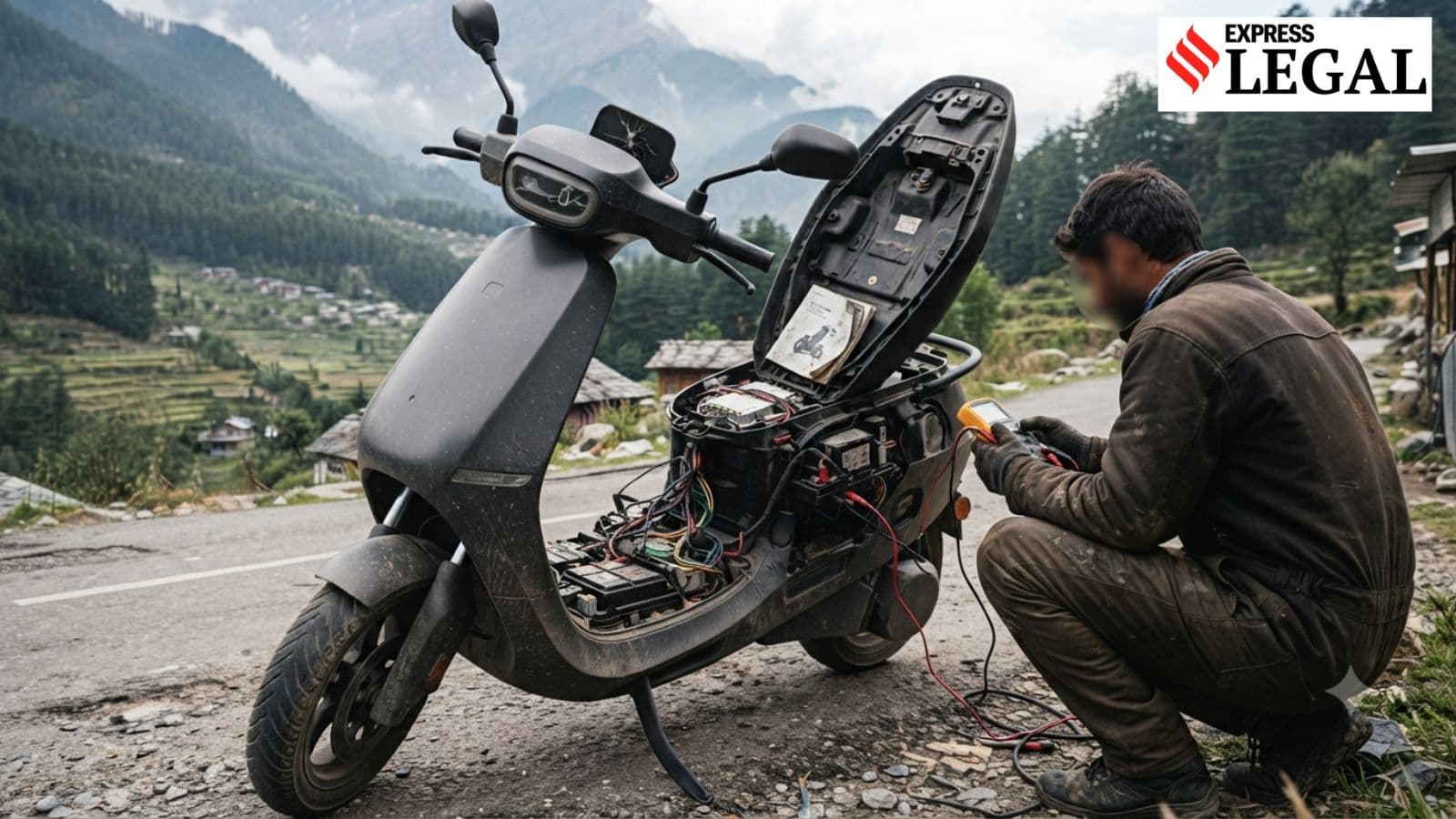
New DelhiAug 5, 2026 05:00 PM IST The Bilaspur District Consumer Commission held the dealer liable after finding the electric scooter remained defective even after its battery was replaced. (Image generated using AI)A Himachal Pradesh Consumer Commission has directed an automobile dealer to refund Rs 1.19 lakh besides paying Rs 10,000 as compensation and Rs 5,000 as litigation costs after holding that it sold a defective electric scooter. The commission found that the scooter continued to suffer from battery, mileage and starting problems even after its battery was replaced, amounting to deficiency in service. The Bilaspur District Consumer Disputes Redressal Commission president Purender Vaidya and members Manchali and Jagdish Thakur were hearing a complaint filed by one Pawan Kumar under Section 35 of the Consumer Protection Act, 2019 alleging that an electric scooter purchased from Ivaan Automobiles developed defects soon after its purchase and that the dealer failed to rectify them despite replacing its battery.“The aforesaid affidavits proved that from the very beginning there was a problem in the electric scooty as its battery and ignition system were defective…The battery, when charged fully, was not giving the claimed mileage,” said the commission on July 18. The dispute arose after the complainant purchased the electric scooter in April 2025. According to him, he was assured that the scooter would deliver a range of about 200 kilometres on a full charge. However, even after the battery was replaced, the scooter allegedly covered only about 80 to 90 kilometres and continued to suffer from starting and battery-related issues, prompting him to move the consumer commission seeking a refund and compensation. Defects soon after purchase According to the complaint, Pawan Kumar purchased an electric scooter manufactured by Konami Private Limited from Ivaan Automobiles on April 11, 2025 for Rs 1,18,000. The scooter was later registered with the Registering and Licensing Authority, Ghumarwin, in Bilaspur district, and insured for Rs 5,281. He alleged that the scooter developed battery, mileage and starting problems soon after the purchase. Although the dealer replaced the battery after charging him Rs 1,560, the defects persisted. The complainant further alleged that despite being assured the scooter would cover about 200 kilometres on a full charge, it delivered only 80-90 kilometres. He subsequently approached the commission seeking a refund of the purchase price, Rs 1 lakh as damages, Rs 20,000 towards litigation costs and interest at 9 per cent per annum. The commission noted that despite being served notices, neither Ivaan Automobiles nor Konami Private Limited appeared before it and both were proceeded against ex parte.Story continues below this ad The complainant relied on his own affidavit, affidavits of two witnesses, the purchase invoice and proof of payment of Rs 1,560 towards battery replacement. The commission decided the case based on the unrebutted evidence. Dealer guilty of deficiency in service Relying on the complainant’s unrebutted evidence, the commission held that the scooter suffered from defects from the very beginning and that its battery and ignition system remained faulty even after the battery was replaced. “Inspite of replacement of battery the problem persisted and the defect was not removed by opposite party number 1 (Ivaan Automobiles). This act is nothing but deficiency in service,” it observed. The commission also held that the dealer had sold a defective scooter to the complainant. It, however, dismissed the complaint against Konami Private Limited, observing that there was no privity of contract between the complainant and the manufacturer and, therefore, it had no liability in the matter. Allowing the complaint, the commission directed Ivaan Automobiles to refund Rs 1,19,560, including the scooter’s purchase price and battery replacement charges, with interest at 6 per cent per a
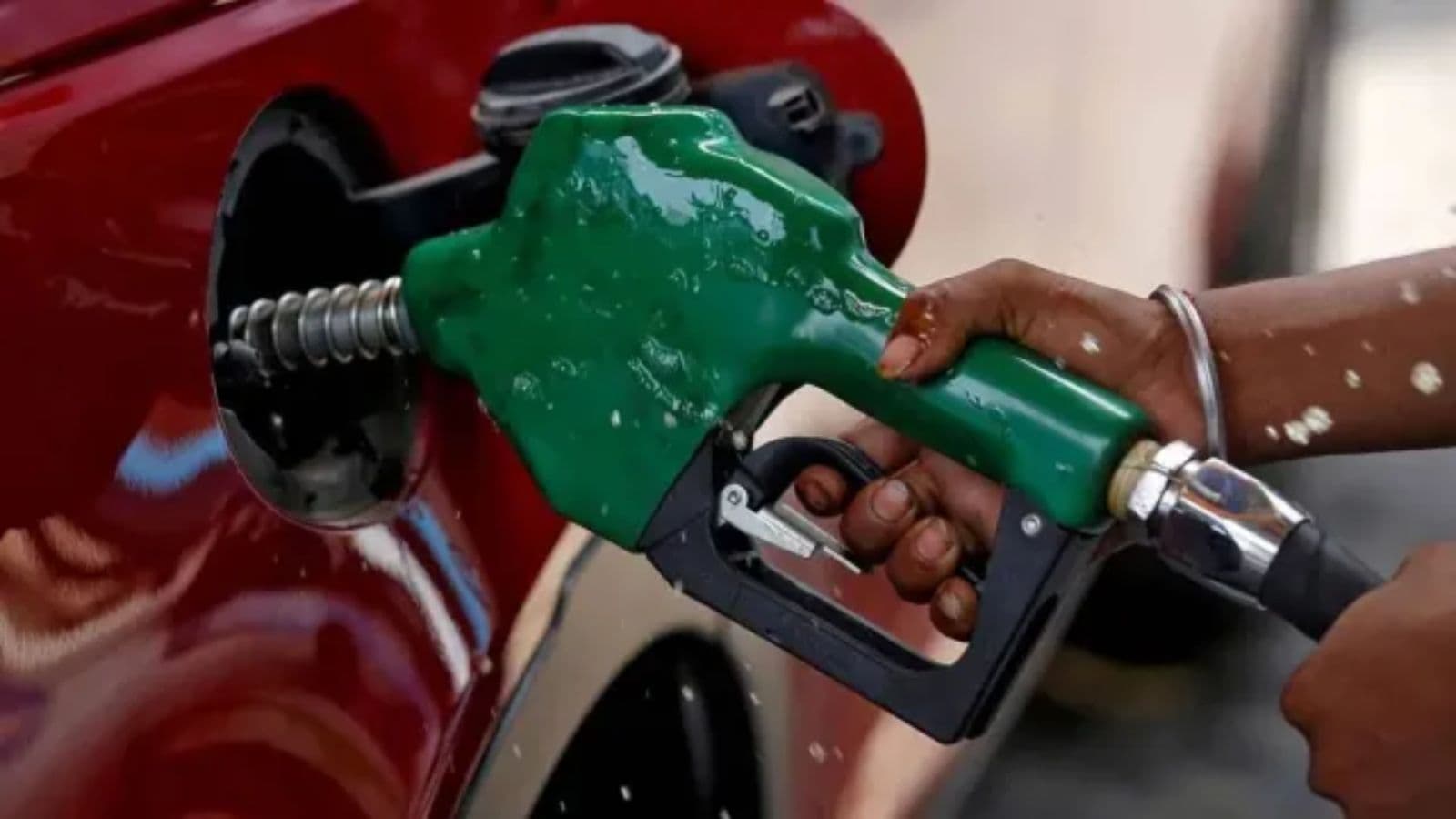
New DelhiAug 5, 2026 04:15 AM IST The court also said that third-party policy for private vehicles be provided with add-on options like “additional optional cover for the occupant(s)/pillion rider”, “personal accident cover for the owner, driver and any occupant(s)/pillion rider” and “own damage cover (for loss or damage to the insured vehicle itself)”. THE SUPREME Court on Tuesday said it is “shocked” to learn that nearly 56% of all vehicles plying on Indian roads do not have valid insurance, and asked the government to plan a pilot project to link fuel for vehicles at petrol pumps with their insurance status. A bench of Justices Sanjay Karol and P K Mishra said the direction should “be enforced through the Ministry of Road Transport and Highways (MoRTH) and IRDA (Insurance Regulatory and Development Authority of India).The court was hearing an appeal which flagged lack of compliance with Section 146 of the Motor Vehicles Act, 1988, which requires all vehicles to have a valid insurance policy covering third parties. The bench also considered whether there should be a uniform motor vehicle policy structure covering all occupants of a vehicle, in addition to the statutorily mandated coverage of third-party risks. Writing for the bench, Justice Karol said: “As deliberated upon in court, the IRDA in consultation with the MoRTH to deliberate and evolve a pilot project whereby fuel for vehicles to be linked with valid insurance status. In the absence thereof, the vehicle concerned would be refused fuel at petrol pumps until such time that valid insurance is obtained.” The court said “the benefit therein is two-fold” — it will assist in identification of uninsured or unregistered vehicles and also prompt the owners of these vehicles to ensure that they have valid insurance status. “Such projects would ensure ground-level compliance with the statutory mandate of Section 146 of the MVA,” said the bench. The bench said this may be done through the use of ANPR (Automatic Number Plate Recognition) cameras and noted that “the Ministry of Petroleum and Natural Gas has, in principle, no objection to the same”. The court further directed that “a pilot project be implemented allowing citizens to verify insurance status, and ultimately assist in the implementation of the statutory mandate under the MV Act”. The bench said this will allow citizens to know whether the vehicle they are travelling in or sending goods in or transporting employees has valid insurance and also allow for prompt reporting of uninsured vehicles.Story continues below this ad The bench noted that though it had issued directions in July 2018 mandating purchase of third-party insurance for three years for new cars and five years for two wheelers at the time of purchase/registration of new vehicles, a large number of vehicles remained uninsured even though eight years had passed. The court said it is “in the interest of road safety that the period be enhanced by one year” and “directed that henceforth, third-party insurance for four years for new cars and six years for new two-wheelers be required to be purchased”. It asked IRDA to immediately issue necessary directions. The bench said: “It is shocking to learn that nearly 56% of vehicles plying on Indian roads remain uninsured as per the Report of the Standing Committee on Finance 2024–25, titled ‘Action taken by the Government on the Observations/Recommendations contained in Sixty Sixth Report on the subject – Performance Review and Regulation of Insurance Sector’, dated December 2024. In absolute terms, the stark figure of uninsured vehicles stands at 16.54 crore vehicles out of 30.48 crore vehicles.” “The consequent effect is that the statutory safeguard of victim compensation is often delayed, if not defeated. The object behind mandatory insurance under Section 146 of the MVA is not just that victims of road accidents are compensated; it is also that they are not drawn into prolonged litigation,” the court s

New DelhiAug 4, 2026 10:24 AM IST The complainant alleged that the jacket was completely destroyed, wet and stained. (Image generated using AI)A consumer commission in Punjab has held a dry-cleaning firm guilty of deficiency in service and directed it to pay Rs 63,494 to a customer after his branded jacket purchased in Canada was allegedly returned in a damaged condition. President S K Aggarwal and members Paramjeet Kaur and Lt Col Jasbir Singh Bath directed it to pay Rs 53,494, the value equivalent of 795 Canadian Dollars, the purchase price of the jacket, along with Rs 10,000 towards compensation for mental agony, harassment and litigation expenses.“Non-payment of 795 Canadian Dollars despite agreeing to pay the same to the complainant being the price of the damaged jacket, amounts to deficiency in service on the part of the OPs for which the complainant also deserves compensation for mental agony and harassment,” the order read. ‘Jacket damaged’ The complainant stated that he had handed over his branded jacket and sweater for dry-cleaning. According to the complainant, the jacket had been purchased in Canada for 795 Canadian Dollars. The dry cleaner assured him that the garments would be returned soon. However, when he visited the shop on the promised date, he was allegedly informed that the clothes were still wet and would be delivered to his residence. The complainant alleged that the garments were never delivered and, when he later visited the shop, he found the jacket completely destroyed, wet and stained. He refused to accept it. According to the complaint, the dry cleaner admitted its mistake and promised to reimburse the equivalent of 795 Canadian Dollars within a week. The complainant alleged that despite a legal notice, no payment was made, prompting the consumer complaint. The opposite parties failed to file their written statement within the statutory period, following which their right to do so was struck off. “Although the Ops appeared through counsel on 14.10.2025 but thereafter neither the written statement was filed nor body appeared on behalf of the OPs,” the commission noted. Relying on the complainant’s evidence, the commission held that the failure to reimburse the customer despite admitting liability amounted to deficiency in service. “To ascertain the amount equivalent to 795 Canadian Dollars, we have downloaded the information from the internet, as per which the amount comes to Rs 53,493.96 (rounded off to Rs.53,494). So the complainant is entitled to Rs.53,494 from the Ops alongwith reasonable amount of compensation for mental agony and harassment,” the commission observed.Story continues below this ad It therefore directed to pay the amount alongwith Rs 10,000 as compensation for mental agony and harassment as well as litigation expenses. “In view above facts and peculiar circumstances, the complaint is partly allowed and OPs are directed to make payment of Rs.53,494 (the amount equivalent to 795 Canadian Dollars as on today), within a period of 30 days from the date of receipt of free certified copy of this order, failing which the aforesaid amount shall carry interest @ 6% per annum thereafter. The OPs are also directed to pay Rs 10,000 to the complainant towards compensation for mental agony and harassment as well as litigation expenses,” the order read. Takeaway If a service provider damages an item, admits responsibility, but fails to compensate the customer, it amounts to deficiency in service under the Consumer Protection Act. In such cases, consumer commissions can direct reimbursement of the item’s value, along with compensation. For consumer-related grievances, individuals may contact the consumer helpline in their respective states and Union territories (Punjab: 0800-22577) or call the National Consumer Helpline at 1915 for assistance. Ashish Shaji is a Senior Sub-Editor at The Indian Express (Digital), where he specialises in legal journalism. Combining a formal education in
The Assam Consumer Commission has held HDFC Life liable for deficiency in service after a son was denied Rs 50 lakh insurance claim on the ground of pre-existing illnesses of his father and ordered the HDFC Standard Life Insurance Company Ltd. to pay Rs 50.60 lakh as the claim amount and compensation.President Justice Malasri Nandi and member Tapas Kumar Ghosh were hearing the complaint filed by the son of the policyholder, who was also the nominee in the said policy, against HDFC Life over the rejection of his father’s insurance claim.“Due to their faulty findings and investigation, the complainant had to suffer a lot for his claim unnecessarily. Hence, such conduct of the opposite parties (HDFC) amounts to deficiency in their service,” the commission observed on 29 June, adding that the medical tests done before the policy was issued left no room for concealment. The commission found that the insurer’s own witness, a pharmacist at a rural health centre, could not confirm whether the earlier treatment records, which the insurer used to reject the claim, belonged to the same patient or not, and it was also noted that no doctor was even posted at the health centre at the time of the said medical records. Events leading to claim denial The counsel for the complainant, advocate G R Dutta, brought before the commission that the policyholder bought a policy, named HDFC Life Click-2 Protect Plus on 22 January, 2016 for an assured sum of Rs 50 lakhs, paying a premium of Rs 35,272. His son was named the nominee. The policyholder died on July 17, 2017, of aspiration pneumonia. His son filed the death claim in October 2017. Still, HDFC Life rejected it in December 2017, saying that he had suffered from hepatitis C and a cerebrovascular accident (stroke) before taking the policy and had not disclosed this. The insurer later said that the policyholder had answered “no” to questions in the proposal form about past illness and hospitalisation, which it called suppression of material facts. It also argued that only the policyholder’s legal heirs, not the nominee alone, could claim the money.Story continues below this ad Court rejects ‘hidden illness’ argument The commission held that the nominee has every right to file the complaint alone; other legal heirs need not be joined. The insurer’s own witness, a pharmacist, admitted no doctor was posted at the rural health centre in 2014-15 and could not confirm the patient’s age matched that of the policyholder. The consumer body further added that the medicines listed in the treatment records did not indicate any serious disease like hepatitis C or stroke. Before issuing the policy, the insurer itself got the policyholder to undergo several medical tests, including HIV and blood sugar tests, at its recognised hospital, and accepted the premium only after being satisfied with the results. Since the tests were conducted by the insurer’s own chosen hospital, the commission found that there was no scope for the policyholder to hide any pre-existing illness. The death certificate showed the cause of death was aspiration pneumonia, unconnected to the illnesses cited for rejecting the claim. Penalty imposed on insurer The commission held that HDFC Life’s repudiation of the claim was incorrect and directed it to pay Rs 50 lakh as the death claim, along with Rs 50,000 as compensation for deficiency in service and Rs 10,000 as litigation cost. The court further said that the insurer must deposit the total amount, Rs 50,60,000, within three months, failing which it will attract 6 percent annual interest from the date of filing the complaint. Insurer arguments for rejection Advocate P P Dutta, counsel for HDFC, argued that the policyholder’s death claim was rightly rejected because he had concealed pre-existing conditions, namely hepatitis C and a cerebrovascular accident (stroke), at the time of buying the policy, in breach of the duty of utmost good faith that governs insurance contracts. The insurer


Discussion (0)