
Loading dispatches...
← Return to Newsroomgeneral
Why your uric acid levels may not improve even after giving up protein-rich foods
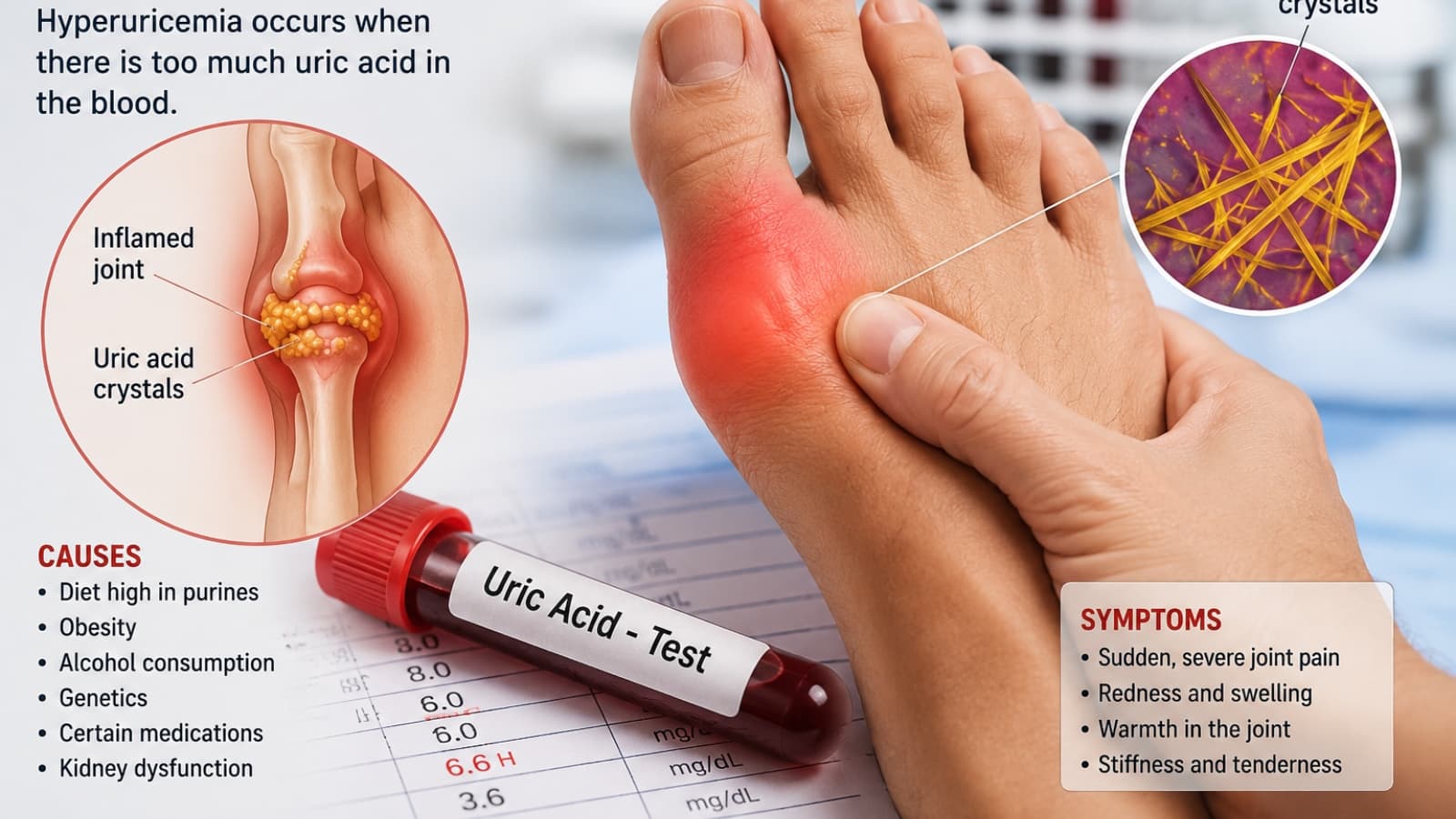
New DelhiAug 2, 2026 09:18 AM IST Monitoring uric acid levels helps ensure treatment goals are achieved (Photo: AI)People with high uric acid are often told to steer clear of protein-rich foods such as eggs, chicken and lentils. But what if the real issue isn’t protein at all? Gut and weight-loss coach Dipika Rampal recently challenged this long-held belief in an Instagram post, arguing that elevated uric acid is more closely linked to metabolic health than to protein intake alone.“If you’ve cut eggs, chicken and even dal — and your uric acid still won’t budge. Uric acid isn’t a protein problem. It’s a metabolic SIGNAL. When insulin runs high, your kidneys hold onto uric acid instead of flushing it out. So the fix isn’t more restriction — it’s fixing the driver.” DISCLAIMER: This article is based on information from the public domain and/or the experts we spoke to. Always consult your health practitioner before starting any routine. She went on to recommend a few lifestyle changes:

New DelhiJul 30, 2026 04:59 PM IST Former cricketer Yograj Singh recalled his son Yuvraj Singh’s diet during his early cricketing days. “When Yuvraj was playing, he was so powerful and so huge. He was on one side, and the entire team was on another. He used to hit the ball the way he was…he had power…he used to eat a 24-egg omelette. Why? Because he was training like that. Main is the diet in the body. 90 per cent of the diet is what works,” he told QUA Nutrition. DISCLAIMER: This article is based on information from the public domain and/or the experts we spoke to. Always consult your health practitioner before starting any routine.Taking a cue, we asked an expert. Consultant dietitian Garima Goyal said that it highlighted an important principle in sports nutrition: young athletes require adequate nourishment to support performance, growth, and recovery rather than restrictive dieting. From a clinical nutrition perspective, a developing athlete’s diet should be centred around high-quality carbohydrates, lean protein, healthy fats, and plenty of fruits and vegetables. Carbohydrates serve as the primary fuel for training and matches, while protein supports muscle repair, recovery, and adaptation after intense physical activity,” said Goyal. Goyal noted how in sports training, nutrition should focus on building a strong foundation rather than on achieving a particular physique. “Inadequate calorie intake or unnecessary dietary restrictions can affect energy levels, recovery, immunity, and even long-term athletic performance,” said Goyal. Here’s what you need to know (Photo: Pixabay)Hydration is another key component that is often underestimated. “Even mild dehydration can reduce endurance, concentration, reaction time, and overall performance on the field. Young athletes also have increased requirements for calcium, vitamin D, iron, and other micronutrients to support bone health and physical development,” said Goyal. Another important aspect of sports nutrition is consistency. “Eating balanced meals at regular intervals, including pre- and post-workout nutrition, helps replenish glycogen stores and promotes muscle recovery. There is rarely one magic food behind elite performance—success usually comes from disciplined eating habits maintained over years,” said Goyal. What Yograj Singh’s recollection reminds us is that sporting excellence is built not only through rigorous training but also through years of appropriate nutrition, recovery, and discipline.Story continues below this ad DISCLAIMER: This article is based on information from the public domain and/or the experts we spoke to. Always consult your health practitioner before starting any routine.

NewsWorldWhy doctors warn against Pentagon's plan to force annual testosterone tests on US troops The order joins other Trump-era health decisions questioned for their scientific basis, including a reversed flu jab rule and a reshuffled vaccine panel. 2 min readJul 19, 2026 01:18 PM IST First published on: Jul 19, 2026 at 01:18 PM IST Defense Secretary Pete Hegseth speaks at the United States Army War College in Carlisle, Pa., during the Pennsylvania Defense and Innovation Summit. (Photo: AP) US Defence Secretary Pete Hegseth has ordered yearly testosterone-deficiency screening for active-duty and reserve service members aged 30 and above, saying it will help keep the military ready for combat. But several doctors warn the policy may not achieve much, and could even raise the risk of infertility or other harm if testosterone ends up being prescribed when it isn’t needed. The order joins other Trump-era health decisions questioned for their scientific basis, including a reversed flu jab rule and a reshuffled vaccine panel. Of six experts Reuters spoke to, five were puzzled by the move, and four said there’s no strong evidence that screening everyone over 30 improves readiness. Medical bodies recommend testosterone treatment only for confirmed deficiency with symptoms like low sex drive or reduced muscle mass, not age alone. Dr Kevin McVary said prescribing without symptoms risks overtreatment; Dr Haleem Mohammed noted that decline varies widely between people of the same age. What risks are experts flagging Every expert flagged fertility risks, warning unnecessary testosterone can shrink the testes with no guaranteed recovery, plus risks like thickened blood and mood swings. Story continues below this ad The FDA recently eased a heart-risk warning on testosterone labels, though the underlying study also found higher rates of abnormal heart rhythm and bone fractures. Does ‘Operator Syndrome’ justify it? Hegseth cited “Operator Syndrome”, seen in special forces troops. Dr B. Christopher Frueh, who identified the condition, said operators are an extreme case unrepresentative of the wider force, questioning universal screening. Some experts still see value in wider testing. Mohammed said testosterone levels are one of the most useful health markers available for men, and that broader screening could pick up reversible causes of low testosterone, such as being overweight among reservists, alongside genuine deficiency cases with both groups benefiting from doctor-guided care. The Pentagon hasn’t said anything about how abnormal results will be handled, or whether screening will apply equally to men and women. Frueh said broader testing could also reveal new information about female service members’ hormone levels, even though testosterone replacement itself is unlikely to apply to most women. (With inputs from Reuters) The Express Global Desk at indianexpress.com which delivers authoritative, verified, and context-driven coverage of key international developments shaping global politics, policy, and migration trends. The desk focuses on stories with direct relevance for Indian and global audiences, combining breaking news with in-depth explainers and analysis. A major focus area of the desk is US immigration and visa policy, including developments related to student visas, work permits, permanent residency pathways, executive actions, and court rulings. The Global Desk also closely tracks Canada’s immigration, visa, and study policies, covering changes to study permits, post-study work options, permanent residence programmes, and regulatory updates affecting migrants and international students. All reporting from the Global Desk adheres to The Indian Express’ editorial standards, relying on official data, government notifications, court documents, and on-record sources. The desk prioritises clarity, accuracy, and accountability, ensuring readers can navigate complex global systems with confidence. Core Team The E

Orthopaedic surgeon Dr Manan Vohra recently highlighted a common yet overlooked issue in Indian households — “sleep shaming” — arguing that it may be harming people’s health. In an Instagram video, he said, “You know what one of India’s biggest problems is? It is sleep shaming. People don’t let anyone sleep. This is very common in Indian households.” Calling out a common mindset, he added, “We’ve grown up believing waking up early means disciplined and sleeping late means lazy. But the body doesn’t work like that.”Highlighting how people are often judged for sleeping in, Dr Vohra said, “If someone hasn’t completed their sleep, waking them up is disturbing their brain.” Referring to the familiar household routine of “Lights on, fan off, door slammed and then the shaming starts,” he urged families to rethink their approach, saying, “Sleep is not a time pass. It resets your brain, it improves your mood, it supports your immunity, and it protects your decision-making.” DISCLAIMER: This article is based on information from the public domain and/or the experts we spoke to. Always consult your health practitioner before starting any routine. But is sleep shaming really affecting our health? Dr Neetu Jain, Senior Consultant, Pulmonology, Critical Care and Sleep Medicine at PSRI Hospital, says the issue deserves serious attention. Sleep is a biological necessity, not a luxury According to Dr Jain, sleep shaming —whether mocking someone for sleeping longer or glorifying those who sleep less—is increasingly a public health concern. “In many workplaces and homes, getting less sleep is seen as a badge of dedication or productivity, while sleeping adequately is viewed as laziness. Such attitudes can lead to chronic sleep deprivation and serious health problems,” she says.Story continues below this ad Research recommends that most adults get 7-9 hours of quality sleep every night. Consistently falling short can impair concentration, decision-making, emotional regulation and reaction time. Dr Jain explains that over time, inadequate sleep is linked to obesity, type 2 diabetes, hypertension, heart disease, weakened immunity, anxiety, depression and even dementia. “Sleep is not a luxury. It’s a biological imperative. Valuing good sleep is just as important as promoting healthy eating and regular exercise,” she says. Does waking up early really mean you’re more disciplined? Many Indian households continue to associate early rising with discipline and success. However, Dr Jain says science does not support this belief. “There is absolutely no scientific basis for the idea that waking up early automatically makes you more disciplined or productive,” she says. Instead, she points to chronotypes—our body’s internal biological clock—which determine when we naturally feel sleepy and alert.Story continues below this ad “Some people are natural ‘morning larks’, while others are ‘night owls’. These differences are influenced by genetics, age, hormones, and environmental factors. Adolescents and young adults, for example, are naturally predisposed to later sleep schedules,” she explains. What matters most, she adds, is getting enough restorative, good-quality sleep that aligns with your biological rhythm. “Rather than when you go to sleep, it’s the length, quality and regularity of sleep that count.” [also_read title = “ALSO READ” article_title= “Your comprehensive guide to a restful night” id = “8946930” liveblog = “no” Why waking someone up mid-sleep isn’t harmless Dr Vohra argues that waking someone before they’ve completed their sleep can disturb the brain. Dr Jain agrees, noting that sleep occurs in roughly 90-minute cycles, each playing a vital role in restoring the body and brain.Story continues below this ad “Each sleep stage contributes to physical restoration, memory consolidation, learning, emotional processing and immune function,” she explains. Repeatedly interrupting sleep can trigger sleep inertia—the groggy, sluggish feeling after waking

EU regulators want Meta to disable autoplay and infinite scroll by default and introduce more effective screen-time protections. (Image: Reuters)The EU charged Meta Platforms’ Instagram and Facebook on Friday with breaching its tech rules, with regulators targeting features they say are designed to keep users hooked and demanding changes to autoplay and infinite scroll or risk fines. The European Commission’s preliminary findings follow a two-year investigation under the European Union’s landmark Digital Services Act, which requires large online platforms to do more to tackle illegal and harmful content.Social media companies face growing scrutiny around the world over concerns that their platforms are contributing to a mental health crisis among children, prompting some governments to impose or consider bans for underage users. The Commission, the EU’s tech regulator, said Meta had failed to adequately assess the addictive risks posed by highly personalised recommendations, autoplay and infinite scroll, which continuously feed users new content and encourage prolonged engagement. It said reels and stories on Facebook and Instagram could contribute to excessive or compulsive use. The regulator criticised Meta’s measures to mitigate these risks, saying time management tools can be easily dismissed, while parental controls require significant time, effort and technical knowledge to use effectively. Meta should disable features such as autoplay and infinite scroll by default, introduce effective screen-time breaks and make its recommendation system less focused on driving engagement, the Commission said.Story continues below this ad Meta disagrees with the charges “We disagree with these preliminary findings, which don’t accurately take into account the significant steps we’ve taken to protect teens,” Meta spokesperson Ben Walters said. “Since this investigation began, we rolled out Teen Accounts that automatically protect teens and put parents in control – allowing them to block access to Instagram at night and cap daily screen time at just 15 minutes.” Meta added it would continue to engage constructively with EU regulators. “Our starting point is that, based on our findings, this design is too addictive and changes need to be made,” EU tech chief Henna Virkkunen told Reuters.Story continues below this ad “The next step is either that Meta changes its design or a non compliance decision will follow.” Meta, which risks a fine of up to 6% of its global annual turnover, can respond to the charges before the Commission issues a final decision in the coming months. The company last month failed in its bid to dismiss claims by 29 U.S. state attorneys general’s that Facebook and Instagram are addictive to children. The EU charges against Meta mirror those brought against TikTok in February, when regulators demanded similar changes to its app.Story continues below this ad The Commission is separately investigating so-called rabbit hole effects caused by Facebook and Instagram recommendation systems, where users can be drawn into prolonged viewing by algorithmic recommendations that push them towards similar content. In another case announced in April, it told Meta to do more to prevent children under 13 from accessing its social networks or risk fines. The Commission is due to receive findings from experts on Monday that could help pave the way for a Europe-wide social media ban for teenagers that Commission President Ursula von der Leyen is expected to announce in her September state of the union address.
The gut microbiome, which consists of the vast community of bacteria, fungi, viruses, and other microorganisms living in the digestive tract, plays a crucial role in overall health. It influences digestion, nutrient absorption, immune function, metabolism, and even aspects of mental well-being. While the microbiome is constantly evolving throughout life, ageing can bring significant changes to the composition and diversity of gut microbes, potentially affecting health outcomes in midlife and beyond.DISCLAIMER: This article is based on information from the public domain and/or the experts we spoke to. Always consult your health practitioner before starting any routine. After the age of 45, many people begin to experience physiological changes linked to ageing, including shifts in hormone levels, metabolism, body composition, immune function, and digestive health. At the same time, lifestyle factors such as dietary habits, physical activity, stress, medication use, sleep patterns, and chronic health conditions may further influence the balance of microorganisms in the gut. To understand this better, we spoke with an expert. How the gut microbiome changes after 45 Kanikka Malhotra, consultant dietician and certified diabetes educator, tells indianexpress.com, “After 45, your gut undergoes measurable shifts: microbial diversity declines, beneficial bacteria like Faecalibacterium and Akkermansia diminish, while potentially harmful species increase.” She adds that this matters because these organisms regulate nutrient absorption, produce short-chain fatty acids that fuel your colon, and train your immune system. “The result? Slower digestion, increased bloating, weaker immunity against infections, and altered metabolism make weight management harder. You may also notice changes in bowel regularity and energy levels. Your gut barrier becomes more permeable, allowing bacterial toxins to enter your bloodstream, a state called “leaky gut”, triggering low-grade inflammation linked to joint pain, brain fog, and metabolic slowdown. Understanding these shifts empowers proactive dietary choices.” Ageing vs lifestyle: What drives microbiome changes? So, roughly 30% of age-related microbiome change is inherent biological ageing, but 70 percent stems from modifiable lifestyle factors. Malhotra notes that diet is the strongest lever; processed foods, low fibre, and high sugar accelerate dysbiosis, while whole foods reverse it. Exercise increases beneficial bacteria diversity within weeks. Sleep deprivation and chronic stress suppress Lactobacillus and Bifidobacterium.Story continues below this ad “Antibiotics reshape your microbial landscape for months. Chronic conditions like diabetes and inflammatory bowel disease also alter composition. But the encouraging news is that midlife is when small dietary and lifestyle corrections compound significantly, offering a genuine window to slow or even partially reverse unfavourable changes,” shares the expert. Supporting gut health in midlife Prioritise fibre, Malhotra says, aiming for 30 to 35 grams daily from vegetables, whole grains, legumes, and seeds, to feed beneficial bacteria that produce butyrate, your colon’s preferred fuel. Include fermented foods such as yoghurt, idli, dosa, or kimchi weekly for live cultures. Polyphenol-rich foods like berries, green tea, and turmeric modify bacterial metabolism favourably. “Limit ultra-processed foods, which promote harmful species. Move daily; even 30 minutes of walking shifts microbial composition. Manage stress through meditation or yoga, since your gut-brain axis is bidirectional. Prioritise 7 to 8 hours of quality sleep. If antibiotics are necessary, discuss probiotic timing with your doctor. Consider prebiotic-rich foods like garlic, onion, and banana. These habits work synergistically; consistency matters more than perfection,” asserts Malhotra. DISCLAIMER: This article is based on information from the public domain and/or the experts we spoke to. Alw



Discussion (0)