
Loading dispatches...
← Return to Newsroomgeneral
FIFA president Infantino faces IOC complaint over political neutrality breaches in Trump support
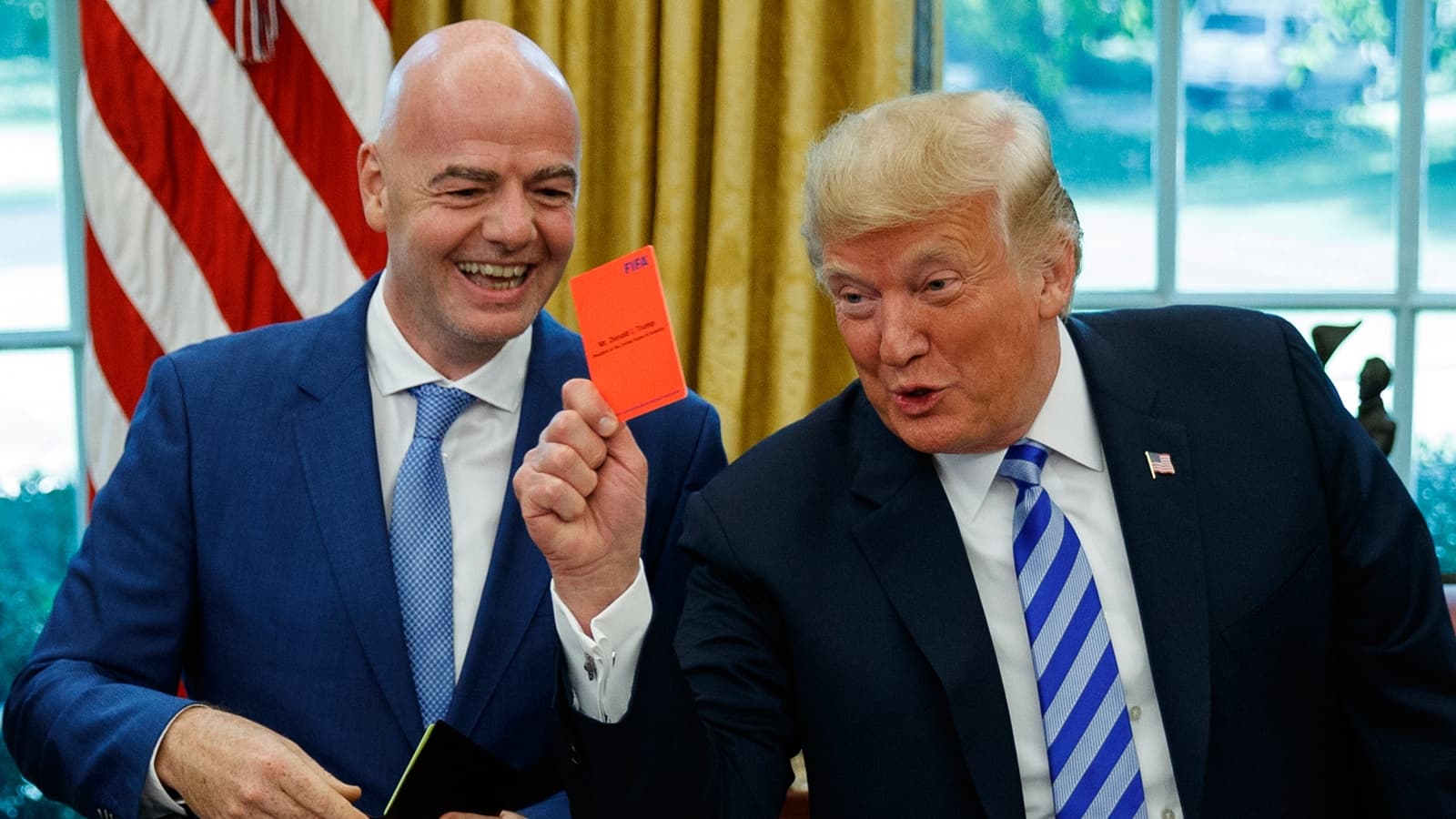
Updated: Jul 15, 2026 09:22 AM IST US President Donald Trump has admitted that he intervened to get FIFA to allow Folarin Balogun to play the hosts' FIFA World Cup round of 16 match against Belgium. (AP Photo)FIFA president Gianni Infantino is facing a complaint over alleged political neutrality breaches, with the International Olympic Committee (IOC) asked to investigate his ties to US President Donald Trump, including his role in a controversial World Cup red-card decision, Reuters reported. The complaint, filed by advocacy group FairSquare, claims Infantino violated IOC rules on multiple occasions. Among the instances cited is his possible involvement in overturning a one-match ban for US striker Folarin Balogun, allowing him to feature against Belgium in the Round of 16 on July 6.Infantino has acknowledged receiving a call from Trump, who publicly pushed for Balogun to be allowed to play. However, the FIFA president has insisted he did not interfere with the disciplinary process. Balogun was sent off in the 64th minute of the US’s Round of 32 win over Bosnia and Herzegovina for a challenge on Tarik Muharemovic. The US won 2-0 with 10 men, but Balogun was automatically suspended for the next game. FIFA later issued a brief statement on its website on July 5, citing Article 27 of its disciplinary code to suspend the ban for a probationary period of one year, without offering further explanation. Trump defended his intervention on the day of the Belgium match. “All I did was ask for a review because I didn’t think it was a foul,” Trump said. “I think they made a really brilliant decision. I think the referee’s call was horrible and nobody talks about that.” Infantino, through a statement on FIFA’s website, said the governing body’s judicial committees operate independently. “Their independence is essential to the credibility and integrity of football, and this must always be respected,” the statement read.Story continues below this ad FairSquare, in its complaint, argues that Infantino, who became an IOC member in 2020, is bound by strict neutrality rules under the Olympic Charter and the IOC Code of Ethics. The group has pointed to five specific instances of alleged breaches, including his public endorsement of Trump for the Nobel Prize in October 2025 and supportive social media posts following Trump’s inauguration. The complaint also highlights Infantino’s promotion of a FIFA fan site for the 2026 World Cup, which FairSquare claims “appears to have been part of a data-harvesting campaign run by entities linked to President Trump.” Additionally, Infantino presented Trump with the inaugural FIFA Peace Prize at the World Cup draw in December. A separate complaint to FIFA’s ethics committee, filed by FairSquare in December, has received support from the Norwegian football federation and 50 members of the European Parliament, according to Reuters.
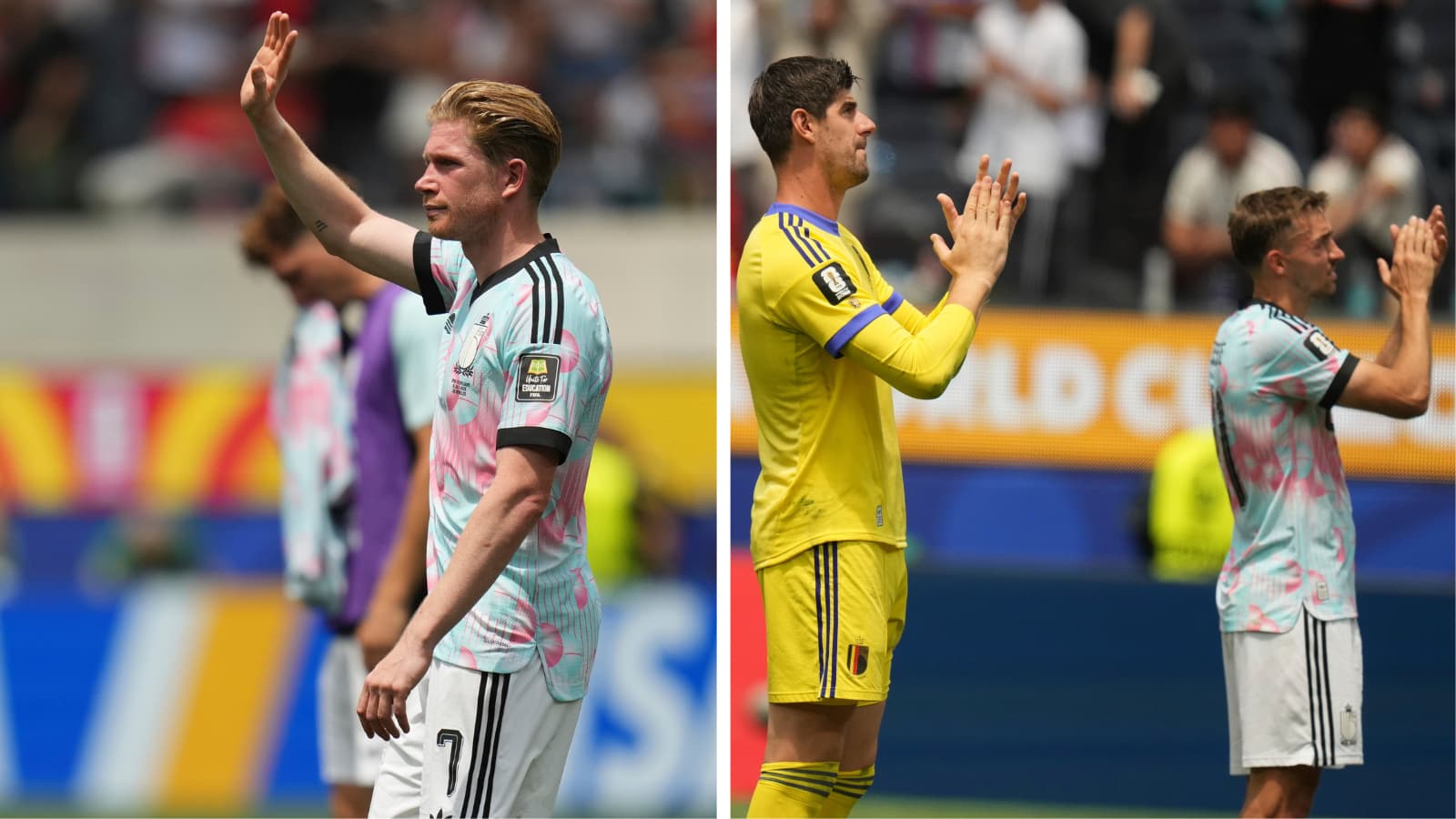
In Belgium’s red, you could not find any blues.There was no reticence in Rudi Garcia’s eloquence. “I reminded everyone to be proud of our World Cup run.”There was no pain behind Axel Witsel’s prestige. “There is pride in the way he played.”There was no confusion in captain Youri Tielemans’ confidence. “We gave our everything. I am sure the country will be proud of us.”The abundance of pride might lead an unsuspecting reader to believe these words were spoken after a Belgian victory. They were not. They came in the immediate aftermath of their 2-1 quarter-final defeat to Spain.Story continues below this ad Could Belgium really be content with defeat in a sport that leaves so little room for nuance? Yes, Garcia’s men were facing the reigning European champions, but they are also Belgium. Ranked eighth. A former semifinalist. They are no strangers to football’s biggest stages. But they once were. When Spain lifted the World Cup in 2010, Belgium had not even qualified. They had, in fact, been thrashed 5-0 by the same opponents during qualifying. Two years later, Spain won the Euros. Belgium, once again, could not qualify. They drew against Azerbaijan in the qualifiers on that occasion. It was one of the reasons Marc Wilmots accepted the national team’s managerial job. He had grown weary of pretending to be neutral while commentating on tournaments his country never reached. Vincent Kompany watched every World Cup and Euros because he adored football, and yet, he hated every minute of it because Belgium were never there. Kevin De Bruyne grew up idolising England’s Michael Owen. Thibaut Courtois’ favourite was Spain’s Iker Casillas. No player captivated Axel Witsel quite like France’s Zinedine Zidane, while Romelu Lukaku dreamt only of scoring goals like Brazil’s Ronaldo. Belgium’s would-be heroes had to look elsewhere because of the dearth of Belgian heroes.Story continues below this ad On Friday, the most glorious chapter of Belgian football concluded. The curtain fell on a golden generation that lifted the country from 68th in the FIFA rankings after that 5-0 humiliation by Spain to No. 1 just nine years later. There were no pompous celebrations, no poetic justice, only a quiet acceptance that their time had passed. The golden generation of Belgian hockey yielded an Olympic gold, a World Cup, a European Championship and two FIH Pro League titles. But not the De Bruynes and Lukakus. But they leave with something larger – the realisation that they belong. Even when they won nothing, Belgium’s golden generation won somethingStory continues below this ad Belgium have had teams that punched above their weight, but they were never blessed with talent. They were not meant to. A nation of just 11.8 million people – only a couple of million more than London, fewer than the population of Ile-de-France and barely a fifth of Spain’s. Its professional pyramid comprises only 33 clubs; England has 92. Then came the reforms of 2006. Government-funded football schools emerged. The De Bruynes and Courtois’ were nurtured here. While Brazil debated how to stem the exodus of teenage talent to Europe’s elite, Belgium embraced it. A small nation like theirs could afford to keep the best talents at home and stagnate their growth. Only three players in Belgium’s current squad represent domestic clubs. In 2002, there were 15. The plan worked. At the 2018 World Cup, there was barely a team more intimidating than Belgium. History records only that France won the semi-final 1-0. Not that Belgium had 64 percent ball possession, or that they completed 539 passes to France’s 287. It forgets that Thomas Meunier, who had shackled Neymar in the quarter-final, was suspended.Story continues below this ad Like in Inglewood, context gave way to consequence. It did not matter that Youri Tielemans – Belgium’s best player in this tournament, who had covered the most distance by any player – was
The final say, and a last dance.Romelu Lukaku had it all as he made a beeline to the stands, cupping his ear, asking the silenced Seattle crowd for a reaction. When none came forth, the Belgians formed a circle on the pitch and started to dance. Soon it became evident that it was less of a dance, and more of an attempt to mock the President of the United States.Now that Donald Trump’s powerplay didn’t have the desired effect and the co-hosts were handed a timid exit, it was Belgium’s turn to mock the Americans. They chose the dance that Trump once did at a rally – a dance that has since then become a global meme, often used to denote the American president in poor light. ‘Overturn this’, read Belgium football’s social media accounts with a picture of Lukaku running towards the crowd. The final word would not go to the Americans. Afterwards, Belgian captain Youri Tielemans said that the previous two days had prompted the team to convene. “Let’s be honest: we held a meeting when we heard the news,” Tielemans said after Monday’s game, referring to Folagin Balogun’s reinstatement for the match despite the red card in the previous match. “We told ourselves we needed to do our talking on the pitch. That’s what we did today. I’m very proud of the team.” Their coach Rudi Garcia was forgiving in his words for Balogun, who, through no fault of his own, was dropped into the middle of the storm. “He came to talk to me; I really like that. … It’s not his fault, he’s not the one to blame and that’s what I told him,” Garcia said after the match.Story continues below this ad Ball don’t lie There is a slang in basketball that has transcended to everyday American-speak and now finds appropriate use. ‘Ball don’t lie’ essentially translates to sporting karma. That when a referee or a higher authority makes a poor call, the sport and the actors in the middle of it usually course-correct, and that the purity of the sport trumps the forces that attempt to manipulate it. Football is no stranger to poor refereeing calls, just like every other sport, but it has rarely seen state heads bullying the sport to give their teams an undue benefit. And lost in the fracas was the true triumph of the day – Belgium. Garcia dropped Kevin de Bruyne but also chose not to put super-sub Romelu Lukaku in their starting eleven. They took an even braver call to not include Jeremy Doku. The United States is billed as the ‘Land of opportunity’ – three words that are the foundation of the American dream. Belgium didn’t just win, they did so by living up to the very ethos of the host country.Story continues below this ad Garcia acknowledged the seminal moment that arrived towards the end of their Round of 32 game against Senegal. Belgium’s golden generation would have to be the supporting act. Against the Americans, the young brigade led the way, and the old guard supported the shift in power ably. Of their four goals on the day, two came from Charles de Ketalaere in the first half. It was a statement moment for the 25-year-old Atalanta striker. Struggling for goals for his country, Lukaku’s late-game heroics were threatening his spot in the starting eleven. Eight of Belgium’s 13 goals at the World Cup so far have come after the 60th minute. A strong statement of intent was needed and Ketalaere delivered on the promise of youth. He scored in the ninth minute and then helped Belgium take the lead again in the 33rd after the United States had equalised from a deflected freekick guided in by Malik Tillman. Belgium’s third goal came from 33-year-old substitute and long-time Club Brugge attacking midfielder Hans Vanaken in the 57th minute. And then the stage opened for Lukaku.Story continues below this ad Lukaku’s football gets as much mention as his background. Son of Congolese immigrants who struggled to make ends meet in Belgium, tales of his youth – his mother mixing water with milk, parents of other children asking for his ID because of his accelerated growth spurt at a youn


Discussion (0)