
Loading dispatches...
← Return to NewsroomWorld
2 UAE tankers attacked while transiting Strait of Hormuz, and other news from the Middle East

2 UAE tankers attacked while transiting Strait of Hormuz, and other news from the Middle East AP News Iran targets tankers in ‘unprovoked attacks’ in Strait of Hormuz, UAE says Fox News UAE accuses Iran of Hormuz attacks as Vance says cheap gas are "goal number one" Yahoo Oil Rises After Tanker Attack in Hormuz WSJ Live Updates: UAE accuses Iran of attacks in Strait of Hormuz as Vance says cheap oil and gas are "goal number one" CBS News
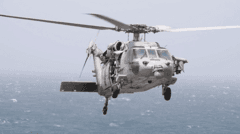
The US military says one of its helicopters has fired missiles to disable "the steering gear" of a cargo ship attempting to violate the US blockade of Iranian ports.In a statement, US Central Command (Centcom) says its MH-60 aircraft on Tuesday fired two hellfire missiles into the engine room of the Panama-flagged M/V Vela Nova vessel, as it attempted to transit the Gulf of Oman.Centcom says it acted after "the ship's civilian crew ignored repeated warnings from American forces". It adds that the vessel "is no longer transiting to Iran".Iran has so far not commented on the issue. The US has been enforcing a blockade of Iranian ports, following failed attempts to end the war it and Israel started on 28 February. Tehran retaliated by launching attacks on Israel and US-allied states across the Gulf. It has also effectively closed the Strait of Hormuz - a key oil shipping waterway.A fifth of the world's oil and liquefied natural gas used to transit the strait before the war and prices have fluctuated wildly since then.Mediators have so far failed to bring the sides to an agreement on reopening the strait - and, since the latest ceasefire collapsed in June, both the US and Iran have exchanged fire intermittently. In its statement on X, Centcom said M/V Vela attempted to sail to an Iranian port without naming it. It says the US blockade "remains in full effect", adding that as of 11 August Centcom has "redirected 55 commercial vessels attempting to run the blockade, disabled 3 non-compliant vessels, and boarded 2".In a separate development on Tuesday, Yemen's internationally recognised government said six people were killed and 10 injured in strikes by Yemen's Iran-backed Houthis on a cargo ship in the Red Sea.The Houthis said they hit a vessel carrying Saudi military equipment. It appears to be the first deadly attack by the group on a ship since the war began.
com Iran Issues List of Demands, Complicating Efforts to Reopen Strait The New York Times Amid Strait of Hormuz talks, Iran publishes list of demands for US The Hill Live updates: Iran demands concessions from US as it nears Strait of Hormuz deal with Oman CNN Iran War Updates: Iran says strait won't open until the U.S. "corrects" behavior CBS News
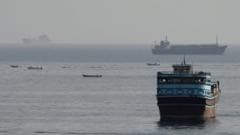
Iran says it has reached an agreement with Oman on a route for shipping through the Strait of Hormuz.Foreign ministry spokesman Esmaeil Baqaei did give any further details on the agreement, which he said was "in the final stages".Baqaei warned however that a deal with Oman would not guarantee safe navigation through the strait on its own, arguing that security remains impacted by the US blockade of Iran's ports. The US has not so far commented on the proposal.Since the US and Israel attacked Iran in late February, Tehran has largely blocked the Strait of Hormuz through which about a fifth of the world's oil and liquefied natural gas usually passes. Since then, global oil prices have fluctuated wildly. On Tuesday, US President Donald Trump warned that Iran would be "hit very hard" if the strait did not open "very soon".His comments came after senior US officials said talks had progressed to allow shipments to potentially to resume later this week, though Iran has maintained that it is not negotiating with the US and has no plans to do so.Reopening of the strait has been a key point in discussions between the two countries and mediators.In his statement, the Iranian foreign ministry spokesman said the "geographical coordinates of the route" had been agreed with Oman."The factors making the Strait of Hormuz insecure still exist on the part of the United States, particularly the naval blockade and other aggressive and threatening actions against Iran and its interests," he said, according to Iran's official Irna news agency.The US has imposed a naval blockade of Iranian ports in the region, while another blockade is in place on Saudi Arabia's ports in the Red Sea, imposed by Yemen's Iran-backed Houthis since 20 July.
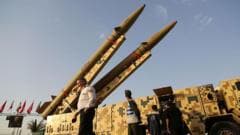
At first glance, Iran's surprise missile strike on a US base in Jordan earlier this week appeared difficult to explain. The attack effectively ended the fragile pause in direct US-Iran fighting and prompted Washington to resume strikes inside Iran. It was also unusual.If Tehran's priority had been a ceasefire, the strike is difficult to explain. But if Iranian leaders judge that a controlled confrontation could offer greater strategic leverage, the decision becomes more understandable.One possible explanation is that Tehran believes that, despite its risks, a limited war serves its interests better.Today, neither side appears ready for an all-out war. Washington has shown little appetite for a much broader regional conflict that could threaten energy infrastructure in the region, draw in more countries, push oil prices higher, and further stretch US military resources.Iran may also try to avoid an all-out war because its weakened air defences, vulnerable industrial infrastructure and sanctions-constrained economy make rebuilding losses increasingly difficult and expensive.Iran may have concluded that this creates room for a strategy based not on military victory but on sustained pressure.A prolonged ceasefire under current conditions could actually leave Tehran in a weaker position. The US naval blockade of Iranian ports would continue, sanctions would remain, and Iran would still be largely excluded from international energy markets.Meanwhile, Saudi Arabia, the UAE, Qatar and other oil and gas exporting countries in the region could gradually resume normal exports while Iran remained economically isolated.A limited conflict could change this landscape for Iran. Although Iran is paying a heavy military and economic price, disruption in the Strait of Hormuz and, through the Houthis, pressure around Bab al-Mandab continue to affect global shipping, insurance costs and energy markets. Even limited uncertainty forces governments, shipowners and importers to pay attention to Iran's demands.In effect, Tehran may believe it still possesses leverage.Iran also appears to be trying to reshape the diplomatic discussion. Rather than accepting unrestricted freedom of navigation, it has repeatedly signalled that shipping should operate under rules agreed with or administered by Iran. If that interpretation is correct, Tehran's objective may be that any future reopening of the Strait of Hormuz reflects Iranian influence rather than a return to the pre-war status quo. An ongoing, limited conflict would allow Iran to keep the pressure on to achieve this goal.From Tehran's perspective, keeping the crisis alive below the threshold of total war may therefore be preferable to accepting a ceasefire that leaves sanctions, the blockade and economic isolation largely unchanged.There may also be domestic calculations. Iran continues to face high very inflation rates, unemployment, economic hardship and public dissatisfaction. During periods of external conflict, governments often find it easier to suppress internal opposition, justify tighter security measures and rally support around national defence. That does not remove Iran's economic problems, but it may reduce the immediate political pressure created by them.None of this means the strategy is without significant costs. Iran continues to absorb repeated military strikes, economic uncertainty, and there is no guarantee that the current balance can be sustained.That is the main paradox facing Tehran. A controlled conflict may currently offer more leverage than an imperfect peace, but controlled conflicts have a habit of becoming uncontrolled. Iran may believe it can calibrate escalation carefully enough to keep pressure on the United States, global energy markets and regional diplomacy while avoiding all-out war.But that calculation also carries significant risks. Beyond the possibility of a much wider war, a prolonged conflict with no clear end in sight could gradually strengthen international supp
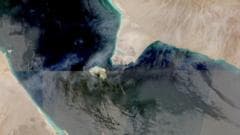
Yemen's Houthis say they have attacked two Saudi oil tankers in the Red Sea as the US launched its 12th consecutive night of strikes on Iran. Iranian state media said two people had been killed in the US strikes on Wednesday, and a tanker caught fire in an explosion in a mined route in the Strait of Hormuz. Ahead of the latest round of strikes, US President Donald Trump had threatened to destroy an Iranian bridge or power plant if Iran attacked a ship in the strait and to "take care of" the Houthis if they blocked the Red Sea.If confirmed, the Houthi attack would be the first since the Iran-backed group announced a "maritime embargo" against Saudi Arabia.The Houthis named the tankers as the Encelia and the Layla, though neither their responsibility, nor the attack on the Layla has been confirmed. The group's military spokesperson Yahya Saree said they had targeted the ships with drones and missiles for allegedly violating its naval blockade. Saree added that the Houthis promised to continue their naval operations and would continue "enforcing the 'siege for a siege' equation". The state-run Saudi Press Agency confirmed early on Thursday that the Encelia was struck "while sailing in the Red Sea", resulting in a fire on its bow. Citing an unnamed official source at the Transport General Authority, it described the attack as a violation of international law. All crew were safe, it reported.UK Maritime Trade Operation (UKMTO) reported an "unknown projectile" struck a Saudi tanker about 130km from Al Shuqaiq in Saudi Arabia at 20:00 GMT. The attack caused a fire but no casualties, it said.British maritime risk management group Vanguard also reported that the Saudi tanker Encelia had been hit. US Central Command (Centcom) said at 21:30 GMT it had launched strikes at Trump's direction "to further degrade Iran's ability to threaten civilian mariners and commercial vessels transiting regional waters".The strikes targeted "Iranian military targets including maritime capabilities, missile and drone storage facilities, coastal surveillance sites, and air defense assets," it said.Kuwait, Jordan and Bahrain soon reported responding to airborne threats, before Iran's military said they had targeted US assets in all three countries, according to AFP.Iranian state media reported two people had been killed in US strikes on the country's south near its border with Iraq. Meanwhile, the Iranian Revolutionary Guard (IRGC) said the Strait of Hormuz was "completely closed" after an explosion in the channel, Iranian state media reported. The IRGC said it had stopped three oil tankers from passing through the strait.One tanker caught fire and two others turned back after attempting to pass through a mined route south of the strait, according to Iranian state media.It comes after Trump promised earlier on Wednesday to attack an Iranian bridge or power plant if its forces hit ships in the Strait of Hormuz. Iran's Foreign Minister Abbas Araghchi later warned of an "eye for an eye" response to attacks on Iran.On Tuesday, Trump told reporters he would "take care of the Houthis" should they obstruct the Red Sea as they had said. Few details of the "maritime embargo" were given by the Houthis when it was announced on Monday, but a media official said they were closing the Bab al-Mandab Strait - the Red Sea's southern gateway - to Saudi vessels.The Red Sea has become crucial for oil shipments from Saudi Arabia during the US-Israeli war with Iran, which has led to the effective closure of the Strait of Hormuz in the Gulf.Now, the threat from the Houthis risks further disruption to international shipping, with hostilities in the region having already led to global fuel prices fluctuating significantly.So far, at least seven oil tankers have made U-turns close to Yemen since the embargo. Saree claimed the Houthis had "forced approximately ten ships to retreat and return".The disruption in the Red Sea comes as peace negotiations have effectively stalled between th
com US launches new strikes as Iran warns of regional turmoil Al Jazeera U.S. and Iranian attacks continue as tensions mount on a key waterway in the Red Sea NPR

Tehran’s chief negotiator says if Iran’s ‘security is not ensured, no infrastructure will be safe’.Iran has threatened to launch more attacks across the Gulf region if strikes by the United States military do not stop, warning that “no infrastructure will be safe” unless its own security is guaranteed.Iran’s chief negotiator Mohammad Bagher Ghalibaf delivered the message in a post on X Wednesday, after US President Donald Trump threatened to attack more Iranian power plants and bridges.Recommended Stories list of 3 itemslist 1 of 3US ‘open’ to negotiations with Iran but Tehran not ‘serious’, Rubio sayslist 2 of 3US Secretary of State say Iran is in ‘a lot of trouble’list 3 of 3Iran war’s $37bn price tag: Why does the Pentagon want $67bn more?end of list“In a region where we do not sell oil, no one will sell oil,” Ghalibaf said. “If our security is not ensured, no infrastructure will be safe.”Ghalibaf’s statement, echoing similar threats by other Iranian officials, came after eleven straight nights of US attacks, some of which hit Iranian power plants and roads.Both sides have been targeting civilian infrastructure, which is a war crime under international law unless it is being used for military purposes.Iran’s Ministry of Health said US attacks since late last month have killed 53 people, including three children, and injured 590 others.Iran has responded to the US onslaught with repeated attacks on US allies Bahrain, Kuwait and Jordan this week, including hitting water and power plants in Kuwait.An Iranian attack on an air base in Jordan on Friday killed three US service members, while a fourth US soldier was killed in Erbil, Iraq on Sunday during a controlled detonation of an attack drone. Their deaths brought the total number of US personnel killed during the war to 18, according to the US military.Iran’s Foreign Minister Abbas Araghchi said Tehran would retaliate “an eye for an eye” against any future attacks.“Any aggression against Iran, including our infrastructure, will compel a powerful and decisive response,” Araghchi said.Iran’s military said threats from Washington “will have no result other than the expansion of the war”.“Neither side wants to look weak by backing down,” Mehran Kamrava, professor of government at Georgetown University in Qatar, told Al Jazeera.But he said Iran is “running out of options in terms of the number of regional targets they can attack” without causing more severe lasting damage to its regional standing.Trump ‘had enough of waiting’The escalating attacks have led both sides to say they have abandoned the interim peace deal they signed last month, at least for now.A major point of contention has been the status of the Strait of Hormuz, which Iran has insisted on maintaining control over. The US military’s Central Command (CENTCOM) has said the strait “remains open for transit” despite “threats and attacks” by Iran’s Islamic Revolutionary Guard Corps.Iran-allied Houthis in Yemen have also threatened a second vital energy route, the Bab al-Mandeb Strait, by declaring a blockade of Saudi ports, prompting five tankers to change course in the Red Sea.Trump raised the stakes on Wednesday by saying the US would attack one power plant or bridge in Iran every time Iranian forces target a ship in the Strait of Hormuz.“President Trump had enough of waiting on the Iranians, and it does not seem there is any mediator with the credibility to bring the Iranians to the table,” Muhanad Seloom, assistant professor at the Doha Institute for Graduate Studies, told Al Jazeera.As mediators rushed to salvage the faltering US-Iran agreement, Rubio said Wednesday Iran is not serious about diplomacy even though Iranian officials have been reaching out to Washington.“If they’re serious, we’re serious. If they’re not, then we will do what’s necessary to protect our interests, and also the interests of our allies,” Rubio told reporters at a meeting of southeast Asian foreign ministers in Manila.



Discussion (0)