
Loading dispatches...
← Return to Newsroomgeneral
Court says punishing children ‘self-destructive’ grants bail to juvenile in rape case
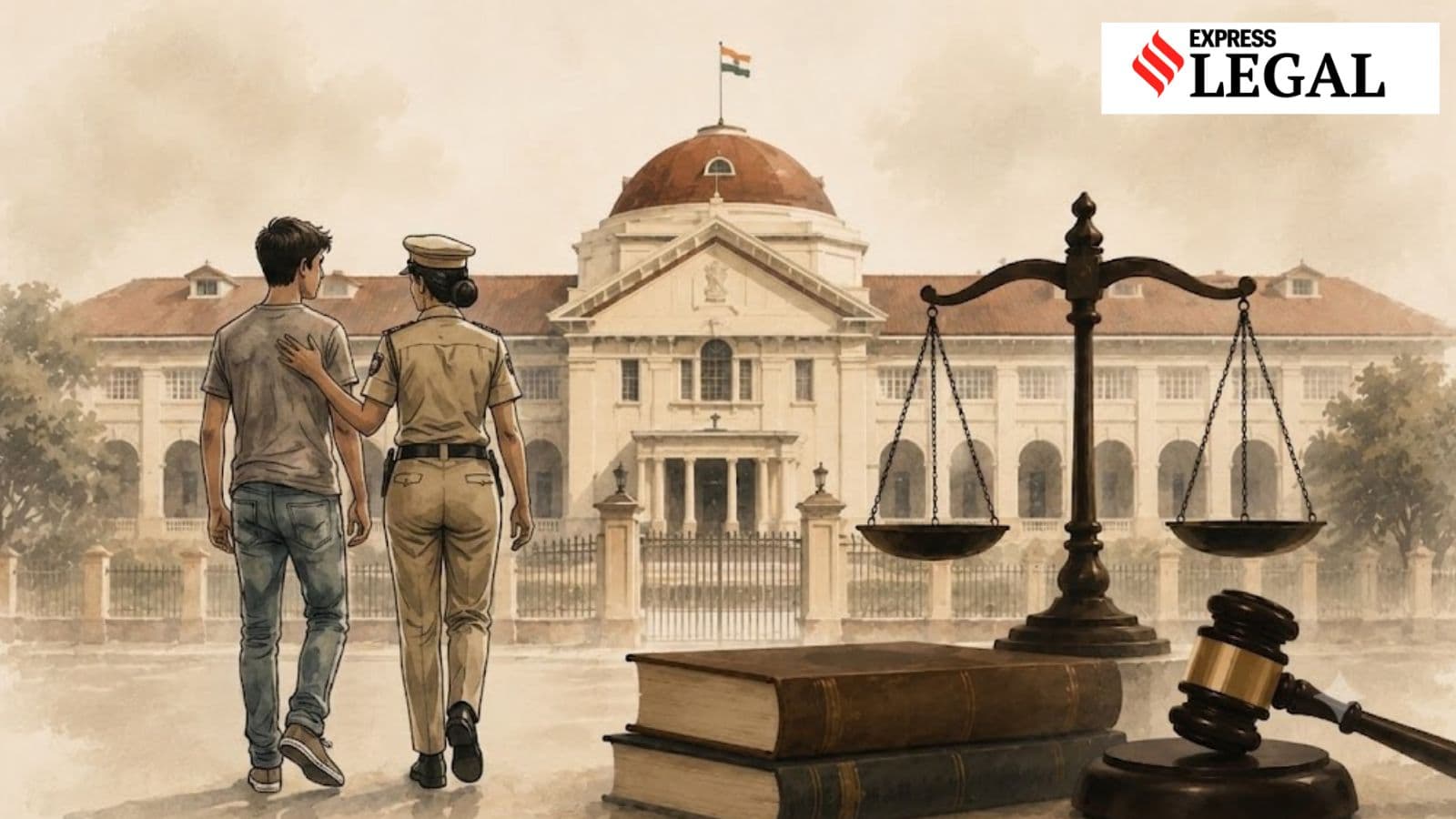
Observing that children in conflict with the law are not expected to be treated as “adult offenders” and that no society can afford to “punish” its own children, who are the future of society, as doing so would be “self-destructive”, the Patna High Court recently granted bail to a juvenile accused of sexually assaulting a minor girl from a different caste.Justice Jitendra Kumar noted that the juvenile, who belonged to a “very poor” family, was allegedly in a relationship with the girl and remained in constant contact with her while hearing his bail application, which had earlier been rejected by the children’s court.“The Juvenile Justice Act is based on the belief that children are the future of society and in case they go into conflict with the law under some circumstances, they should be reformed and rehabilitated and not punished. No society can afford to punish its children. A punitive approach towards children in conflict with the law would be self-destructive for society,” the July 7 order read. The high court also pointed out that it is only when keeping a child in custody aids his development, rehabilitation or protection that it can be said that his release would “defeat” the ends of justice. Adding that the “institutionalisation” of a juvenile in conflict with the law is contemplated only as a “last resort”, the high court granted bail, noting that the juvenile had no criminal antecedents, had studied up to eighth class and had never been involved in anti-social activities in the past. The prosecution claimed that the juvenile was found in the victim’s room by her mother and later refused to marry her. However, the juvenile stated that he was acquainted with the girl and that her parents wanted to get their daughter married to him. According to him, the case was lodged to pressure him into marriage. ‘Reform child into productive member of society’ The high court clarified that the “seriousness” of the alleged offence or the age of the juvenile is also not a relevant consideration for denial of bail under the Juvenile Justice Act. Story continues below this ad “Even the child who is 16 years or above 16 years of age and is alleged to have committed a heinous offence is also entitled to get bail under Section 12 of the Act, 2015 (mandatory presumption of bail),” the court added. Justice Jitendra Kumar stated that the “institutionalisation” of a juvenile in conflict with the law is contemplated only as a “last resort”.Pointing out that the purpose and object of the Juvenile Justice Act is to reform and rehabilitate the juveniles and not to punish them, the high court mentioned that the family of the child in conflict with the law has been considered by the legislature as the “best and first desirable institution” to achieve the object of the Act. “Hence, the primary responsibility of care and protection of the child has been given to the biological family or adoptive or foster parents of the child, and it has been contemplated that every child in conflict with the law has the right to be reunited with his family at the earliest,” the court stated. The high court further observed that juvenile justice boards and courts are required to adopt a “fundamentally different approach” while dealing with children in conflict with the law. It added that such children should be dealt with “sensitively and responsibly”, to reform and rehabilitate them into responsible and productive members of society.Story continues below this ad The high court also directed the district magistrate to find a way to help the juvenile and his family members under the welfare schemes of the government to rehabilitate and reintegrate with the “mainstream” of society. Arguments Appearing for the juvenile, advocate Pramod Kumar Yadav argued that as per the medico-legal examination, which was placed on record, the alleged survivor has refused to undergo any medical examination. He further added that even the survivor’s mother did not want to get her

It feels like 2011 again. Where an empire that looked unshakable only months back has been brought to the ground in the most stunning fashion. Three months after becoming the first team ever to successfully defend the T20 World Cup, India remain winless on their trip to Ireland and the UK and are staring at a second successive series defeat, having already lost to Ireland. Set 202 to win in Nottingham, with MS Dhoni watching from the stands on his 45th birthday, India folded for 76 in 11.4 overs, losing by a record 125 margin – their worst ever- on Tuesday, and go 0-2 down in the series. As has been the case throughout this tour, India failed to bring their A-game to the fore and paid for it. It is the first instance where India are without a win in five successive matches. A new T20 cycle calls for changes in personnel. But given India’s depth, the fact that they have been listless so far is a concern.A series that promised fireworks is turning into a damp squib as India simply refuse to put in a complete performance and some of the decision-making so far has been questionable. Powerplay trouble Having gone on the trip with a left-handed heavy batting line-up, which doesn’t usually sit in head coach Gautam Gambhir’s tactics book where having a left-right mix is preferred to offset the opposition bowlers, the think-tank is perhaps sending a message or two to the selectors. How else can one explain the logic to send Harshit Rana in at No 7 inside the powerplay ahead of Shivam Dube? The management might believe there is a potential to tap into Rana’s batting, but sending him in a crisis ahead of a capable batter so early indicated that India may have thrown in the towel early in the chase. Abhishek Sharma in action. (AP photo)However, well before Rana walked in, the top-order batsmen had endured another difficult outing. After playing on bowler-friendly wickets against Ireland, England’s batting-friendly wickets would have come as a relief. Yet, they are yet to fire as a unit. Chasing 202, the target was very much in their range. Both Abhishek Sharma and Vaibhav Sooryavanshi started off in a flash, but in the space of 19 deliveries, Josh Tongue and Jofra Archer sent India’s top five back. Abhishek slashed one straight to point; Sooryavanshi tried to hook Archer and gloved it behind; Ishan Kishan went for a pull and picked the fielder at deep backward square; Shreyas tried to loft Archer off his legs and found the fielder at deep square-leg. Axar Patel went for a slice and edged it to Jos Buttler to be Archer’s third wicket. It was at this point that India sent in Rana with the side in tatters and one over still to play in the powerplay.Story continues below this ad Prince impresses On an afternoon where nothing went their way, India received some encouraging signs from pacer Prince Yadav. The 24-year-old pacer, coming in as the second change in the powerplay, started with a pin-point yorker that brushed Buttler’s feet and castled the stumps. It was a timely breakthrough for India, having started the day with eight successive dot deliveries and seeing Buttler land the early blows as Phil Salt had a sedate beginning. Prince Yadav in action. (Deepak Malik / CREIMAS for BCCI)After removing Buttler, it was Prince who also ensured Harry Brook’s innings didn’t last long. He was on the money when it came to hitting the line of stumps, which kept Brook and Salt tied up. Consistently bowling in the early 140kmph, he got the England captain with one that had a bit of extra bounce as he ended up skying to the fielder at deep mid-wicket. With Varun Chakaravarthy continuing to frustrate, Shreyas had to turn to Rana in the middle-overs, who responded by picking up the wickets of Jacob Bethel and Tom Banton in successive deliveries – first at deep mid-wicket and next at third man. Out of nowhere, those two wickets seemed to bring India back into the game, but at the pace at which England were heading, all it needed was someone to put their ha
New DelhiJul 8, 2026 04:45 AM IST The SC held that the IBA’s Caution List is intended to operate only in cases involving serious misconduct and not to address cases resting merely on alleged negligence or errors of professional judgement as in the present case. While self-regulation lies at the heart of the independence of the legal profession, it is also important to maintain public confidence in the institution of lawyers, the Supreme Court said Tuesday. The top court also asked the Bar Council of India (BCI) to undertake a “comprehensive performance audit of the disciplinary mechanisms administered by it and the State Bar Councils under the Advocates Act, 1961”. A bench of Justices P S Narasimha and Alok Aradhe also called for setting up a National Legal Academy (NLA) that will provide continued legal education to lawyers so as to enable post-enrolment structural learning, enhance professional competence and other skills.The bench set aside an Allahabad HC order which refused to give a lawyer any relief in a matter in which his name was removed from a panel of advocates by the Canara Bank and included in a “Caution List” titled “Third Party Entities Involved in Fraud”, maintained by the Indian Banks’ Association (IBA). This happened after a legal opinion given by the advocate turned out to be wrong and exposed the bank to loss. The SC held that the IBA’s Caution List is intended to operate only in cases involving serious misconduct and not to address cases resting merely on alleged negligence or errors of professional judgement as in the present case.


Discussion (0)