
Loading dispatches...
← Return to NewsroomPolitics
Century-old Kannada schools to be developed as heritage institutions: KDA Chairman
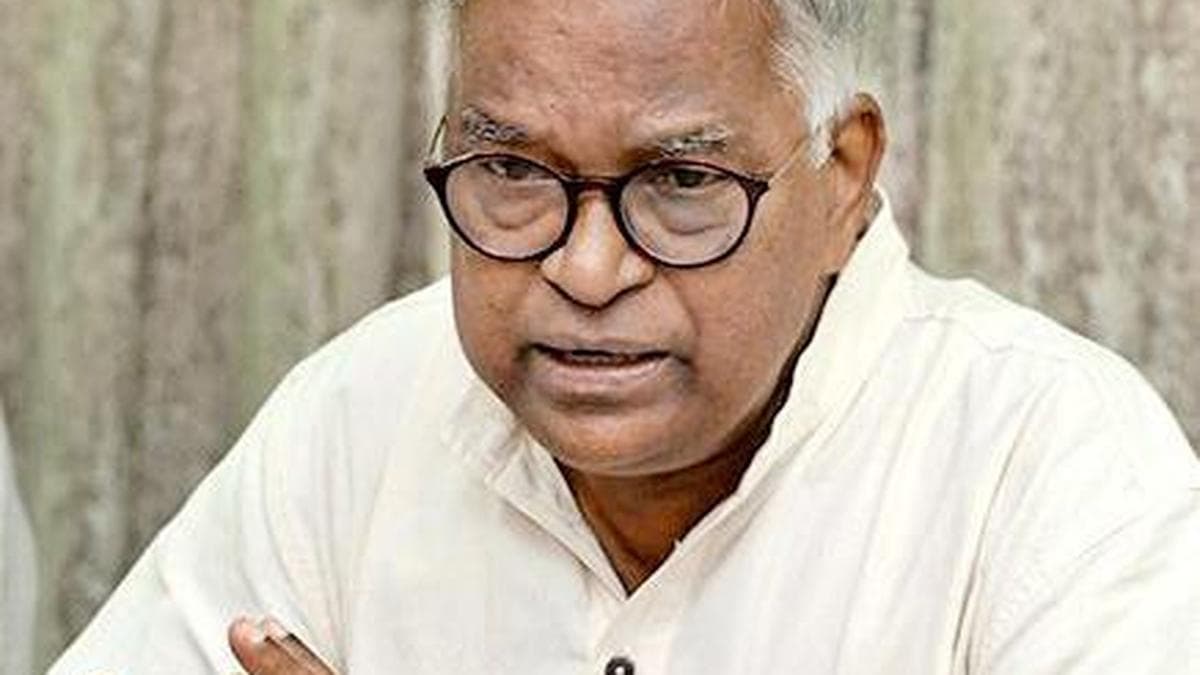
Purushottama Bilimale | He also reiterated that Kannada must be implemented mandatorily in government administration and public services across the State.Addressing reporters after reviewing the progress of Kannada implementation with district-level officers at the Deputy Commissioner’s office in Chamarajanagar, Mr. Bilimale said district administrations had been asked to prepare a list of century-old government Kannada schools to facilitate the initiative.Expressing concern over the lack of property records for government schools, he said around 19,700 government schools across Karnataka do not have registered property documents, leaving the school land vulnerable to encroachment after the institutions are closed.In Chamarajanagar district alone, 115 government schools reportedly lack such records. He said the issue would be taken up with the State government to ensure that government school land remains in government ownership even after the schools cease to function.Mr. Bilimale said all district-level officials had been directed to ensure the mandatory implementation of Kannada in government administration and stressed that the language should be used effectively across all government departments.The Kannada Development Authority has visited 24 districts over the past one-and-a-half years and has interacted with officials from more than 1,200 government departments to assess the implementation of Kannada in administration, he said.Commending Chamarajanagar for preserving the spirit of Kannada despite being a border district with linguistic diversity, Mr. Bilimale said the district administration and various departments had shown commendable commitment to promoting the language. He added that other districts should emulate the model.Referring to complaints from rural residents about language barriers in banks, the KDA Chairman said many bank officials from outside Karnataka were unable to communicate in Kannada. He called for Kannada language training for bank employees and urged the government to conduct banking recruitment examinations in all 22 scheduled languages, enabling candidates to write the examinations in their mother tongue. He also stressed the need to provide greater employment opportunities for Kannadigas in the banking sector.Mr. Bilimale said the government had already issued a circular directing industries established on land allotted by the Karnataka Industrial Areas Development Board to reserve 40% of jobs for local Kannadigas. However, he alleged that the directive was not being implemented effectively and urged district administrations to inspect industries, verify compliance, and submit reports on local employment to the government.Calling for wider use of Kannada in public life, Mr. Bilimale said police stations and tourist destinations should display Kannada signboards, receipts issued at the Male Mahadeshwara Hills temple should be printed in Kannada, and doctors should write at least patients’ names in Kannada on prescriptions. He also advocated for Kannada-medium education up to class 5 in Karnataka Public Schools to strengthen Kannada learning among future generations. Published - July 10, 2026 08:55 pm IST
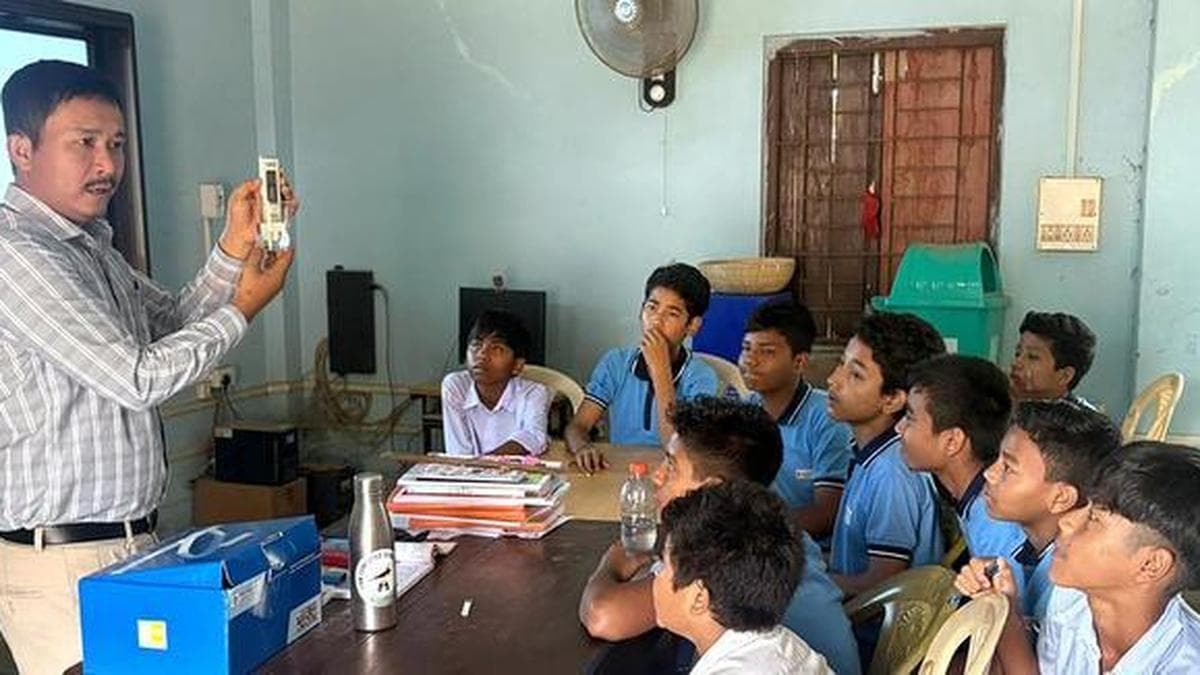
Unified District Information System for Education data for 2025-26 revealed that the number of upper primary, secondary, and higher secondary schools not maintaining the 30:1 norm is 1,253, 829, and 517, respectively. Photo: Special Arrangement GuwahatiAssam has 7,948 government and government-aided schools without the ideal pupil-teacher ratio of 30:1, Education Minister Ranoj Pegu told the 126-member State Assembly on Thursday (July 9, 2026).Replying to separate questions by All India United Democratic Front MLA Mohammad Badruddin Ajmal and his Congress counterpart Asif Mohammad Nazar, the Minister said that the norm is to deploy two teachers per lower primary school while maintaining the pupil-teacher ratio, depending on student enrolment. This is because lower primary schools are generally located within a 1-km radius of one another.“However, the 30:1 pupil-teacher ratio has not been maintained in 5,303 lower primary schools,” he said, citing UDISE+ (Unified District Information System for Education) data for 2025-26.The data revealed that the number of upper primary, secondary, and higher secondary schools not maintaining the 30:1 norm is 1,253, 829, and 517, respectively.The Education Minister also said 5,128 of the State’s 44,103 schools lack separate classrooms.“Multi-grade teaching is practised in schools without an adequate number of teachers and students. In most of these schools, two teachers teach students from five classes in the same room. This is not found to have affected the quality of teaching,” he said.A few months ago, Mr. Pegu said Assam has 2,670 single-teacher government primary schools.On Thursday (July 9, 2026), he clarified that an educational institution is classified as a single-teacher school when one of its sanctioned teaching posts remains vacant.“However, local education authorities usually make temporary arrangements by assigning another teacher or a Cluster Resource Centre Coordinator to support such schools,” he said.He further said that election or other public duties are usually not assigned to teachers of such schools. Published - July 10, 2026 10:28 am IST
During the current financial year, 328 additional schools will be provided with ICT laboratories. | The first and second categories represent 1.53% and 0.64%, respectively, of the State’s 44,243 government-run and government-aided schools.On the brighter side, all these schools have girls’ toilets and 643 schools have functional solar energy systems, Mr. Pegu said on social media platform X.The State government had earmarked ₹4 crore for the current fiscal year to ensure electricity connection in all the left-out schools, he said. He also announced a plan to provide all essential infrastructure to these schools by March 2027.“Construction of boys’ toilets in 283 schools has been initiated during the current financial year,” the Minister said.Mr. Pegu further said that 10,033 of the 10,965 schools that the government manages have at least one digital learning facility, including an Information and Communication Technology (ICT) laboratory, and a tele-education facility or smart classroom.“The remaining schools are yet to receive digital infrastructure. During the current financial year, 328 additional schools will be provided with ICT laboratories, reducing the number of uncovered schools to 608,” the State Education Minister said. Published - July 08, 2026 03:52 pm IST

Discussion (0)