
Loading dispatches...
← Return to Newsroomgeneral
Census 2027 must count castes, not create them
Recent news reports indicate that the rehearsal for the second phase of Census 2027 includes an “open column” for recording caste. While the government has clarified that the final methodology will be decided after evaluating feedback from the test exercise, experience from previous surveys suggests that relying solely on an open-text response without a standardised coding framework can undermine the objective of caste enumeration.The experience of the Socio-Economic and Caste Census (SECC), 2011 is a cautionary example. The use of an open column resulted in over 46 lakh different caste entries, largely due to spelling variations, regional names, sub-castes, synonyms, and inconsistent reporting. As a result, the data could not be effectively classified or officially released for policy purposes. This stands in contrast to earlier and more structured exercises. The 1931 Census recorded approximately 4,147 castes, while the Anthropological Survey of India identified around 6,325 castes in 1951. More recently, states that adopted a standardised coding methodology have shown that accurate enumeration is feasible and reliable. The Bihar Caste Survey (2023) identified around 214 castes (plus an “Others” category). These included 22 Scheduled Castes, 32 Scheduled Tribes, 30 Backward Classes, 113 Extremely Backward Classes, and seven Upper Castes. The Telangana Socio-Economic, Educational, Employment, Political and Caste Survey, 2024 identified 242 castes, comprising 133 Backward Classes, 59 Scheduled Castes, 32 Scheduled Tribes, and 18 Other Castes. Both relied on officially recognised caste lists and assigned standardised codes to each caste, ensuring consistency and minimising duplication. As the Union government finalises the methodology for Census 2027, it must constitute an expert committee to determine the authoritative source for caste coding. The committee should examine what the coding framework should be based on: State-wise lists of SCs, STs, and OBCs; the central list of OBCs maintained by the National Commission for Backward Classes; the caste database maintained by the Anthropological Survey of India; or a harmonised national master list integrating these while accommodating state-specific variations. The identification of Upper Castes also requires a clear framework. Since EWS certificates are issued to persons belonging to communities not included in the SC, ST, or OBC categories, the government already has an administrative basis for identifying such communities. This can be refined and incorporated into the Census coding methodology. An open column should remain available only to capture genuine omissions, new caste names, or regional variations. However, every enumerator should also have access to a standardised coded list so that recognised castes are recorded uniformly. The Modi government has a historic opportunity to conduct India’s first comprehensive caste enumeration after Independence as part of the regular Census. This should not be compromised by repeating the methodological shortcomings of SECC-2011. A well-designed caste census is not merely about counting communities; it is about generating accurate data to identify deprivation, measure inequality, and formulate targeted public policies for communities that continue to remain socially and educationally backward. The success of Census 2027 will depend on the government’s ability to classify every recorded caste through a transparent, standardised, and nationally accepted coding system. The writer is national president, All India OBC Students Association
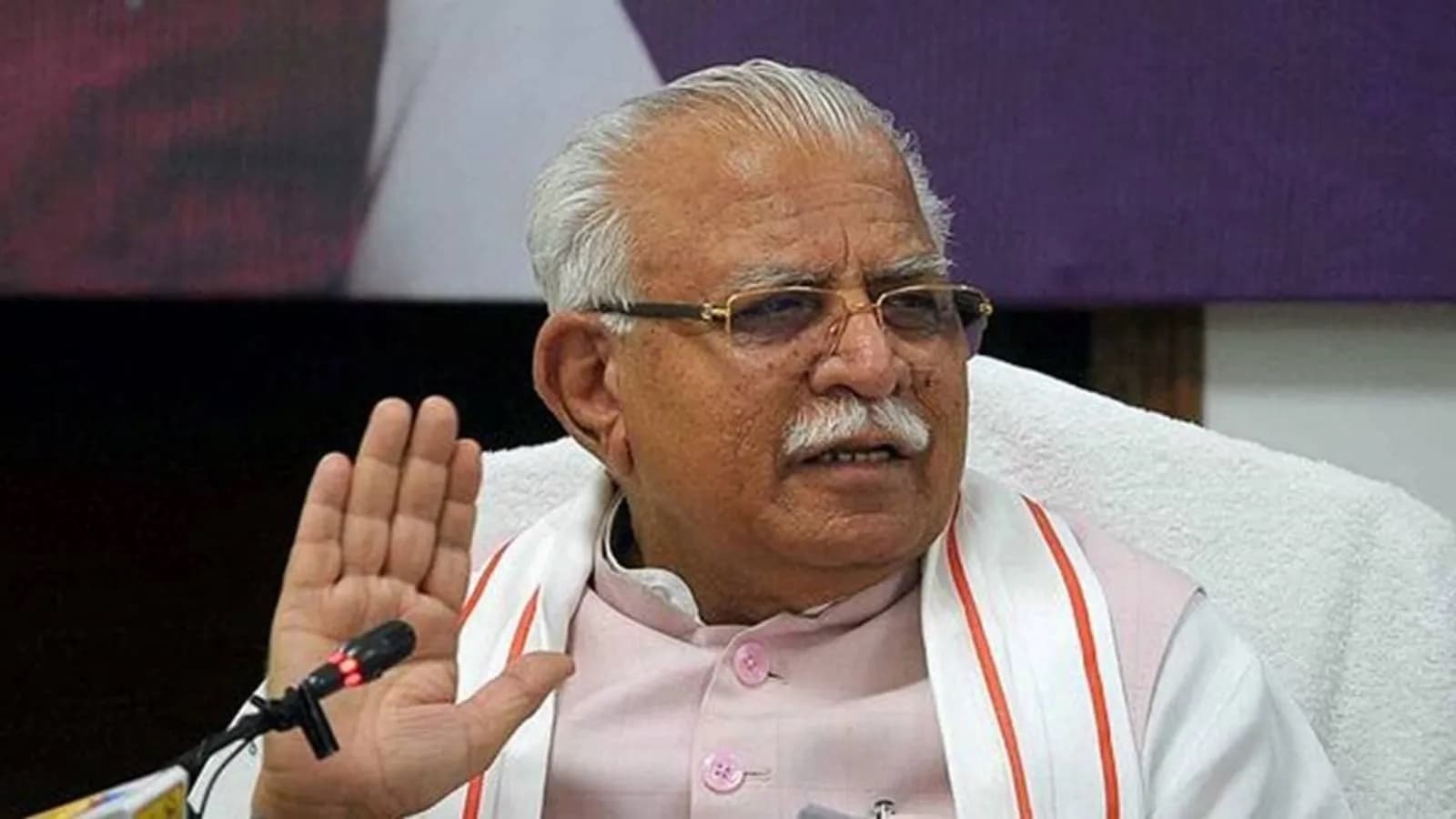
New DelhiJul 13, 2026 04:50 AM IST Union Minister Manohar Lal Khattar. (File Photo)UNION MINISTER for Housing and Urban Affairs Manohar Lal on Sunday said the Central Vista area, which covers the stretch from Rashtrapati Bhawan to India Gate, should now be called the “Kartavya Bhawan area”, named after the new secretariat buildings. Speaking at the CPWD’s 172nd foundation day event, he said that like Vice-Regal Lodge and Council House built by the British were renamed Rashtrapati Bhawan and Parliament after Independence, the entire area should now be called Kartavya Bhawan area.The government is in the process of redevelopment of the area, with 10 new secretariat buildings proposed. So far, the government has completed three of the buildings and named them Kartavya Bhawan 1, 2 and 3, while also renaming Rajpath as Kartavya Path. “So far we have been calling it Central Vista, from now on please call it Kartavya Bhawan area,” the Minister said, adding that this should be reflected in documents as well. Speaking of the new transfer policy rolled out this year, he said some officials welcomed it as they did not have to seek references from senior officials and leaders, but there were some at the same post for 30 years who were not as happy. “They started getting sifarish [references]. But, I said transfers will go through for now; they may get transferred again next year.”
New DelhiJul 9, 2026 09:54 AM IST Saif Ali Khan and Sanjay Mishra in Kartavya.Saif Ali Khan might not be the most reliable actor at the box office, but he is known to be a strong performer who often makes a film-watching experience worthwhile. However, his recent streaming films, Kartavya and Jewel Thief, have divided the audience as the films themselves did not live up to expectations. In a recent interview, Saif opened up about how he was disappointed with films like Kartavya and Devara, revealing that both films could have benefited from creative decisions that ultimately never materialised. ‘Devara pitch sounded exciting’ Speaking to The Hollywood Reporter India, the actor said, “I think I am lucky to have done films like Omkara and Kartavya. At least you get cast in some of these projects because people think there’s perhaps more to you.”He continued, “I think I need to attract more of those kinds of films, and I want to push myself further at this stage of my career. When I look back, at the last couple of years, you realise that you survive as an actor. Somebody pays you, and that’s great. I did Devara. I thought it would take two months because the role and the pitch sounded exciting, but it ended up taking much longer. Suddenly, you’ve spent almost a year on one film. Yes, you got paid, and maybe it covered one child’s education or took care of other responsibilities, but where is the film that makes it all worthwhile? Every film should count. I keep asking myself, ‘Why am I doing this?’ I am at a stage where I want every next film to matter.” ‘Discussed Kartavya ending change’ Speaking specifically about Kartavya, Saif said, “Kartavya is fortunate that Red Chillies gave it to Netflix because it was actually completed three years ago. Had it released when it was made, it would have felt much fresher. We had also discussed changes to the ending. I remember writing about it because we all felt the villain should have faced consequences and been arrested. If we had pushed a little harder, it might have happened. But for some reason, these things happen and we let it go.” Saif expressed his regret at the film and shared, “Looking back, everyone saw it, yet nobody insisted that this change was necessary. Almost all the feedback I received from friends and well-wishers was that they liked the film, but they felt the villain should have been brought to justice. Maybe that’s was Pulkit’s point. It is more realistic. ” Saurabh Dwivedi played the film’s primary antagonist. However, the story concluded with Saif Ali Khan’s character killing his own father for murdering his other son and daughter-in-law. The main antagonist was not brought to justice at the end of the film.



Discussion (0)