Trinamool rebel camp forms State and district committees
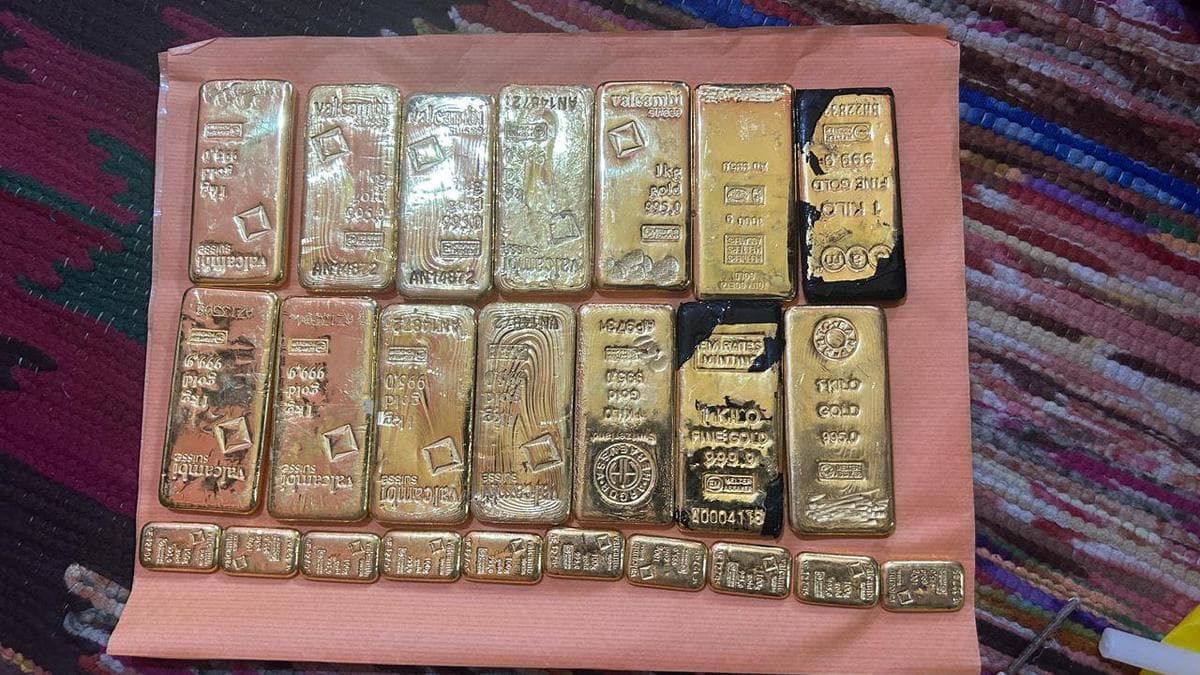
5 crore recovered from Minar Mondal’s house. Photo: X/@SuvenduWB | 5 crore cash from a former government bus driver in the Birbhum area.

5 crore recovered from Minar Mondal’s house. Photo: X/@SuvenduWB | 5 crore cash from a former government bus driver in the Birbhum area.


Gold bars valuing approximately ₹21.5 crore recovered from Minar Mondal’s house. Photo: X/@SuvenduWB | 5 crore cash from a former government bus driver in the Birbhum area. The accused bus driver Minar Mondal is the brother-in-law of Tulu Mondal, allegedly a close aide of Trinamool Congress leader and strongman of the Birbhum district Anubrata Mondal.“Minar Mondal has been arrested after the raid. It was his property where this cash and gold was found. A case has been registered and investigation is ongoing,” a top police official told The Hindu on Thursday (July 30, 2026).This cash and gold seizure has been one of the biggest in the State after such massive recoveries were made from properties linked to former Trinamool era Education Minister Partha Chatterjee’s and his aide Arpita Mukherjee. The amount recovered from Ms Mukherjee was ₹50 crore in cash and over 5 kilograms of gold. The cash was packed in around 35 sacks, and the gold was found as solid gold biscuits inside a humble house of Mr Minar Mondal. The police have brought in five machines to count the recovered cash and around five trunks to store them. The total cash recovery was around ₹28.5 crores, according to police officials. It was almost a 15-hour long operation. The gold bars recovered were valued at approximately ₹21.5 crore at current market prices. Mr Tulu Mondal alias Mohd Nazibuddin is an absconding businessman and influential stone trader and had close interest in the stone quarrying business in the Birbhum district. This comes amid a crackdown on illegal mining and sand smuggling in the Birbhum district. The police got a secret tip off and raided the house of Mr Minar Mondal late on Tuesday (July 28) and the cash recovery continued till Wednesday (July 29). Chief Minister Suvendu Adhikari said that this was a crackdown on the sand mafia and appreciated the local police for the massive cash and gold recovery. “West Bengal Govt’s ongoing drive against the corrupt will go on with ‘Zero Tolerance Policy against Corruption’ as our guiding principle. Let it be unequivocally clear: no person with a chequered past who has amassed wealth through the exploitation of public resources and hobnobbing with the then ruling political party will be spared. Public wealth belongs to the people, and those who loot it will face the full might of the law,” Mr Adhikari wrote on his social media on Wednesday morning. He also added that the crackdown on mafia syndicates will continue. Earlier in July, Mr Adhikari had accused that most of the money from stone industrial areas was siphoned off by the previous Trinamool government leading to low revenues. He also said that within one month, their new government was able to stop that revenue leakage and improve the earnings of the government. Interestingly, Mr Anubrata Mondal himself was previously arrested in 2022 by the Central Bureau of Investigation in the cattle smuggling scam. He spent over 25 months in prison after a disproportionate amount of cash was recovered from his properties and was later released on bail in 2024. In the cattle scam, the CBI and Enforcement Directorate officials are investigating 70 properties linked to Mr. Anubrata Mondal, multiple land deals, two rice mills, and other businesses. Published - July 30, 2026 11:20 am IST

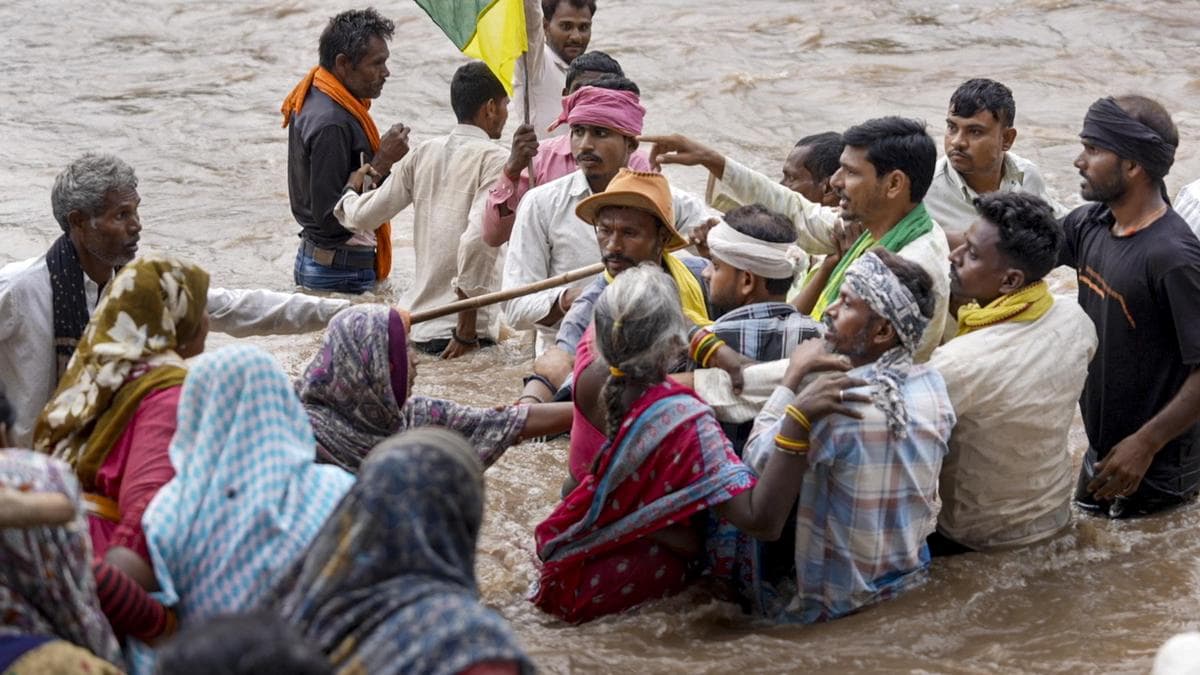
The story so far: Madhya Pradesh police personnel went to the banks of the Barana river stream in Kupi village of Chhatarpur district on July 19 and cleared a protest site where hundreds of villagers, mostly tribal people, had been demonstrating for two weeks against the Union government’s ₹44,000 crore Ken-Betwa Link Project, India’s first river-linking project, and two irrigation projects of the State government.The police took local activist Amit Bhatnagar, founder of the Jai Kisan Sangathan, who had been on an indefinite hunger strike for 14 days, and admitted him to a government hospital. They also picked up nearly 150 protestors, most of them from neighbouring Panna district, in buses and dropped them off at their villages. On July 23, he suspended his 18-day fast after the government’s assurance that people left out of the rehabilitation process will be included. What is the Ken-Betwa river linking project?The Ken-Betwa River Linking Project is the first of 30 proposed river-linking projects under the National Perspective Plan (NPP). Formulated in 1980 by the then Union Ministry of Irrigation and the Central Water Commission, the NPP aims to transfer water from rivers with a perceived surplus to those facing water deficits. The NPP is divided into two components — Himalayan Rivers Development that proposes 14 links and Peninsular Rivers Development that plans 16 links, as identified by the National Water Development Agency.The foundation stone for the project was laid by Prime Minister Narendra Modi in December 2024, in Khajuraho, where he also laid the foundation stone for the construction of the Daudhan Dam during a public event.The project aims to transfer the declared surplus water of the Ken River to the Betwa River by constructing the Daudhan Dam on the Ken and a 221-kilometre canal, including a 2-km tunnel. In addition, the project is expected to generate 103 MW of hydropower and 27 MW of solar power. It also aims to address water scarcity in the drought-prone Bundelkhand region by providing drinking water to about 4.4 million people across 12 districts of Madhya Pradesh and more than 2 million people across 10 districts of Uttar Pradesh.Why are tribal people protesting and what are their key demands?According to the Union government, 7,193 families of 14 villages in Chhatarpur and eight villages in Panna district are facing displacement under the project. According to Divya Ahirwar of Jai Kisan Sangathan, the key demands regarding the Ken-Betwa project are that each adult be treated as an individual beneficiary — rather than as part of a family — for the ₹12.5 lakh rehabilitation package, and that the eligibility cut-off date be revised from February 16, 2024, to the present date.The protests also oppose the State government’s Majhgaon and Runjh irrigation projects. For these projects, the protesters are demanding rehabilitation and compensation on par with the package offered under the Ken-Betwa project. In both cases, they have also alleged serious irregularities in the survey and selection process and claim that several people who have no connection with the villages or have moved years ago have been included in the rehabilitation plan, while many genuine residents have been left out.Speaking from the hospital, Mr. Bhatnagar claimed that the police action came on the day he was planning to “reveal the details of an alleged ₹400-crore corruption scheme” involving the inclusion of fake beneficiaries in the compensation process.Protesters have also alleged irregularities in the gram sabha proceedings in tribal villages, claiming that the process of securing consent for the Ken-Betwa project was flawed.How did the government respond?The State government has approved an additional ₹300 crore for the rehabilitation packages of the Majhgaon and Runjh irrigation projects, increasing compensation from ₹5 lakh to ₹12.5 lakh per eligible beneficiary.Chhatarpur Collector Parth Jaiswal said that a new survey had identifie

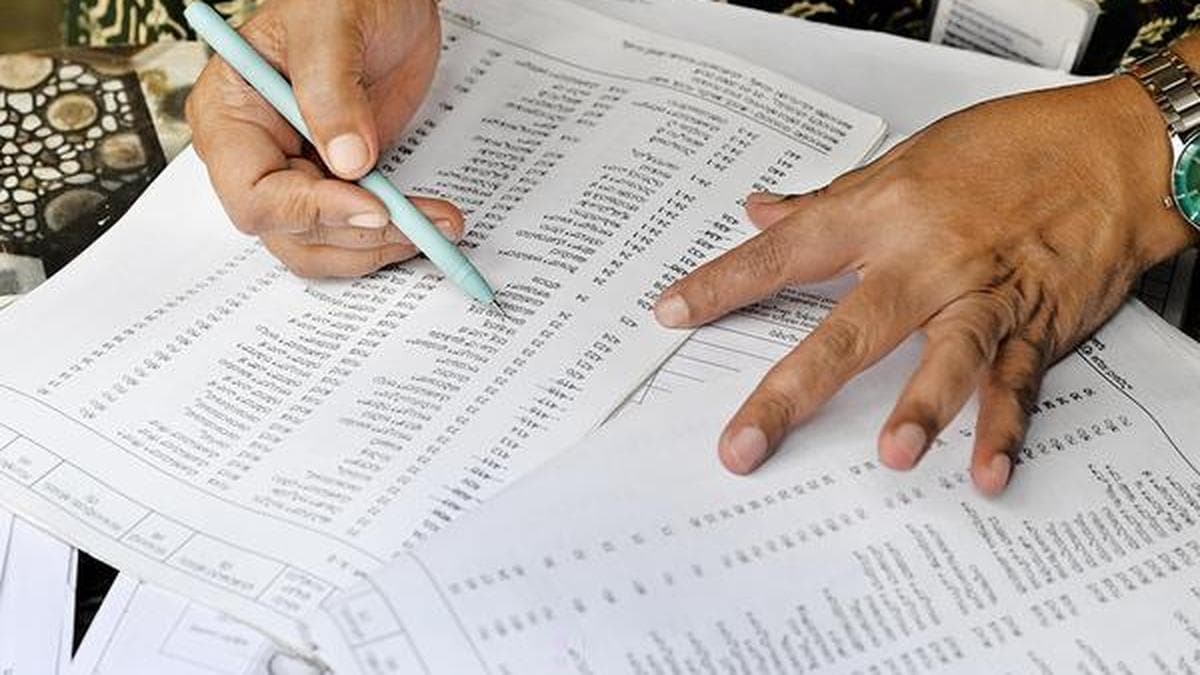
Booth Level Officers (BLOs) verify the enumeration form of residents during the Special Intensive Revision (SIR). File | Haryana’s Chief Electoral Officer A. Sreenivas said that the first phase of the SIR in the State has been completed and the draft electoral roll will be published on July 31, which will be made available on the official website as well as at all designated publication centres.Addressing a press conference here, Mr. Sreenivas said that 20,629 Booth Level Officers (BLOs) distributed enumeration forms to more than 2 crore electors, out of which over 1 crore enumeration forms have been digitised.“However, the names of 33,84,568 electors could not be recorded. Of these, 13,75,278 had permanently shifted, 7,66,205 were found to be deceased, 2,04,916 were already registered as electors, 9,36,646 electors were found absent, while 1,01,523 electors did not submit their enumeration forms due to other reasons,” he said.He said that claims and objections can be filed from July 31 to August 30. “If the name of any elector does not appear in the draft electoral roll to be published on July 31, he or she may submit Form 6 to get the name included again. The name will be included in the final electoral roll,” he said.“The name of any elector will not be deleted without giving an opportunity of hearing. If an elector is aggrieved by the decision of the Electoral Registration Officer (ERO), an appeal may be filed before the District Magistrate within 15 days. If the grievance still persists, a further appeal may be filed before the Chief Electoral Officer within 30 days,” he added.The final electoral roll will be published on October 3, he said. He said that 37,055 Booth Level Agents (BLAs) appointed by various political parties are also assisting in the process. “These include 19,051 appointed by the Bharatiya Janata Party (BJP), 15,818 by the Indian National Congress, 1,476 by the Indian National Lok Dal (INLD), 54 by the Aam Aadmi Party (AAP), 314 by the Communist Party of India (CPI) and 342 by the Jannayak Janata Party (JJP),” he said. Published - July 26, 2026 04:20 am IST

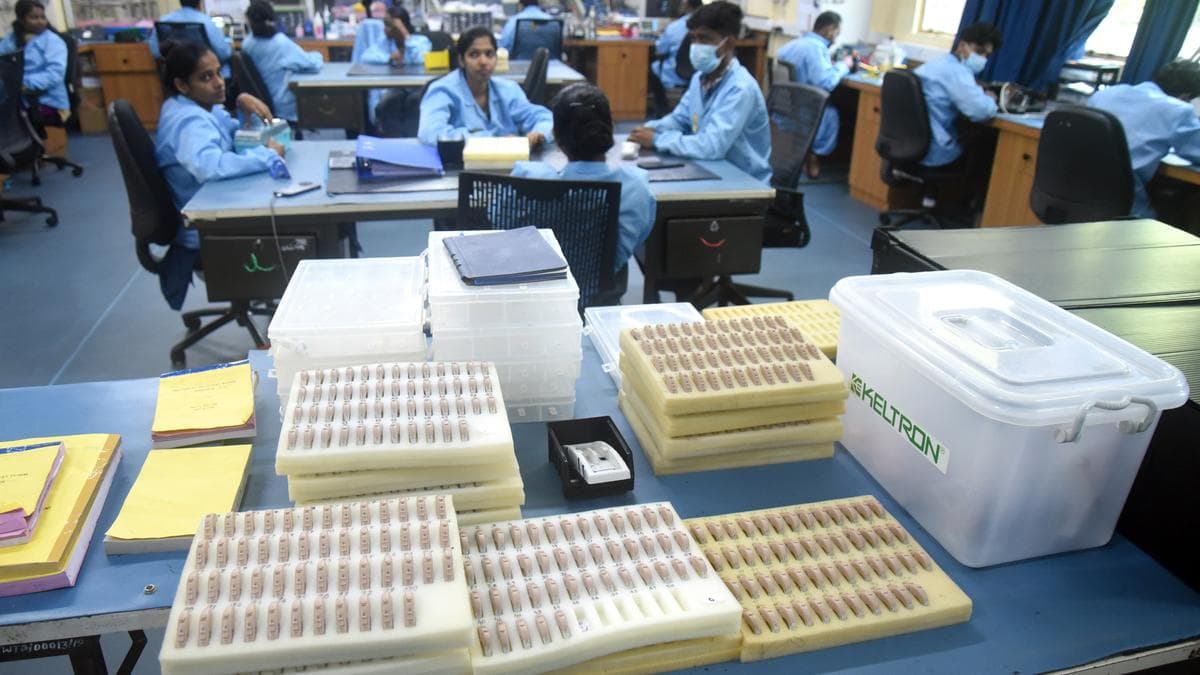
The Kerala State Electronics Development Corporation (Keltron) unit at Moodadi in Kozhikode district designs and manufactures Shravan, a fully digital, programmable hearing aid at affordable price. | Ragesh Once a modest assembly line for cathode-ray televisions, the Kerala State Electronics Development Corporation (Keltron) unit at Moodadi in Kozhikode district is today on the cusp of a major high-tech makeover.Thanks to a fresh injection of ₹1 crore earmarked in the State’s latest budget, the facility is set to be transformed into a cutting-edge electronic village. Interestingly, its tech credentials are not just a promise for the future but the facility is already quietly changing lives across India.The unit’s flagship success story is Shravan, a fully digital, programmable hearing aid designed and manufactured right on the workshop floor. “Our aim is to make this technology accessible to ordinary people while delivering the exact same quality offered by private brands,” Sreejith Sasidhara Kurup, unit head at Keltron, told The Hindu.For thousands suffering from hearing loss, the market can be incredibly hostile. A decent digital hearing aid costs upwards of ₹25,000, a price tag that excludes those who need it most. The Shravan is priced at ₹8,000, with an annual production capacity of 30,000 units. Yet despite its accessible pricing, the hearing aid contributes nearly 2% of Keltron’s total annual profit, Mr.Sreejith added.”The quality of Shravan is best reflected in the physical transformation we see in our users. The shift in their expressions before and after fitting the device speaks for itself,” he said.As the only public sector entity in the State manufacturing hearing aids, Keltron also provides repair services at minimal rates, having established collection points across Kerala for customer convenience.The establishment of an electronics village has set the stage for a major expansion that promises to reshape both the local healthcare manufacturing sector and regional employment. Overall, the expansion will see the division’s workforce triple, growing from nearly 50 to 150 employees.Mr. Sreejith said that the division has already developed and approved numerous medical equipment prototypes, including oxygen concentrators, nebulisers, pH meters, clinical thermometers, baby-warming wraps, and tri-scooters for disabled users. Mass production of these items is currently constrained by space, as each requires a dedicated line; however, the upcoming 13-acre electronics village project will make large-scale manufacturing entirely feasible.Koyilandy legislator K. Praveenkumar held discussions with staff regarding the scope and impact of the expansion. “To elevate Keltron to international standards, the project is considering several strategic initiatives, including the production of motorised wheelchairs and the introduction of a skill-based certificate course with guaranteed job placement,” he said.The course aims to bridge the gap between technical education and practical industry demands, upskilling local youth while new production units create hundreds of fresh jobs, cementing its long-term presence in the healthcare market, Mr. Praveenkumar said.The writer, Arya M., is an intern with The Hindu Published - July 25, 2026 12:35 pm IST

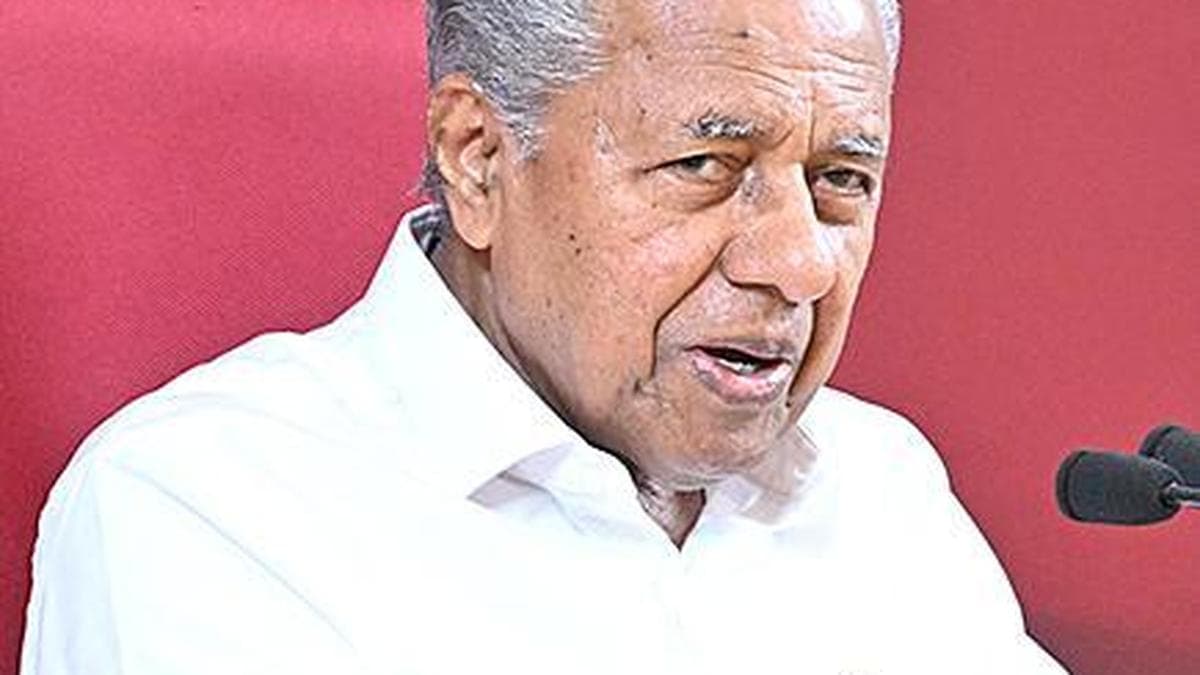
The United Democratic Front (UDF) government’s stand in the Supreme Court that it will implement Section 14 of the Union government’s Unified Waqf Management, Empowerment, Efficiency and Development (UMEED) Act, or the Waqf (Amendment) Act, 2025, will sacrifice minority interests and adversely affect the writ petitions on the matter pending in the Supreme Court, Leader of the Opposition Pinarayi Vijayan on Tuesday.In a statement, Mr.Vijayan welcomed the Supreme Court’s quashing of the interim order of the High Court imposing administrator rule in the Waqf Board. However, he said it was worrying that the State government has repeated its position taken in the High Court last week that Section 14 of the new Waqf Act in the Supreme Court too. The amended Act had mandated the inclusion of two non-Muslim members in the Waqf Board, a move against which several pleas are pending in the Supreme Court. The previous LDF government did not include non-Muslim members in the board.In the intervention petition filed in the Supreme Court during the LDF government’s tenure, it also took a clear stand that non-Muslims should not be appointed to the Waqf Board, he said. He quoted a part of the petition to this effect: “There is no rationale behind inclusion of non-Muslim members in the Waqf Boards and there is strong legal contention that such inclusion of non-Muslims violates articles 14, 25 & 26 of the Constitution of India. As per the amended section 14 of the Act, members from Muslim Community will be a minority in the board. Except the 4 members under clause (c) of sub-section (1) of section 14, all the seven members can be non-Muslims and it is left to the State Government to nominate members of their choice in the Waqf Board”.Spreading rumoursMr. Vijayan said that the UDF government is pretending to be a protector of minorities and at the same time betraying the minorities according to the Sangh Parivar agenda. “Those connected to the UDF are spreading rumours that the current Waqf Board members have some disqualifications. Such observations have been made in the statement filed on behalf of the State government in the High Court. If the Waqf Board members have disqualifications, the government has the power and obligation to take action as per the law. But no such action as prescribed by law has been taken so far. Instead, they are creating a smokescreen through the media and misleading even the courts,” he said.Mr. Vijayan alleged that the moves are part of a conspiracy to capture the Waqf Board after change of power in the State. “When the LDF government came to power in 2016, the Waqf Board appointed by the previous UDF government was allowed to continue until its term in 2019. The UDF is now trying to carry out political sabotage in such statutory bodies. The UDF has degraded to the point of accepting the Sangh Parivar-sponsored law that questions the rights of minorities, the purity of the intention of the Waqf Act and the very concept of Waqf. In this situation, we extend all possible support to the efforts of the current Waqf Board to ensure that the legal battles launched by Kerala are not weakened,” he said. Published - July 21, 2026 10:48 pm IST

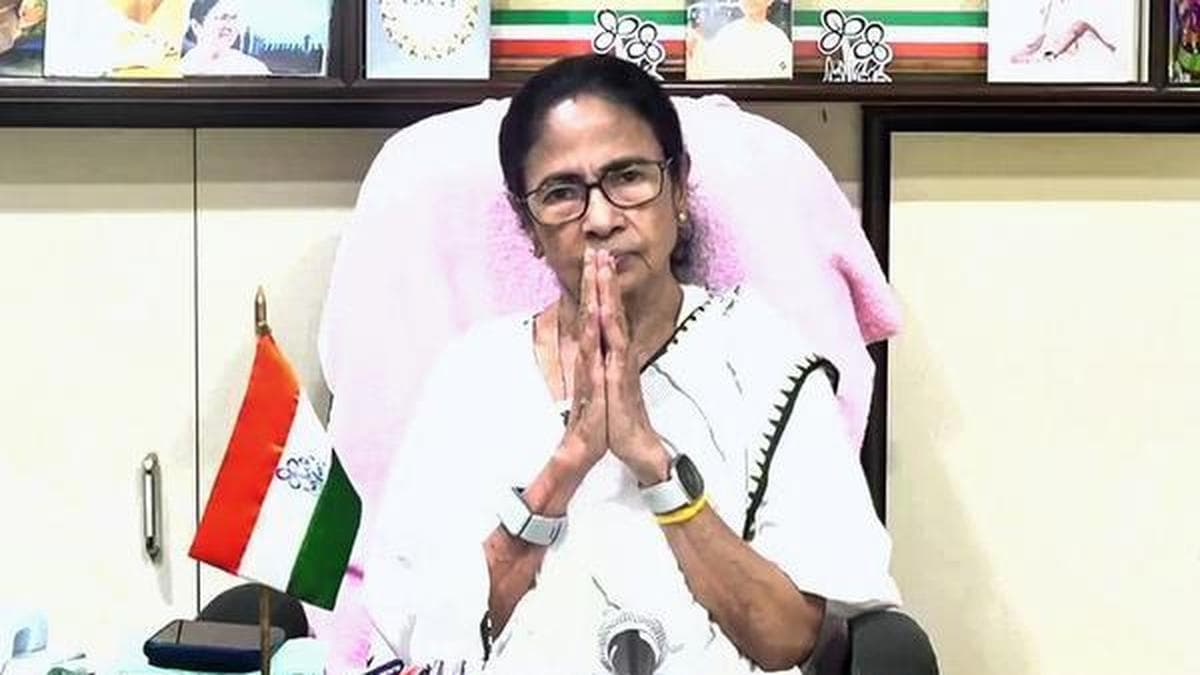
West Bengal former Chief Minister Mamata Banerjee’s remarks on July 16, 2026, came on the day Rajya Sabha MP Koel Mallick resigned and met Union Minister and BJP leader Bhupendra Yadav. | TMC MLA Madan Mitra attends Mamata camp's assembly protest days after joining rebel faction“I request those who are facing various pressures from the ED, CBI or BJP to leave before July 21. Leave with all your belongings,” the Trinamool chairperson said on social media live.The remarks came on the day Rajya Sabha MP Koel Mallick resigned and met Union Minister and BJP leader Bhupendra Yadav. On Wednesday, Ms. Banerjee’s long-time aide Madan Mitra changed sides and joined the Ritabrata Banerjee-led faction of the Trinamool.Ms. Banerjee, who is facing one of the biggest challenges of her political life, said those who remain with her will be her “greatest strength”. “They will build the future. If we could begin afresh in 1997 [when she left Congress and set up Trinamool], we can certainly do so again in 2026,” she said.“BJP leaders say they will erase our name and symbol. But many political parties have changed their names and symbols over time, while their identity has endured. You may change a name through the force of power, but you cannot erase an ideology or a direction,” she added.Ms. Banerjee, who has exhorted her supporters to join the Martyrs’ Day rally on July 21, alleged that the administration and the police are pressuring people to stay away from the event. “I know the police are telling people not to come and threatening to stop them. I appeal to the administration to remain neutral,” she said.‘Things will change’She said that the rebels are doing everything with the “backing from Delhi”. “Remember, life is long. If things start to shake in Delhi, the situation here will change as well,” she said, adding that it does not matter how many MPs are bought.The Trinamool chairperson spoke on a number of issues, including the hunger strike of climate activist Sonam Wangchuk, and asked why the government was not holding discussions with him. Ms. Banerjee has called and spoken to the activist who is demanding the resignation of Union Education Minister Dhamendra Pradhan.“Even after Sonam’s prolonged hunger strike, no government official met him. When I fasted for 26 days, no one from the government came to speak to me either. After 20 days, Governor Gopal Krishna Gandhi, Mahasweta Devi, Kabir Suman, V. P. Singh, and several other leaders visited me,” she said.Another switchDuring the day there were reports that another Trinamool leader, former Rajarhat-Newtown MLA Tapas Chatterjee, was also going to leave Ms. Banerjee and join the Ritabrata camp. The faction has the support of over 65 of the 80 MLAs. Ms. Banerjee had described it as a “setting-party” of the BJP. Published - July 16, 2026 10:43 pm IST

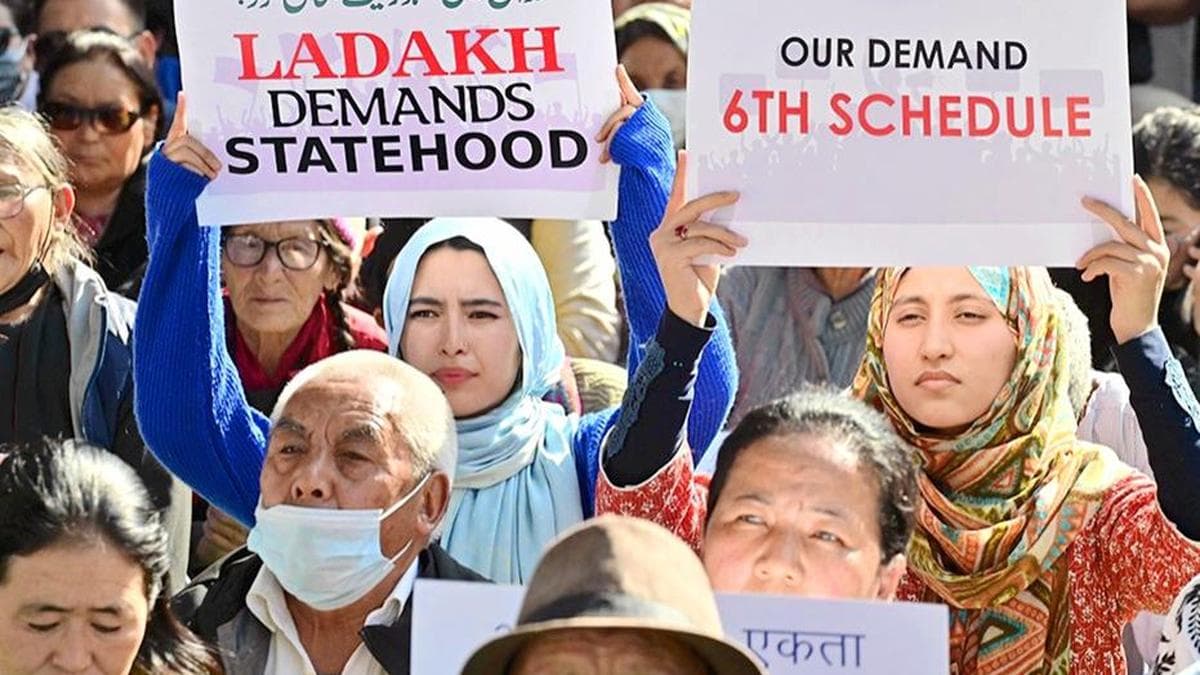
Two major socio-religious groupings, Leh Apex Body (LAB) and Kargil Democratic Alliance (KDA) spearheaded a major campaign for Statehood status and inclusion in the Sixth Schedule list. File. | Besides, 17 newly created tehsils have been notified, taking the total tehsils in the cold desert region to 32. Till 2019, Ladakh comprised only two districts of Leh and Kargil. In April this year, five new districts of Sham, Nubra, Changthang, Zanskar and Drass were notified.What is LAHDC Act?Introduced in 1997, the Act envisages an elected council on the lines of the legislative councils in the States in the country. The Act said each Council will have locals chosen by direct election on the basis of voting for 26 seats. The administration is empowered to nominate not more than four persons, from religious minorities and women. The Council under the Act has executive powers to decide on use of land, formulation of development programmes, review of developmental plans and schemes, formulation and finalisation of the Budget (Plan and Non-Plan) etc. These councils also had powers to collect taxes, establish toll bars, tax on boards, pilgrim tax, hawkers and pheriwalas tax etc. Once implemented, the LAHDC Act will provide an elected body in all the districts, which can micro manage the local governance issues with a sense of local participation.What is the need for new districts and tehsils?The Ladakh administration, headed by Lieutenant Governor Vinai Kumar Saxena, pushed the fresh measures like new districts and tehsils as part of the administrative reforms, which are aimed at strengthening grassroots governance. It argued that these initiatives would bring government services closer to the people, reduce travel for citizens living in remote villages and strengthen infrastructure and development across regions, especially remote districts of Zanskar, Drass, Nubra, Changthang and Sham. Ladakh is spread over 59,146 square kilometers with a sparse population of only 2.74 lakh population, as per the 2011 census. Each district is hundreds of kilometres away from each other and locals reside in high-altitude locations, up to 16,000 feet high, posing a challenge to the governance model. Each district in Ladakh has unique issues. Ladakh is home to two communities, which include Shia Muslims and Buddhists. According to the 2011 census, Ladakh has a total population of 2.74 lakh, of which 46% are Muslims, and 39% are Buddhists. However, KDA leader Sajjad Kargili voices concern over distribution of districts as well as tehils, alleging bias in favour of Buddhists. He said the erstwhile Leh district was allotted 12 new tehsils against five in the erstwhile Kargil district. The KDA also expressed concern over having only two Muslim-majority districts against five Buddhist-majority districts in the region.Why is the Centre rolling out new measures to Ladakh?Ladakh saw major street protests in the past five years. Locals expressed concern over outsiders settling in Ladakh and diluting its culture, language and straining land in violation of environmental norms. Two major socio-religious groupings, Leh Apex Body (LAB) and Kargil Democratic Alliance (KDA) spearheaded a major campaign for Statehood status and inclusion in the Sixth Schedule list. Besides these civil society groups, climate activist and innovator Sonam Wangchuk also held protests over these demands. In September 2025, violent street protests broke out over these demands. Four civilians were left dead and around 90 injured in the violence. Later, Wangchuk, who was on a hunger strike, was also arrested. The unrest forced the Ministry of Home Affairs’ sub‑committee of the

Municipal employees scanning SIR forms after receiving it from voters in Sangareddy on Tuesday. | Distribution of forms has been hit at several locations where the Booth Level Officers did not go from house-to-house as mandated. A large number of BLOs made themselves available at school grounds, Resident Welfare Association’s offices and community halls, where the voters had to go and collect the forms. Wherever the electors were not proactive, their forms have remained with the BLOs.So far, official records show 100% distribution in all the 15 constituencies, which are part of the Hyderabad district. This includes the forms of electors who are either absent, or dead, or have shifted to another location, officials say. Municipal employees scanning SIR forms after receiving it from voters in Sangareddy on Tuesday. | Hyderabad District Election Officer and Commissioner of the Greater Hyderabad Municipal Corporation R.V. Karnan says each BLO must have done the house-to-house visits at least once during the past 20 days, if not thrice as prescribed. He said he is also receiving updates about the absent, shifted and dead voters regularly.The situation at the ground level is entirely different, say sources. Under extreme pressure from the Commissioner and Electoral Registration Officers, those in supervisory roles directly monitoring the distribution and collection of the enumeration forms are reportedly resorting to fudging of figures to satisfy the higher-ups.“I have reported 100% distribution several days ago. But fact of the matter is, I have 20% forms lying with me undistributed. There is no way of knowing how many of them are shifted, deceased, absent or simply didn’t collect the form,” shared an official under the condition of anonymity. Municipal employees scanning SIR forms after receiving it from voters in Sangareddy on Tuesday. | Mr. Karnan reportedly placed an AERO under suspension, and issued showcause notices to several others for slow progress in SIR process.Corroborating what the official said are the impossible spurts in figures posted on the social media accounts of the Telangana Chief Electoral Officer on certain days.For instance, 69.35% distribution was posted for Hyderabad on the Telangana CEO’s X account at 8 a.m. on July 6. By 8 p.m. on the same day, the achievement jumped to 76.36%, translating into distribution of a total 3,31,567 forms in 12 hours. The following day, it leapt from 78.75% to 87.48% between 8 a.m. and 8 p.m. These two days account for distribution of an average of 106 forms per day by each BLO, which, officials say, is impossible. Published - July 14, 2026 08:57 pm IST

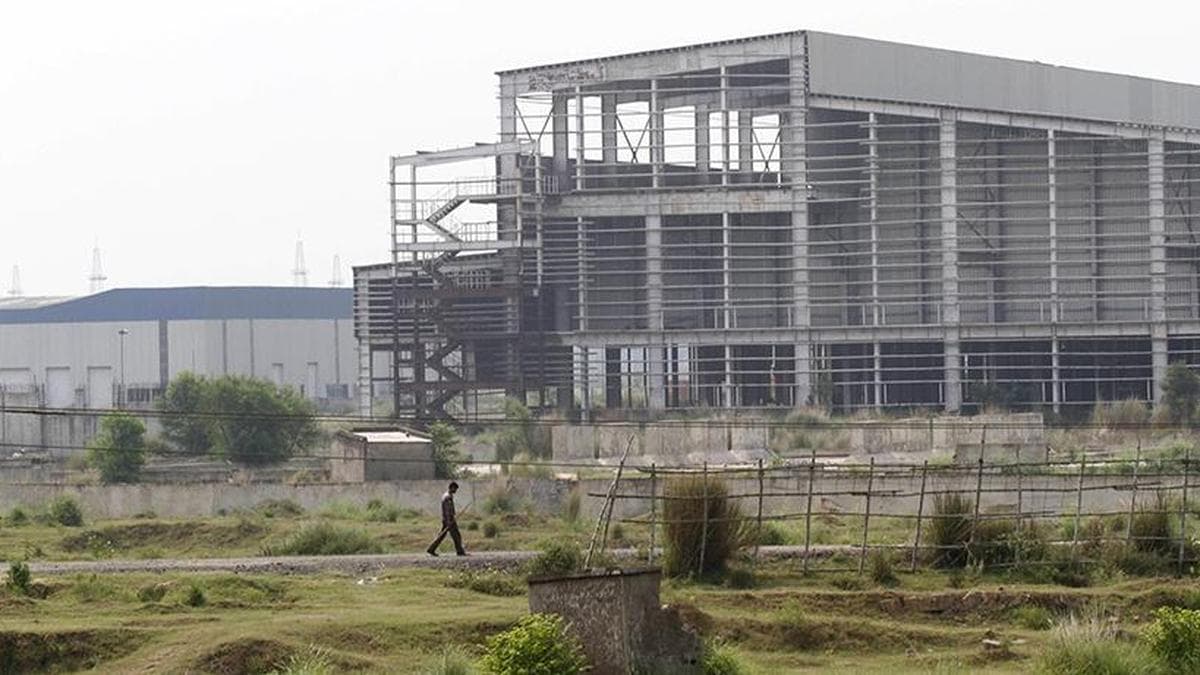
‘Land acquisition for (the Tata Motors Nano car factory in Singur) spiralled into a key issue, which consequently ended the 34-year-old Left Front government in the State and catapulted Trinamool chairperson Mamata Banerjee to power in 2011.’ Photo shows a private security guard outside the closed Tata Motors factory on April 27, 2011 . | Even as it has introduced new legislation to make preventive detentions easier, implement Uniform Civil Code, dismantle the statues and signage of the previous regime, and change names of streets, the Suvendu Adhikari government has also accelerated the push to bring industries to the State.There have been several shifts at the policy level such as reintroduction of an incentive scheme for industry – which was stopped by the previous regime, exemption for investments over ₹100 crore from acquiring a no-objection certificate from local bodies, and re-examination of the West Bengal Urban Land (Ceiling and Regulation) Act, which limits private ownership of vacant land in urban agglomerations.However, the biggest policy announcement for attracting industry was made by the Chief Minister on July 11, when he said that his government would purchase land directly from farmers for setting up industry. “We have accepted the direct land purchase policy of 2013…. With this policy, we are giving land to the BSF, railways and the national highways (authority), and for the new airport... Under the land purchase scheme, we will directly purchase land and hand it over to you,” Mr. Adhikari had said while laying the foundation stone for a manufacturing unit at Dankuni last week.While the shift in policy indicates that the State government is willing to go the extra mile to attract industries, land acquisition remains a tricky issue. West Bengal is the second most densely populated State in the country with over 1,000 people per square km and the average size of land holding being only 0.77 hectares.About 20 years ago, the CPI(M)-led Left Front government had returned to power with a huge mandate, winning 235 of the 294 Assembly seats in the State (the BJP won 208 seats in 2026). Led by Buddhadeb Bhattacharjee, it was in haste to industrialise the State and announced the Tata Motors small car factory at Singur.However, land acquisition for the project spiralled into a key issue, which consequently ended the 34-year-old Left Front government in the State and catapulted Trinamool chairperson Mamata Banerjee to power in 2011. Mr. Adhikari, who was part of the fight against land acquisition at Nandigram, is aware of the dangers of forcible land acquisition and how it could unite people against the government. “We do not want a repeat Singur and Nandigram anti-land acquisition agitations,” he said, emphasising that he did not want industries to directly purchase land from farmers.However, the Chief Minister’s remark has left the industry without a clarity on land acquisition. Business houses say that a clear picture will emerge only when the government comes up with a land acquisition policy in the next few months.During the 15 years of Trinamool Congress government, prominent industry leaders made proposals worth lakhs of crores at the Biswa Bangla Global Conventions. Often, they repeated the same proposals year after year, while millions of workers from the State moved to the South and the West of the country to work as migrant workers.The decision of Tata Motors to leave the State at the height of Singur agitation in 2008 is considered a major setback for West Bengal’s dreams of industrial revival after years of militant trade unionism. Over the past two decades, the Left and Trinamool governments tried hard to shrug off the anti-industry image of the State. In those years, West Bengal lost the rac
According to a press release issued by the Deputy Commissioner, 5,05,463 forms have been digitised, accounting for 18.05% of the total electorate. | 47% distribution of enumeration forms (EFs) under the ongoing Special Intensive Revision (SIR) of electoral rolls, with 27,84,750 forms distributed among 27,99,693 electors as of 6 p.m. on Monday.According to a press release issued by the Deputy Commissioner, 5,05,463 forms have been digitised, accounting for 18.05% of the total electorate. The house-to-house enumeration and digitisation drive is under way until July 29.Of the district’s 2,915 polling stations, 2,410 booths (82.68%) have completed 100% form distribution, while 493 stations (16.91%) have achieved over 90% distribution. The release added that 14,397 forms have been submitted online.Officials identified 8,634 deceased electors, 3,095 permanently shifted voters, 1,438 already enrolled electors, 171 absent voters, and 33 cases under other categories, taking the total number of unverified electors to 13,371.Among the Assembly constituencies, Hunsur recorded the highest digitisation with 89,085 forms, followed by Piriyapatna (65,973) and Varuna (63,745). Krishnaraja (10,681) and Chamaraja (9,401) reported the lowest digitisation figures so far. Published - July 13, 2026 10:28 pm IST
Discussion (0)