
Loading dispatches...
← Return to NewsroomPolitics
Union Ministers Rajnath, Gadkari inaugurate Lucknow-Kanpur Expressway
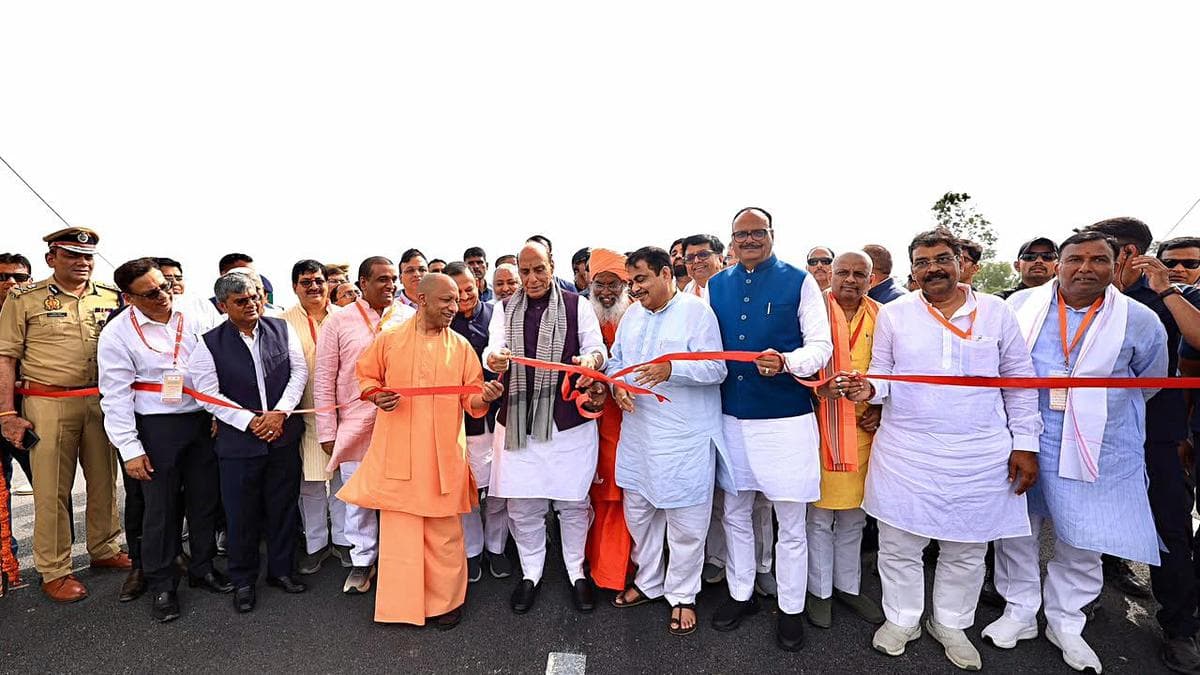
Union Defence Minister Rajnath Singh, along with Union Road Transport and Highways Minister Nitin Gadkari, Uttar Pradesh Chief Minister Yogi Adityanath, state Deputy Chief Minister Brajesh Pathak, and others, inaugurate the Lucknow–Kanpur Expressway in Unnao on July 13, 2026 | Speaking on the occasion, Mr. Singh said the demand for a highway between Kanpur and Lucknow had been pending for a long time, and that its inauguration had resolved the long-standing problem of traffic congestion between the two cities.“The demand for the construction of a highway from Kanpur to Lucknow had been pending for a long time, and I want to express my gratitude to Nitin Gadkari for this — that as soon as he received the information about it, he immediately approved it. Today, I have come to say that you have given a lot, and if I ask for something more in the future, you will not delay in giving that too. With the opening of the expressway, the long-standing problem of traffic congestion between the two cities has been resolved. In March 2019, the foundation stone of the project was laid,” Mr. Singh said.The projects inaugurated included the Kanpur-Lucknow six-lane Expressway and the four-laning of the Hardoi-Lucknow National Highway (Package 4), while the foundation stone was laid for a four-lane flyover at Engineering College Chauraha.Mr. Gadkari said that in view of the steadily increasing traffic between Lucknow and Kanpur, with hours-long jams and journey times of up to three hours, a Detailed Project Report (DPR) was prepared at an estimated cost of around ₹4,500 crore. The objective of the project was to provide world-class, safe, and fast connectivity between the two cities.In December 2020, the Union government accorded it the status of National Expressway-6 (NE-6) in view of its importance, making it the country’s first expressway fully equipped with AI-based and modern traffic management systems. To expedite construction, the National Highways Authority of India (NHAI) divided the project into two packages, with the work entrusted to PNC Infratech. The first package comprised an approximately 18-km elevated section connecting to the Amausi and Shaheed Path areas of Lucknow.“Despite challenges such as dense population, traffic, and land acquisition, engineers successfully completed this complex section using modern technology. The second package comprised an approximately 45-km greenfield section developed on new land. The route passes through 11 villages in Lucknow and 31 villages in Unnao,” Mr. Gadkari said.A standout aspect of the Lucknow-Kanpur Expressway is its advanced technology. Automated Machine Guidance construction systems were widely used during the road-building process; machines operated via computer and satellite technology enhanced the precision, strength, and durability of construction, significantly improving quality while greatly minimising the risk of human error. Another notable feature is its Multi-Lane Free Flow (MLFF) tolling system, with no traditional toll plazas — vehicles can travel at speeds of up to 120 kmph without stopping, and toll charges are deducted automatically through advanced FASTag and Automatic Number Plate Recognition (ANPR) technology.On safety, the expressway ranks among the country’s most modern road corridors, with more than 80 high-definition cameras, 16 Video Incident Detection Systems, and speed radars installed along the 63-km stretch. If a vehicle exceeds the prescribed speed limit, an automatic challan will be generated directly from the control room, according to an official government statement.U.P. CM Yogi Adityanath thanked the Union Defence Minister a
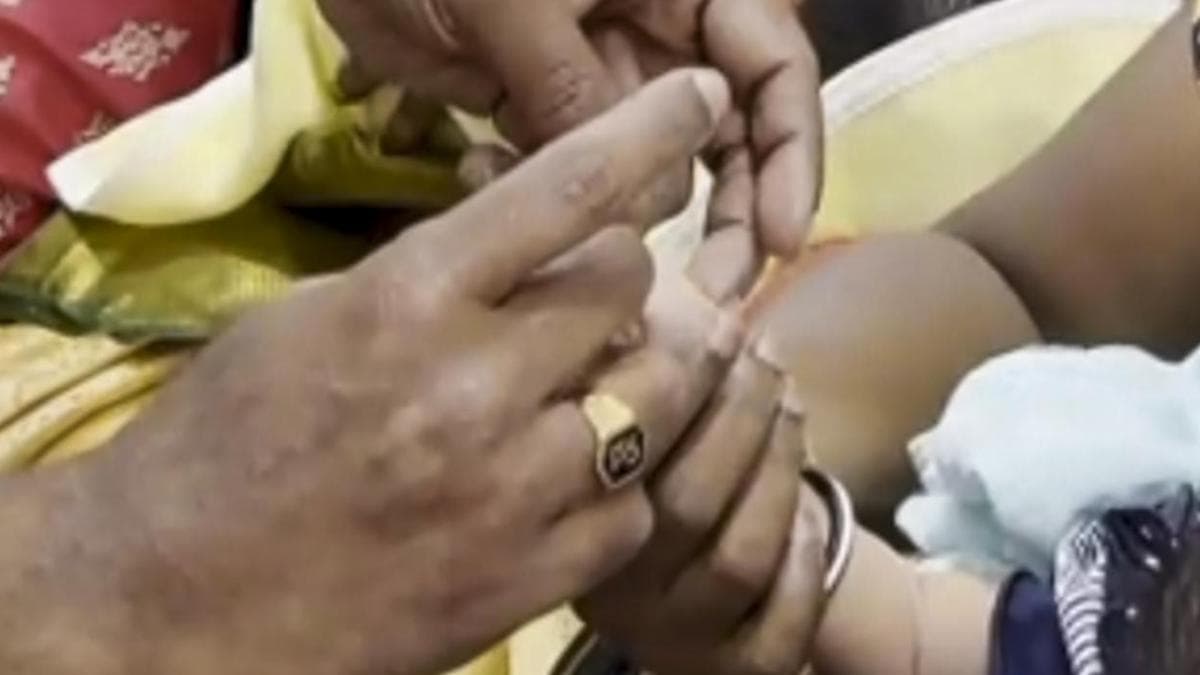
The “welfare scheme” to provide one-gram gold ring to babies born in government hospitals would cost the exchequer about ₹756 crore annually. File | While the first talked of “deterioration” of the situation in the last five years (2021-26) – when the Dravida Munnetra Kazhagam (DMK) was in power, the second took a longer view of the health of power utilities over the last 25 years. The common thread of the two documents is: the precarious financial condition.The profligacy of the successive governments has been a key factor that contributed to the very tight fiscal situation in the State. In the name of welfarism, they have been overindulgent in disbursing freebies. Afraid to wound popular political sentiments, the intelligentsia has also kept quiet. But such decisions should have been put to severe critical scrutiny as they reduced the availability of funds for public health, education, agriculture, and infrastructure – all of which come under development expenditure.One classic example is the cash dole to ration card holders for the Pongal festival. What was started with ₹100 in 2009 rose to ₹2,500 in 2021 and ₹3,000 in 2026, the last two instances of which totalled to ₹12,300 crore. Despite distributing the largesse, the incumbent regimes were voted out in 2021 and 2026. Scrapping the scheme would not have made any difference to those who have been celebrating the festival with usual gaiety.Unfortunately, the TVK too does not seem to have learnt any lesson from the experiences of its predecessors as its leader C. Joseph Vijay, immediately after being sworn in as Chief Minister, cleared a proposal for providing 100 more units of electricity free to those who consumed up to 500 units bimonthly. This was done as part of his fulfilling an electoral assurance regarding 200 units free every month to “eligible” domestic consumers. With this, the government added ₹1,730 crore to its tariff subsidy being provided to the State discom. The subsidy in 2025-26, under the DMK regime, was close to ₹17,000 crore. If the present government had, instead, begun cracking down on the parallel system of houseowners collecting from their tenants electricity charges that are far in excess of the official tariff slabs, the lower strata of society, which has been at the receiving end and which was said to have supported Mr. Vijay during the poll, would have got some relief on its power bill. Or, had it restored monthly billing for the domestic category, it would have made around 2.5 crore consumers happy. The government’s payment of tariff subsidy to the discom is in addition to 100% funding of revenue loss and equity share capital contribution. In total, the State provided nearly ₹33,400 crore last year just for maintaining “normalcy” in only one segment of the economy. In 2016-17, this was about ₹10,835 crore.It is no wonder why the State government’s revenue deficit is always on the rise, especially after 2022-23, when the practice of 100% loss funding came into vogue. Power Minister R. Nirmalkumar, while presenting a few weeks ago the White Paper on the power utilities, stated that there would be no tariff revision this year. Maintaining the status quo appears to be the government’s approach in other revenue- earning areas. Another “welfare scheme” announced by this regime is the provision of one-gram gold ring to babies born in government hospitals. This would cost the exchequer about ₹756 crore annually and this will be implemented from September 15. As of now, the new government has not made any attempt to prune the welfare schemes.Under such circumstances, it is unfathomable how the new government can continue with “key welfare schemes” of the previous governments as revenue deficit is estimated to cross the ₹90,000-crore mar

Prayas, a Pune-based non-governmental and non-profit body, carried out the study that was commissioned by the 16th Finance Commission. | Nirmalkumar that electricity distribution would not be privatised in the State is not only a policy statement but also a reiteration of the finding of a study commissioned by the 16th Finance Commission on the financial performance of electricity distribution companies (DISCOM).Carried out by Prayas, a Pune-based non-governmental and non-profit body, the study states that “privatisation can improve operational efficiency and may be relevant in DISCOMs with unmanageably high AT&C [Aggregate Technical and Commercial] losses. However, it may not lead to major benefits” in States such as Tamil Nadu, where “AT&C losses are low and supply and service quality is relatively good,” the study observes. As per the 14th edition of the Power Finance Corporation (PFC)’s Integrated Rating and Ranking of Power Distribution Utilities across the country, Tamil Nadu’s AT &C losses were 10.92% for 2022-23; 11.39% for 2023-24 and 10.96% for 2024-25 against the all-India average figures of 15.22%, 15.97% and 15.04% respectively. According to the Consumer Service Ratings of the DISCOMS prepared by the REC [formerly Rural Electrificiation Corporation], the Tamil Nadu Power Distribution Corporation’s score with regard to distribution transformer (DT) failure rate, an indicator of supply and service quality, was 2.65% for 2024-25 against the national average of 5.02%. There are about 4.48 lakh DTs in the State. The reports of the PFC and the REC were released early this year. Besides the two performance parameters, the issue of privatisation, even if it is considered independent of the government’s stand against such a course of action, raises the question whether private players would be keen on taking the load of about 24 lakh agricultural connections, a substantial portion of which is in the Cauvery delta, or serving hilly areas such as the Jawadhu Hills. Invariably, the answer would be an emphatic “no” as the private firms would like to bag the plum segment of consumers. This would leave the government to wonder why it should embark on privatisation as the move would only financially weaken the power DISCOM. Also, the State’s legacy has been against the involvement of any third party in electricity distribution.Despite the REC’s push over 15 years ago, Tamil Nadu did not agree to let franchisees run rural power supply. Till about the late 1990s, a few electricity cooperative societies were functioning in areas such as Thirumayam and Kumbakonam and they were later merged with the now-abolished Tamil Nadu Electricity Board (TNEB). Successive governments have not been receptive even to creating regional power distribution companies. Power scenarioA brief overview of the Tamil Nadu’s electricity sectorConsumers strength - 3.52 croreDomestic - 2.5 croreAgricultural - approximately 25 lakhPeak demand met - 21,307 MWRevenue Receipt* (RE): ₹1,23,072 croreRevenue Expenditure*: ₹1,24,004 croreSurplus: ₹933 croreOutstanding debt of 4 power utilities: ₹2,47,130 croreOutstanding debt of TNPDCL: ₹1,07,365 crore* 2025-26 RE-Revised estimate; TNPDCL - Tamil Nadu Power Distribution Corporation LimitedBut, the key problem with the TNPDCL or its predecessors has been the gap between the Average Cost of Supply and the Average Revenue Realised. Of late, the gap has gone down substantially, turning positive (₹+0.04/unit) on a provisional basis during 2025-26. “However, the gap’s narrowing is not owing to the operational efficiency or full recovery of the cost of supply from consumers,” the State government’s White Paper says, attributing the reduction to huge loss funding support given by the State government pursuant to the conditions imposed by the Union government. The prescription suggested in the document is a “comprehensive res

Telugu tourists at the Noi Bai International Airport in Hanoi, before boarding their flight to Hyderabad on Sunday. | Officials at A.P. Bhavan in New Delhi said Union Civil Aviation Minister K. Rammohan Naidu had intervened to speed up the repatriation of the mortal remains of the three victims.Distressed by the tragic boat accident in Vietnam and the loss of Indian nationals.My office has been closely monitoring the situation to ensure speedy repatriation of mortal remains and swift medical care for those undergoing treatment. My deepest condolences to the affected…— Ram Mohan Naidu Kinjarapu (@RamMNK) July 12, 2026After details furnished by the District Collectors concerned on the designated recipients, a detailed request was submitted through the e-Care portal for transporting the mortal remains of Nallapeta Adiseshaiah Ravi Teja to Bengaluru, Gelli Jaya Lakshmi to Vijayawada and Mudium Sreedhar to Chennai.The Embassy of India in Vietnam finalised the travel plan; the flight schedules were expected to be communicated. Gelli Kishore, who was injured in the boat accident, undergoing treatment at the Phu Quoc Government Hospital in Vietnam. | During his transfer from the Phu Quoc Government Hospital, Mr. Kishore developed grave complications, forcing doctors to postpone his evacuation.He remains unconscious in the ICU on advanced life support. Medical investigations, including an MRI scan, revealed a small blood clot in the brain, following which he suffered a mild cardiac episode. Doctors immediately performed an emergency cardiac procedure and, subject to his condition stabilising, he would be airlifted to Ho Chi Minh City for advanced treatment, the officials added.Senior officials and diplomats are maintaining close coordination with the treating doctors and the victim’s family.Andhra Pradesh Excise Minister Kollu Ravindra spoke to Mr. Kishore’s cousin, Santosh, who is at the hospital in Vietnam, to review the situation and assure all possible assistance.The Indian Ambassador has been in constant touch with the medical team, and a Vietnamese Minister visited the hospital to assess Mr. Kishore’s condition. Despite the language barrier, the Indian Embassy, the Vietnamese authorities, the doctors and the family are working in close coordination to ensure uninterrupted medical support.The officials said efforts were also under way to enable Mr. Kishore’s family to travel to Vietnam at the earliest.A request was made to the Embassy of India in Vietnam for the urgent issuance of emergency e-visas for the family members. Assistance had also been sought from a representative of the Telugu community in Vietnam to coordinate with the authorities concerned and speed up the process, officials said. Mr. Ravindra had also been requested to extend support from the Machilipatnam family’s side to ensure smooth coordination.Officials said all efforts were being made by the Central and State governments and the Indian Embassy in Vietnam to facilitate the family’s travel, provide timely medical assistance to the injured survivor and ensure the repatriation of the mortal remains of the deceased. Published - July 13, 2026 11:23 am IST
Former BJP State president K. Annamalai, on Sunday (July 12, 2026), condoled the deaths of those who lost their lives in the Vietnam boat accident on Saturday and further urged the Union and Tamil Nadu governments to shift the mortal remains of 10 victims belonging to Tamil Nadu to the State.He also urged the governments to ensure medical treatment to those who were injured in the accident.In a social media post, Mr. Annamalai expressed his deep condolences to the bereaved families. He wished a speedy recovery to those injured in the accident. Published - July 12, 2026 03:56 pm IST

Discussion (0)