
Loading dispatches...
← Return to NewsroomEconomy
India to push for common standards, AI rules at expanded Brics meet
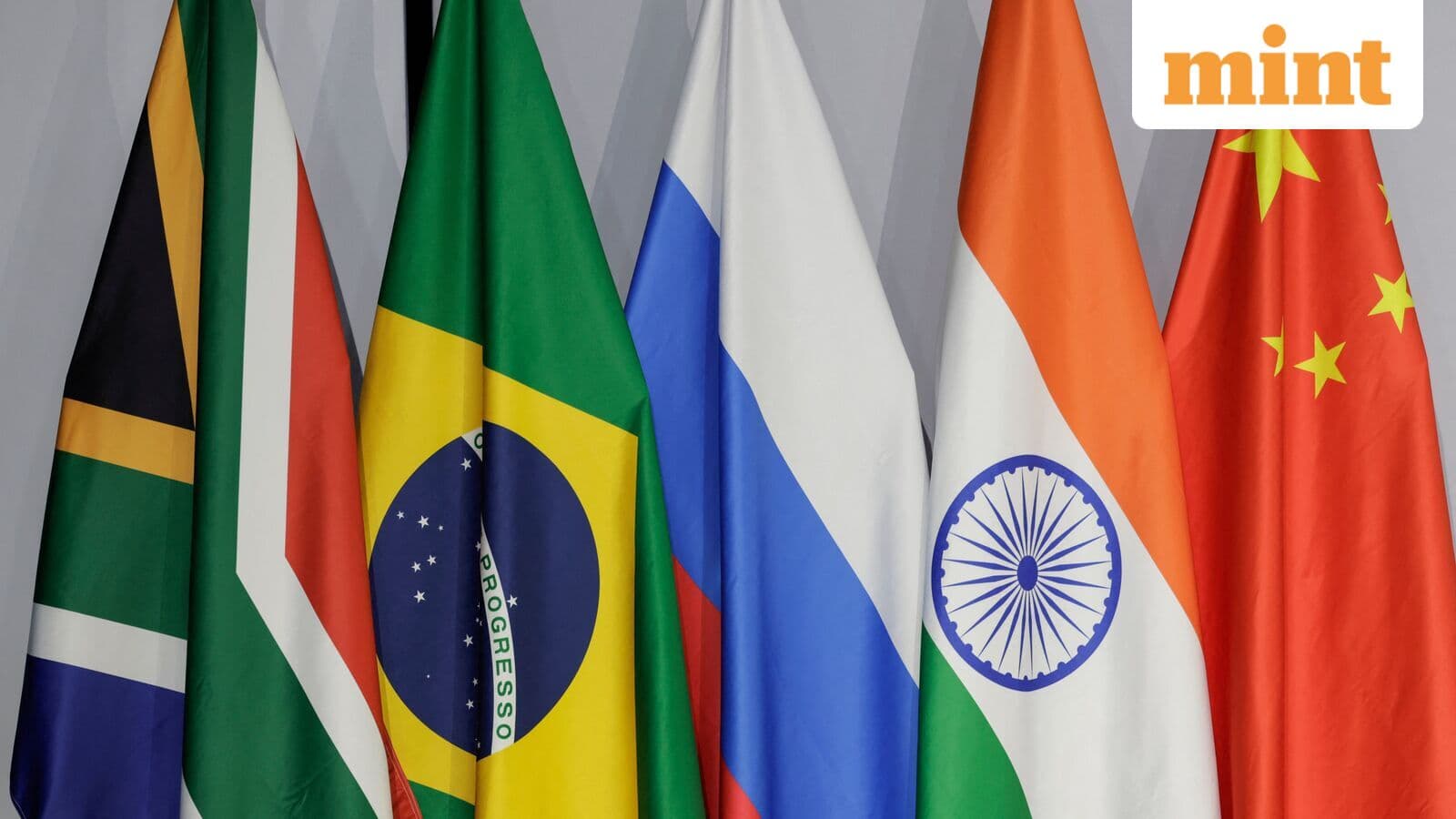
New Delhi: India will seek to lay the foundation for a common standards framework across the Brics bloc this week, aiming to shape technical rules that increasingly determine global trade, manufacturing and emerging technologies such as artificial intelligence (AI). The development is seen lowering compliance barriers for Indian exports and strengthen New Delhi's role in global standard-setting.The two-day meeting of the heads of national standard-setting bodies, hosted by the BIS under India's 2026 Brics Chairship in Bengaluru, is expected to establish a formal mechanism for cooperation on developing, adopting and implementing standards, the Bureau of Indian Standards (BIS) said on Wednesday, citing its parent, the department of consumer affairs.The meeting brings together national standards bodies from all 11 Brics members—Brazil, Russia, India, China, South Africa, Egypt, Ethiopia, Indonesia, Iran, Saudi Arabia and the United Arab Emirates (UAE). The expanded grouping now accounts for nearly half of the world's population, around 40% of global GDP and about 26% of global merchandise trade.The proposed framework would enable Brics countries to work together on drafting standards, exchange technical expertise, undertake joint capacity-building initiatives and coordinate on priority sectors, helping reduce technical barriers to trade while increasing the bloc's influence in global standard-setting, the statement said.Strategic toolStandards have increasingly become strategic tools in international trade. Countries are using technical regulations not only to ensure product safety and quality but also to shape market access in sectors ranging from electronics and electric vehicles (EVs) to medical devices, clean energy and AI.For India, closer alignment on standards with Brics partners could support exports by reducing compliance costs and improving acceptance of Indian products across major emerging markets, a senior government official said. It could also strengthen New Delhi's efforts to position the BIS as a more influential player in international standard-setting, this person said.Union consumer affairs minister Pralhad Joshi will inaugurate the meeting on Thursday. Consumer affairs secretary Nidhi Khare and BIS director general Sanjay Garg will also participate in the inaugural session, which will be attended by heads of national standards bodies from all 11 Brics member countries.“One of the key discussions will focus on standardization of artificial intelligence,” the statement said. On Friday, the BIS will host a dedicated workshop bringing together experts from India, Russia, China and Brazil to discuss the development of standards for safe, trustworthy and responsible AI systems.Common specifications“Unlike regulatory frameworks that govern the legal use of AI, technical standards establish common specifications for areas such as safety, interoperability, transparency, testing and risk management. As governments worldwide race to develop AI governance frameworks, cooperation among Brics members could influence future international norms in the technology,” it said.The Bengaluru meeting also fits into India's broader strategy of strengthening its domestic quality ecosystem. Over the past few years, the government has rapidly expanded the use of quality control orders (QCOs), making compliance with BIS standards mandatory across hundreds of products to improve manufacturing quality, protect consumers and enhance the competitiveness of Indian industry.According to government data, around 23,700 Indian standards are currently in force, with nearly 94% harmonized with global ISO (International Organization for Standardization) and IEC (International Electrotechnical Commission) norms.As of November 2025, domestic manufacturers had obtained 26,793 certifications for notified products and 24,330 voluntary certifications, indicating growing acceptance of BIS standards, particularly among micro, small and medium enterprises (

Jordan Brown, an American national who claims to be a former US Navy and Special Forces serviceman, was detained by the Sashastra Seema Bal (SSB) near the India-Nepal border in Uttar Pradesh for allegedly attempting to cross into Nepal without valid travel documents.American national Jordan Brown, who claims to be a former US Navy serviceman, is escorted by police after being detained near the India-Nepal border in Uttar Pradesh for allegedly attempting to cross into Nepal without valid travel documents.A 36-year-old American national, Jordan Brown, has come under the scanner of Indian security agencies after being apprehended near the India-Nepal border in Uttar Pradesh while allegedly attempting to cross into Nepal without valid travel documents.Brown was intercepted by personnel of the Sashastra Seema Bal (SSB) on Saturday near Border Pillar No. 516 in the Sonauli Kotwali area of Maharajganj district, away from the designated immigration route. According to officials, he ignored instructions to stop and allegedly tried to flee before being overpowered and taken into custody.His arrest has drawn attention because Brown claims to be a former member of the US Navy and Special Forces, while investigators say he has given inconsistent accounts of how he entered India and travelled across the country.What do authorities know about Jordan Brown?According to police, Brown was not carrying a passport, visa or any other identity documents when he was detained. Following his arrest, intelligence and security agencies began questioning him to verify his identity, travel history and the purpose of his visit.Brown identified himself as a resident of California and claimed he had served in the US Navy and Special Forces for six years before leaving the military about two years ago. He also told investigators that he had studied at the University of California and travelled to nearly 70 countries.Authorities, however, are independently verifying these claims.How did Brown say he reached India?During questioning, Brown gave multiple versions of his journey.In one account, he told officials that he had travelled to Thailand on a tourist visa and had lost his passport there. He then allegedly reached Sri Lanka by sea before arriving in India by another sea route on 2 November 2025. Since then, he claimed to have been living in Goa.In another version, Brown said he had arrived in Goa from the United States about two months ago, stayed there for nearly six weeks, travelled to Bengaluru and later boarded a bus to Lucknow on 8 July. From Lucknow, he said he continued to Gorakhpur before hiring a taxi to the Sonauli border.Officials have noted these discrepancies and are continuing to verify his statements.Passport, marriage claim raise more questionsBrown claimed that an acquaintance in Bengaluru had his passport. However, police said he failed to provide a complete address or verifiable details about the individual.He also told investigators that he met an Indian woman from Uttarakhand in Italy three years ago and married her in October 2024. According to Brown, she works as a yoga instructor. Authorities are verifying both claims as part of the investigation.Case registeredPolice have registered a case against Brown at the Sonauli Police Station under relevant provisions of the Immigration and Foreigners Act for allegedly entering India and attempting to cross into Nepal without valid travel documents.While Brown remains under interrogation by multiple intelligence agencies, officials have said that no evidence of suspicious or anti-national links has emerged so far. The investigation is ongoing to establish his identity, travel route and the circumstances surrounding his presence in India.Stay updated with the latest Trending, India , World and US news. HomeNewsAmerican national held at Nepal border: Who is Jordan Brown and why are Indian agencies questioning him?More

Discussion (0)