
Loading dispatches...
← Return to NewsroomEconomy
Trump era drives global opinion shift towards China as US favourability declines: Pew survey
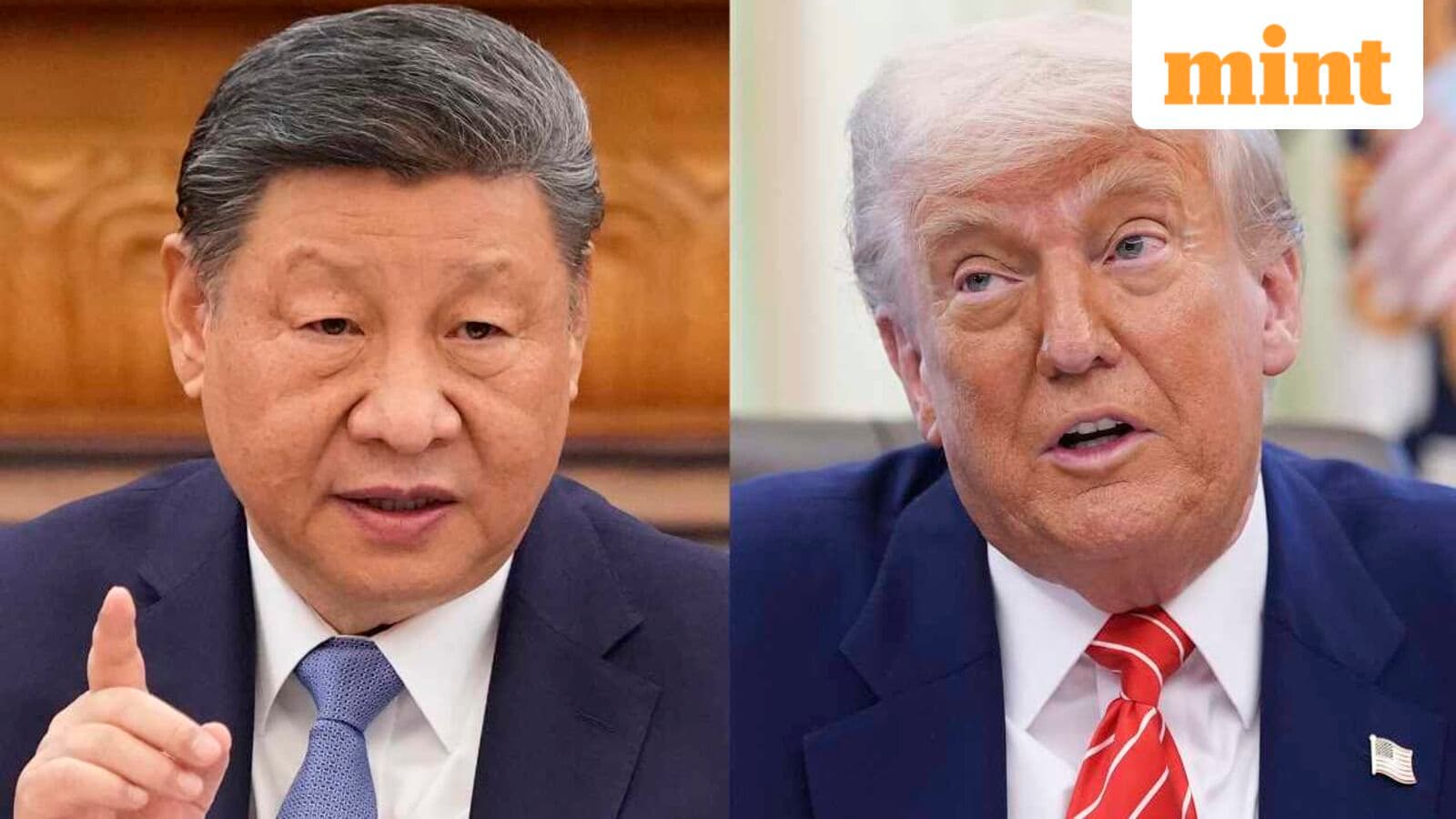
China is now viewed more favourably than the United States across most of the world for the first time in roughly two decades, according to a new Pew Research Center survey.The survey, conducted between February 8 and May 13, 2026, among 42,151 adults across 35 countries and the West Bank and East Jerusalem, found that China enjoys higher favourability than the US in 25 of the 36 countries and territories surveyed. The US is viewed more positively in only six countries -- India, Japan, South Korea, the Philippines, Poland and Israel."China being assessed more positively than the US is a relatively recent shift in most countries surveyed," the report said, attributing the reversal to improving perceptions of China along with worsening views of the United States.Trump's second term weighs on US imageGlobal perceptions of the US deteriorated during the early years of Donald Trump's second term, while confidence in the American president also declined rapidly.More respondents expressed confidence in Chinese President Xi Jinping than in Trump in 22 of the 36 countries surveyed, including major US allies like Canada, France, Germany and the United Kingdom. However, Pew noted that confidence in both leaders remained relatively low overall.According to Laura Silver, associate director of Pew's Global Attitudes Research, the shift reflected declining confidence in Washington's role in maintaining international stability."There was just an actual relationship between the outbreak of the war and the sense that the US is just not contributing to peace and stability and that people have less confidence in Donald Trump," the Associated Press quoted her as saying.The survey period coincided with increased uncertainties and churn globally with the US itself involved in a military campaign in West Asia against Iran. Other factors that hurt the Washington's standing abroad include threats to take control of Greenland, tariff disputes with allies, and US policy on the Israel-Hamas war.Pandemic effect fades, China's image improvesAccording to the research, China's improving global image also reflects the fading impact of the Covid-19 pandemic, which had severely damaged perceptions of Beijing in previous years.The Chinese embassy in Washington welcomed the findings, saying they demonstrated that "China's governance achievements and development progress are widely recognized," the Associated Press report mentioned further.Allies shift towards BeijingSome of the most dramatic opinion shifts occurred among longstanding US allies.In Canada, favourable views of the US dropped from 57 per cent in 2023 to 33 per cent in 2026, while positive views of China climbed from 14 per cent to 44 per cent over the same period. Trump's tariffs on Canadian goods and repeated remarks suggesting Canada could become the "51st state" coincided with the decline.Major European countries, including France, Germany, Italy, Spain, Sweden and the Netherlands, also shifted towards viewing China more positively than the United States.Even within the US, public opinion has narrowed considerably. Whereas Americans viewed their own country 32 percentage points more favourably than China three years ago, respondents now rate the two countries similarly.China seen as more reliable in many middle-income countriesThe survey also found growing support for China's global role across middle-income countries in Latin America, Africa, the Middle East and Asia-Pacific.A median of 75 per cent of respondents in 17 middle-income countries said the US interferes in other countries' affairs, compared with 45 per cent who said the same about China.Many respondents also described China as a more reliable partner and more likely than the US to contribute to global peace and stability.However, the research also mention that the US is viewed favourable in China's immediate neighbourhood with India, Japan, the Philippines and South Korea. China is in territorial dispute with most of these countries.
A Chinese-born American seismologist has reportedly been detained in China for nearly two years on espionage charges. The scientist, who conducted publicly funded research on detecting North Korean nuclear tests, has been designated by the US as wrongfully detained.File photo of the Chinese national flag. A Chinese-born American seismologist remains detained in China on espionage charges, with the United States designating his case as a wrongful detention, according to Reuters.(REUTERS)A Chinese-born American seismologist who carried out US-funded research on detecting North Korean nuclear tests has been detained in China for nearly two years and is awaiting trial on espionage charges, Reuters reported, citing his wife, US lawmakers and hostage advocacy groups.The case of Youlin Chen, 54, has emerged as another point of tension in already strained US-China relations, even as both countries seek to stabilise ties following last year's trade disputes.Chen, who became a US citizen in 2011 and lives in Boston, Massachusetts, has been officially designated as "wrongfully detained" by US Secretary of State Marco Rubio. The designation, made in March, elevates his release as a top US diplomatic priority. However, the Trump administration has not publicly announced the designation, reportedly to preserve room for high-level negotiations with Beijing.According to Chen's wife, Yufang Rong, President Donald Trump personally raised the case with Chinese President Xi Jinping during a visit to Beijing in May. She said Xi promised to look into the matter, but no progress has been made since then.A US official familiar with the case told Reuters that Washington remains focused on securing Chen's release, while describing his detention as unjustified.Rong fears Chinese authorities have already decided to convict her husband regardless of the evidence. Under Chinese law, espionage convictions can carry severe penalties, including life imprisonment or, in particularly serious cases, the death penalty.China has rejected claims that Chen is being wrongfully detained. Foreign Ministry spokesperson Lin Jian said Chinese judicial authorities handle cases according to law and denied the existence of what he described as "so-called wrongful detention."Questioned extensively over nuclear test researchAccording to Reuters, Chinese investigators have interrogated Chen more than 100 times about his research into the seismic signatures of North Korea's underground nuclear tests.His wife said US embassy officials have visited him several times in detention, but Chinese officials have remained present during those meetings, preventing private conversations. She also said Chen was unable to meet a lawyer until more than a year after his detention began.Hostage advocacy groups believe Chinese authorities may be interested in Chen's scientific expertise. Eric Lebson, a former US national security official advising Chen's family, suggested investigators may be attempting to learn more about techniques used to detect concealed underground nuclear tests.Chen's published research examined how seismic waves generated by North Korean nuclear explosions could be distinguished from natural earthquakes. According to Reuters, the work was funded by the US State Department and the Air Force Research Laboratory, conducted using publicly available Chinese data and approved for public release.Human rights groups have argued that China's broad state-secrets legislation allows authorities to retroactively classify previously public information as sensitive, potentially exposing researchers to prosecution. Chen was arrested by Chinese state security officers at Beijing International Airport while preparing to return to Boston after visiting relatives and delivering lectures at two universities.His wife said his health has deteriorated significantly in detention. She alleged he initially faced harsh treatment, was denied adequate medication for diabetes and other medical conditio



Discussion (0)