
Loading dispatches...
← Return to Newsroomgeneral
HDFC Bank ordered to pay Rs 2.2 lakh to cyber fraud victim

The commission found the bank deficient in service for not releasing the money despite the complainant reporting the fraud, completing the required formalities, and repeatedly approaching the bank. (Representational image) Finding that a senior citizen reported a cyber fraud promptly, but was still “harassed”, the District Consumer Disputes Redressal Commission of Chandigarh has directed HDFC Bank to release his frozen amount of Rs 2 lakh and pay him Rs 20,000 as compensation and litigation expenses. The commission found the bank deficient in service for not releasing the money despite the complainant reporting the fraud, completing the required formalities, and repeatedly approaching the bank. The order was pronounced on June 9.Passing the order, the Bench of Amrinder Singh Sidhu (President) and B M Sharma (Member) observed, “The continued retention of the complainant’s money without any explanation or resolution, despite repeated approaches made by him, amounts to deficiency in service”. The order blamed HDFC Bank for “compelling” Balwinder Singh, who is a senior citizen, to make numerous visits to the bank and has caused “inconvenience, mental agony and harassment” to him. Appearing through counsel Prabhpreet Singh and also in-person, complainant Balwinder Singh submitted that on April 3, 2024, he received a fraudulent phone call from unknown persons claiming that his son had been taken into custody after narcotic substances were allegedly recovered from him. According to the complaint, the callers even made him speak to a person impersonating his son. Under threats that his son would face serious consequences, he was induced to transfer Rs 2 lakh to an HDFC Bank account belonging to one Mihar Kumar Gupta, the complaint said. After speaking to his son, he realised he had been cheated. Balwinder Singh claimed that he immediately approached the bank branch and succeeded in getting the transferred amount frozen. He also lodged a DDR with Chandigarh Police and supplied its copy to the bank. Story continues below this ad However, despite repeated requests and written representations seeking release of the frozen amount, the bank failed to return the money, prompting him to approach the consumer panel alleging deficiency in service. HDFC Bank’s Sector 22 branch did not appear before the commission despite being served a notice and so the case proceeded against them ex-parte vide an order dated September 11, 2025. The commission noted that despite service of notice — the Opposite Party (OP) — HDFC Bank did not appear in the proceedings and was proceeded against ex parte. “This act of the OP draws an adverse inference against it. The non-appearance of the OP shows that it has nothing to say in its defence against the allegations made by the complainant. Therefore, the assertions of the complainant go unrebutted and uncontroverted,” the panel observed. Story continues below this ad The consumer commission further recorded in its order that there is no material on record to show that the complainant was informed of any legal impediment, restraint order or any other valid reason preventing the release of the amount in question. “It is not disputed that the amount originally belonged to the complainant and that the complainant had promptly reported the matter to the bank and the police authorities. Once the complainant had completed the formalities required by the bank, it was incumbent upon the OP to take a reasoned decision regarding his request and communicate the same to him within a reasonable period,” the panel held. “The continued retention of the complainant’s money without any explanation or resolution, despite repeated approaches made by him, amounts to deficiency in service. The complainant, a senior citizen, has been compelled to make numerous visits to the bank and has suffered inconvenience, mental agony and harassment on account of the inaction of the bank.” Allowi
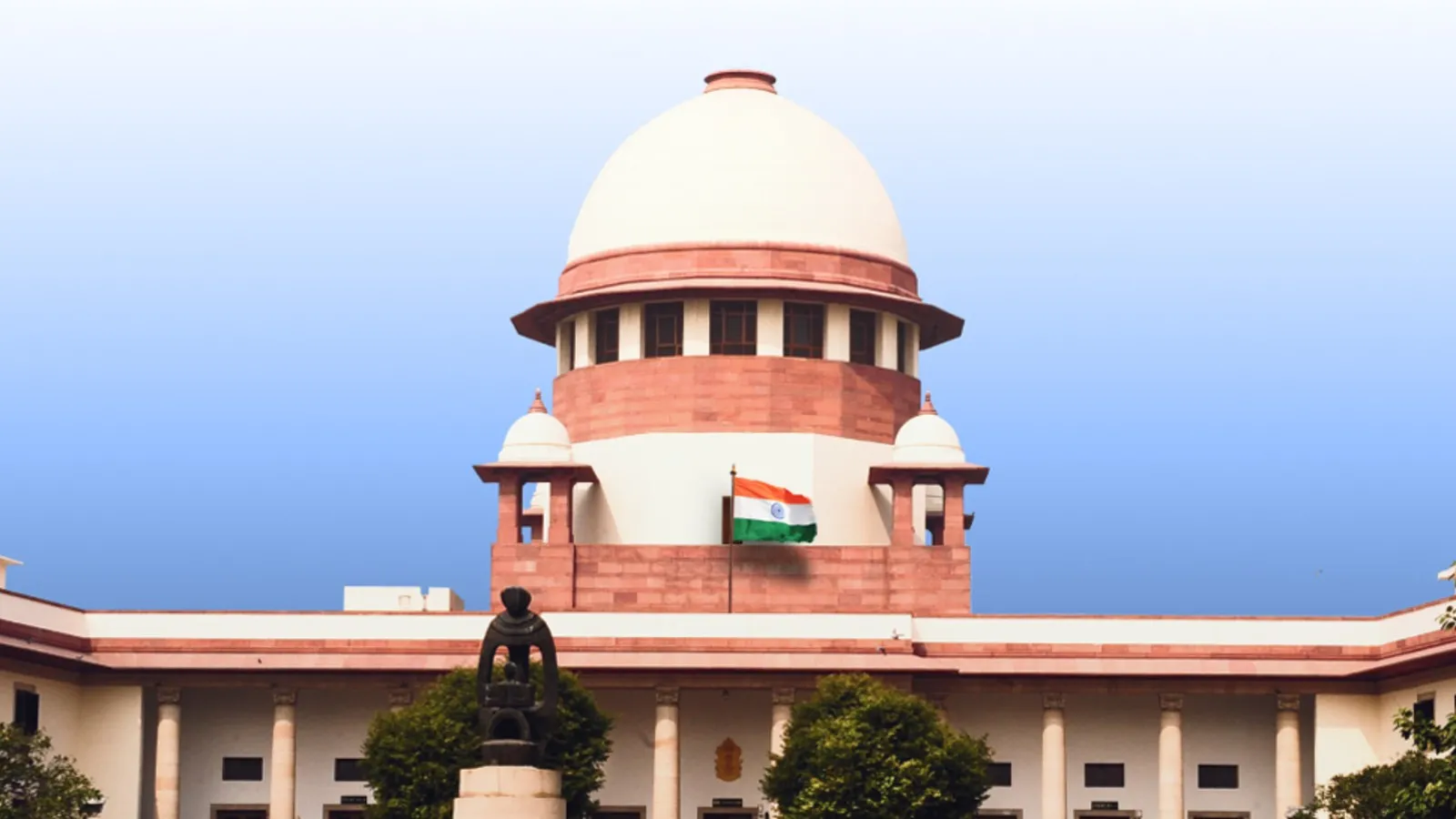
The Supreme Court Tuesday agreed to consider implementing a Standard Operating Procedure (SOP) to facilitate access to constitutional courts during off-duty hours in urgent matters involving questions of life and personal liberty.A three-judge bench, presided over by Chief Justice of India Surya Kant, issued notice on a plea filed by Advocate Maheravish Rein, who said that, as of now, litigants find it difficult to access the courts at night.“My grievance is if I am a poor man, I want to have access to justice, I can only access the legal aid committee during the day, not at night. I can access the court only during the day, not at night,” she told the bench also comprising Justices Joymalya Bagchi and V Mohana. She referred to Article 32(4) of the Constitution which says, “The right guaranteed by this article (to move the Supreme Court for enforcement of fundamental rights) shall not be suspended except as otherwise provided for by this Constitution.” She submitted that even in urgent matters, when applications are filed, litigants have to wait until the next morning for their cases to be heard. The CJI said that, though it does not happen regularly, many a time lawyers file vague applications. “I don’t say it’s a regular practise, but sometimes vague applications are filed. How can such matters be listed on the same day?”, the CJI said. Justice Bagchi pointed out that there have been instances when the Supreme Court has sat even at night, but counsel said this does not happen in every needy litigant’s case.Story continues below this ad Justice Bagchi said, “What you want is official hours and unofficial hours to become same, we do not agree to that.” The judge added, “There is difference between access to justice during official hours. There is a difference and a different criterion proposed to access to justice beyond official hours. If that was not there, your case is made out of non-access. But a graded access to justice is not denial of justice.” Call for a ground-level solution Issuing notice to High Courts on the plea, the CJI asked the counsel to “give some concrete solutions, some SOP as to what is the procedure that can be followed after court hours which according to you will ensure access to justice.” CJI Kant recalled that he had “earlier made a request to High Courts that you start working 24×7 like government hospitals. If I can make a request to High Courts, then why not SC (Supreme Court)? But tell us what the SOP is. Because mere announcement is not going to serve any purpose unless it is implemented at the ground level.”Story continues below this ad The counsel recounted a personal experience involving an interfaith couple who approached her at night. She said that the couple approached police, who sent off the woman with her parents and though she tried approaching courts, it did not work out. The bench asked whether she was even unable to contact anyone in the court’s registry. The counsel said the person she contacted asked her to wait till morning. Justice Bagchi said that it cannot be termed a lack of access to justice, but the officer concerned may have had a different assessment of the urgency of her plea. “There is one difference. It is a wrong decision, but it does not mean you did not have access. You had access. The assessment of urgency may have been different”. He added that what can be done is to see if there can be an SOP “that if an urgent communication is made, the institution is duty-bound to respond within, say, 1 hour.”Story continues below this ad Safeguards against misuse Solicitor General Tushar Mehta, who was present in court, said it would be better if the SC examined it on administrative grounds rather than asking the High Courts to do so at this stage. Justice Bagchi said, “Our view is once the online filing and access is available, it can’t be said that the court’s doors are closed. There may be a differential response, expectation of a litigant and the assessment of the (reque
The ongoing debate over the ban on ‘Satluj’ — a film based on the life of human rights activist Jaswant Singh Khalra — has put the spotlight on a story that extends far beyond its central character. It has brought into focus the intervention by the judiciary, particularly by Justice Kuldip Singh, whose landmark order transformed the disappearance of Khalra into one of the most consequential human rights investigations.Khalra was abducted from outside his Amritsar home on September 6, 1995, and murdered by Punjab Police personnel soon after he exposed the alleged illegal cremations of at least 2,097 “unclaimed” bodies in the district following suspected fake encounters during the militancy era.Within days of his disappearance, Khalra’s wife, Paramjit Kaur Khalra, moved the Supreme Court, while then Shiromani Gurdwara Parbandhak Committee (SGPC) president Gurcharan Singh Tohra sent a telegram to Justice Kuldip Singh seeking immediate intervention. Even as Punjab Police denied knowledge of Khalra’s whereabouts, the Supreme Court widened the scope of the case. In a landmark order on November 15, 1995, a division bench of Justices Kuldip Singh and S Saghir Ahmad ordered a CBI probe not just into Khalra’s disappearance, but also into his “press note” that had exposed alleged illegal cremations of laawaris (unclaimed) bodies in Amritsar following alleged extra-judicial killings of Sikh youths by Punjab Police. The probe eventually established that Khalra had been murdered by police personnel, leading to five policemen being convicted. The CBI investigation also triggered multiple FIRs relating to alleged extra-judicial killings and “secret cremations of unidentified bodies” across Punjab. Justice Kuldip Singh, a Partition survivor born in Jhelum (now in Pakistan) and who later settled in Patiala, continued to shape the case through a series of landmark orders. In 1996, describing Khalra’s disappearance as the “worst crime against humanity”, he awarded Rs 10 lakh compensation to his Paramjit Kaur after her husband remained missing for over a year. He also directed that all accused policemen be transferred out of Amritsar and Tarn Taran to ensure an impartial CBI probe and later entrusted the National Human Rights Commission with determining compensation for families whose relatives had been illegally cremated. Justice Kuldip Singh died in Chandigarh in 2024 at the age of 92. Senior Supreme Court advocate and human rights activist HS Phoolka says Satluj ultimately highlights “the strength of the Indian judiciary.”Story continues below this ad “At Justice Kuldip Singh’s bhog ceremony, the conversation centered on it how many innocent people are alive today because of him. It was his guts, resilience and farsightedness that the Khalra case went to the CBI; otherwise, it would have been buried,” Phoolka told The Indian Express. “Khalra did nothing wrong. He only encouraged victims of alleged extra-judicial killings to move court and demand the whereabouts of their family members through legal process. Even after his abduction, his wife moved the Supreme Court instead of promoting any violence.” Phoolka said Khalra urged people “to pick up a pen and file petitions, not weapons” and made people believe in the judicial system. His work ultimately led to convictions in at least 63 fake encounter cases, adds Phoolka. Former Rajya Sabha MP Tarlochan Singh echoed the sentiment, saying Justice Kuldip Singh’s intervention prevented the case from being buried.Story continues below this ad “We should never forget the role of Justice Kuldip Singh and the judiciary in the Khalra case. Had the CBI probe not been ordered, Punjab Police would have buried it forever. The film is not reopening wounds, but instead giving a lesson,” says Tarlochan, a former chairman of the National Minorities Commission and ex-officio member of the NHRC. The film, he says, could serve as a reminder against abuse of power. “Police personnel and their families also watch films



Discussion (0)