
Loading dispatches...
← Return to NewsroomPolitics
Six workers dead, 14 injured as water, debris enter tunnel in Uttarakhand’s Chamoli
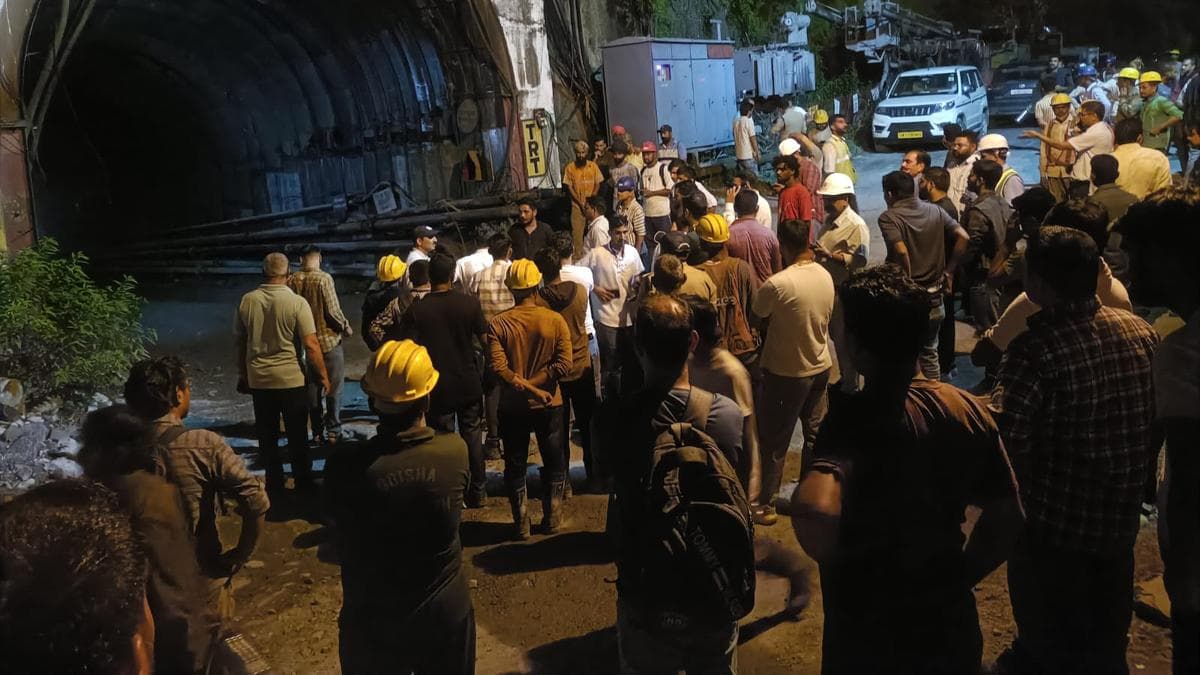
Rescue Operations at the site of an under-construction tunnel, where workers are feared trapped after water and debris entered, in the Pipalkoti area of Chamoli district, Uttarakhand, on August 13, 2026. | According to preliminary information shared by the officials, 22 workers were trapped inside the tunnel. Twenty people have been brought out of the tunnel. Of them, six were declared dead, while 14 others have sustained injuries and are undergoing treatment at a nearby hospital. Information about the remaining two workers was not immediately available.Earlier, officials said 16 workers were rescued after water and debris entered the under-construction tunnel in the Pipalkoti area of Chamoli.According to the State Disaster Response Force (SDRF), the incident was reported around 7.05 p.m. Preliminary information suggested that 22 workers were inside the tunnel being built for a Tehri Hydro Development Corporation Limited (THDC) project when water and debris entered it.Rescue operations were launched soon after the incident was reported. Teams from the Indian Army, Indo-Tibetan Border Police (ITBP), National Disaster Response Force (NDRF) and SDRF were rushed to the site and raced against time to locate and evacuate the trapped workers.District-level rescue teams, the local police and Central Industrial Security Force (CISF) personnel were also involved in the operation.Uttarakhand Chief Minister Pushkar Singh Dhami expressed concern over the incident and directed officials to carry out the rescue operation on a war footing. He said the government’s priority was to ensure the safe evacuation of every worker trapped inside the tunnel.Chamoli district has witnessed heavy rainfall over the past several days. On Monday (August 10, 2026), a bridge in the Niti Valley region was swept away after rising water levels triggered a strong current in the river. A video of the incident showed a large volume of muddy water surging downstream and crashing into the metal bridge. The powerful current soon uprooted the structure and pushed it towards the riverbank.(With PTI inputs) Published - August 14, 2026 12:01 am IST
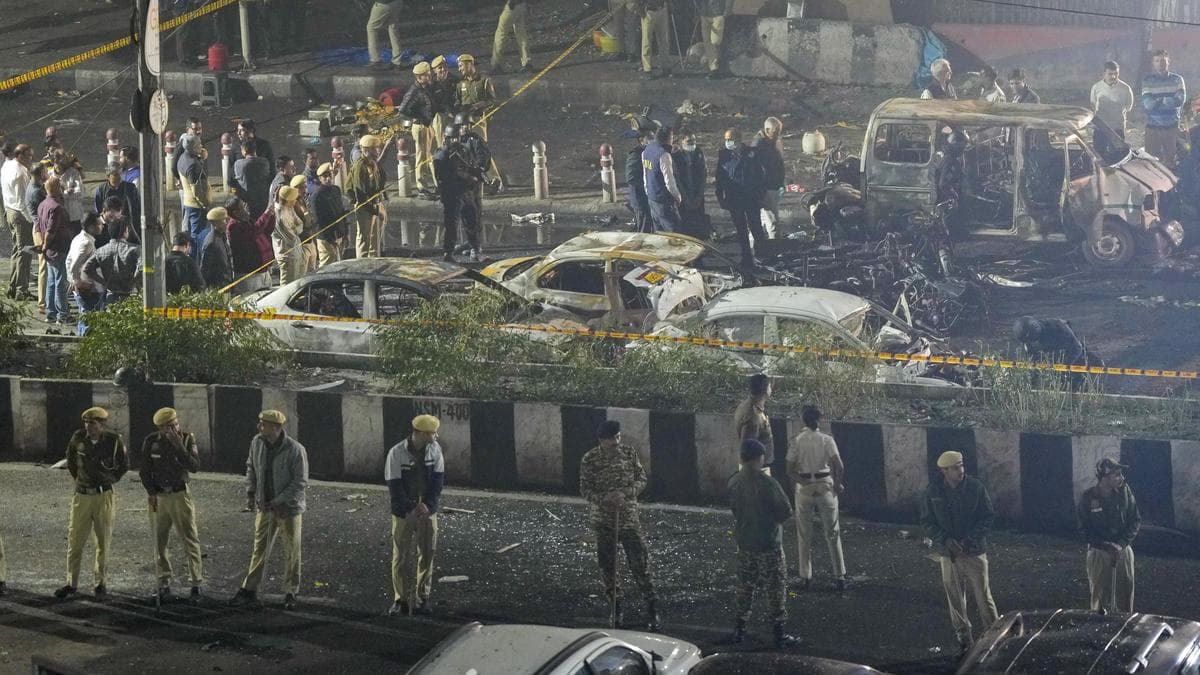
A deadly and high-intensity explosion had rocked the Red Fort area in New Delhi, killing about 15 people and injuring many more. The explosion had ripped through a slow-moving car at a traffic signal near the Red Fort metro station. File. | A deadly and high-intensity explosion had rocked the Red Fort area in New Delhi, killing about 15 people and injuring many more. The explosion had ripped through a slow-moving car at a traffic signal near the Red Fort metro station.The report, published on Monday (August 10, 2026), said that “AQIS continued to evolve from a fragmented group into a regional terrorist entity.”“AQIS established logistics and financial networks, working in decentralised small, scattered cells instead of large units. The attack in November 2025 on the Red Fort in Delhi was officially attributed to AQIS,” the 38th report of the Analytical Support and Sanctions Monitoring Team submitted to the Security Council 1267 Sanctions Committee concerning ISIL and Al-Qaeda said.Also read: UNSC panel notes Pak-based terror group JeM’s reported link to Red Fort attackThe report added that there was some concern about “AQIS trying to exploit Bangladesh to establish cells there.”The report further said that Al-Qaeda and ISIL (Da’esh) have shown a sustained interest over many years in developing chemical and biological weapons but so far have failed to overcome the associated technical challenges. Instructions on how to develop such weapons have been shared widely within online terrorist communities.“For example, in February, ISIL (Da’esh)’s English-language Invade magazine included instructions on how to develop botulinum toxin and cyanide,” it said.ISIL-K has shown a “particular interest and, over the past 12 months, circulated instructions on developing the toxin ricin. At the end of 2025, Indian authorities arrested three people, including a doctor, who had been tasked by an ISIL (Da’esh) cell abroad to develop ricin.” The report further said that regional tensions in South Asia remained “high” as cross-border attacks between Pakistan and Afghanistan continued.The Taliban continued publicly to deny harbouring any terrorist groups. Member States expressed concern that the conflict could create opportunities for terrorist groups, generating additional security challenges for the region.“The terrorist threat emanating from Afghanistan remained largely unchanged. The ability of numerous terrorist groups to operate in Afghanistan constituted an enduring threat to neighbouring countries and the Central Asian region. Despite efforts by the de facto authorities to combat Islamic State in Iraq and the Levant-Khorasan and contain other terrorist groups, the authorities were unable to suppress the terrorist problem,” it said.The report also pointed out that on December 25 last year, following its annual rahbari shura (leadership council), Tehrik-e Taliban Pakistan (TTP) “announced a revised structure with two new divisions covering: (a) Balochistan and the central region; and (b) Kashmir and the division of Gilgit. The restructuring included a new division described as the TTP Air Force.” Published - August 13, 2026 05:52 pm IST
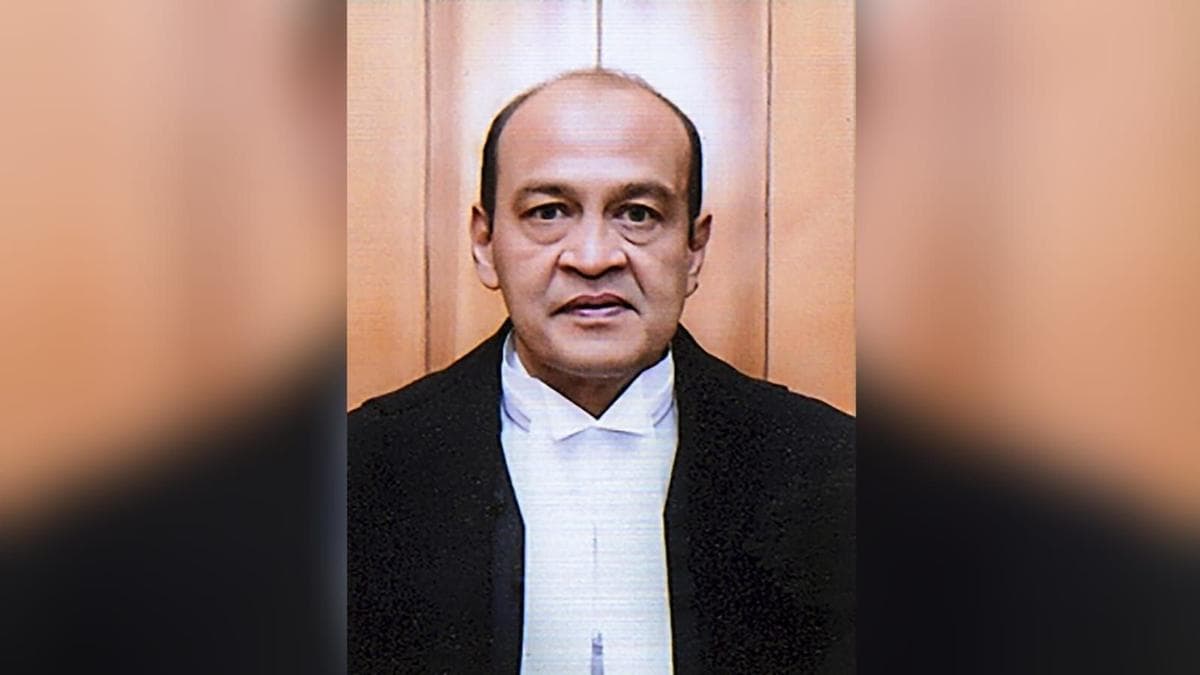
Justice Yashwant Varma. File | The report was tabled in both Houses on Wednesday (August 12, 2026). Firefighters responding to the blaze found burnt currency notes in a storeroom. Justice Varma, then a Delhi High Court judge, denied ownership of the cash and questioned the manner in which the evidence was handled.A motion seeking his removal was subsequently signed by nearly 200 MPs. Under the Judges (Inquiry) Act, 1968, the Speaker constituted an inquiry committee headed by Supreme Court judge Justice Aravind Kumar, with Bombay High Court Chief Justice Shree Chandrashekhar and senior advocate B.V. Acharya as members. The committee submitted its report to the Speaker in May.What did the committee find?The report identifies three charges.First, it found that substantial quantities of unexplained ₹500 currency notes were found in a storeroom within Justice Varma’s official residential premises and that he failed to give a satisfactory explanation about their presence, source or ownership. Article I was therefore proved.Second, the committee found that material evidence was not properly secured or preserved. It held that the evidentiary condition of the storeroom was disturbed before lawful sealing and inspection, and that the subsequent non-availability of the currency remained unexplained.Third, it examined Justice Varma’s explanations and found them wanting. The report said they did not display the “candour, transparency and institutional responsibility” expected in the circumstances and remained “evasive and unsatisfactory” when tested against independent official witnesses and corroborative material. Article III was proved.The committee’s consolidated finding is unequivocal: “Articles of Charges I, II and III are proved.” It then submitted the report and inquiry record for “such further action as may be considered in accordance with law”. The findings do not themselves remove a judge from office.What happens next?Ordinarily, a finding of proved misbehaviour under Section 6 of the Judges (Inquiry) Act sends the removal motion back to the House in which it is pending, along with the committee’s report. If adopted, the motion must be passed by both Houses with the Constitution’s special majority — a majority of the total membership and at least two-thirds of members present and voting.The Houses would then present an address to the President seeking removal.But Justice Varma’s resignation has complicated this route. Though he has resigned, the Allahabad High Court official website continues to mention him as one of the senior-judge most judges of the high court.His resignation has not been formally notified, although legal commentators have argued that such a resignation takes effect without separate acceptance. Article 217 permits a High Court judge to resign by writing to the President.If his resignation treated as effective, there is no longer a sitting judge to remove, making the parliamentary process effectively infructuous.The Judges (Inquiry) Act does not expressly set out a separate punishment after a judge has left office; Section 6 links the committee’s finding of guilt to consideration of the removal motion.This creates a question over whether Parliament can proceed after resignation. The report does not resolve this issue as its concluding paragraph recommends further action in accordance with law.Officially, the government has not made a statement, but senior officials have argued that it can proceed with the removal process as the proceedin
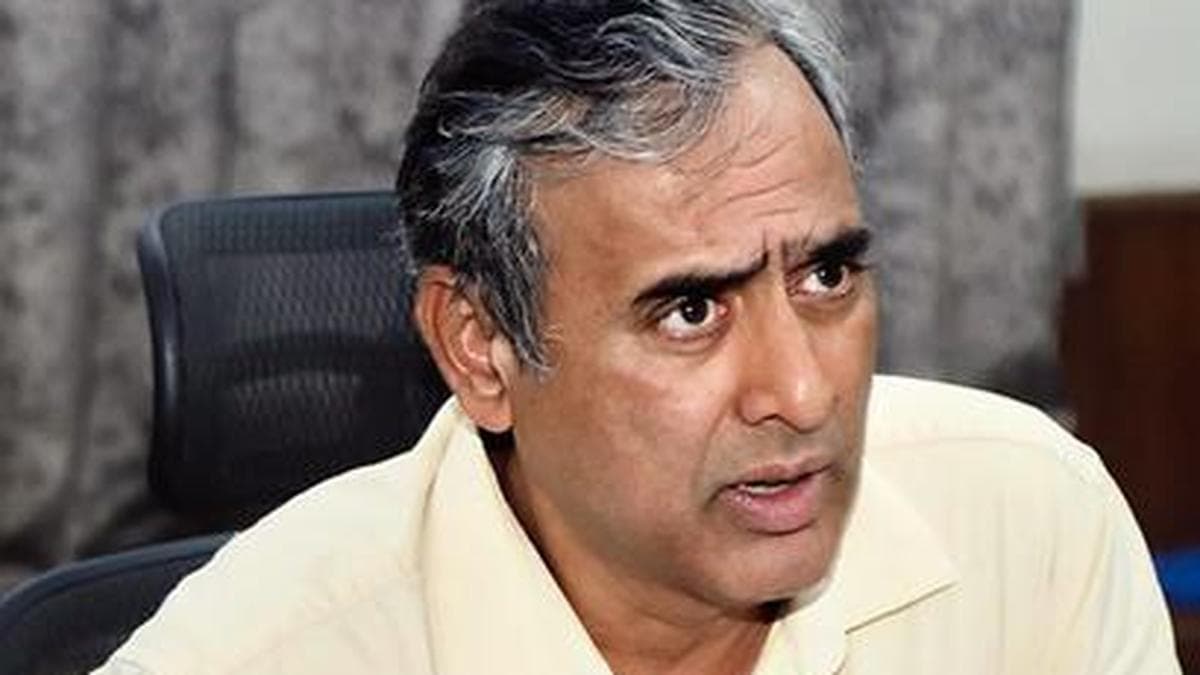
M. Maheshwar Rao, Chief Commissioner, Greater Bengaluru Authority (GBA) M. Maheshwar Rao, Chief Commissioner, Greater Bengaluru Authority (GBA), on Tuesday directed officials to expedite the ongoing construction of the 5.45 km buffer road between Lower Agaram Junction and Sarjapur Road via Ejipura and complete it at the earliest.Reviewing the progress of development works in Bengaluru South City Corporation, Mr. Rao instructed officials to speed up construction of the buffer road, which comprises a 2.45 km stretch from Lower Agaram Road to Ejipura Road and a 3 km stretch from Ejipura Road to Sarjapur Road.The Defence Department has handed over 5.34 acres for the project near Ejipura. About 90% of the retaining wall work has been completed, while drainage and footpath works are under way, according to the GBA officials.Mr. Rao directed officials to adopt a road design that facilitates rainwater percolation into the ground wherever feasible. Since S.T. Bed Colony adjoining the buffer road is a low-lying area, he also instructed officials to construct suitable stormwater drains within the road limits to prevent flooding.He also reviewed the Ejipura flyover works and directed officials to deploy additional manpower and expedite the project. Noting that the footpath along the service road beneath the flyover is narrow, he instructed officials to widen it after completion of the flyover and provide a cycle track. The cycle track should be designed to prevent two-wheelers from entering it. Officials were also asked to prepare an estimate for adequate lighting beneath the flyover. Published - August 13, 2026 12:57 am IST
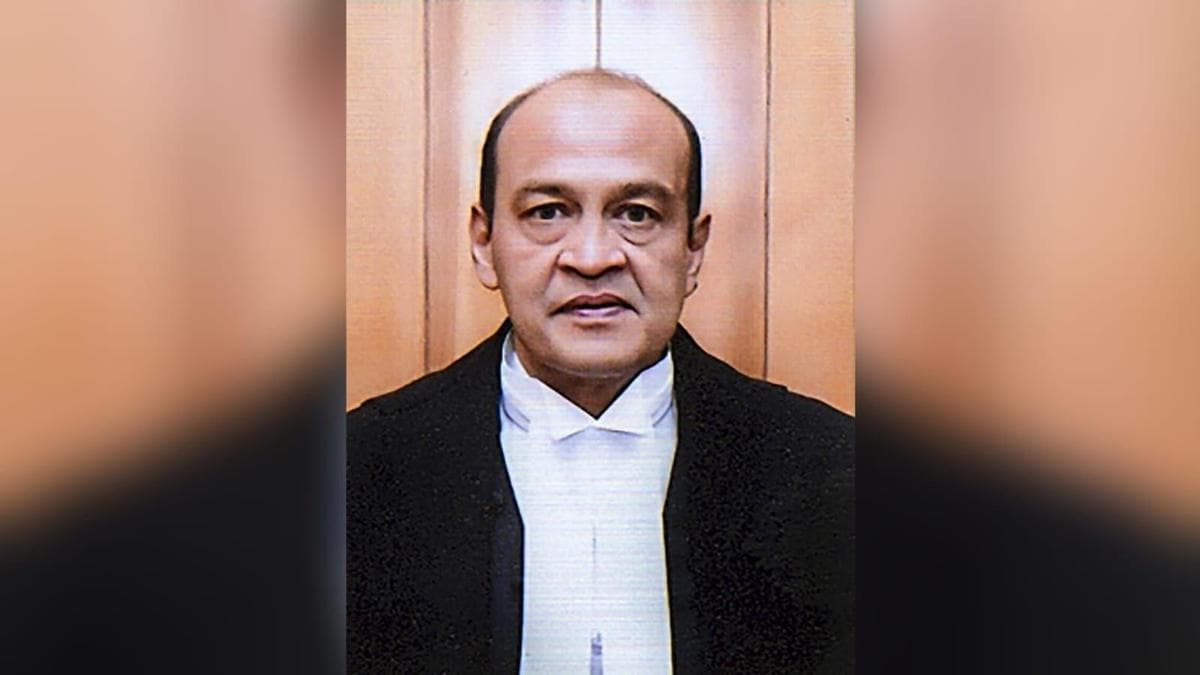
Justice Yashwant Varma. File | The committee’s report, in a way, responds to questions in the public domain such as why it chose to continue its work and submit the report to Parliament even after Justice Varma ceased to be a judge with his resignation, with immediate effect, on April 9.The report, tabled in Parliament on Wednesday (August 12, 2026), found the charges against Justice Varma “proved”, holding that his explanations were “evasive and unsatisfactory”. The discovery of the currency notes occurred in the national capital when he was a Delhi High Court judge.In a communication sent to the committee on April 9, the former Allahabad High Court judge had informed it of his decision to withdraw from the proceedings. Parallel communications were sent to the President and Chief Justice of India on the same day.The committee report said Justice Varma, in the April 9 communication, had further found fault with the inquiryon several counts, including procedural unfairness, reversal of burden, non-availability of CCTV footage. The report chose to rebut him, saying that “silence may permit a partial account to assume the character of the whole”.For one, the committee said rather than making allegations, the former judge ought to have entered the witness box. It said Justice Varma withdrew from the inquiry proceedings at the crucial point ofwhen he had to produce evidence for his defence.“The least that could have been done by the judge was to enter the witness box and deny the charge, which he did not choose to do, but abandoned (withdrew) from further participation in the inquiry,” it said.The panel said a statutory inquiry cannot depend on the “unilateral” decision of a judge under inquiry, especially after the “evidence has substantially come on record”.“This was not a case where the inquiry had not commenced, or where the judge had not been heard, or where the material had remained untested,” the committee said.The committee proceedings were neither erratic nor episodic. The former judge withdrew in the midst of a live, advancing and continuous process, the committee said.It said the articles of charges against the judge had already been framed, defence statements had been received; material to be relied upon for the inquiry had been supplied and inspection done; applications had been heard and decided; nine witnesses had already been examined; and documents and electronic material had been marked. Even witnesses had been cross-examined on behalf of the judge himself.“The proceedings had, therefore, crossed the stage of mere procedural arrangement and entered, and substantially completed, the evidentiary stage,” the report said.The inquiry committee said Justice Varma was given a reasonable opportunity to make his case before it.It said the inquiry could proceed even in the absence of the judge if there was sufficient proof that he was given the opportunity to join the proceedings.“The present case, however, does not rest merely on absence. It is a case where the judge had participated through advocates, contested the procedure, cross-examined the witnesses, inspected the records, and reached the stage where he was required to establish his defence,” the report said. Published - August 12, 2026 11:23 pm IST

Elephants at Sakrebylu Elephant Camp were decorated to mark the World Elephant Day on Wednesday. | K. Dinesh The World Elephant Day at Sakrebylu Elephant Camp near Shivamogga was a low-key affair on Wednesday, with the camp remaining closed to tourists as works to ensure safety for visitors were on.Caretakers and officials decorated the elephants at the camp and performed a special pooja to mark the occasion. Department officials also conducted a drawing competition for students of the Morarji Desai Residential School at Gajanur.Prasanna Krishna Patagara, Deputy Conservator of Forests (Wildlife), told The Hindu that the day was observed without any special programmes this year. The staff decorated the animals, offered special food, and conducted special prayers at the kraal area, he said.The camp is likely to be reopened for visitors by the end of this month, Mr. Patagara said. Civil works to enhance security measures for visitors are under way. “We are hopeful of opening the camp for visitors by the end of August,” he said.The camp has been closed to visitors since May 21, on instructions from senior department officials, following a tragic incident at the Dubare elephant camp in which a woman tourist lost her life during a fight between two elephants. One of the elephants involved also died. In the wake of the incident, the department decided to formulate a standard operating procedure (SOP) for elephant camps in the interest of the safety of visitors and animals. Published - August 12, 2026 06:55 pm IST

The Supreme Court referred to a status report submitted by the Indian Cyber Crime Coordination Centre (I4C) under the Ministry of Home Affairs, which said the complaints against digital arrests had substantially reduced from 1,23,672 in 2024 to 58,249 in 2025, and further reduced to 16,377 during the period ending June 30, 2026. The Supreme Court on Tuesday (August 4, 2026) passed a detailed order directing the Centre, States, the Reserve Bank of India and telecom authorities to prepare a standard operating procedures (SOPs) to curb "digital arrests" scams and operationalise mechanisms to redress grievances of victims, initiate criminal action through zero FIRs against cyber fraudsters, and restore the monetary losses of those defrauded in a time-bound manner.The court referred to a status report submitted by the Indian Cyber Crime Coordination Centre (I4C) under the Ministry of Home Affairs, which said the complaints against digital arrests had substantially reduced from 1,23,672 in 2024 to 58,249 in 2025, and further reduced to 16,377 during the period ending June 30, 2026.However, the court said it was essential to continue to monitor the situation.“As per the fourth status report, a data-sharing MoU between the Reserve Bank Innovation Hub and I4C was executed on May 11, 2026. The grievance redressal mechanism portal now covers 1,23,590 branches of 69 banks. Additionally, the Money Restoration Mechanism Portal has 57 participating banks and covers all 36 States and Union Territories, with restoration completed in 36,290 cases, involving an aggregate amount of ₹18.05 crore,” the court noted.The court said the e-Zero FIR mechanism was functional in 19 States, while only 14 States had notified their State Cyber Crime Coordination Centres. Similarly, the Telecommunications (Radio Equipment Possession Authorisation) Rules, 2025 had been notified, while the Telecommunications (User Identification) Rules, 2025 was at the final stage of notification.“As far as the CBI’s investigation is concerned, the report reveals that the agency has presently registered 10 digital arrest cases and several connected cases. In one investigation, it identified 238 victims, 67 first-layer bank accounts, transactions of approximately ₹80 crore, and conducted searches at 93 locations across 16 States,” the court said.The Bench recorded the suggestion made by the Inter-Departmental Committee that the CBI take up cases involving amounts lower than the ₹10-crore threshold. The court directed the RBI to prepare and circulate a Standard Operating Procedure (SOP) to deal with mule accounts and those linked to money laundering and cyber-enabled fraud.States and Union Territories were asked to frame modules for grievance redressal and money restoration as per the Ministry of Home Affairs’ SOP concerning the National Cyber Crime Reporting Portal and Cyber RMS, dated January 2, 2026.The court said the next status report would include State-wise and bank-wise details of data grievances registered and disposed of, summary restoration orders issued, summary restorations completed, and the amounts restored.States have been asked to notify Cyber Crime Coordination Centres and operationalise e-Zero FIR mechanisms within four weeks. The court also said cases involving freezing of bank accounts arising out of cyber-enabled financial frauds ought to be dealt with expeditiously. Published - August 04, 2026 05:27 pm IST
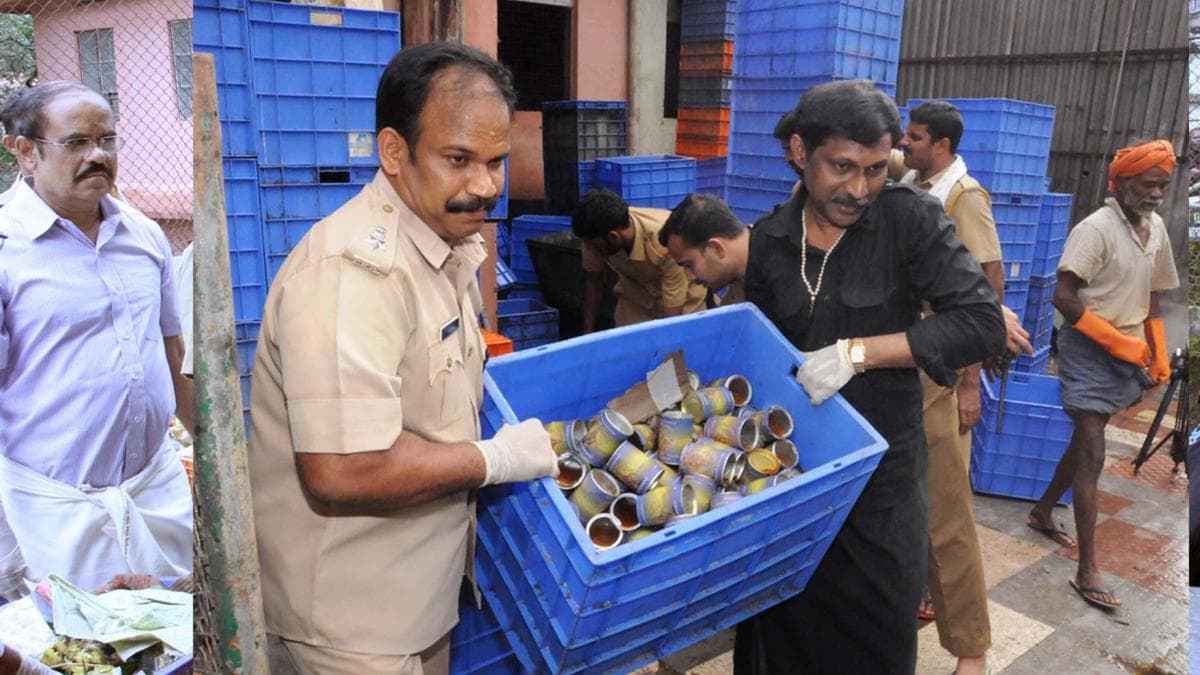
The Punyam Poonkavanam scheme implemented to keep the Sabarimala Sannidhanam, Pampa and its surroundings clean with the active participation of devotees had run into controversies with allegations of illegal funds collection and undertaking activities beyond the scope of the Kerala Police. (Photo for representation) The Kerala government is learnt to be risking violation of a Kerala High Court order by permitting the restoration of the ‘Punyam Poonkavanam’ project in Sabarimala.The State government, while exonerating P. Vijayan, the Additional Director General of Police (Law and Order), of all the allegations levelled against him regarding the controversial scheme on Friday (July 24, 2026), had permitted the continuation of the project since it was an “exemplary community initiative by the Kerala Police in Sabarimala.”Incidentally, the Devaswom Bench of the court had in February, 2025, asked the Travancore Devaswom Board and also the Kerala Police to issue an advisory to Sabarimala pilgrims that the project was not part of the Police Bandobast Scheme from the Mandalam-Makaravilakku festival season of 2023-24 and that the name of the project cannot be used for any activity connected with Sabarimala.It was after considering an inquiry report by M.R. Ajithkumar, the then Additional Director General of Police and Chief Police Coordinator, Sabarimala, that the order was issued.Besides violating the court order, the official who issued the recent government order on restoring the project stood the risk of committing contempt of court, as the High Court order still holds good, pointed out judicial sources.“If the State has found the report of Mr. Ajith Kumar baseless, the government shall initiate legal proceedings against him for filing a false report to the court, which is an offence under Section 212 of the Bharatiya Nyaya Sanhita. The offence attracts simple imprisonment up to six months or a fine up to ₹5,000,” judicial sources indicated.Allegations of illegal funds collectionIncidentally, the scheme implemented to keep the Sabarimala Sannidhanam, Pampa and its surroundings clean with the active participation of devotees had run into controversies with allegations of illegal funds collection and undertaking activities beyond the scope of the State police.The inquiry report, which was not available in the public domain so far, noted that the project “coordinators had solicited and collected money and other articles from private individuals and organisations.”The “serving and retired police officers involved in the programme have travelled widely all over the country and are suspected to be in foreign countries also, which requires funding.” Neither the government nor the department was permitted to “collect any funds nor to extend the programme into other religious places, other States or foreign countries.”The report stated that the Police department had no control over the programme that was run by private individuals of various States using the banner of the Kerala Police department. A specialised unit like the State Crime Branch shall inquire into it. The financial transactions carried out by Mr. Vijayan shall be probed by the Vigilance or the Central Bureau of Investigation (CBI), Mr. Ajith Kumar recommended.Clean chit to VijayanHowever, the government gave a clean chit to Mr. Vijayan and concluded that no material had emerged to indicate any misuse of authority, misconduct, or mala fide action on his part.Meanwhile, K. Jayakumar, president of the Travancore Devaswom Board said the agency had issued an advisory as directed by the court and the programme was stopped since the court order. Published - July 28, 2026 05:12 pm IST

HR&CE officials prohibited entry to devotees with obesity, those with health problems, and senior citizens at Idukku Pillayar Temple on the Girivalam path near Arunachaleswara temple in Tiruvannamalai town | The action comes after 36-year-old S. Manikumar from Godavari district in Andhra Pradesh died of a cardiac arrest while trying to exit a narrow passage after offering worship at the temple on July 25.Temple officials said the century-old shrine, located on the 14-km-long Girivalam path, has a narrow passage about one foot wide. Devotees have to negotiate the passage to offer worship at the small temple.Following the July 25 incident, HR&CE officials prohibited entry to devotees with obesity, those with health problems, and senior citizens. The department also installed steel beams about one foot apart at the temple entrance. Only devotees who are able to pass through the gaps between the beams are allowed to worship at the temple. Security personnel were also deployed to ensure the safety of devotees.Worship time changeThe HR&CE Department also restricted the temple’s worship timings. Accordingly, the temple will remain open only between 6 a.m. and 8 p.m. on all days, including Sundays. However, devotees will be allowed to worship round the clock only on Pournami days.The temple authorities have also introduced the following helpline numbers for emergencies: 9047937733, 9445086172, 9498100439, and 843811175.The 36-year-old’s death was the third such incident in the region in recent years. In May 2024, a 47-year-old man from Bengaluru died of a cardiac arrest while climbing the steep steps leading to the Lakshmi Narasimha Swamy temple atop a hillock in Sholinghur near Ranipet. In April 2024, 14-year-old S. Harish died while climbing down from a hilltop temple in Ratnagiri near Arcot in Ranipet district. Published - July 28, 2026 03:56 pm IST

Bengaluru East City Corporation Commissioner D.S. Ramesh on Sunday ordered officials to conduct a technical feasibility study for constructing a railway underpass connecting Alpine Eco Road to the Outer Ring Road service road to reduce congestion.The direction was issued during joint inspections with Karthik Reddy, Joint Commissioner of Police (Traffic), across major traffic bottlenecks.At Hope Farm Junction, where underpass construction is ongoing, Mr. Ramesh directed the contractor to deploy three work shifts to speed up construction, while damaged stretches were ordered to be temporarily asphalted to facilitate smoother traffic movement.At Marathahalli Junction, he directed officials to study the feasibility of a skywalk for pedestrians crossing from HAL Road and a free left turn for vehicles travelling from Varthur Kodi towards ORR.The inspection also covered the congested Thubarahalli-Vibgyor School Road, where B-SMILE is preparing a detailed project report for a proposed buffer road. At Panathur S-Cross, Mr. Ramesh directed officials to submit a report on land acquisition and the feasibility of widening the road near the railway underpass. A proposal for a free left turn at the Bhoganahalli Road junction was also reviewed. Published - July 26, 2026 11:53 pm IST


Discussion (0)