
Loading dispatches...
← Return to Newsroomgeneral
CJP to Wangchuk, BJP to Rahul: Amid Jantar Mantar stir, why youth voices must be heard
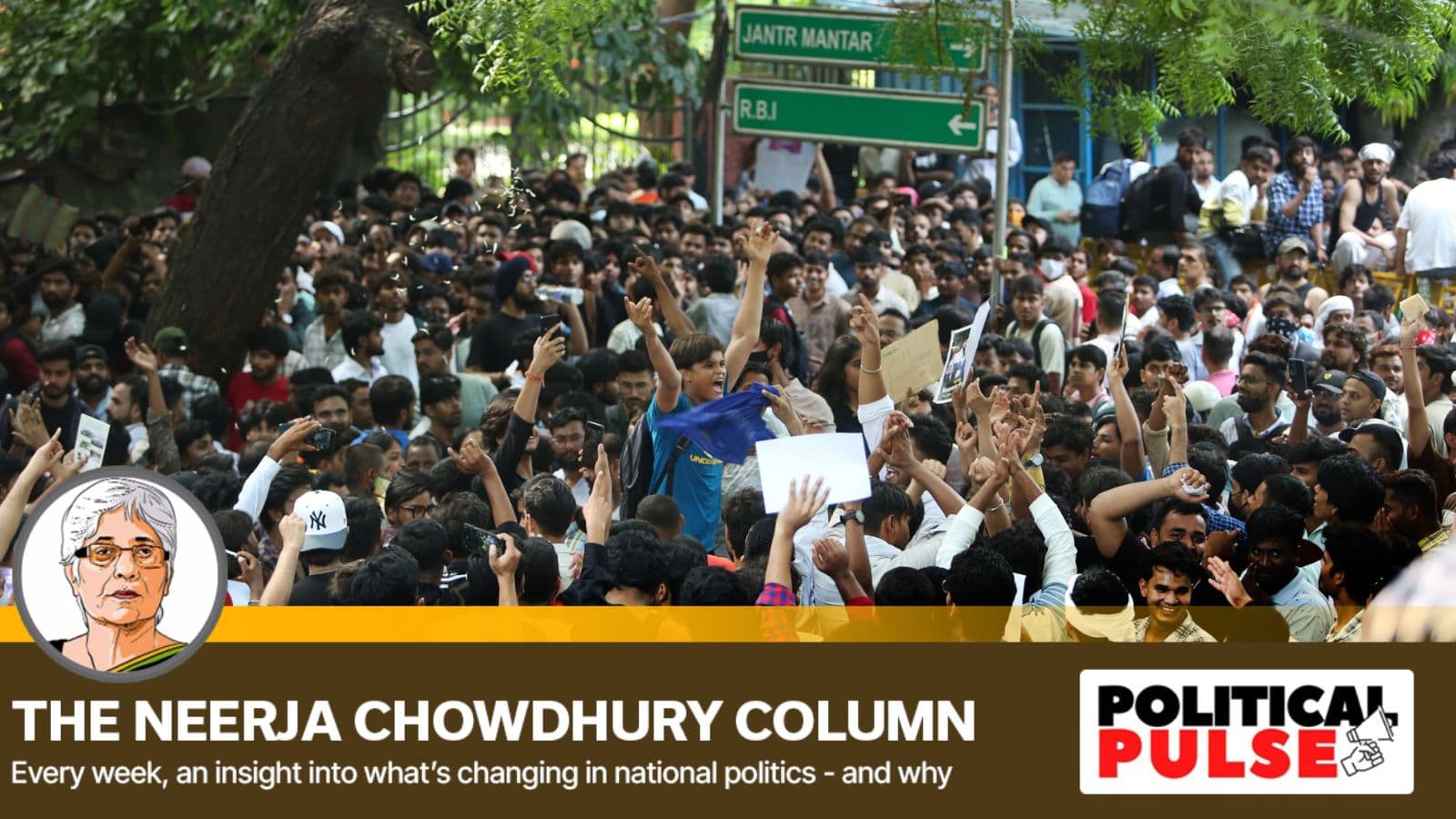
Three days after thousands of youths stormed central Delhi as they joined a march to Parliament called by the Cockroach Janta Party (CJP) demanding the resignation of Union Education Minister Dharmendra Pradhan over the NEET exam paper leak, only to face lathi-charge and tear gas shells used by the police and security personnel, their protest continues at Jantar Mantar.Following the Delhi High Court’s order, the fasting activist, Sonam Wangchuk, has already been shifted to a private hospital in Gurgaon from the government-run Safdarjung Hospital. Rahul Gandhi along with Priyanka Gandhi Vadra and other senior Congress leaders have already been released after a brief detention on Tuesday, when they held a dharna outside Prime Minister Narendra Modi’s residence on Lok Kalyan Marg, as was Samajwadi Party chief Akhilesh Yadav who also joined their sit-in.In his first remarks on the raging row on Tuesday, PM Modi, while addressing a meeting of the MPs of the BJP-led NDA, asserted that strong action was taken against those involved in the “grave offence” of paper leaks so that no one could play with the future of the youths. The government has also made a placatory gesture and reached out to the CJP leaders and Wangchuk – a move that could have been made several days ago. Why it did not do so, is a question on everyone’s lips. The Jantar Mantar protest has underscored the extent to which a faulty examination and education system is exercising the minds of the young in India today. It has now become increasingly clear that political parties would ignore the youth sentiments at their own peril. This also showed that even though the Modi government is within striking distance of mustering a two-thirds majority in Parliament, it must be prepared to face street protests in a young, diverse and aspirational country. The CJP protests seem to be different from other protests in the past. Firstly, these protests are not centred on the concerns of any one section of society, like what was seen in recent years – be it the year-long agitation of farmers (from Punjab, Haryana and west UP) against the now-repealed central farm laws, or the anti-CAA-NRC dharnas involving essentially the Muslim community. The CJP, which was launched by Abhijeet Dipke as a satirical, youth collective in response to the Chief Justice of India (CJI) Surya Kant’s courtroom use of the word “cockroach”, is different from other movements in post-Independent India. Whether it was the JP movement in 1973-74 for “total revolution”, or the Assam movement in the early 1980s against illegal immigrants from Bangladesh, or the Anna Hazare movement in 2011 for the Lokpal and public accountability – they had a clear leadership that helmed a popular struggle and, in each case, led to the formation of a political party which eventually came to power. The CJP is an online phenomenon in this social media age, trying now to become an offline outfit, which may be a formidable task. The recent CJP protests have touched not just those appearing for the NEET or JEE-IIT exams, who would number only a few thousands. The Jantar Mantar stir represented the voice of many more – of all those who feel left out of the system. An enquiry will reveal more about the lathi-charge against the protesting students during their march to Parliament, and the stone-throwing incidents. But the use of batons and tear gas against the protesting youngsters has taken their cause – and alleged police brutality against them – into every middle class home, with many parents asking,”What if my daughter had been there?” Wangchuk factor There were two turning points in the CJP’s current month-long agitation at Jantar Mantar. Wangchuk’s bid to join it on June 28, and go on an indefinite hunger strike, gave the movement a gravitas. Till then Dipke’s attempts to gain traction on the ground received a tepid response in different cities, considering that 22 million people had become the CJP’s online followers within a week
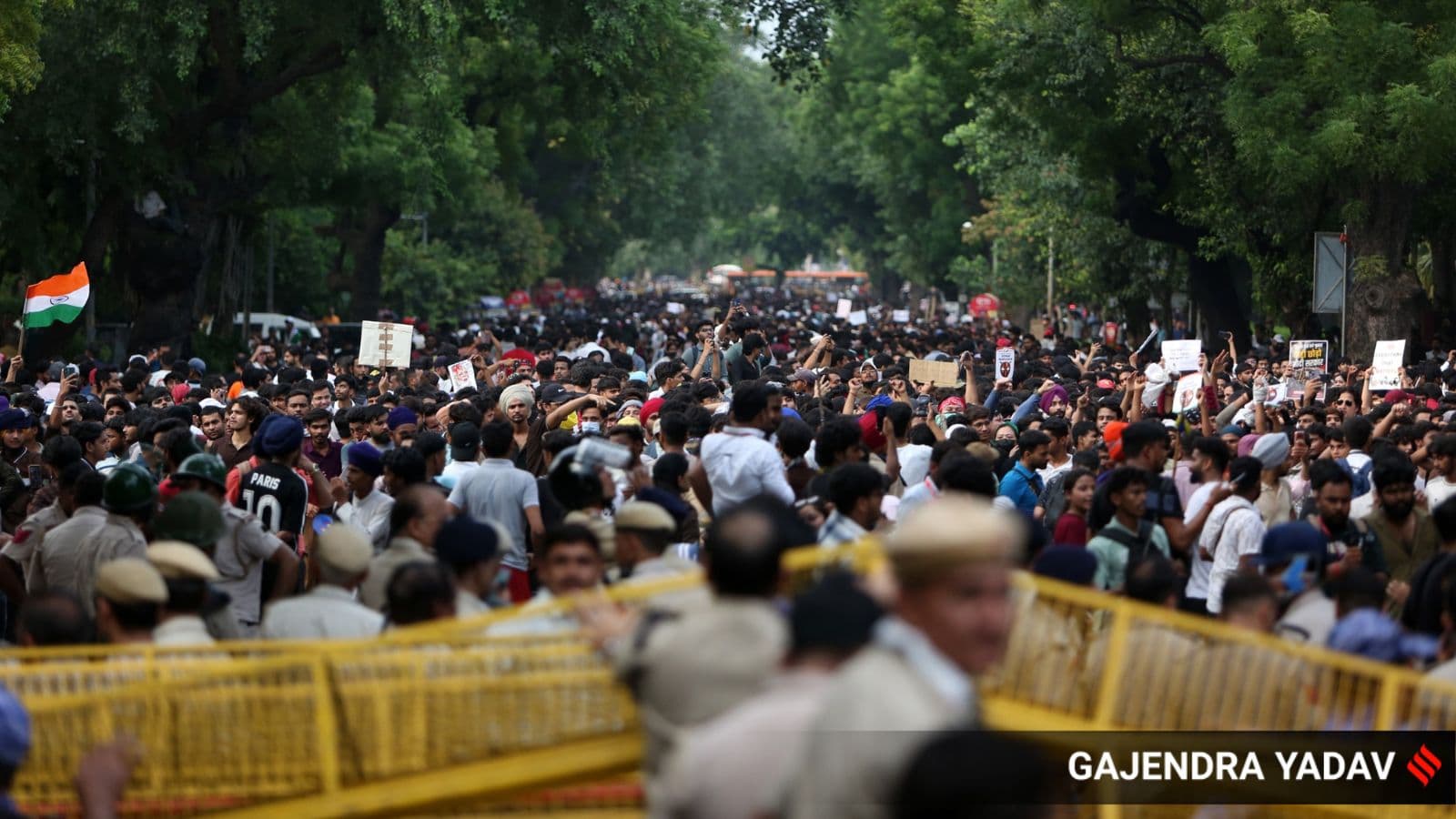
Heavy crowd of CJP protesters at Sansad Marg on Wednesday during the protest. (Express Photo by Gajendra Yadav) The protest at Jantar Mantar by the Cockroach Janta Party continued on Thursday even as the protesters remained resolute in their demand calling for the resignation of Education Minister Dharmendra Pradhan. The gridlock in the Parliament over the paper leak issue showed no signs of abating with the government signalling it was ready to discuss the issue in the Parliament. The Opposition, meanwhile, remaining firm in their demand for the minister’s resignation. A CJP delegation was scheduled to meet the government on Wednesday. However, the meeting couldn’t take place as the CJP delegation disagreed with the Centre’s proposal of holding the meeting at JP Nadda’s place. The health minister said there was no meeting on Wednesday, but added that the CJP delegation have submitted their points in writing.Story continues below this ad Activist Sonam Wangchuk remains on hunger strike at the Medanta Hospital in Gurugram. The government on Tuesday reached out to the activist, with union ministers Nadda and Jitendra Singh holding a meeting with Wangchuk. In a statement to the ministers on Wednesday, Wangchuk put forward his demands to end his strike and CJP protest, which included compensation for the families of students who died by suicide and a meaningful discussion in Parliament, and consideration on the resignation of the Education Minister. Live UpdatesStay updated with the latest - Click here to follow us on Instagram© IE Online Media Services Pvt Ltd Tags: CJP Protest delhi delhi metro Dharmendra Pradhan Jantar Mantar
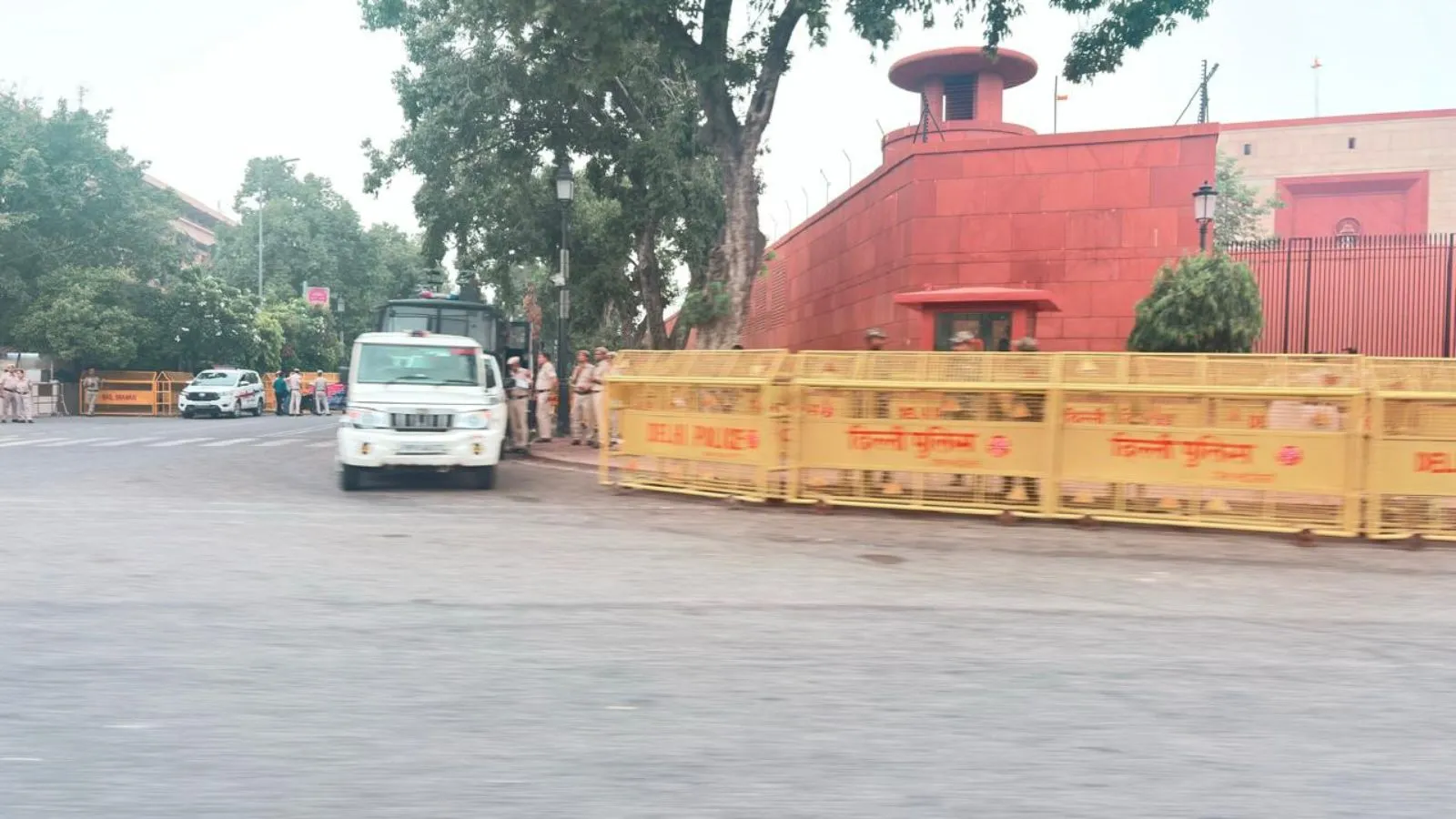
Delhi Police has declared that no permission was sought by the CJP to hold the protest march and imposed prohibitory orders under Section 163 of the BNSS. (Express photo)Riot control vehicles, barricades, deployment of over 1,200 Delhi Police personnel across VIP areas and borders of the Capital — Delhi looked like a fortress on Sunday while protesters led by the Cockroach Janta Party (CJP) at a packed Jantar Mantar prepared for a march towards Parliament on Monday. CJP founder Abhijeet Dipke, addressing the crowd, which only grew bigger, said that Monday’s march will be the biggest Independent India has seen. “Sonam Wangchuk has told me that the protest will only be successful if it is peaceful. There will be an even bigger crowd tomorrow (Monday), but that will also mean more responsibility for us,” he said.Dipke also asked people who thronged the protest site at Jantar Mantar on Sunday to inform volunteers about “troublemakers” in the crowd. He also asked supporters to carry the Indian flag, a copy of the Constitution, a rose or photos of B R Ambedkar or Mahatma Gandhi. With banners, slogans and the swelling crowd, Jantar Mantar on Sunday night had little space to even walk. Footpaths were lined with tents housing students who were on hunger strike for days or weeks. The protestors answered the extremely humid air with makeshift fans made out of cardboard or scraps of paper found on the ground. Police presence rose. Officers in batches were seen on both sides of the stage — not a common sight at the site so far. CJP spokesperson Vijeta Dahiya told The Indian Express that they were expecting around one lakh people to join Monday’s march. “We will leave for Parliament around 9 am,” he said, adding that some might stay back at the protest site “to protect it”. Asked if the Congress will join the march, Dahiya said that he was not sure, but that the CJP has asked all political parties to join.Story continues below this ad Meanwhile, on Sunday night, the area around the entrance of Parliament was visibly void of any public movement. A police officer deployed at the protest site said protesters won’t be allowed to even cross the Parliament Street police station — metres away from the protest site — let alone Parliament. Barricades, meanwhile, blocked multiple entry points of roads around the South Avenue Marg. Police personnel and reserve forces, battalions of the paramilitary forces, will stand on guard around Jantar Mantar, Parliament, roads leading to them and the border areas of the Capital on Monday, sources told The Indian Express. Around three ACP-rank officers, five to six inspectors and 50-100 personnel from the Delhi Police Crime Branch will monitor high-security areas.Story continues below this ad Police officers from local police stations will man the borders of Delhi with Uttar Pradesh and Haryana, as the CJP’s call for the march is expected to see participation from farmer organisations as well. Delhi Police has declared that no permission was sought by the CJP to hold the protest march and imposed prohibitory orders under Section 163 of the BNSS. “As the Monsoon Session of Parliament is commencing from July 20, strict security arrangements are in place to ensure public safety, security of protectees, and the protection of vital government installations,” DCP (New Delhi) Sachin Sharma said. “Any person violating prohibitory orders shall be liable for prosecution under Section 223 BNS and other applicable provisions of law. The Delhi Police appeals to all citizens to respect the law, refrain from participating in any unauthorised gathering or march,” DCP Sharma saidStory continues below this ad The CJP-led protest saw a steady rise in the number of participants after activist Sonam Wangchuk’s 20-day-long hunger strike was disrupted when the police took him to Safdarjung Hospital on Saturday. Devansh Mittal is a Correspondent at The Indian Express, based in the New Delhi City bur
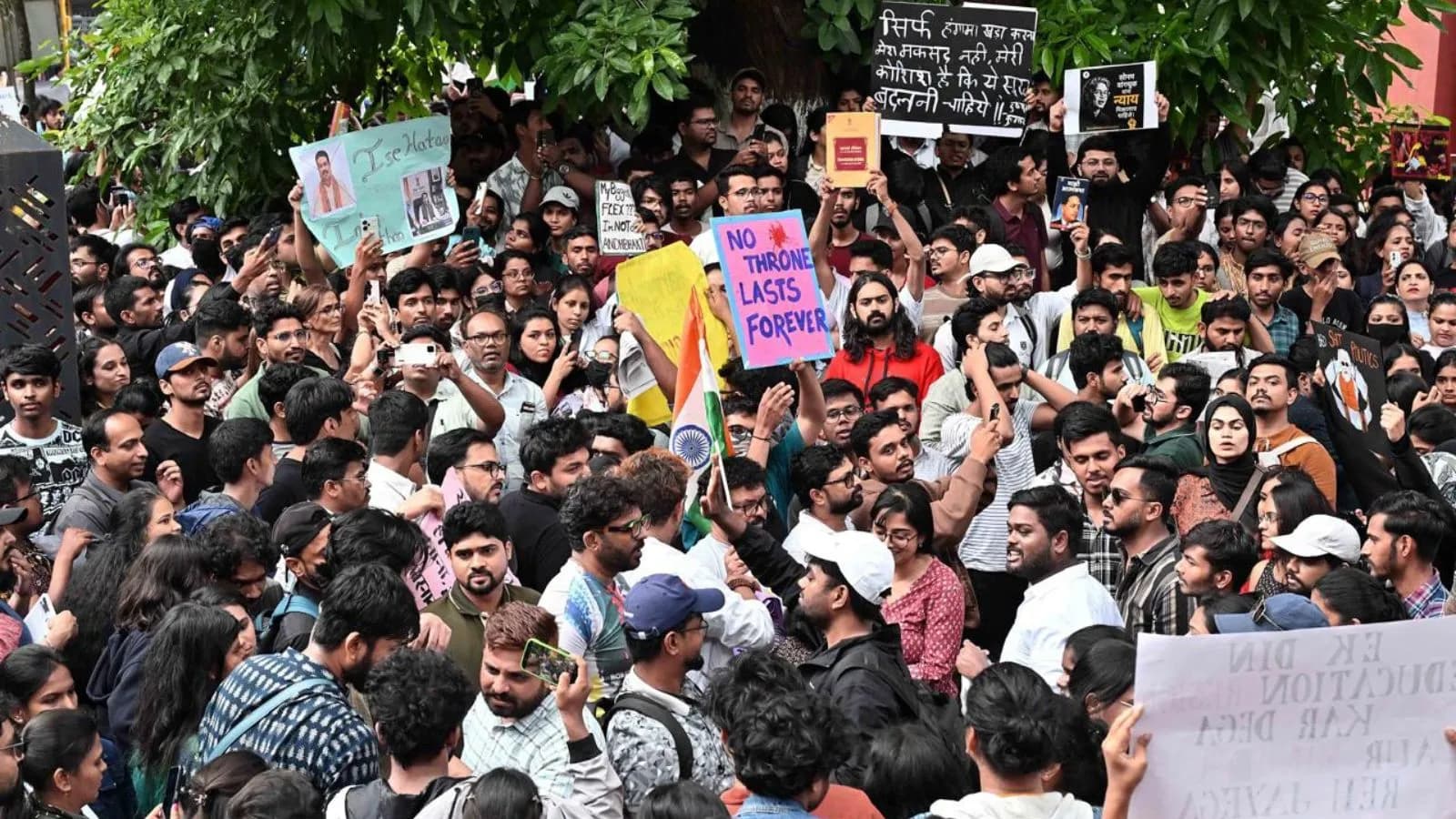
Students, youth, and parents held a demonstration at Balgandharva Chowk in support of Sonam Wangchuk on Sunday. (Express Photo By Pavan Khengre)By Shrijita Acharyya & Saniya SinhaSupporters of the Cockroach Janata Party (CJP) on Sunday organised a protest at Balgandharva Chowk in Pune expressing solidarity with activist Sonam Wangchuk, who been on a hunger strike in New Delhi since June 28, demanding the resignation of Education Minister Dharmendra Pradhan over the alleged NEET-UG paper leak. On Saturday, Wangchuk was taken to Safdarjung hospital in Delhi from the protest site and put under medical supervision. The protest in Pune called for reforms in the education system and demanded the resignation of Pradhan, with participants alleging a lack of accountability in handling issues affecting students. For Sachin Chaudhary, a 19 year-old who was among the protesters, the protest was about protecting students’ faith in the education system. “Students dedicate years of their lives to building their future. They deserve an education system that is fair, transparent and trustworthy. We believe Union Education Minister Dharmendra Pradhan should resign because students across the country deserve better leadership and meaningful reforms in education,” he said. Standing nearby, Rekha Chaudhary, 23, said her decision to join the protest was shaped by a lesson she had carried with her since childhood. “When I was in Class 8, one of my teachers told us that India has one of the largest youth populations in the world and that our generation has the potential to give the country a strong presence globally. That stayed with me all these years. Today, I feel we are moving in the opposite direction. Things can go wrong in any system, but what matters is whether those in power acknowledge their mistakes and act on them. Governments earn public trust by accepting responsibility, not avoiding it,” she said. For Vira Mahajan, 21, the protest was about ensuring that the movement was not seen as one limited to the national capital. “This isn’t only Delhi’s issue. Every student is affected by the education system. We wanted to show that people in Pune stand in solidarity with Sonam Wangchuk and that this conversation belongs to the entire country,” she said.Story continues below this ad Vedant Rathore, 23, said young people needed to take ownership of the future they wanted to build. “History has shown us that rights are never simply handed over. They are earned when people come together and demand change. Students have every reason to speak up—not just for education reforms, but for a future with better opportunities,” he said. The demonstration later turned tense after police intervened to disperse the gathering, leading to commotion at the site. Several protesters were detained and taken away in police vehicles as officers cleared the protest venue. Police, however, maintained that the action was taken after protesters allegedly refused to comply with instructions and was necessary to maintain law and order. Among those at the protest was Minu Sadwedkar, 56, who has spent the last 30 years as an educator. Having met Wangchuk personally during his work in education, she said his commitment inspired her to join the demonstration. “I have been a teacher for three decades, and I have seen how education shapes generations. I have also seen Sonam Wangchuk’s dedication to improving learning for young people. As educators, we cannot remain silent when students are losing faith in the system,” she said.Story continues below this ad Calling the protest an exercise in democratic participation, Romila Yadav, 25, said, “Remaining silent when people are raising genuine concerns only allows those concerns to be overlooked. We are here to peacefully express our concerns and ask for dialogue and meaningful action. Democracy doesn’t end with casting a vote; it also means speaking up when something deserves attention.”
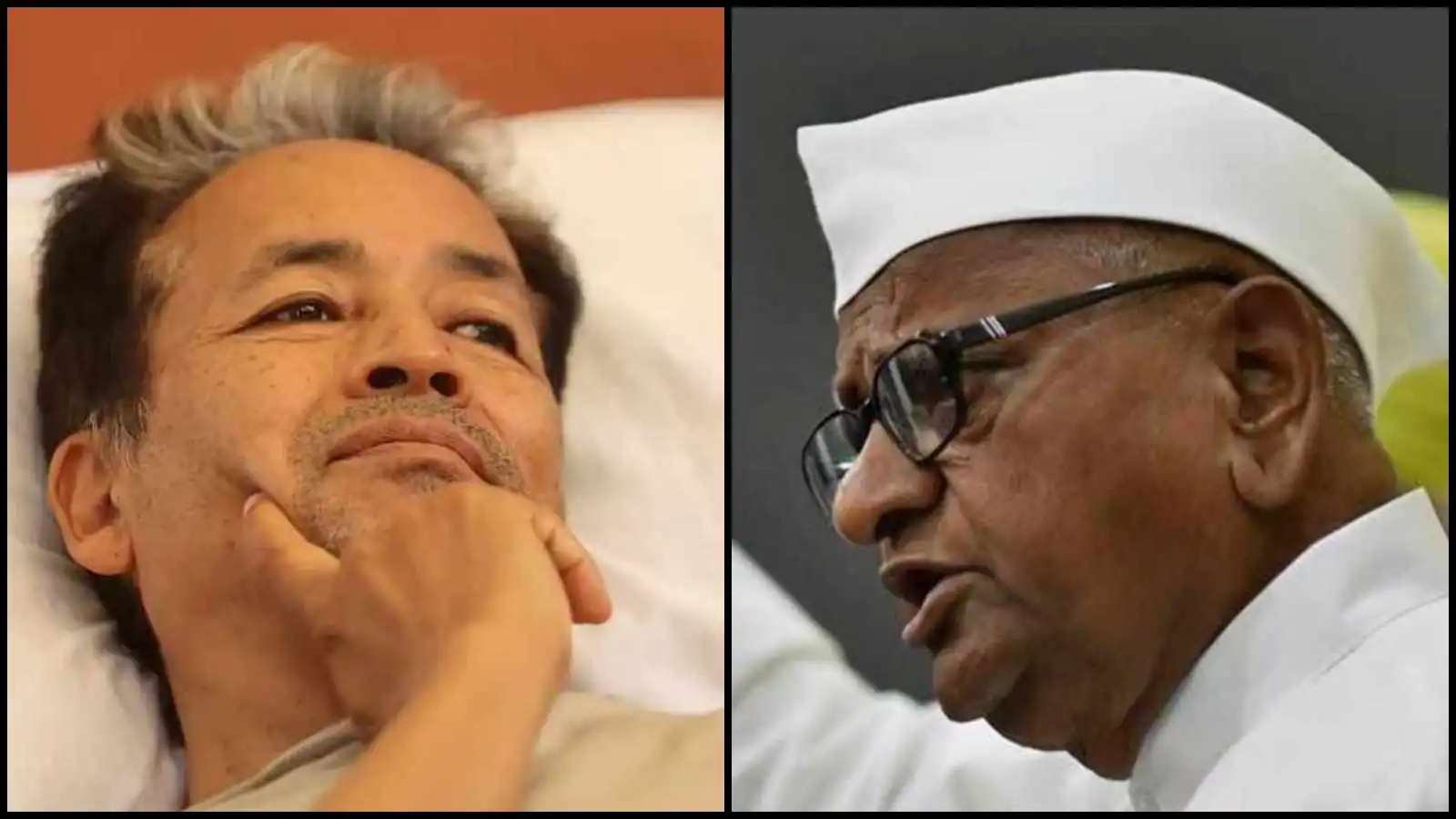
New DelhiUpdated: Jul 19, 2026 09:58 AM IST Activist Anna Hazare Saturday said Centre should hold talks with educationist Sonam Wangchuk who is on indefinite hunger strike demanding Union Education Minister Dharmednra Pradhan’s resignation over NEET paper leak. In a video message on Saturday, Hazare said, “The government should not test his limits. Say yes or no (to his demands) but what is wrong in holding discussions.” Delhi Police shifted Wangchuk to a government hospital on Saturday after his health deteriorated on the 21st day of his hunger strike at Jantar Mantar. In 2022, Hazare caught everyone’s attention when he started a hunger strike for Lokpal Bill on April 5 that year in Delhi. It ended in just 96 hours on April 9, when the government agreed to form a joint committee to draft the Jan Lokpal Bill. His second, longer hunger strike began on August 16 at the famous Ramlila Maidan. It ended on August 28, 12 days later, after Parliament passed a resolution in favour of his core demands.
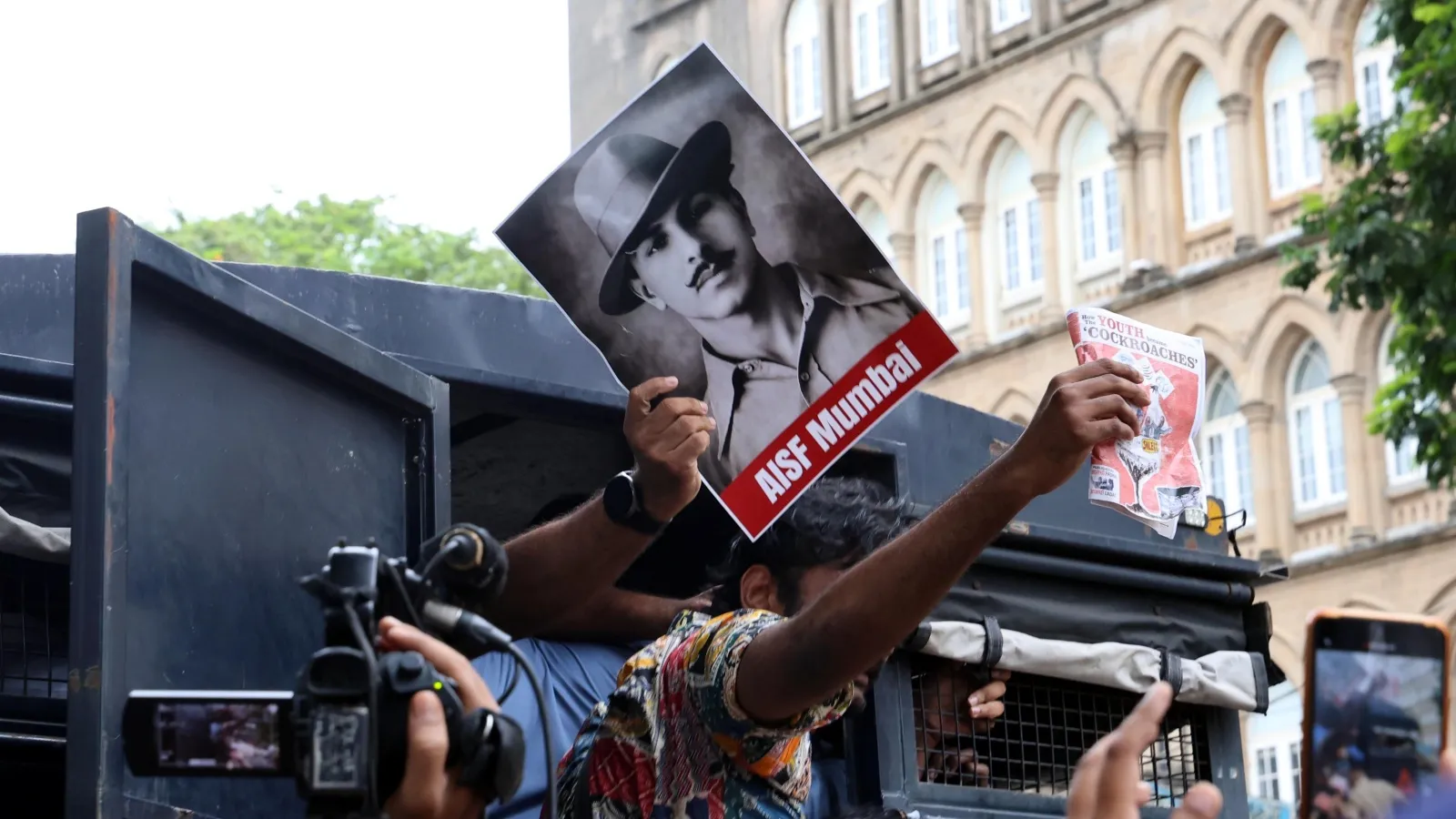
MumbaiUpdated: Jul 19, 2026 06:53 AM IST Protesting All India Students’ Federation (AISF) activists being detained after a clash broke out between them and the police in Mumbai on Saturday. (Ganesh Shirsekar)Student organisations and Opposition supporters staged separate protests in south Mumbai on Saturday against the Delhi Police’s removal of activist Sonam Wangchuk from his hunger strike at Jantar Mantar, with Mumbai Police detaining protesters and registering cases against organisers for holding demonstrations without permission. Under the banner of Mumbai Against Suppression of Students (MASS), members of the Students’ Federation of India (SFI), All India Students’ Federation (AISF), Aamchi Padhai Aamchi Ladai and other groups gathered outside Azad Maidan to condemn Wangchuk’s detention and express solidarity with students protesting over alleged irregularities in the NEET-UG 2026 examination.According to organisers, around 100 people participated in the protest. They alleged that police detained around 50 protesters shortly after the demonstration began, citing the lack of permission, before later releasing them. “We organised this protest against the illegal detention of Sonam Wangchuk at Jantar Mantar. We stand in solidarity with him and condemn the actions of the Delhi Police as well as the detention of students protesting here in Mumbai,” an SFI member said. In a statement, MASS alleged that the Centre was attempting to suppress democratic protests and student movements. The organisation also appealed to Mumbaikars to join future demonstrations in support of Wangchuk and the Cockroach Janta Party (CJP). Separately, a group of 15 to 20 Nationalist Congress Party (Sharad Pawar) workers staged a protest near Mantralaya over the same issue. Marine Drive police detained the protesters and later released them after registering an FIR against four to five organisers and issuing notices. Police also registered a case against seven persons after around 25 CJP supporters assembled outside Azad Maidan without permission and raised slogans against the Delhi Police’s action. The organisers have been booked under charges of disobedience to a public servant’s order, wrongful restraint, unlawful assembly and relevant provisions of the Maharashtra Police Act.Story continues below this ad Wangchuk, who had been on an indefinite hunger strike at Delhi’s Jantar Mantar in support of the CJP’s demand for the resignation of Union Education Minister Dharmendra Pradhan over alleged NEET-UG irregularities, was shifted to Safdarjung Hospital on Saturday after his health deteriorated. While the Delhi Police said the move was made on medical grounds, protesters alleged he was forcibly removed to end the agitation. Saturday’s demonstrations came a day ahead of Shiv Sena (UBT) chief Uddhav Thackeray’s scheduled public meeting at Shivaji Park in support of the CJP, signalling growing political and student support for the agitation in Mumbai.
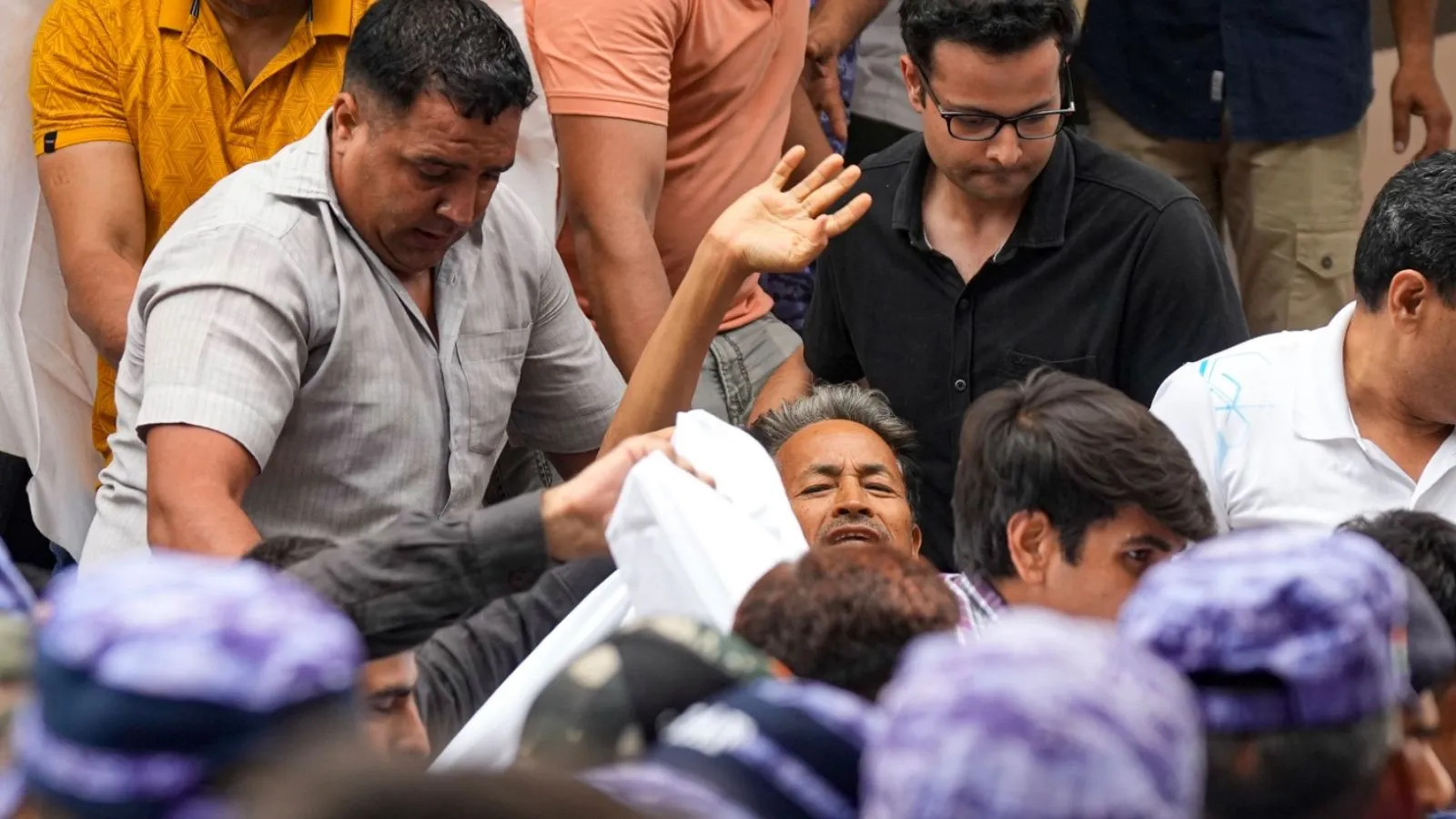
The 59-year-old activist had been on an indefinite hunger strike since June 28 as part of a protest organised by the Cockroach Janta Party (CJP) to demand reforms in the education and examination systems besides the resignation of Union Education Minister Dharmendra Pradhan over the NEET paper leak.Wangchuk, who had also gone on a 21-day fast in 2024 to press for Ladakh’s inclusion in the Sixth Schedule of the Constitution, has now emerged as a national figure of protest, insisting that he will continue his fast after his release. By undertaking his hunger strike, Wangchuk seemed to follow a long tradition of fasting in India, most famously associated with Mahatma Gandhi, which was also adopted by several prominent figures with varying degrees of success. Bhagat Singh and Jatin Das’s fast A defining fast of colonial India is associated with the country’s revolutionaries. In June 1929, Bhagat Singh, Jatin Das, Rajguru and Sukhdev went on an indefinite fast in Lahore jail against its inhuman conditions. They demanded that they be treated like political prisoners and not common criminals, asserting their right to access newspapers and books. On the 64th day of the fast, Jatin Das died. Historian Bipan Chandra recalled in India’s Struggle for Independence that when his body was taken from Lahore to Calcutta (now Kolkata) by train, crowds thronged every station, and a crowd of more than 6 lakh people accompanied the body to the cremation ground. Bhagat Singh continued his fast even after his comrade’s death, refusing to yield. He continued his fast for 116 days – till the British were forced to improve prison conditions. Gandhi’s fast against separate electorates In 1932, the British granted separate electorates for the Depressed Classes (now, Scheduled Castes) through the Communal Award. B R Ambedkar sought separate electorates – he thought that the majority in any constituency being general category people, the candidates from the Scheduled Castes (SCs) would get defeated unless the electors on reserved seats are also from the SCs – but Mahatma Gandhi took serious objection to the British move. Gandhi was in Yerawada jail at that time and went on an indefinite fast on September 20, 1932, saying separate electorates would drive a permanent wedge in the Hindu society. The answer, he said, was eradication of untouchability, not separating voters. His fast led to concerns globally and within India, which led to the Poona Pact being hammered out within six days. Gandhi ended his fast on September 26, and a higher political reservation for the SCs than proposed by the Communal Award was accepted, but with joint electorates. This system prevails in the country for the SCs and the Scheduled Tribes (STs) till date. Gandhi’s fast against communal riots A short but impactful fast undertaken by Mahatma Gandhi was against raging Partition violence in Bengal in September 1947. He had earlier boycotted the Independence celebrations, concerning himself more with dousing the flames of riots that accompanied it as well as Partition. Gandhi was in Beliaghata in Calcutta when violence broke out at the end of August 1947. By September 1, Ram Guha says in his book India After Gandhi, 50 people were dead. Gandhi decided to go on an indefinite fast against the violence on September 2. His fast had immense impact – people, both Hindus and Muslims, began to come and lay down arms before him. Within three days the violence ended. Lord Mountbatten said that one unarmed man had been more effective than 50,000 troops in Punjab. The Statesman, then a British-owned daily, said, “… never in a long career has Mahatma Gandhi, in our eyes, fasted in a simpler, worthier cause than this, nor one calculated for immediate effective appeal to the public conscience”, recalls Guha in his book. Potti Sriramulu’s fast for Andhra Pradesh Behind the carving of Andhra Pradesh from the Madras Presidency was a fast by Gandhian Potti Sriramulu – who won the state after losing
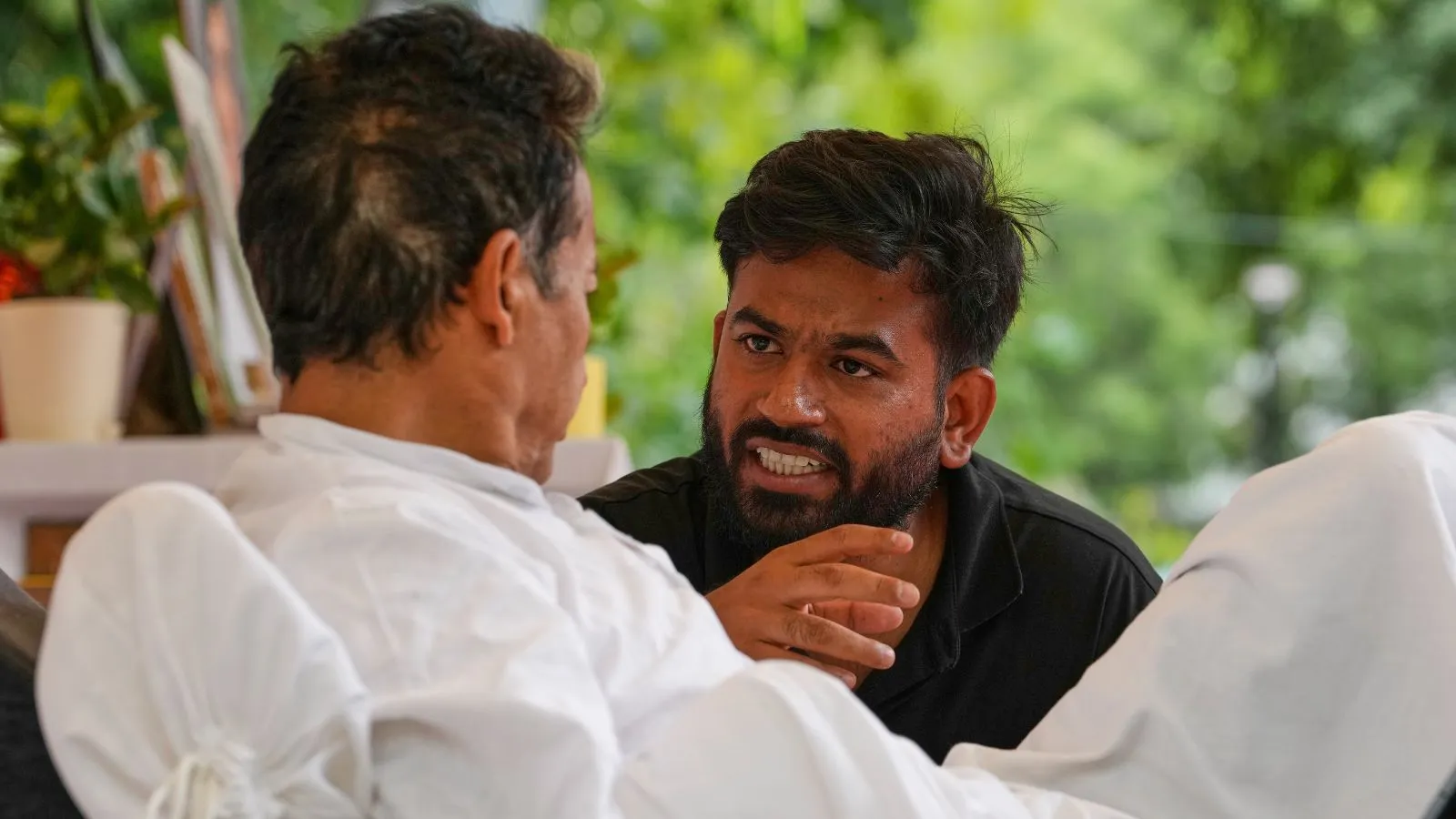
New DelhiJul 18, 2026 10:52 PM IST Cockroach Janta Party leader Abhijeet Dipke has announced hunger strike after Sonam Wangchuk was taken to hospital. It was around 1:20 pm. Cockroach Janta Party (CJP) founder Abhijeet Dipke was addressing the crowd at Jantar Mantar on Saturday. He claimed that the Delhi Police “tactfully” removed climate activist Sonam Wangchuk earlier in the day from the site. “You say you were concerned about his health. If you weren’t doing anything wrong, Toh wardi mein kyun nahi aaye (why didn’t you come in uniform),” he questioned. A woman kept moving closer to the stage as he spoke. Once she was at the stage, close enough to Dipke, she threw ink at the CJP founder. The 32-year-old was taken by surprise. Identified as Barkha Trehan, she was dragged away from the stage by CJP supporters and taken to the Parliament Street police station, said officers. Trehan, who describes herself a men’s rights activist, chanted ‘Jai Shree Ram,’ while being taken away from the protest site, officers added. She alleged that she was beaten by the CJP supporters as she left the venue.On her X account, Trehan has heavily criticised CJP in her posts. In her bio, she describes herself as a “Hindu entrepreneur”, and the ‘Voice of Men.’ The last time she was seen at Jantar Mantar was on December 25, 2025, when she participated in a protest organised by her NGO ‘Purush Aayog,’ supporting former BJP MLA Kuldeep Senger, who was accused of raping a 17-year-old girl in Uttar Pradesh’s Unnao, according to officers. She is a regular on TV debates and also writes for media outlets. Referring to an earlier attack in Jaipur, when he was slapped during a CJP protest, Dipke said that he won’t be deterred by such attacks. Soon after the incident, referring to the colour of the ink that was thrown at him, he posted on his X account, “Blue is my colour.” Meanwhile, police said that officers merely removed Trehan from the protest site and did not detain her. According to police, they let her go and no case was registered.

New DelhiJul 18, 2026 09:27 AM IST Top news on July 18, 2026.Good morning!The friendship and the brotherhood between Andrés Iniesta and Lionel Messi turned bitter on the fields of Buenos Aires years ago. They had been comrades in 489 games. However, that day, playing for Argentina, Messi showed little mercy to Iniesta, the goalscorer in the final against the Netherlands, or his other Barcelona friends. “It was the last time Messi confronted Spain – the country where he spent most of his years from 13 to 34, the La Masia Academy of Barcelona that moulded and nurtured his ideas and ideals of football, the club that gave him an identity, where he made friends and bonds of a lifetime,” describes Sandip G. So, how did Argentina manage to retain Messi? A VHS tape, a mistranslated fax reading “LEONEL MECCI,” and a coach cold-calling every Messi in the phone book: here’s the story of how Argentina found him first. With that, let’s move on to the top five stories from today’s edition: 🚨 Big Story Activist Sonam Wangchuk, who has been on an indefinite hunger strike at Jantar Mantar in New Delhi for the past 20 days, was taken to Safdarjung Hospital in South Delhi on Saturday morning amid a heavy police deployment at the protest site. Wangchuk’s fast comes as part of the protest organised by the Cockroach Janta Party to demand the resignation of Union Education Minister Dharmendra Pradhan over the NEET paper leak. The development comes a day after Anurag Kumar assumed charge as the Delhi Police Commissioner. Delhi Police said the move was carried out in compliance with the directions of the Delhi High Court and on expert medical advice, citing the activist’s deteriorating health condition. Meanwhile, Cockroach Janta Party leader Abhijeet Dipke has alleged he was “beaten up and put under detention by the Delhi Police”. Another CJP leader, Saurav Das, confirmed the developments, and said Dipke was detained from the place he was staying at. This development comes two days ahead of a planned march to Parliament on July 20 by Wangchuk and his supporters. Follow live updates here. Legacy: Wangchuk, by observing the fast, seems to be carrying forward his father, Sonam Wangyal’s, legacy. Wangyal had fasted for 16 days in 1982 and again for five days in 1984 to demand Scheduled Tribe (ST) status for the people of Ladakh. The 1984 hunger strike of Wangyal ended when then Prime Minister Indira Gandhi flew to Leh to meet him. She persuaded him to end his fast, offering him a glass of soft drink. Gandhi also expressed her intent to accept his demand, but was assassinated later that year. ⚡ Only in Express Two years after the Kargil War, with the main instigator, General Pervez Musharraf, in power in Pakistan, Indian Prime Minister Atal Bihari Vajpayee decided to invite the Pakistani official to India. This would result in what is referred to as the Agra Summit that lasted from July 14 to 16, 2001. The Summit marked a fleeting moment when it looked like the two countries would finally solve some of their problems by talking across a table. However, the talks ended spectacularly, with Musharraf cutting short his visit, followed by one of the lowest points for India-Pakistan relations. 25 years later, the Summit holds valuable lessons — on both the possibilities and futility of dialogue when the mistrust runs as deep as it does between the two nations. 💡 Express ExplainedStory continues below this ad Official economic data on India’s Q1 growth is set to be released at the end of August. In his weekly column, Udit Misra highlights that according to the latest official data series released by the Ministry of Statistics and Programme Implementation, India’s economy grew at over 7 per cent in each of the past three years — 2022-23, 2023-24 and 2024-25. This figure is crucial because it is the bare minimum that India needs to achieve its long-term goal of becoming a developed country by 2047. However, given the severe economic turbulence, thanks

Discussion (0)