
Loading dispatches...
← Return to NewsroomPolitics
M.P. Parameswaran, renowned nuclear scientist and CPI(M) theorist, dies at 92
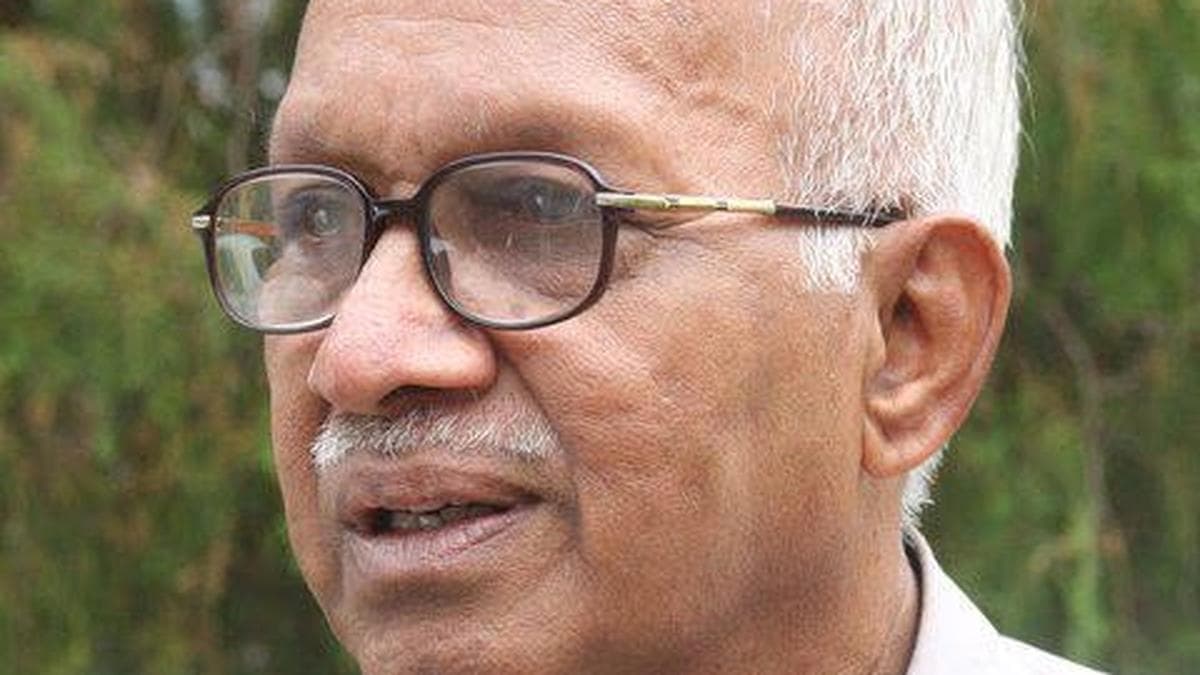
M.P. Parameswaran | P. Parameswaran, former nuclear scientist who later became prominent as a CPI(M) theorist, people’s science movement activist and writer, passed away in Thrissur, Kerala, on Tuesday (August 11, 2026). He was 92.Mr. Parameswaran was one of the earliest and foremost members of Kerala Sasthra Sahithya Parishad (KSSP). His ideas on the ‘fourth world’ had triggered wide debate and eventually led to his expulsion from the CPI(M) in February 2004.Born on January 18, 1935 in Thrissur district, Mr. Parameswaran secured his Bachelor’s Degree in Engineering from the College of Engineering, Thiruvananthapuram, in 1956 and his PhD in Nuclear Engineering from the Moscow Power Institute in 1965. He was a scientist with the Bhabha Atomic Research Centre (BARC), Mumbai, from 1957 to 1975.After leaving BARC in 1975, he became a full-time activist and one of the best-known faces of KSSP.Wide areas of interestHis areas of interest included environment, energy, education and rural development. He has numerous books to his name, many of which have won accolades.Mr. Parameswaran was instrumental in the formation of the All India People’s Science Network (AIPSN), a network of people’s science organisations spread all over the country. He was its secretary and later, president. He also helped build the Bharat Gyan Vigyan Samiti, an organisation responsible for massive literacy campaigns across India.Book triggers debateMr. Parameswaran’s book Fourth World triggered a massive debate within the CPI(M), of which he had been an active member. In it, he envisioned a world founded on decentralised democracy and economic production and detached from consumerism.In February 2004, the CPI(M) expelled Mr. Parameswaran on serious charges of indiscipline, finding that he had deviated from the party line.Mr. Parameswaran has written several popular science books in Malayalam and English on topics as wide-ranging as atomic energy, radioactivity, astronomy, mathematics, political science and ecology. Published - August 11, 2026 03:42 pm IST
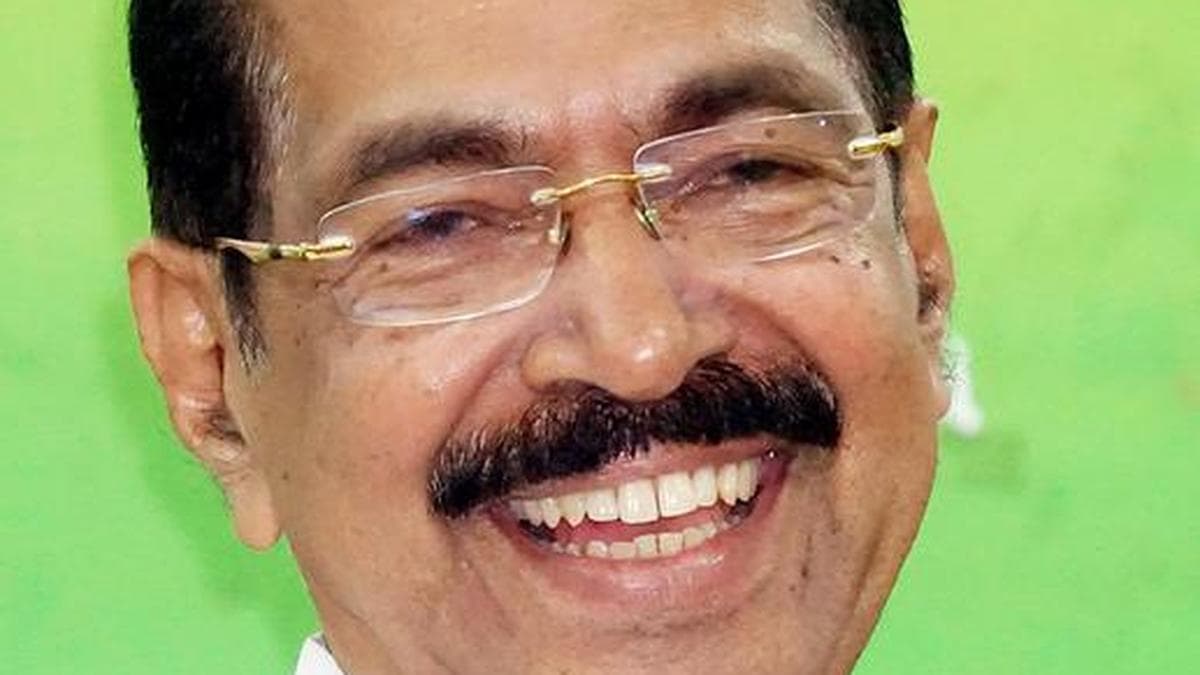
Electricity Minister Sunny Joseph | CPI(M) State secretary M.V. Govindan had said that the candle light protest will be held at 7 p.m. on Sunday, urging all households to be a part of it.Responding to the CPI(M) announcement, Mr. Joseph described it as mistimed and said that the people will reject it. Mr. Joseph went on to add that the State government and the Kerala State Electricity Board were in the process of making arrangements to resolve the power crisis. Power curbs were required only on a few days, and the people were informed about it. However, the CPI(M) propaganda that the UDF government was responsible for the crisis has no basis, he said.The cancellation of a clutch of long-term power supply contracts totalling 465 MW during the LDF government’s term is one of the reasons for the present crisis. Further, the LDF government had also failed in taking control of the Maniyar small hydroelectric project in Pathanamthitta district from Carborundum Universal Ltd, he said.The previous government had failed in restarting operations at the Barapole hydel project. The UDF government is taking steps to resolve the issues related to this project, Mr. Joseph said.Meanwhile, the CPI(M) is also planning to organise protests against the operational crisis faced by local bodies under the UDF government due to Plan Fund cuts, he said. On July 30, the LDF’s people’s representatives will take out a march to the Secretariat. Protests will be held at panchayat offices on August 1 and 3. Published - July 24, 2026 11:53 pm IST

Kerala Chief Minister V.D. Satheesan | K. Nithin Kerala Chief Minister V.D. Satheesan on Wednesday blamed the ongoing power crisis in the State partly on the cancellation of a clutch of long-term power supply contracts during the previous CPI(M)-led LDF government term.These contracts, which took effect during the 2011-2016 Oommen Chandy-led Congress government’s period, had ensured uninterrupted power supply at र4.29 per unit for 25 years. After the cancellation of the contracts (in May 2023 when the LDF was in power), the LDF government had purchased power at per unit-prices of र8 to र14, including from the Adani Group, said Mr. Satheesan, adding that the old low-priced contracts would have stood Kerala in good stead during the present crisis.“The then Chief Minister (Pinarayi Vijayan) who is now the Opposition Leader has not explained why the contracts were cancelled. The then Power Minister (K. Krishnankutty) also has not explained why,” Mr. Satheesan said.On being pointed out that it was the Kerala State Electricity Regulatory Commission that cancelled the contracts for a total of 465 MW citing procedural lapses, Mr. Satheesan said that CPI(M) leaders were on the commission at the time. He also pointed out that the contracts were cancelled eight years after they were signed.The cancellation was “one of four major reasons” for the ongoing peak-time power shortage experienced by Kerala, he said. The other reasons being, an 800-1,000 MW increase in demand compared to last year, low water storage in the reservoirs for hydro power generation on account of the poor monsoon rainfall, and the increased nationwide demand for electricity in the market due to El Nino-linked warm temperatures, he said.“Storage in the reservoirs is only 28% now compared to 61% last year during the same period,” Mr. Satheesan said. Compared to 2024-25, Kerala has recorded an increase of 10 million units (mu) in daily consumption, he added.On power restrictionsHe also slammed the Opposition LDF’s accusations against the UDF government with respect to the power curbs imposed in the State. “Will any new government, on coming to power, deliberately let the people remain in darkness for one hour?” he asked.The Chief Minister’s comments on the issue have come at a time when power curbs have been imposed in Kerala after 6 p.m.Electricity Minister Sunny Joseph had stated last week that the State was currently facing a 500 MW to 600 MW deficit in availability. Unavoidable circumstances had forced the State government to introduce power curbs on a “limited scale” and attempts were being made to overcome the crisis, Mr. Joseph had said. Published - July 22, 2026 02:27 pm IST

Services of Green Line of Namma Metro in Bengaluru were disrupted between 8 and 8.45 AM on the stretch from Yeshwanthpur to Madavara, on July 21, 2026. | Normal services resumed at 8.45 a.m.According to BMRCL, the disruption began around 8 a.m. when a power failure affected services in the northern section of the Green Line. During the outage, trains operated only in a short-loop service between Silk Institute and Yeshwanthpur stations, while services between Yeshwanthpur and Madavara remained suspended.The disruption affected commuters during the morning peak hours, with passengers forced to wait or seek alternative modes of transport.In a public statement, BMRCL said its technical teams were working on a war footing to restore normal operations at the earliest. The corporation expressed regret for the inconvenience caused, and thanked commuters for their patience and cooperation.At 8.45 a.m., BMRCL announced that power supply had been restored and that normal revenue services had resumed across the entire Green Line, including the Yeshwanthpur–Madavara section.The Green Line, which connects Silk Institute in the south to Madavara in the north, is among Namma Metro's busiest corridors and carries thousands of commuters every day.Between late June and early July 2026, Namma Metro faced a series of technical disruptions that crippled peak-hour commutes on both major corridors. On June 23, a major technical fault on a train in the underground section near Cubbon Park halted Purple Line services, forcing the Bengaluru Metro Rail Corporation Limited (BMRCL) to suspend operations between Majestic and Trinity until the following morning.Just three days later, on June 26, another disruption affected the Purple Line at Cubbon Park after a commuter's metal chain became lodged in a train door guideway, delaying services for 17 minutes and leading to severe overcrowding at several stations.The Green Line was affected on July 9, when a signalling fault near Banashankari during the morning peak hours triggered widespread train delays. Published - July 21, 2026 09:51 am IST
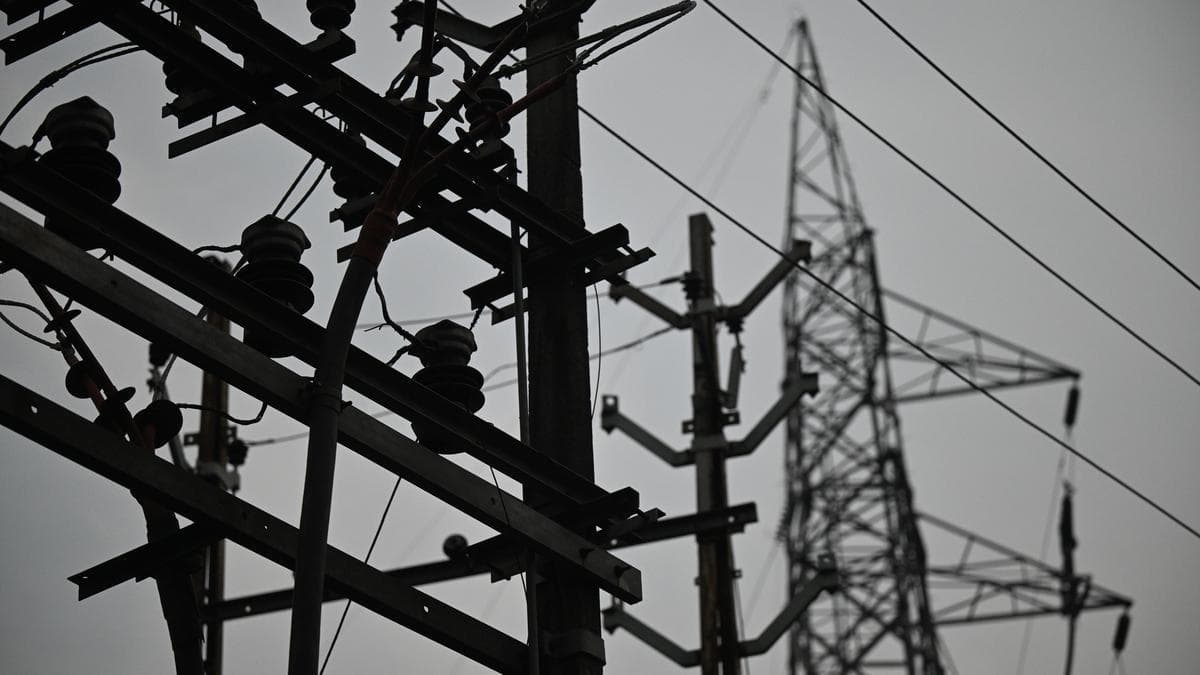
As Kerala continues to grapple with a power crisis, the State will starting receiving 200 MW from two sources from July 19. | At a public hearing here, commission chairman T.K. Jose and member B. Pradeep wanted the KSEB to ensure a “stable and predictable” pattern for the load restrictions. The KSEB representatives at the hearing told the commission that the power utility will comply with the direction.The commission’s instruction has come at a time when the KSEB is facing flak for the seemingly arbitrary nature of the load-shedding and the number of times they are imposed in a day. Mr. Pradeep said that it is possible for the KSEB to make a “reasonable estimation” of the next day’s demand beforehand and plan the load restrictions accordingly. The public faces uncertainty when they don’t know when the power will go out, Mr. Pradeep said, urging the KSEB to explore the possibility of maintaining a pattern for the restrictions. Mr. Jose said alerting the public beforehand will prove especially useful to a large section such as patients.Kerala to receive 200 MW from SundayAs Kerala continues to grapple with a power crisis, the State will starting receiving 200 MW from two sources from Sunday (July 19, 2026).A senior KSEB official informed the commission about this at a public hearing on the KSEB proposal to procure a total of 200 MW from NTPC Vidyut Vyapar Nigam Ltd (NVVNL) and Power Pulse Trading Solutions Ltd at ₹5.96 per for a one-year period.Given the emergency in the power sector, the commission had already given the KSEB verbal assurance to start the procurement although formal orders were expected to follow, Mr. Jose said.The short-term power purchase is for the period till July 14, 2027.The KSEB proposal was based on the assessment that that there could be a “persistent base round-the-clock (RTC) power deficit of around 200 MW throughout the year, coupled with the weak monsoon and low reservoir levels, which are expected to adversely impact power availability.”At Saturday’s hearing the commission asked the KSEB whether there was any alternative to load-shedding and whether they were, from a financial perspective, profitable or loss-making for the power utility. Published - July 18, 2026 05:25 pm IST
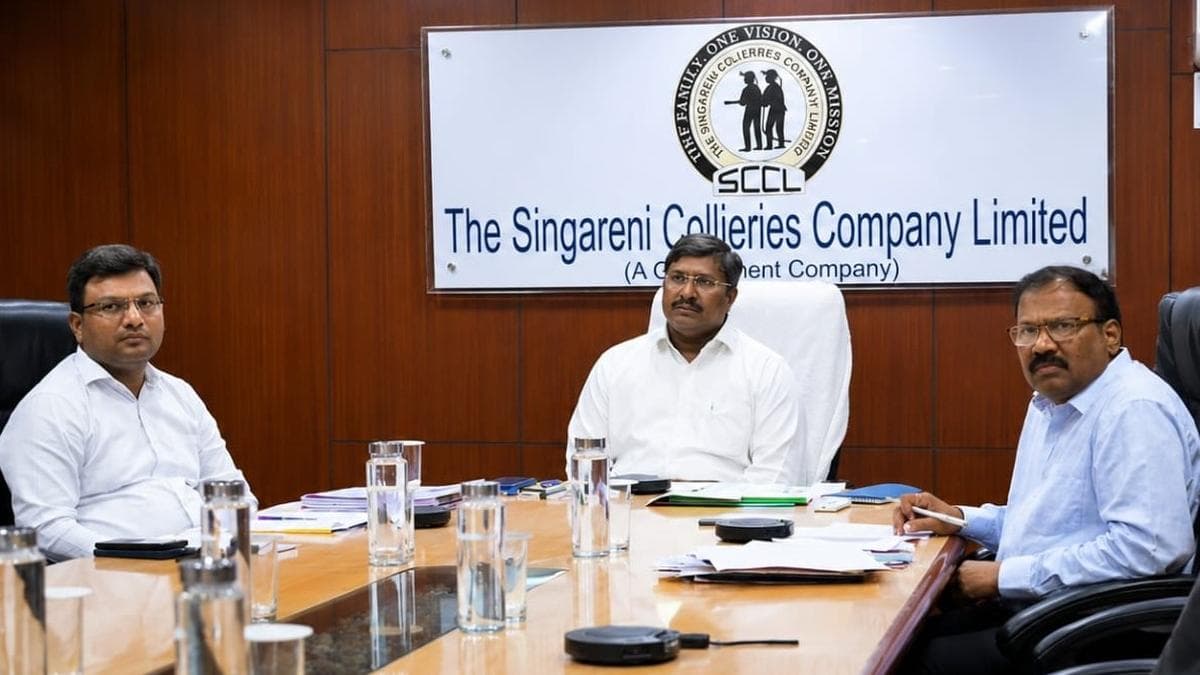
CMD of SCCL Buddhaprakash Jyoti participating in a virtual meet on coal supplies to generations station in Telangana on Friday. | Chairman and Managing Director of SCCL Buddhaprakash Jyoti on Friday told them to accord the highest priority to coal transportation and further enhance supplies to thermal power plants which have significantly increased generation to meet the in view of the prevailing El Niño conditions.A coordination meeting through video conference was held between SCCL CMD and CMD of the Telangana Power Generation Corporation Ltd (TG-Genco) S. Harish, along with senior officials of both the organisations to review the current power demand, coal production, transportation and other related issues.Speaking at the meeting, Dr. Buddhaprakash Jyoti said the rising electricity demand under the prevailing El Niño conditions would require close coordination between SCCL and TG-Genco to ensure adequate coal stocks at all thermal power stations in the State. He stated that special officers would be designated to closely monitor uninterrupted coal transportation and resolve operational issues on a priority basis.Officials of SCCL’s Marketing Department informed the CMD that around 72% of the coal produced by SCCL was presently being supplied to TG-Genco thermal power stations, NTPC Ramagundam and the Singareni Thermal Power Plant. However, considering the increasing power demand and keeping the State’s interests in mind the CMD directed that greater priority be accorded to meet the coal requirements of Telangana’s thermal power stations and, if necessary, coal earmarked for supply to other States be suitably reallocated.The CMD further instructed the officials of both the organisations to continuously review the coal requirements of power stations and maintain close coordination on coal production, transportation, railway rake availability and road transport logistics to ensure seamless fuel supply.He also asked the General Managers of all SCCL Areas to take all necessary measures to prevent any disruption to coal production in opencast mines during the monsoon season. He stressed that coal production should not decline under any circumstances and that quality standards must be maintained without compromise.Dr. Harish reviewed the coal stock position at TG-Genco thermal power stations and stressed that local senior officials should resolve bottlenecks, if any, in coal transportation proactively to ensure uninterrupted coal movement. Published - July 18, 2026 05:13 am IST
A view of the Kudankulam Nuclear Power Plant, in Tirunelveli district, Tamil Nadu. File | Newswire agency Reuters reported that the breach was part of an infiltration into Reliance Anil Dhirubhai Ambani Group’s Reliance Infrastructure Limited, and contained 14.3GB of data on the power plant’s operations, including floor plans.The data has been hosted on World Leaks, which is a Dark Web site hosted by cybercriminals who infect vulnerable firms with ransomware, threatening to leak the data if the ransom is not paid. The site claimed that the ransom was indeed not paid, and so it leaked the data. The Hindu opened the site and reviewed the index of files, which amount overall to 1.2TB, a slice of which pertained to the Kudankulam plant.Was the reactor affected by the data leak?“The files do not pertain to the core reactor’s operations, which are the most sensitive in a nuclear setup,” Nuclear Power Corporation of India Limited (NPCIL) said in a statement. “NPCIL reiterates that the information claimed to be available in the public domain pertains only to conventional Balance of Plant (BOP) common service facilities and does not relate to any nuclear safety, or nuclear security-related systems or information,” it said in a statement.A spokesperson for the Reliance Group told The Hindu that it “was informed by Yotta Data Services Private Limited (Yotta), its third-party data centre service provider, of a cybersecurity incident involving an attempted ransomware attack that resulted in a partial breach of data hosted on one of Yotta’s servers,” and that “Yotta has confirmed that enhanced security monitoring and preventive controls are now in place. The Company has directed Yotta to conduct a detailed investigation and submit a report.”“No ransomware execution, data loss or lateral movement occurred,” Reliance said in a stock exchange filing. The files reportedly include multiple drawings of “blueprints and supplier details, meeting and inspection records, equipment reviews,” and a $112 million insurance policy against terrorist attacks, though it is unclear what the premium amount for this insured sum is.What did Yotta say about the cyber incident?Yotta, which runs data centres across the country, characterised Reliance as its “customer’s private cloud environment,” but said it took steps to address the infiltration as it was detected on May 29.“Yotta’s managed endpoint security controls detected suspicious activity on a file server of our customer, Reliance Infrastructure,” the company said in a statement to The Hindu. “We acted immediately: the suspicious process was terminated, and the affected server was isolated, preventing the suspected ransomware from executing. Our technical assessment confirmed no evidence of ransomware encryption and no lateral movement to any other server or system within the customer’s private cloud environment. The incident was limited to this single customer-managed server, with no impact on any other Yotta customer or on Yotta’s shared cloud platforms, AI cloud infrastructure, datacentre infrastructure or other services.”Why does the Kudankulam data leak matter?The revelations have sparked “absolute commotion” among top officials at the power plant, even as they downplay the impact of the findings.The plant has commissioned two 1,000 Mwe VVER reactors, allowing for a power supply of up to two gigawatts. The reactors are built in partnership with the Russian firm Rosatom, and the government is planning four more such units, which would triple the power production at the facility. Published - July 16, 2026 01:54 pm IST


Discussion (0)