
Loading dispatches...
← Return to NewsroomPolitics
Amit Shah inaugurates India’s first immersive language museum in Kolkata
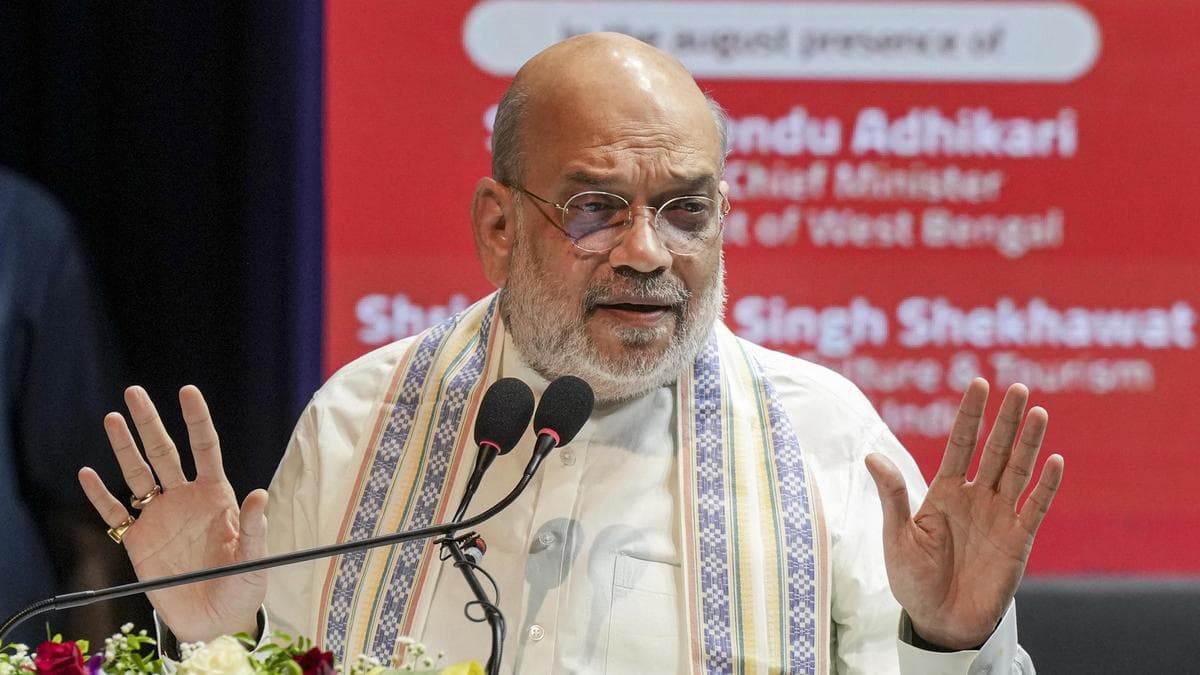
Union Home Minister Amit Shah addresses the inauguration ceremony of the Museum of Word (Shabdalok) at the National Library campus in Kolkata, Sunday, July 19, 2026. | Developed by the National Library under the aegis of the Union Culture Ministry, the first immersive language museum in the country, also known as Shabdalok, celebrates India’s rich linguistic heritage and showcases the evolution of its oral and written traditions through interactive and technology-driven exhibits.“Our Prime Minister [Narendra Modi] has prioritised both Vikas (development) and virasat (heritage). This museum is a step to preserve India’s rich linguistic and cultural heritage. Our language carries our heritage, and through languages you can understand a country’s culture,” Mr. Shah said, addressing the inauguration event. The museum features nine galleries exploring different facets of the history of languages and their influence on India’s civilisation and culture. It seeks to present language as a living entity that has continuously shaped society while also being shaped by it.The first phase of the museum chronicles the diversity of Indian languages, scripts, and literature. Rather than a conventional repository, it has been designed as an immersive cultural experience using digital displays, holograms, and motion-sensor technology to engage visitors.Shabdalok celebrates India’s 22 official languages and traces their journey from oral traditions and ancient manuscripts to printed works and modern electronic texts, highlighting the country’s enduring linguistic diversity. “Our officials are also working to digitise over 1 lakh manuscripts that they have collected; Bengal was the centre of India’s cultural revolution, but it lost its way in the middle. Foreign powers occupied them. It is time to revive our culture,” Mr. Shah said. The Union Minister also praised the newly formed Bharatiya Janata Party government in West Bengal. “I have been closely monitoring West Bengal for the last nine months, and it is becoming the prakash stambh (guiding light) of the country. I am confident that the vision of a sonar Bangla (golden Bengal) would be realised under the leadership of Chief Minister Suvendu Adhikari,” Mr. Shah said. Published - July 19, 2026 05:03 pm IST
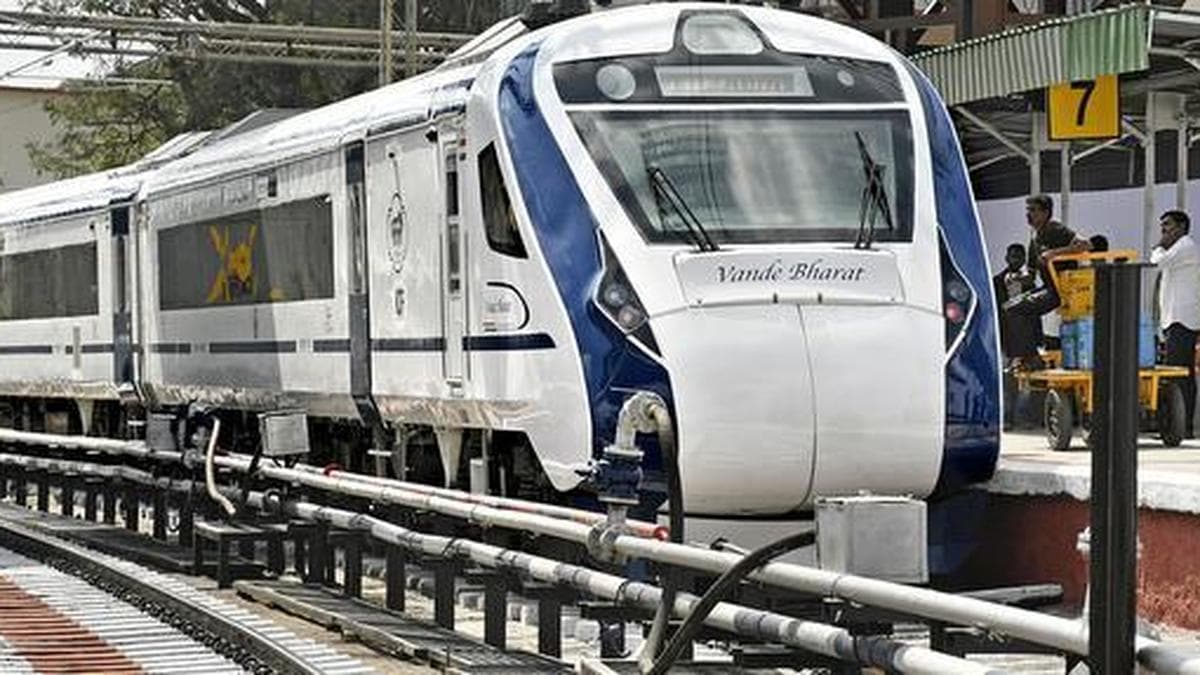
The long-awaited launch of the proposed Bengaluru – Mumbai Vande Bharat Sleeper service has once again come into focus, with railway passenger groups calling on the Union government to expedite the introduction of the premium overnight train.Adding to the anticipation, two Vande Bharat Sleeper trainsets intended for the proposed service are currently stationed at the Krantivira Sangolli Rayanna (KSR) Bengaluru City Railway Station. The trainsets, built by BEML, have been moved to the coaching yard, where they are undergoing preliminary inspections and other pre-commissioning checks before entering passenger service.Despite the arrival of the rakes in Bengaluru, railway officials indicated that a few procedural matters are still pending before the trains can be introduced.Not handed over yetOfficials from the South Western Railway (SWR) said the trainsets have not yet been formally handed over to the Indian Railways by BEML, and therefore cannot be commissioned for commercial operations at this stage.“The Vande Bharat Sleeper trainsets presently stationed at KSR Bengaluru City Railway Station are yet to be officially handed over by BEML to the Indian Railways. Until the formal transfer process is completed and all the mandatory technical and operational clearances are obtained, the trains cannot be inducted into regular passenger service. In addition, the final decision on the routes these trainsets will operate is still under consideration,” SWR officials said.Railway officials said that the final operating corridor for the two trainsets has not yet been confirmed. However, the proposed Bengaluru – Mumbai Vande Bharat Sleeper is expected to run via Solapur and Kalaburagi, bringing down the travel time between the two cities to nearly 15 hours, considerably faster than many existing overnight services.Earlier, Union Railway Minister Ashwini Vaishnaw had indicated that the Bengaluru – Mumbai Vande Bharat Sleeper service was expected to be introduced soon. The train is expected to provide a faster and more comfortable overnight travel option, strengthening rail connectivity between Karnataka and Maharashtra while benefiting passengers travelling from both the southern and northern parts of the State.Concern over delayRailway activists, however, have expressed concern over the delay in the rollout.K.N. Krishna Prasad, a railway activist and the founder of the Karnataka Railway Vedike, said that passengers have been eagerly waiting for the announcement to translate into reality. “For several months, people have been hearing that the Bengaluru – Mumbai Vande Bharat Sleeper is on the verge of launch, yet there has been no concrete progress. Once a new service is announced and the trainsets are ready, the process should move forward without prolonged delays.”“Every postponement creates uncertainty among passengers who are looking forward to a faster overnight connection, and it weakens public confidence in such announcements. We hope the remaining formalities are completed quickly so the service can begin at the earliest,” he added.Nearly six years after the introduction of India’s first Vande Bharat Express in 2019, the country’s first commercial Vande Bharat Sleeper service commenced operations on January 22, 2026. Operated by the Northeast Frontier Railway, the inaugural train connects Kamakhya (Guwahati) and Howrah, covering a distance of about 972 km in nearly 14 hours.The Vande Bharat Sleeper has been developed for overnight travel on routes spanning 800 km to 1,200 km. Over time, it is expected to replace conventional premium long-distance trains, including the Rajdhani Express, on selected corridors by offering faster journeys and upgraded onboard comfort. Each 16-coach Vande Bharat Sleeper train consists of 11 Third AC (3AC) coaches, four Second AC (2AC) coaches and one First AC (1AC) coach, with a total carrying capacity of 823 passengers. The seating capacity includes 611 berths in 3AC, 188 in 2AC, and 24 in 1AC.The fully a
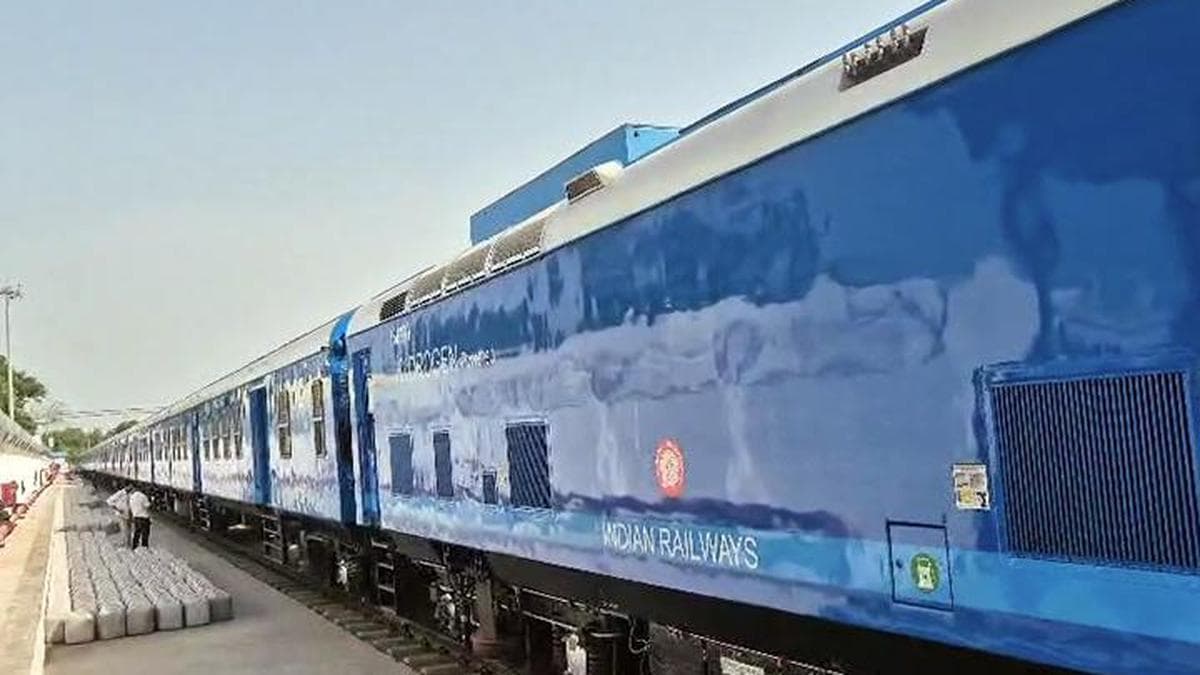
The story so far: Prime Minister Narendra Modi will flag off India’s first Hydrogen powered train running between an 89-km stretch of Jind and Sonipat in Haryana on July 17. “This milestone marks the latest chapter in the evolution of how Indian Railways from coal and steam to cleaner, more sustainable sources of energy,” Union Minister of Railways Ashwini Vaishnaw stated in a media interaction earlier this week. What is a Hydrogen-powered train? India’s First Hydrogen Fuel Cell Train is a ten-coach train set with capacity to carry around 2,600 passengers. The train generates its own electricity onboard using hydrogen, the cleanest fuel known. Unlike conventional electric trains that draw power from overhead lines, the Hydrogen Fuel Cell Trainset generates electricity onboard through a chemical reaction between hydrogen and oxygen, with water vapour as its only by-product. The train is run on operational speed of 75 kmph on the Jind–Sonipat section and a design speed of 110 kmph. Unlike conventional diesel locomotives that burn fuel to generate mechanical power, a hydrogen train carries a small power plant onboard in the form of a Proton Exchange Membrane (PEM) fuel cell. Hydrogen stored in the train’s cylinders combines with oxygen from the surrounding air inside the fuel cell, producing electricity that powers the traction motors and turns the wheels. The only direct by-products of this electrochemical reaction are water vapour and heat. There is no combustion, no smoke and no tailpipe carbon emissions. An interior view of India's first hydrogen-powered train, the NaMo Green Rail, showing hydrogen storage tanks and fuel cell systems ahead of operations on the Jind-Sonipat route, in Haryana on Wednesday (July 1, 2026). | Each DPC houses fuel cells, lithium iron phosphate (LFP) batteries and hydrogen storage cylinders that work together to provide traction power, while ensuring reliable operation under varying operating conditions.The two power cars, one at each end, produce 1,200 kW (1600 hp) of power per DPC, together enough to push the entire train up to 110 km per hour. Where does the Hydrogen to fuel the train set come from?The dedicated hydrogen storage, compression and dispensing facility established at Jind will support refuelling operations, Indian Railways has stated. Just like a petrol pump or a CNG station, the train needs a place to refuel. Firstly, hydrogen is produced on site through electrolysis, in which water is split into hydrogen and oxygen using electricity at the green hydrogen plant, and is then stored safely in dedicated storage tanks. In the second step, the hydrogen is compressed to 500 bar, enabling a larger quantity to be stored in a smaller volume. Finally, it is dispensed through two independent hydrogen dispensers at a regulated pressure of 350 bar, allowing both Hydrogen Driving Power Cars to be refuelled simultaneously and reducing turnaround time. The facility stores nearly 3,000 kg of hydrogen at a time, sufficient to support regular operations of the train set, and its storage and supply system has been approved by the Petroleum and Explosives Safety Organisation (PESO).Research Designs and Standards Organisation (RDSO) has formulated the technical specifications and leading the design approval process and the trainset has been integrated by M/s Medha Servo Drives, while Integral Coach Factory (ICF) contributed to the train’s theme and exterior design.Is it safe to travel on a train running on gas that is inflammable?Hydrogen is colourless, odourless, tasteless and non-toxic. However, it is highly inflammable and needs to be handled with real care. Because hydrogen cannot be seen or smelled, the entire safety design of this project is built around detecting even the smallest leak instantly. The train and the plant are fitted with devices that continuously watch for hydrogen lea
India’s first privately developed orbital-class rocket Vikram-1 at the first launch pad of the Satish Dhawan Space Centre in Sriharikota. | Private space launch company Skyroot Aerospace on Thursday (July 16, 2026) announced that it will attempt to launch Vikram-1 from the space port’s first launch pad at 11.30 a.m.“We have done everything that could be done to test Vikram-1 on the ground. On July 18, we are eager to see how Vikram-1 performs in a real flight environment for the first time. This is our first test flight, and we will be getting valuable data from it. This will be foundational to Skyroot’s aspirations of establishing a launch cadence. We are excited to see this through,” Pawan Kumar Chandana, Co-founder & CEO, Skyroot Aerospace.Skyroot said all stages of Vikram-1 have been successfully integrated and stacked on the launch pad. Following this, the final integrated checks of the vehicle on the launch pad from Skyroot’s launch control centre have been completed along with the interface checks with all the telemetry ground stations and tracking radars.Vikram-1 is a seven-storey-tall, multi-stage orbital launch vehicle built with an all-carbon composite structure and powered by in-house-developed propulsion systems, including 3D-printed engines and high-thrust solid-fuel rocket boosters. Designed to carry small satellites weighing up to 350 kg to Low Earth Orbit (LEO), its first test flight is targeting a 450 km orbit at 60° inclination.Vikram-1, will carry technology demonstration payloads from Grahaa Space, Cosmoserve, DCubed and Skyroot’s own SCOPE, along with Cosmos Diamonds’ artwork “Cosmic Bloom” and a micro-art piece.“The small satellite launch market is deeply constrained on the supply side. At the same time, the demand for services enabled by satellites in space will only continue to grow, and that is where Skyroot’s opportunity lies. The clearance of Vikram-1 for flight following rigorous testing is a defining milestone in India’s space journey. This first test flight marks the beginning of Skyroot’s aspiration to open space for all,” Mr. Chandana said.Naga Bharath Daka, Co-founder & COO, Skyroot Aerospace, said that the launch represents the hopes and hard work of around 1,000 people, the contributions of over 400 suppliers, and nearly 3,000 days of resolve to build a global offering from India.“This test flight will show us how every technology we have developed over the years performs in real-world conditions. With the in-flight data gathered from this mission, we will return to the shop floor to learn, improve, and build further. This test flight is the first step towards creating a reliable, on-demand launch company for the world from India,” he said. Published - July 16, 2026 05:28 pm IST



Discussion (0)