
Loading dispatches...
← Return to NewsroomWorld
Brad Pitt's children are dropping their dad's surname - here's why I did the same
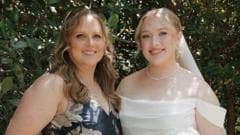
For more than a decade, Hannah had been known by two surnames.On social media, sports rosters, email and restaurant bookings, she was Hannah Leonard, sharing her surname with her mother.But legally, and at work and school, she had a different surname - the one she inherited from her father.Hannah's parents divorced when she was a toddler and she hasn't had much of a relationship with her dad since. She says she last saw him seven years ago and isn't sure where he's living now.Last month, the 25-year-old in California legally changed her surname to Leonard-Ripley, removing the reminder of her father and replacing it with a name combining her mother's maiden name and her husband's surname.That same month, two of the adopted children of Hollywood divorcees Angelina Jolie and Brad Pitt undertook an important legal step in the process to drop their father's surname, something they began earlier this year.In April, Zahara Marley Jolie-Pitt and Maddox Chivan Jolie-Pitt, aged 21 and 24, filed documents to remove their father's surname from their names, according to media reports.In June and July, the siblings carried out the legal requirement of publishing their name-change intention in a local paper for four weeks.Both have already used the surname Jolie in some circumstances, including Zahara during her graduation ceremony earlier this year and Maddox in his credits on a film. Another of Jolie and Pitt's six children, Shiloh, changed her surname to Jolie in 2024.Zahara and Maddox will have to wait until their court appearances in September to get the approval from a judge to change their names.Jolie met Pitt on the set of the 2005 film Mr and Mrs Smith, married in 2014 and filed for divorce in 2016 following an incident on board a private plane. Jolie told Vogue, external in 2020 that she had left Pitt for the "wellbeing" of her family.A source close to Pitt told BBC News that he regretted how things had unfolded with his family and that, while he was "heartbroken", he respected his children's decisions.Hannah says she had no emotional connection to her previous surname, and it often confused people when she would use two surnames in different contexts.She had wanted to legally change her surname for years, but had been deterred by the cost. Getting married gave her the push to finally make the change."I've never felt like my last name reflected the love that encompasses my life," Hannah says. "And I wanted to make sure that my name reflected that. My mother's love and also my husband's love are very abundant and so important to me.""Surnames have a close connection to identity," says University of Chester lecturer Dr Harry Parkin, who has studied the history of names. When people change theirs, it can be a sign that they want to disconnect and disassociate from it, he adds.Maggie, from Lincolnshire, told BBC News that she had no emotional connection to her previous surname, which she had inherited from her father.Her parents split up when she was a child and while she isn't estranged from him, she says they've never been close.She adds that she had always "hated" the surname she inherited from her father, which included a profanity that she was teased for at school. "I didn't want to be associated with it," she says.Changing her surname to match her mother's felt like a relief and Maggie says she now feels "more like myself"."I wanted to be part of my mum's family," she says.Dr Becca Bland, a family counsellor and coach specialising in estrangement, says that people who are distanced from a relative or are estranged might choose to change their surname as a psychological defence mechanism to "help you separate yourself from something that could be problematic or traumatic".She says changing their name would mean they wouldn't have to keep repeating a surname that they may associate with bad memories or that they felt connected them to a family they didn't identify with.People who are estranged from their parents may feel a range of
Back in Ribandar, Eunice moves slowly through her garden, brushing dried leaves from a kokum plant. At the mention of orchata, her wrinkled face breaks into a smile.“I first drank orchata in my early teens; it was a family favourite,” she recalls.It wasn’t made at her home. Her family would source bottles prepared by the Coelhos from a handful of shops in Panaji: Cappuccina Bar and Restaurant, Farm Products and Lija Camotim.“We would especially buy it during summer, and drink it with lots of ice.”One particularly difficult summer, after giving birth to her first child, she remembers surviving almost entirely on orchata. Years later, her daughter-in-law would find herself doing the same.“It had been almost 30 years since it was last available,” she says. “I was craving its sweet, almondy flavour and decided to try making it myself.”What followed was years of trial and error. “I tried different proportions, and after five to seven summers, I finally got it right,” she says, beaming. She laughs at the memory. She simply wanted to taste the orchata she remembered growing up.During the COVID-19 pandemic, demand grew unexpectedly, turning it into a small, pre-order-based business.Eunice uses a mix of almonds and cashews to prepare her concentrate. The cashews, she says, lend it a creamier texture. She blends the concentrate with equal parts milk before diluting it with water for a silkier consistency.Guilhermina Vas, Eunice's friend and former colleague, grew up in Panjim's Altinho neighbourhood. Small-framed and animated, she jumps into the conversation before Eunice has finished speaking, eager to offer another memory.Her gold-rimmed glasses slide to the edge of her nose as she laughs. "Orchata isn't for everyone. In my house, I was the only one who liked it."Her neighbour, Dona Zenia, who lived two houses away, celebrated her own birthday every year with homemade orchata."I used to look forward to that day just for the orchata," she laughs. "My sisters, however, didn't care for it much."“Ice makes all the difference,” they both insist.I ask Eunice what drinking orchata feels like after all these years, what memory it stirs.“It makes me happy,” she says simply.“Doesn’t it remind you of your mother?” Guilhermina asks.Eunice fiddles with the base of her glass. Her smile softens, and for a moment her eyes glisten."I immediately think of my mother, returning home in the afternoons after playing, asking her for a glass of orchata," she says.She pauses.“One glass was never enough.”Her mother, she says, would take a bottle she had stored in the family’s icebox and prepare a glass for her.“It reminds me of simple, happy times in the home I grew up in at Chorao, just across the river.“When people drink it, they often close their eyes. It transports them back to childhood, or to a period 20 or 30 years ago, when a grandmother or an aunt would make it,” says Oliver. “It feels deeply personal, attached to a memory, to a person, or to a moment.” When people drink it, they often close their eyes. It transports them back to childhood by OLIVER FERNANDES, THE GOAN KITCHEN Sitting on Eunice’s verandah, it becomes clear that orchata survives because of the people who remember making it, serving it and drinking it together. The recipes can be recreated. The worlds they belonged to cannot.The older generation that held on to these recipes has passed on, while the younger generations who inherited them moved away from Goa in search of better economic prospects.The social lines that once determined who could access certain ingredients have also shifted. Ingredients that once signified privilege became more accessible, and the exclusivity gradually lost its allure.The Goa that produced those orchatas has changed, too. Overtourism and rapid development have replaced fields with resorts and apartment blocks, altered coastal skylines and reshaped once-quiet villages.At the river, a speedboat whirs past. Ribandar, with its pastel-hued homes and winding


Discussion (0)