
Loading dispatches...
← Return to NewsroomPolitics
Telangana CM congratulates Hyderabad-based Skyroot Aerospace on Vikram-1 successful test flight
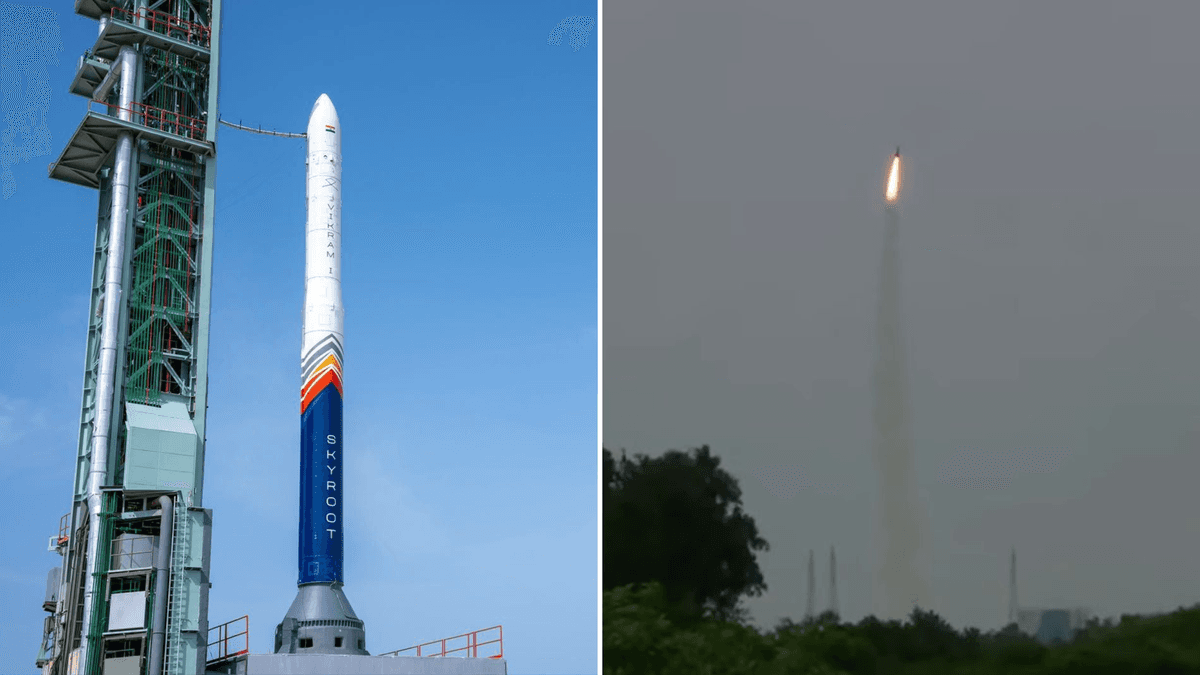
Vikram-1, India’s first privately developed orbital rocket, lifts off from Satish Dawan Space Centre in Sriharikota | Revanth Reddy congratulated Hyderabad-based space-tech startup Skyroot Aerospace on the successful test flight of Vikram-1, India’s first privately developed orbital rocket, under Mission Aagaman on Saturday (July 18, 2026).He said that the success is a historic milestone for the country’s space sector and a moment of immense pride for Telangana.Mr. Reddy recalled that he flagged off transportation of the space-tech startup’s orbital rocket Vikram-I flight hardware to Satish Dawan Space Centre in Sriharikota in April this year, and said that the successful test launch marks a defining milestone in Telangana’s journey towards becoming a global hub for aerospace and space technology. Telangana Chief Minister A. Revanth Reddy flags off Skyroot Aerospace’s orbital rocket Vikram-I components from Hyderabad in April, 2026 | — Telangana CMO (@TelanganaCMO) July 18, 2026 Published - July 18, 2026 01:54 pm IST
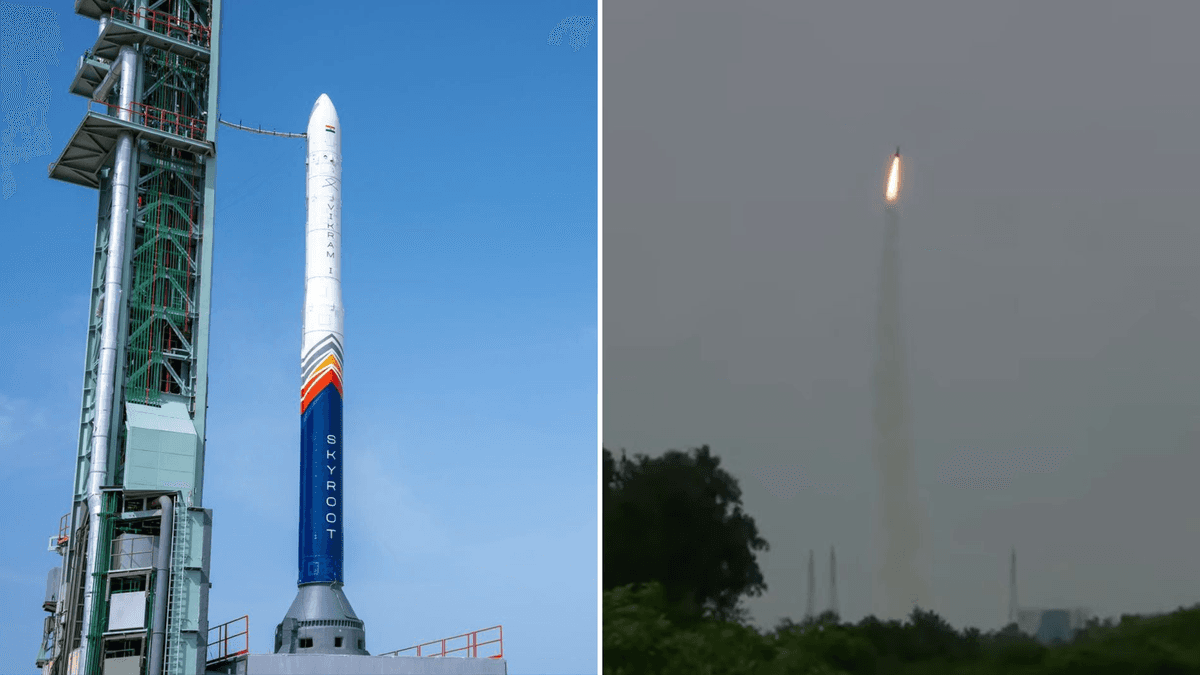
India achieved a major milestone in its space journey on Saturday (July 18, 2026) as Vikram-1, the country’s first privately developed orbital rocket, successfully placed multiple technology demonstration payloads and postcards — including from Prime Minister Narendra Modi — into a low earth orbit.Dubbed ‘Mission Aagaman’ (meaning arrival), the mission marks India’s entry into an elite group of nations with private orbital launch capability, making it only the third country in the world to achieve the feat through a privately developed launch vehicle. The mission was a “grand success,” the company said.Skyroot’s Vikram-1, carrying technology demonstration payloads and postcards, lifted off from the Satish Dhawan Space Centre in Sriharikota at the rescheduled time of 12:05 p.m. The launch was temporarily put on hold from its original time of 11:30 a.m. Skyroot’s Vikram-1, India’s first private orbital rocket to be launched on July 18 India's first privately developed orbital rocket is ready to blast off from the Satish Dhawan Space Centre in Sriharikota. Developed by Skyroot, a private aerospace company, Vikram-1 has been named after India's pioneering space scientist Vikram Sarabhai.This will be the first time an orbital-class rocket, fully designed and developed by a private player, will attempt to fly from Indian soil.The Mission Aagaman launch marks the arrival of India's private sector in the global launch business. Vikram-1 is a multi-stage orbital launch vehicle built with an all-carbon-composite structure. It is powered by in-house developed propulsion systems, including 3D-printed engines and high-thrust solid-fuel rocket boosters, and is designed to carry small satellites weighing up to 350 kg to Low Earth Orbit. The test flight is meant to see how the technology developed by Skyroot Aerospace performs in real-world conditions. The in-flight data gathered from this mission will be used by the company to learn, improve, and build further. | Video Credit: Businessline The rocket was developed by Skyroot Aerospace. Five minutes before the earlier scheduled lift-off, Skyroot Aerospace announced that there is a ‘planned hold’.Earlier in the day, around 10 minutes before the scheduled launch, the Vikram-1 began its automated launch sequence. From there, the onboard software runs the countdown, monitoring every system and clearing each checkpoint on its own, all the way to ignition. However, five minutes before liftoff, the launch was put on hold.Later, the Automated Launch Sequence (ALS) was restarted, and the lift-off was re-scheduled at 12.05 p.m.Private enterpriseDeveloped by private space launch company Skyroot Aerospace, Vikram-1 is a seven-storey-tall, multi-stage orbital launch vehicle built with an all-carbon composite structure and powered by in-house developed propulsion systems, including 3D-printed engines and high-thrust solid-fuel rocket boosters.Designed to carry small satellites weighing up to 350 kg to Low Earth Orbit (LEO), its first test flight is targeting a 450-km orbit at a 60° inclination. Vikram-1 will carry six technology demonstration payloads from Grahaa Space, Cosmoserve, DCubed and Skyroot’s own SCOPE, along with Cosmos Diamonds’ artwork “Cosmic Bloom”, and a micro-art piece.Skyroot Aerospace said that the decks for the launch had been cleared with the Indian National Space Promotion and Authorisation Centre (IN-SPACe) — the government agency to promote, permit, and oversee private-sector space activities — granting launch authorisation.Skyroot said all stages of Vikram-1 have been successfully integrated and stacked on the launch pad. Following this, the final integrated checks of the vehicle on the launch pad from Skyroot’s launch control centre have been completed, along with the interface checks with all telemetry ground stations and tracking radars.“We have done everything to test Vikram-1 on the ground. On July 18, we are eager to see how Vikram-1 performs in a real flight environment
India’s first privately developed orbital-class rocket Vikram-1 at the first launch pad of the Satish Dhawan Space Centre in Sriharikota. File | 30 a.m. The launch is expected to mark the entry of Indian private space technology companies into the global launch services market.Rocket developed by Skyroot AerospaceDeveloped by Hyderabad-based space launch company Skyroot Aerospace, Vikram-1 has secured all the necessary clearances for its maiden mission, named Mission Aagaman.This will be the first attempt by a private company in India to launch an orbital-class rocket. The relevant authorities have issued the required airspace and maritime notices, designating restricted zones along the vehicle’s ascent and impact corridor for launch day.Design structureVikram-1 is designed to carry small satellites weighing up to 350 kg to Low Earth Orbit (LEO). Its inaugural flight will target a 450-km orbit with an inclination of 60 degrees.The seven-storey-tall, multi-stage launch vehicle has been built using an all-carbon composite structure and is powered by in-house developed solid and liquid propulsion systems. These include 3D-printed engines and high-thrust solid rocket boosters. The vehicle has been designed for rapid manufacturing and a high launch cadence.The flight sequence, from lift-off to orbital injection, comprises 14 phases and is expected to last 15.46 minutes.Vikram-1 ready for lift-offSkyroot Aerospace said it had received launch authorisation from the Indian National Space Promotion and Authorisation Centre (IN-SPACe), the agency responsible for promoting, authorising and supervising private-sector space activities in India.The company said all stages of Vikram-1 had been successfully integrated and stacked on the launch pad. Final integrated checks of the vehicle were completed from Skyroot’s launch control centre, along with interface checks involving telemetry ground stations and tracking radars.Payloads to be launched by Vikram-1Vikram-1 will carry technology demonstration payloads from Grahaa Space, Cosmoserve, DCubed and Skyroot’s own SCOPE. It will also carry Cosmos Diamonds’ artwork Cosmic Bloom and a micro-art installation.Developed by Cosmos Diamonds, Cosmic Bloom features a diamond jewellery creation mounted on an aluminium base plate. The micro-art installation, created by Ajay Kumar Mattewada, consists of an 18-carat gold rocket carrying microscopic sculptures of Sir C.V. Raman, Dr. Vikram Sarabhai and Dr. A.P.J. Abdul Kalam. Each sculpture is smaller than a grain of rice and has been crafted inside the eye of a sewing needle.The artwork pays tribute to the three visionaries whose contributions continue to inspire India’s scientific and space pursuits. The mission will also carry an international payload, uD3PP and mD3RN, developed by Germany-based DCubed GmbH.Robotic arm to remove space debrisAlso on board will be the Embrace payload developed by Cosmoserve Space. During the mission, the robotic arm will remain attached to Vikram-1’s payload deck while carrying out its planned demonstration.Mission Embrace aims to carry out what Cosmoserve describes as the world’s first demonstration of soft robotic capture in orbit. The company said the mission would represent a significant step towards technologies that support orbital sustainability and the removal of space debris, while highlighting the growing capabilities of India’s private space sector.At the core of the project is a dual-spacecraft system featuring a robotic servicing spacecraft designed to capture and remove defunct satellites at a fraction of the cost of comparable solutions currently available. The soft robotic capture mechanism has been developed to latch on gently to unprepared and non-cooperative objects in orbit, the conditions typically encou


Discussion (0)