
Loading dispatches...
← Return to NewsroomEconomy
Trump cannot implement mail-in voting order, US appeals court rules
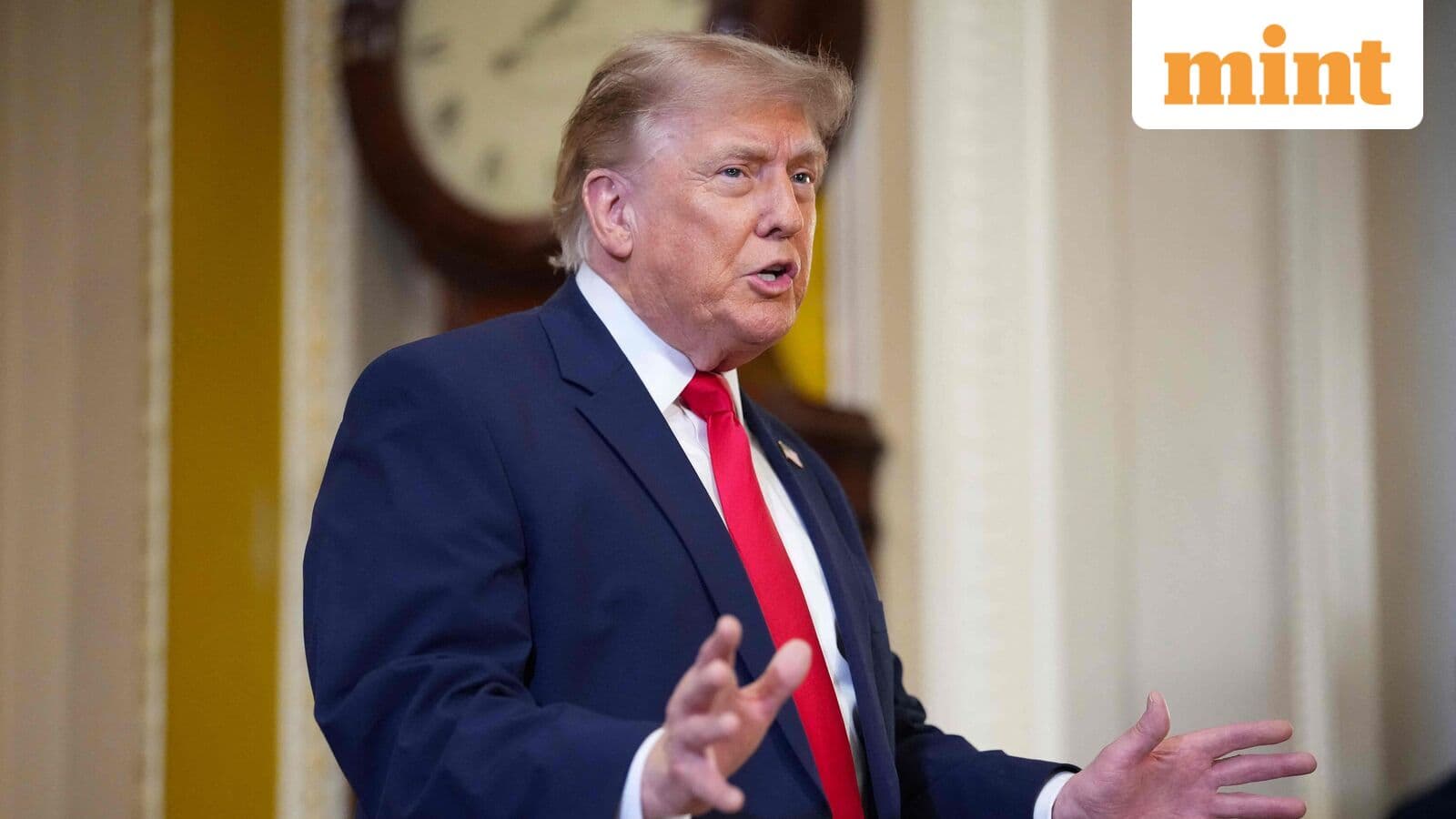
A federal appeals court on Saturday declined to allow U.S. President Donald Trump's administration to implement in 23 states an executive order he signed that aims to tighten rules for mail-in voting ahead of November elections that will decide control of Congress.The Boston-based 1st US Circuit Court of Appeals rejected the administration's request to lift an injunction several Democratic-led states secured on June 25 from a lower-court judge who concluded that key parts of the Republican president's order were unconstitutional, Reuters reported.In asking the court to pause US District Judge Indira Talwani's ruling while it pursues an appeal, the US Department of Justice had argued that because government agencies had yet to finalize actions and policies to implement Trump's directive, any lawsuit challenging his order was premature.The appeals court, in a 2-1 ruling, rejected that argument."As the district court reasoned, the (executive order) lays out a clear set of rapidly approaching deadlines by which states must coordinate with federal officials and comply with new voting procedures — all while the states must also ensure that their officials and the public understand the evolving set of rules that would govern the upcoming September and November elections," the judges wrote."The Plaintiff States have no practical choice but to respond to the (order) now." Before Talwani ruled, a federal judge in Washington, D.C., rejected a related effort by Democrats to block Trump's order on similar grounds. The Justice Department warned that absent a ruling in its favor from the 1st Circuit, it may be forced to ask the U.S. Supreme Court to intervene.Trump's March orderTrump signed the executive order in March after years of calling for tighter rules on voting by mail and pushing the false claim that his 2020 election defeat was the result of widespread voter fraud. Under the US Constitution, states are assigned the role of administering federal elections.That order came on top of other efforts by Trump to overhaul elections. He has made winning approval in Congress of a divisive package of voting restrictions called the SAVE America Act a priority. Judges have blocked an earlier executive order he signed requiring proof of citizenship to register to vote and restricting the counting of mail ballots.The March order directed the U.S. Department of Homeland Security to compile and transmit to the states a list of confirmed US citizens eligible to vote in each state, derived from citizenship and naturalisation records and other federal databases. Trump's order also required the US Postal Service to only deliver ballots to voters on each state's approved mail-in ballot list. USPS recently moved to implement Trump's directive by issuing new proposed rules requiring states to provide the names and barcodes tied to their mail-in ballots.It also directed the US Department of Justice to prioritise the investigation and prosecution of state and local election officials who issue federal ballots to people deemed "not eligible" to vote.But Talwani, in siding with a coalition of 23 states and the District of Columbia that was led by California, Massachusetts, Nevada and Washington state, said the president lacked any authority to direct DHS to compile voter eligibility lists for each state to use and that USPS had no statutory authorization to adopt any binding regulations on mail-in voting.The judge, who was appointed by Democratic President Barack Obama, said Trump also could not attempt through his order "to intimidate local election officials to use the necessarily incomplete confirmed citizenship lists as a resource, lest they face criminal prosecution."(With inputs from Reuters)About the AuthorLivemintFor about a decade, Livemint—News Desk has been a credible source for authentic and timely news, and well-researched analysis on national news, business, personal finance, corporates, politics and geopolitics. We bring the latest updates on
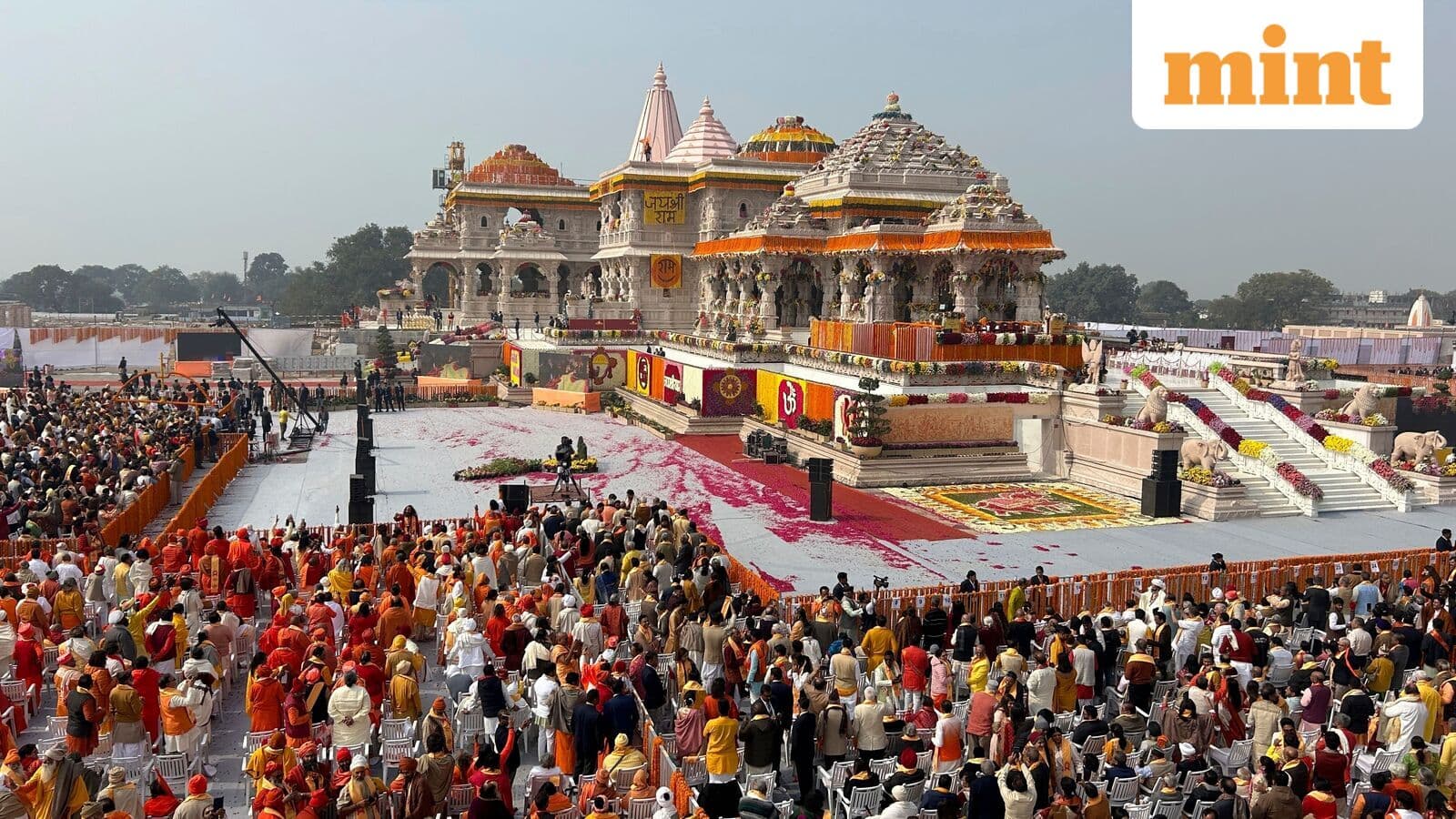
The Uttar Pradesh government has reconstituted the SIT probing the alleged embezzlement of offerings at the Shri Ram Janmabhoomi Temple, appointing three senior IPS officers to lead the probe after the Supreme Court directed a fresh investigation under an IPS officer.The case relates to the alleged embezzlement of offerings (chadhava) at the Shri Ram Janmabhoomi Temple.(AP)The Uttar Pradesh government has reconstituted the Special Investigation Team (SIT) probing the alleged embezzlement of offerings at the Shri Ram Janmabhoomi Temple in Ayodhya, inducting three senior IPS officers to lead the investigation in compliance with a Supreme Court directive, according to ANI.The newly constituted SIT is headed by Inspector General (IG) Kiran S, with Deputy Inspector General (DIG) Ayodhya Somen Verma and Senior Superintendent of Police (SSP) Ayodhya Dr Gaurav Grover as its members.The earlier SIT comprised Lucknow Commissioner Vijay Vishwas Pant, Special Secretary (Finance) Neel Ratan Kumar and other officials.Move came after SC directionThe move follows the Supreme Court's July 13 order directing the Uttar Pradesh government to constitute a fresh SIT under the leadership of a senior IPS officer. The direction was issued by a Bench headed by Chief Justice Surya Kant, along with Justices Joymalya Bagchi and V Mohan.The apex court also asked the state government to submit a status report on July 27. Following the order, the Uttar Pradesh government reconstituted the SIT, and sources said the new team has already begun its investigation.The case pertains to the alleged embezzlement of donations (chadhava) offered by devotees at the Shri Ram Janmabhoomi Temple.The previous SIT carried out an extensive probe by examining CCTV footage, donation registers, cash-handling procedures and financial records. It also questioned several temple employees before submitting a preliminary report that pointed to alleged irregularities in the counting and deposit of temple offerings.SIT to submit status report on July 27Based on the investigation, police arrested key accused and recovered cash, vehicles, investment-related documents and other assets allegedly purchased using the misappropriated funds. Investigators also conducted searches at multiple locations and examined digital evidence and financial transactions.While ordering the reconstitution of the SIT, the Supreme Court observed that criminal investigations and technical examination of theft-related cases are better handled by experienced police officers.The newly formed SIT is expected to continue the investigation and submit its status report before the Supreme Court on July 27.Stay updated with the latest Trending, India, World and US news. Follow CJP Protest LIVE updates as Sonam Wangchuk ends his 26-day hunger strike following government assurances, while the Jantar Mantar protest continues. Get the latest updates on talks between the CJP delegation and the Centre, the demand for Dharmendra Pradhan’s resignation, possible arrests, Delhi security measures and developments in Parliament.HomeNewsIndiaUP reconstitutes SIT in Ram Temple donation embezzlement case; three IPS officers to lead probeMore
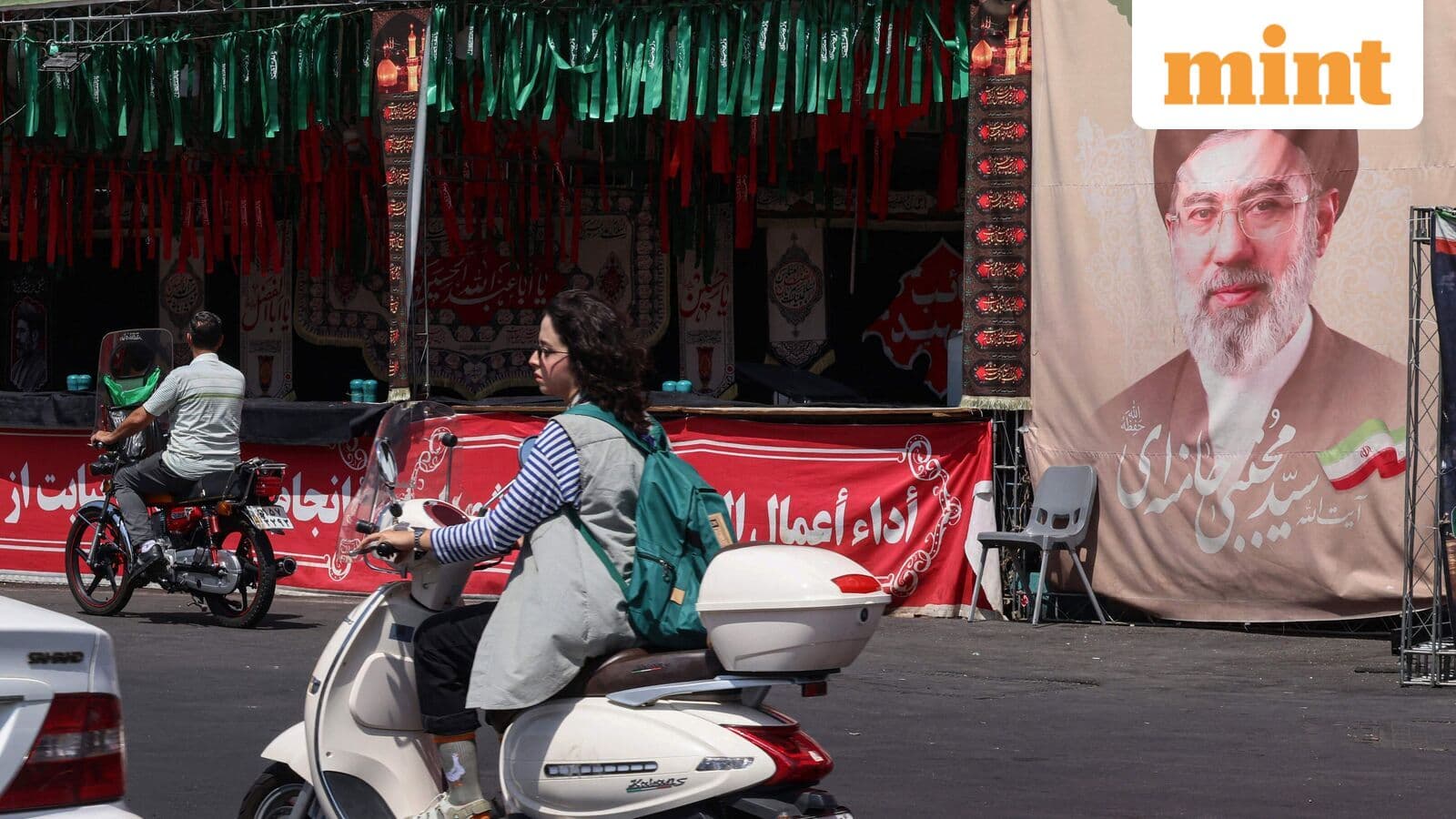
American intelligence believes Iran's new Supreme Leader, Ayatollah Mojtaba Khamenei, is more inclined to pursue nuclear weapons than his predecessor. The assessment comes as US President Donald Trump weighs expanding the military campaign against Tehran.A woman rides a motorcycle past a banner of Iran's Supreme Leader Mojtaba Khamenei at Valiasr Square in Tehran on July 19, 2026 | Representational image(AFP)As the United States and Iran continue to trade strikes after an interim ceasefire collapsed earlier this month, American intelligence agencies believe that Tehran's new supreme leader, Ayatollah Mojtaba Khamenei, is much more interested in procuring a nuclear weapon than his father and predecessor.Mojtaba pushing for nuclear weapon? Here's what intel suggestsCiting officials briefed on the assessments, The New York Times reported that Ayatollah Ali Khamenei, the former supreme leader, who was killed at the start of the war in late February after Israel attacked, had sworn off developing a nuclear weapon. Intelligence inputs further suggested that while American officials asserted that Tehran wanted to be capable of building a nuclear weapon, many believed that the former supreme leader was genuinely hesitant.While Mojtaba has never publicly called for the Islamic Republic to build a nuclear weapon, US intelligence agencies believe that Khamenei and the hard-line government that emerged after the US and Israel killed many of Tehran's previous leaders have ambitions to develop advanced nuclear weaponry.The current Iranian government has already sought to tighten its control over the Strait of Hormuz and has remained a challenging negotiating partner. If the US-Israeli war has increased, rather than reduced, Tehran's determination to pursue nuclear weapons, it would represent another serious consequence of the reported killing of the supreme leader and the US President Donald Trump administration's initial push for regime change, the report added.Further, US officials have cautioned that most of the intelligence on Mojtaba's views was from before the war. During the first part of the war, which was halted in April, Mojtaba Khamenei was severely injured, with American officials stating that he had limited his communications and public appearances due to his injuries, adding that he did not want to be targeted in another airstrike.Tehran restarting nuclear programme?While Washington believes that Tehran has not made any significant move to restart its nuclear programme, the Islamic Republic has taken some steps to preserve its nuclear assets after the US strikes on key facilities last year or during pauses in fighting in the current war.American officials believe that Tehran has reportedly moved at least some centrifuges to a hardened underground complex in central Iran that the US refers to as Pickaxe Mountain.Satellite images captured in June, just days after the MoU was signed, showed vehicles entering and exiting the tunnel complex. According to experts cited by CNN, the activity may indicate that Tehran violated the terms of the agreement it had signed with Washington.Earlier this month, CNN reviewed the latest satellite imagery in collaboration with the Institute for Science and International Security. The analysis raises questions about whether Tehran breached the ceasefire before the US President declared it "over" and resumed strikes on Iran, citing its continued attacks on vessels in the Strait of Hormuz.Last year, when Washington launched attacks on Tehran's nuclear facilities, days after Israel launched an attack in June, the nuclear site at Pickaxe Mountain was reportedly untouched, as it was a far more difficult target for the US military. According to US officials, the underground facilities at Pickaxe are buried deep beneath a mountain, out of the range of some of the most powerful conventional US bombs.After evaluating the damage at the Fordow nuclear facility last year, Iranian officials concluded how deeply
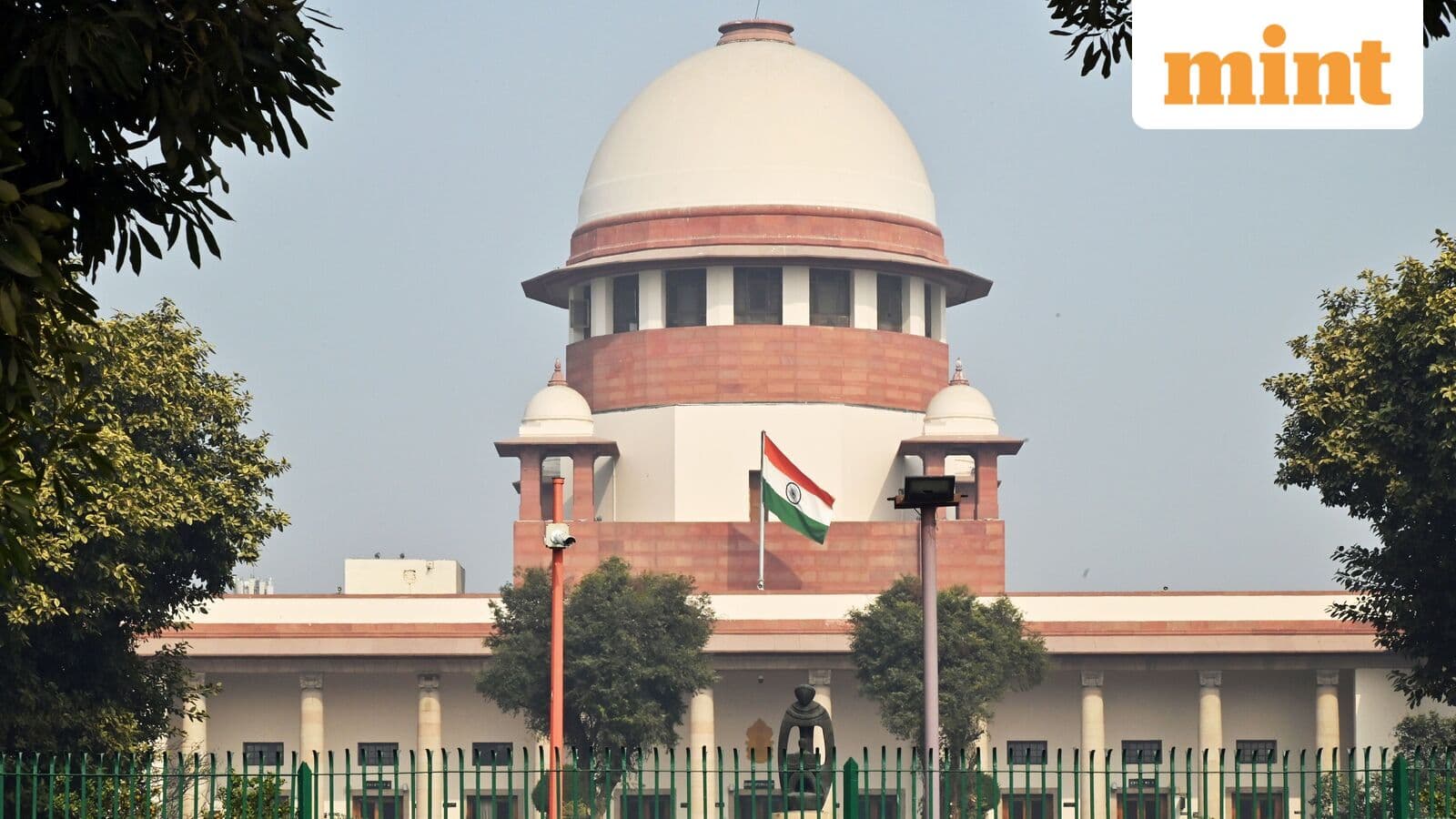
In May, the Union Cabinet approved a proposal to increase the number of Supreme Court judges, after which the government cleared the appointment of five new judges on 1 June to help reduce pendency in the apex court, which primarily deals with complex questions of law.The Supreme Court (Number of Judges) Amendment Bill, 2026 seeks parliament's approval to raise the headcount of judges in the apex court to 38, including the chief justice of India (CJI), from 34 currently.(PTI)NEW DELHI: Union law and justice minister Arjun Ram Meghwal on Monday introduced a bill in the Lok Sabha to increase the number of Supreme Court judges, as the government seeks to ease case pendency in the apex court.The Supreme Court (Number of Judges) Amendment Bill, 2026 seeks parliament's approval to raise the headcount of judges in the apex court to 38, including the chief justice of India (CJI), from 34 currently.In May, the Union Cabinet approved a proposal to increase the number of Supreme Court judges, after which the government cleared the appointment of five new judges on 1 June to help reduce pendency in the apex court, which primarily deals with complex questions of law.Currently, the working strength of the top court's bench is 32, including the CJI. The last time the sanctioned strength of the Supreme Court bench, excluding the chief justice, was increased was in 2019, from 30 to 33.Appointments to the Supreme Court bench are crucial due to the high volume of cases to be decided by the top court. According to the National Judicial Data Grid (NJDG), a government-run portal, as many as 92,249 cases are pending in the Supreme Court, of which 35,808 (38%) are less than a year old. The oldest case still pending before the court is from 1986, according to the NJDG. India’s top court disposed of 56,342 cases in 2025 against 60,948 new cases filed, the data showed.The Supreme Court collegium, which recommends appointments and transfers of judges to the higher judiciary, is currently headed by Chief Justice of India Surya Kant and includes the two senior-most puisne judges, Justices Vikram Nath and J.K. Maheshwari.A puisne judge in a high court or Supreme Court refers to a judge who is ranked lower in seniority than the chief justice of that particular court.NJDG DATAMeanwhile, India’s lower courts are still burdened with high pendency. NJDG data also showed that the country’s district courts have 31.15 million criminal pending cases and 6.13 million pending civil suits.So far in 2026, district courts have disposed of 12.89 million cases, the data showed, against 14.68 million new cases instituted in the same period.Most notably, according to NJDG data, the biggest reason behind this burgeoning pendency is the unavailability of counsel in nearly 6 million cases.About the AuthorManas PimpalkhareManas is a New Delhi-based journalist with Mint, where he covers the intersection of economic policy, industry, and emerging sectors shaping India’s growth. He writes on government regulation, manufacturing, and the clean energy transition, with particular depth in areas such as electric mobility, battery ecosystems, and rare-earth supply chains. He has written on India’s efforts to build domestic capacity in electric vehicles and energy storage, as well as the broader push to reduce import dependence and strengthen supply chain resilience. His reports are not limited to capturing the headline; they also aim to explain complex policy simply. Manas has studied law in Pune, the city where he grew up, followed by a business journalism diploma from the Asian College of Journalism in Chennai. In his almost two years of being a correspondent for Mint, Manas has reported as major wars unfolded, a general election brought surprises for both the ruling party and the Opposition, and three Union Budget announcements where India has charted its economic course for the days to come. On vacation, Manas plays bass guitar with his friends in Space & Co, their jam
The Supreme Court, however, upheld the man's conviction for causing grievous hurt after finding that he had fractured the complainant's nasal bone with a billhook. At the same time, it reduced his sentence to imprisonment till the rising of the court and ordered him to pay a fine of ₹50,000.Can saying this abusive word lead to an obscenity case? SC explains (FILE PHOTO)(HT_PRINT)The Supreme Court on Friday clarified that the use of abusive or vulgar language, no matter how offensive or uncivil, does not by itself amount to the criminal offence of obscenity. The court mentioned such words would attract obscenity provisions only if they are lascivious, appeal to prurient interests and have the tendency to deprave or corrupt those exposed to them, reported Bar and Bench.The ruling came from a Bench comprising Justices Sanjay Karol and Vipul M Pancholi while partly allowing the appeal of a man convicted for obscenity after he used the expressions “motherfr”, “son of a we” and other vulgar expletives during a dispute over land.Court reduces sentence to imprisonment till rising of court, orders ₹50,000 fine“Let’s be clear, legally, obscenity is not synonymous with ‘vulgarity’, ‘abuse’ or ‘profanity’. Use of mere swear words, profanities and vulgar expletives, however distasteful or uncivil they may be, cannot be equated with obscenity...Words which are merely vulgar or abusive may evoke a feeling of disgust, revulsion or shock, but that by itself does not make them obscene in law,” the Court mentioned.The Supreme Court, however, upheld the man's conviction for causing grievous hurt after finding that he had fractured the complainant's nasal bone with a billhook. At the same time, it reduced his sentence to imprisonment till the rising of the court and ordered him to pay a fine of ₹50,000.What is the case about?The case stemmed from an agricultural land dispute in Tamil Nadu in August 2017. According to the prosecution, the conflict began with an argument between the appellant, Mani, and the complainant's brother-in-law over the property. Two days later, Mani allegedly got into another confrontation with the complainant's nephew over the same issue.The prosecution alleged that when the complainant stepped in, Mani verbally abused him with vulgar expletives and caste-based slurs before returning with a billhook from his house and attacking him. The complainant suffered injuries to his forehead, nose and thumb, and subsequent CT scan findings confirmed a fracture of his nasal bone.The trial court found Mani guilty under Sections 294(b) (obscenity), 326 (grievous hurt) and 506(ii) (criminal intimidation) of the Indian Penal Code, along with provisions of the Scheduled Castes and Scheduled Tribes (Prevention of Atrocities) Act. Subsequently, the Madras High Court acquitted him of the charges under the SC/ST Act but affirmed his convictions under the IPC.Mani then challenged the High Court's decision before the Supreme Court.What SC saidWhile examining his conviction for obscenity, the apex court observed that the law does not classify every abusive or vulgar remark as obscene.The Bench said that for words to fall within the ambit of Section 294(b) of the IPC, they must be lascivious, appeal to prurient interests and have the tendency to deprave or corrupt those exposed to them. The court also noted that it must be established that the utterance caused annoyance to others.While examining the legal principles to the facts of the case, the apex court concluded that, even if the prosecution's allegations were accepted in full, the language allegedly used by Mani amounted only to abusive or vulgar remarks and did not meet the legal threshold for the offence of obscenity.“In the present case, during altercation, the appellant allegedly uttered that “Hey Motherfr! You son of a we! Are you coming in support of your elder sister's son? Just fk off, you ‘Kurutha’ F****r.." Such words, howsoever abusive, unpalatable or uncivil, d

Discussion (0)