
Loading dispatches...
← Return to NewsroomWorld
Iran-backed Houthis clash with Yemeni forces and other Mideast developments

com Will all-out war in Yemen reignite as the Houthis escalate attacks? Al Jazeera How A Blocked Iranian Plane Set Off The Houthis' Latest Escalation With Saudi Arabia i24NEWS

A series of Houthi attacks in recent weeks, which are among the deadliest in years, is raising fears that Yemen could be sliding back towards all-out war as conflict spreads across the Middle East.A 2022 truce led to the end of heavy fighting between the pro-Iranian Houthis and Saudi-backed Yemeni government forces, which had been ongoing since September 2014.Recommended Stories list of 4 itemslist 1 of 4Japan protests as Russia’s Putin visits disputed Kuril Islandslist 2 of 4What postcolonialism looks like in Southeast Asialist 3 of 4Life and loss as a first responder in southern Lebanonlist 4 of 4Triple-double king Russell Westbrook announces NBA retirementend of listBut a series of clashes over the last month between the two sides – intensifying in the last two weeks – has led to civilian and military casualties and threatened to reignite the war.Here is what we know.What are the latest attacks?The Houthis have killed a number of civilians in a series of attacks on the government-controlled west coast port of al-Makha, also known as Mocha.There was also an attack on a commercial vessel in the Bab al-Mandeb Strait on Tuesday, which Yemen’s coastguard said killed six people and injured 10 others. The Houthis said the vessel was carrying weapons.It followed the Houthis targeting Yemeni government military sites in eastern Yemen with drones and rockets, killing at least 30 government soldiers and causing further clashes. The Houthis have also attacked Saudi Aramco’s Jazan oil refinery.In response, Rashad al-Alimi, chairman of the Presidential Leadership Council (PLC), said the internationally -recognised government would not accept “a new truce that reproduces previous experiences”.“No action by the Houthi militias will go unanswered or unchecked,” al-Alimi said, according to Yemen’s Saba news agency.But he also appeared to leave space for a political way back, saying the Houthis could still “lay down their arms, engage in political life and compete through the ballot box on an equal footing with all other Yemenis”.What is behind the latest tensions?The Houthis seized the capital Sanaa in 2014 and have since fought a war with the government for control of the country.Although the intensity of the war declined significantly after the 2022 truce, no comprehensive peace settlement followed.The fragile status quo came under increasing pressure after the United States and Israel launched their war against Iran on February 28 .On July 13 , Yemeni government forces – which are backed by Saudi Arabia – attacked Sanaa airport, reportedly to prevent an Iranian aircraft carrying a Houthi delegation from landing. The government accuses Iran of arming the Houthis.The rebel movement responded by launching missiles towards Saudi Arabia. Then, on July 20 , the Houthis announced a maritime blockade against Saudi Arabia, threatening oil shipments diverted towards the Red Sea and attacking Saudi Aramco facilities in Jizan and Yanbu.Is Saudi Arabia changing its approach?As the attacks have intensified, Saudi Arabia has begun to take a more proactive approach to its security – both in Yemen and across the region, according to experts.Some analysts believe the prospect of the Houthis ultimately blocking Bab al-Mandeb – the narrow strait connecting the Red Sea with the Gulf of Aden and the Indian Ocean – may have helped push the Saudis to change their strategy.Saudi Arabia was somewhat insulated from Iran’s closure of the Strait of Hormuz because it could use its East-West Pipeline to transport oil from fields in the east to the Red Sea, bypassing the strait.If the Houthis were to severely restrict shipping through Bab al-Mandeb, that would threaten the Red Sea route for one of the world’s largest oil exporters.Last month, Riyadh announced a new international alliance intended to protect shipping in the Red Sea from Houthi attacks. Dozens of countries were invited, with the kingdom saying 13 had agreed to participate.It is also deepening its security

Six people have been killed and 10 injured in strikes by Yemen's Iran-backed Houthis on a cargo ship in the Red Sea, the internationally recognised government of Yemen has said.The transport ministry said the vessel was hit with three ballistic missiles, south of the port of Mocha, causing a fire on board and resulting in the deaths of four crew - three Pakistanis and one Indonesian. Yemen's coastguard later said a second deadly missile strike targeted rescuers who tried to evacuate the ship. The Houthis said they hit a ship carrying Saudi military equipment. It appears to be the first deadly attack by the group on a vessel since the US and Israel began striking Iran on 28 February.The Houthis launched their attacks on shipping last month - announcing a naval blockade of Saudi ports.The conflict in the region has been ongoing for more than five months, punctuated by a faltering ceasefire which was meant to lead to a deal to end the war.It has whipped up regional tensions, with the Houthis also attacking Saudi tankers in the Red Sea and oil facilities, in parallel with Iran's closure of the Strait of Hormuz - the vital waterway where a fifth of the world's oil and liquefied natural gas used to transit.The latest attack comes after a years-long truce in Yemen's civil war between the Houthis and the Saudi-backed, internationally recognised government collapsed last month. The Houthis control much of north-western Yemen, and frequently clash with the government. The government operates out of Aden in the south, due to the capital Sanaa being held by the Houthis. Social media images examined by BBC Verify appear to show a damaged cargo ship in the Bab al-Mandab Strait, which sits at the inlet of the Red Sea, off the coast of Yemen. In its statement, the Yemeni government said the ship had been carrying food, and that the attack on a commercial vessel marked an escalation in approach from the Houthis. In an earlier statement, maritime risk management company Vanguard said the Yemeni Navy deployed to assist the vessel and came under fire. This resulted in three others being injured. Close-up pictures show the vessel is named Tihamah which, according to ship-tracking platform MarineTraffic, is in the Red Sea off Warner Point.Vanguard has identified the ship as sailing under the flag of Tanzania, while shipping website MarineTraffic says it is owned by an Egyptian operator. In its statement, Yemen's ministry of transport referred to Tihama as a "Yemeni commercial ship", while earlier reports in Iranian media referred to it as "Saudi-affiliated". The pictures of the vessel, which were shared by Iran's semi-official Mehr news agency, have been verified as new and show no signs of AI-generation. Additional reporting by Ghoncheh Habibiazad

Saudi Arabia, Pakistan and Turkiye have signed a joint defence pact as tensions in the Middle East continue to escalate with the United States and Israel’s war on Iran.The agreement, called the Mecca Joint Deterrence Agreement, was signed in the Saudi holy city of Mecca on Friday by Turkish President Recep Tayyip Erdogan, Saudi Crown Prince and Prime Minister Mohammed bin Salman and Pakistani Prime Minister Shehbaz Sharif.Recommended Stories list of 3 itemslist 1 of 3Houthi strikes in Yemen as Saudi Arabia braces for attacks: What we knowlist 2 of 3Saudi Arabia, Pakistan and Turkiye sign defence deal amid regional turmoillist 3 of 3Houthi attacks on gov’t forces hint that a major battle in Yemen is brewingend of listThe pact is intended to provide a collective deterrence against any act of aggression by stipulating that an armed attack against any of the three would be regarded as an attack on all, the partners said jointly.In a statement of its own, the Pakistani Ministry of Foreign Affairs said the joint defence deal signed was “guided by the longstanding historical ties among the three states, based on the enduring bonds of brotherhood and Islamic solidarity that unite them, and building upon their shared strategic interests and longstanding defence cooperation”.The agreement reflects “the three states’ shared commitment to further strengthening their collective security and to promoting peace, security, and stability in the region and beyond, in pursuit of a secure and prosperous future”, it added.The deal comes a day after Pakistani Prime Minister Shehbaz Sharif, accompanied by powerful army chief Asim Munir, arrived in Saudi Arabia and performed the Umrah pilgrimage in Mecca.Turkish President Recep Tayyip Erdogan also travelled to Saudi Arabia on Friday to meet Saudi Crown Prince Mohammed bin Salman.Here’s what we know about what this pact contains:Why has this pact been made now?The defence agreement between Ankara, Riyadh and Islamabad has been in the making for some time. Negotiations began soon after the October 7, 2023 Hamas attack on Israel and the onset of the subsequent Israeli genocide in Gaza, and gained pace amid the US and Israel’s ongoing war on Iran.While Turkiye and Pakistan have not been directly impacted by tensions in the region so far, Saudi Arabia, which hosts US military assets and infrastructure, has come under attack from Iran and its allies, the Houthis in Yemen. Tehran has also attacked other Gulf nations and Jordan, which also host US military assets.But the three nations have been particularly concerned about the impact of Iran’s war and Israel’s growing influence – and attacks – on the region. Israel has occupied roughly one-fifth of Lebanon as it allegedly targets strongholds of the Lebanese armed group, Hezbollah, which is also backed by Iran. Meanwhile, Iran-backed groups in Iraq have been accused of carrying out drone attacks in Saudi Arabia and have, themselves, come under fire from US and Israeli attacks.Reporting from Ankara, Turkiye, Al Jazeera’s Resul Serdar said that, according to officials there, the escalating regional tensions have indeed forced the countries to come together.“Post-October 7 has changed the region dramatically, with the Israeli actions and expansionism. And now there is the crisis in the Strait of Hormuz and ongoing attacks on Iran, as well as Iran’s response to the regional countries,” he said.“So there have been several layers of necessity converging, and forcing these three big countries to come together and sign this binding agreement,” he added.On March 19 this year, the foreign ministers of Turkiye, Pakistan and Saudi Arabia met in Riyadh during an Islamic summit, in which they discussed what a joint security agreement could look like.Before this meeting, in September 2025, Pakistan and Saudi Arabia also signed a mutual defence agreement. The agreement came in the wake of an Israeli attack on the Qatari capital, Doha, on September 9, 2025.Ozgur Unluhisarcik
Scoop: Saudi crown prince raises concerns over Trump's plans for massive Iran strikes Axios Saudi Prince Concerned Over Trump’s Iran Strike Plan: Axios Bloomberg Trump gets conflicting messages as he seeks an exit ramp from the Iran war CNN Bin Salmaan oo ku boorriyay Mareykanka inuu mudnaanta siiyo wadahadalka halkii uu dagaal dooran lahaa BBC Saudi Crown Prince MBS urges Trump to ‘prioritise dialogue’ in US-Iran war Al Jazeera
Iran War Live Updates: Egypt Attack Threatens to Expand War as U.S. and Iran Trade Strikes The New York Times Saudi Arabia prepares sea and possible land offensive against Houthis theguardian.com Saudi Arabia announces maritime defence alliance to secure vital waterways Al Jazeera Oil prices fall after Saudi Arabia proposes naval coalition to protect ships from attack CNBC Saudi Arabia Seeks to Lead Maritime Coalition to Protect Red Sea Bloomberg.com
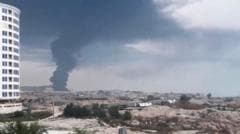
The US military says it has completed a "heavy wave" of strikes against Iran in retaliation for Tuesday's attempted ballistic missile attacks on American forces.Centcom said it hit "dozens" of Islamic Revolutionary Guard Corps (IRGC) targets in response to Iran's firing on US bases in Jordan and at ships in the Strait of Hormuz.Iranian state media said the latest strikes had killed three people, including a two-year-old child, on Qeshm island, while other locations were also hit in the south and west of the country.The latest hostilities come on a week that has seen the conflict expand, with the first publicly announced joint US-Saudi strikes targeting Iranian proxies in Iraq.Iran and the US have engaged in escalating strikes and counter-strikes since a ceasefire in April, aimed at pausing the months-long war, fell apart in June. The US has blockaded Iranian ports and bombed Iranian sites, while Iran has fired missiles and drones at US assets in countries across the Middle East and targeted shipping in the economically important Strait of Hormuz, connecting the Gulf and Arabian Sea.On Wednesday, news outlet Axios cited an unnamed US official as saying that Trump had met Saudi defence minister Prince Khalid bin Salman, who had conveyed that Saudi Arabia wants to de-escalate tensions. The BBC has contacted the White House for comment. Analysis: Saudi Arabia's dilemma as it tries to stay out of US-Iran warMeanwhile, the Egyptian government said a fire at a port on Wednesday had been caused by a drone attack. Egypt, a US ally, has not previously been directly attacked during the war.The US-Iran conflict has reignited after several days of relative calm.For days, both sides halted strikes as talks apparently restarted in hopes of some type of diplomatic solution. Trump called them "very friendly negotiations", though Tehran denied any discussions were happening. But following the Iranian missile attack on a US base in Jordan on Tuesday, Trump vowed to retaliate, telling reporters at the White House: "We're going to be hitting them very hard because it's our turn to hit them. They know it's coming. They asked us not to do it."The latest wave of US strikes started at 20:00 ET on Wednesday (01:00 BST on Thursday) and lasted about an hour, with Centcom calling them a "powerful response to yesterday's attempted Iranian attacks on US forces based in the Middle East". All of Iran's missiles were intercepted, Centcom said. The attack by the US targeted "military command centers, missile and drone facilities, coastal surveillance and defense sites, and maritime capabilities," Centcom wrote once the strikes were complete.Iranian state media agency Irib reported that the islands of Qeshm and Abadan, both central to the oil industry, were among the areas hit. "A US attack on a residential home in the Chah Tangu neighbourhood of Qeshm killed three members of a family: the father, the mother, and their 2-year-old child," Fars reported citing the Hormozgan University of Medical Sciences.A man in his 30s living in the south of the island told BBC Persian he was heading to Tehran, because "things are becoming more dangerous here"."Our internet situation has been a mess. The electricity has been cutting out several times since this morning," he said. "There have been loud bangs since 03:40 this morning. We are helpless."Meanwhile, Jordan's armed forces said that air defence systems had successfully shot down five Iranian missiles targeting the Kingdom's territory on Thursday.On Tuesday, the IRGC said it had targeted a US air base and a command centre in Jordan "in response to the acts of aggression of the American child-killing army".It also said naval forces had struck three oil tankers in the Strait of Hormuz after they "ignored warnings" and sailed along what it described as an "unsafe and illegal route" through the vital Gulf waterway.Last Friday, Trump suspended an intensive bombing campaign that had lasted for 13 consecutive nights. The US s

Riyadh seeks partners to safeguard shipping in Red Sea as strikes on energy tankers expand, pushing oil prices higher.Saudi Arabia is seeking to build an international coalition to protect shipping in the Red Sea from attacks by Yemen’s Houthis, people familiar with the deliberations have told the Reuters news agency.The composition of the coalition has not yet been finalised and is being discussed with dozens of countries, the sources said.Recommended Stories list of 4 itemslist 1 of 4Houthis want to copy Iran’s Hormuz control in the Red Sea: Yemeni FMlist 2 of 4Iran hits US in Jordan, US-Saudi strikes on Iraq: Is war spreading?list 3 of 4Fuel prices soar on back of Iran war, leaving Yemeni labourers with no worklist 4 of 4Iran pushes back against US as regional attacks heat upend of listTensions in the Red Sea are rising, denting the global economic outlook already under stress due to the closure of the Strait of Hormuz.On July 20, the Houthis announced a maritime blockade on Saudi Arabia, accusing its leaders of imposing “an unjust and oppressive siege” on Yemen for nearly 12 years, “plundering our resources and imposing a comprehensive blockade”.Since then, the Houthis said they have launched attacks on Saudi vessels in the Red Sea. Saudi Arabia responded with air strikes on what it said were Houthi military facilities at Yemen’s Hodeidah port used to threaten commercial shipping.The Saudi Center for International Communication did not respond to a Reuters request for comment.The blockade has opened a new front against the United States and its allies in the wider US-Israel war on Iran, expanding attacks on tankers carrying energy and other supplies to waters beyond the Gulf and pushing oil prices higher.“Gulf states have been trying to avoid this [expansion] throughout the US-Iran conflict. They do not believe this is their war to fight, and they have said repeatedly they don’t want to get dragged into it,” said Al Jazeera’s Victoria Gatenby.Saudi Minister of Foreign Affairs Prince Faisal bin Farhan Al Saud received phone calls from his counterparts in Qatar, Kuwait and Bahrain, during which the diplomats “stressed the importance of continuing efforts to de-escalate tensions”, according to his office.They also condemned attacks by Iran and “its affiliated militias in Iraq and Yemen”, and emphasised continued coordination and stronger joint action through the Gulf Cooperation Council.In Yemen, a minister of the internationally recognised government accused Houthi rebels of working under Iranian guidance to establish a system to impose fees for ships transiting the Red Sea and Bab al-Mandeb Strait.Information Minister Moammar al-Eryani described “the move as a dangerous escalation aimed at transforming one of the world’s most strategic maritime corridors into a permanent source of funding for the militia’s military and terrorist activities”.

The Houthis recently declared a naval blockade on Saudi Arabia in the Red Sea, targeting several tankers.Yemen’s Iran-aligned Houthi group says it has fired ballistic missiles at a Saudi oil tanker, more than a week after imposing a naval blockade on Saudi vessels in the Red Sea.In a post on X, Yahya Saree, the Houthi military spokesman, said the group had “carried out a military operation targeting the Saudi oil tanker (NCC GHAZAL) for violating the maritime navigation ban” that the group had imposed on Saudi vessels.He added that the group had used several ballistic missiles and forced the vessel to retreat.The UK Maritime Trade Operations (UKMTO), a maritime security monitor, said a tanker reported an explosion while transiting the Red Sea, adding that the crew is safe and no environmental damage was reported.The Houthis seized the capital Sanaa in 2014 and have fought the internationally recognised Yemeni government, which Saudi Arabia backs, for more than a decade.On July 20, the Houthis announced their maritime blockade, accusing Saudi leaders of imposing “an unjust and oppressive siege” on Yemen for nearly 12 years, “plundering our resources and imposing a comprehensive blockade”.It went on to affirm “the right of our great people to respond to the blockade with a blockade”.Second attackThe Houthis have also claimed an attack on two Saudi oil tankers transiting the Red Sea last week.“We targeted two Saudi oil tankers, named Encelia and Layla, for their violation of the blockade decision issued by the armed forces,” Houthi military spokesperson Yahya Saree said on July 22.The Saudi Press Agency reported that the Encelia had been hit, citing an official source at Saudi Arabia’s Transport General Authority who said all crew members were safe.The Bab al-Mandeb chokepoint connecting the Red Sea to the Gulf of Aden is one of the world’s most important shipping routes, including for oil exports.Between Yemen to the northeast and Djibouti and Eritrea in the Horn of Africa to the southwest, the strait is just 29km (18 miles) at its narrowest point, limiting traffic to two channels for inbound and outbound vessels heading to the Suez Canal.In 2024, about 4.1 billion barrels of crude oil and refined petroleum products passed through the strait – about 5 percent of the global total.
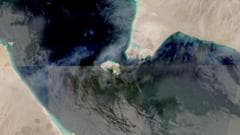
Yemen's Houthi fighters claim to have attacked shipping in the Red Sea - a move that threatens to further escalate the already volatile situation in the Middle East.By forcing ships to turn back from the narrow Bab El Mandeb strait, they have threatened to choke off the main maritime route from Europe to Asia. It comes as US-Iran strikes continue and while a deal to develop Saudi Arabia's nuclear industry prompts fears of an arms race. So is the Middle East becoming more dangerous?So far, 2026 is sadly proving to be one of the more violent years for parts of the Middle East. For 13 consecutive nights, US Central Command (Centcom) has carried out air strikes on Iranian."Iranian military command centers, drone storage facilities, communication networks, coastal surveillance sites, and maritime capabilities to further diminish the threat Iran poses to civilian mariners and commercial vessels transiting the Strait of Hormuz," Centcom said in a statement on Thursday night.The Gulf Arab states, in normal times a haven of low-crime tranquility and minimal taxation, are having to learn to live with constant attacks from their well-armed neighbour across the water: the Islamic Republic of Iran.And now the Iran-backed Houthis of Yemen have entered the fray, after a 2022 ceasefire with neighbouring Saudi Arabia appeared to have broken down. Two Saudi vessels were hit by missiles in the Red Sea this week, while the Houthis claim to have turned back 10 others after warning ships to avoid Saudi ports, disrupting shipping passing through the strategic Bab El Mandeb Strait that links the southern end of the Red Sea with the Indian Ocean.This matters because, on top of the ongoing disruption to global energy and fertiliser supplies caused by Iran effectively closing the Strait of Hormuz, it is a further obstacle to vital maritime trade that will soon impact the global economy.Saudi Arabia has been trying to distance itself from the Iran-US war and has been largely spared the Iranian drone and ballistic missile attacks that have rained down this month on Bahrain, Kuwait and Jordan. With the Strait of Hormuz closed, the Saudis have been able to partially mitigate the disruption to their oil exports by shipping millions of barrels a day through the East-West Pipeline that traverses the entire breadth of their huge country, from the oilfields of Eastern Province to the Red Sea export terminal at Yanbu' Al-Bahr. From there, they have been able to ship oil in bulk to customers in Asia using tankers that depart south, past Yemen and that Bab El Mandeb Strait, and out into the open Indian Ocean.But not anymore - at least not while the Houthis are threatening vessels that pass by their coast. US President Donald Trump has vowed to "take care of the Houthis" but that has not worked before - and without a deal, it will not work this time.The Houthis are a Shia tribal group from the far north of Yemen, based around the city of Saada. In 2014, taking advantage of the turmoil of the recent Arab Spring protests that rocked the Middle East, they marched south and took over the capital, Sanaa. They have since taken over most of the populated parts of Yemen, including the strategic port of Hodeidah.The Saudis went to war with the Houthis in 2015 in support of the legitimate but ousted Yemeni government, as they did not want an Iranian-backed militia in power on their southern border. They expected that their vastly superior, Western-supplied air force would soon be able to bomb the Houthis to the negotiating table and that the rebels would quickly sue for peace. But the Houthis never capitulated, despite horrific civilian casualties largely caused by years of air strikes, and today they are firmly entrenched in power.For two years, from 2023 to 2025, the Houthis attacked what they claimed was Israeli-linked shipping in the Red Sea, action which they said was in support of the Palestinians in Gaza. They also launched powerful modern missiles at the US and Britis


Discussion (0)