
Loading dispatches...
← Return to Newsroomgeneral
Now, Gen Alpha: Bihar school students march 4 km over lack of facilities, staff face salary cut
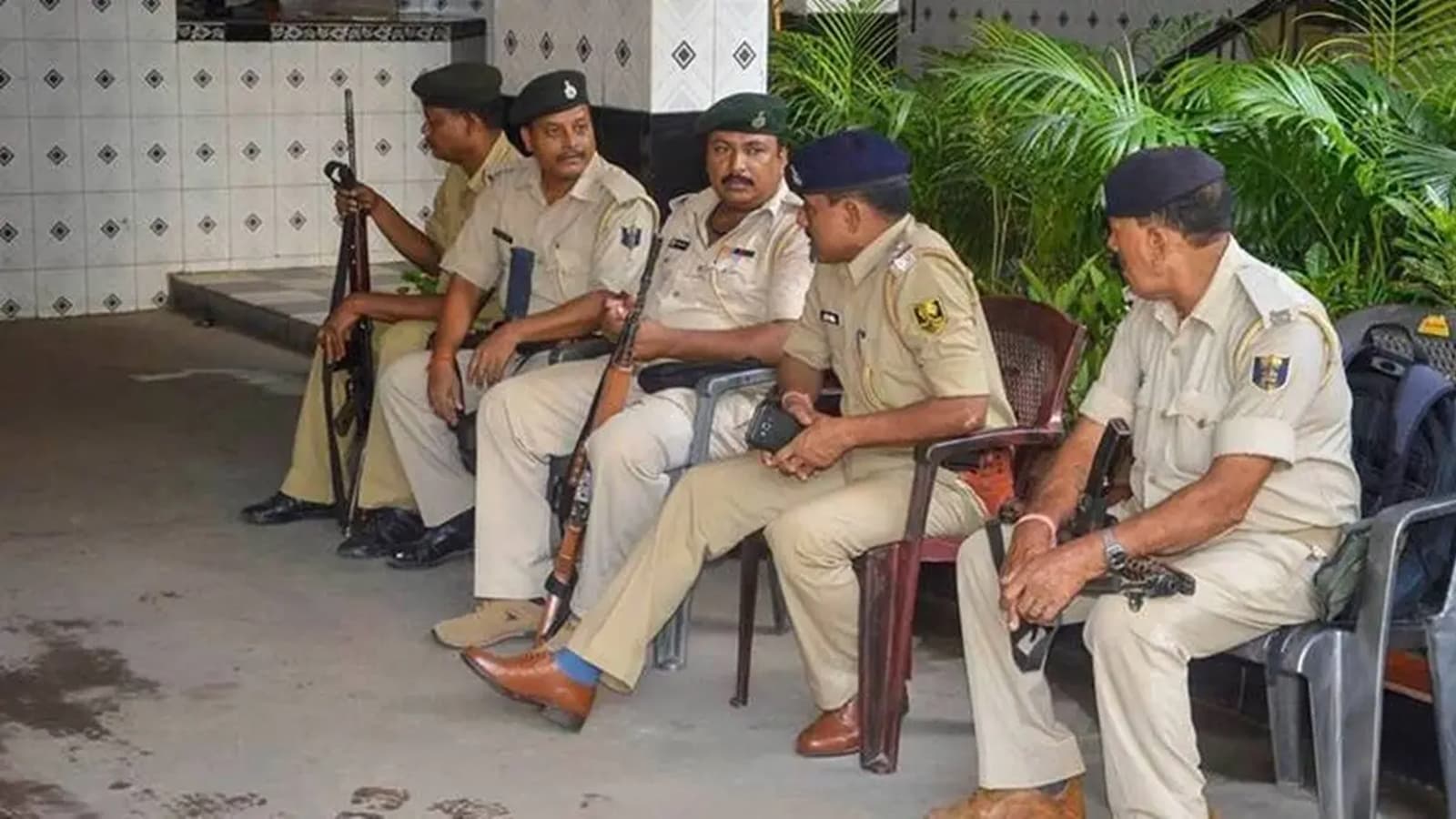
PatnaUpdated: Jul 31, 2026 04:58 AM IST The protest has since triggered multiple departmental inquiries, show-cause notices to school staff, and the suspension of salaries for the day of the demonstration pending satisfactory explanations. (File Photo) Amid a wave of student-led protests nationwide over the alleged NEET paper leak and education issues, students of Simuara Middle School in Bihar’s Gaya district staged a protest of their own on Tuesday, marching around 4 km to the Tikari Sub-Divisional Office over issues regarding basic facilities at their school. The protest has since triggered multiple departmental inquiries, show-cause notices to school staff, and the suspension of salaries for the day of the demonstration pending satisfactory explanations.A video of the protest, which has gone viral on social media, shows dozens of students, mostly from classes 6 to 8, sitting outside the office of the Sub-Divisional Magistrate (SDM), refusing to disperse as they demanded redressal of grievances over the quality of the mid-day meal, drinking water, toilets, electricity, classroom fans, uniforms and the overall state of teaching and school infrastructure. Taking cognisance of the protest, Tikari SDM Praveen Kundan constituted a three-member inquiry committee comprising Assistant District Supply Officer Chandan Kumar, Executive Officer Ranjeet Singh and Block Development Officer Yogendra Paswan to inspect the school and submit a report. An official said the SDM was on field duty when authorities learnt that around 40-50 students from Simuara had reached the subdivision office. “The Executive Magistrate was immediately sent to speak to them. After the SDM returned, he met a group of six students, including three girls, in the presence of teachers. The complaints primarily related to basic facilities such as drinking water, toilets, the quality of the mid-day meal, uniforms and the absence of fans in classrooms,” the official said. The official added that the headmaster was issued a warning and directed to resolve the problems within four to five days, while the inquiry team had also visited the school and is conducting a detailed investigation into the complaints. Surprise inspectionStory continues below this ad The protest was followed by a surprise inspection of the school on Wednesday by District Programme Officer (Elementary Education and Samagra Shiksha) Nityam Kumar Gaurav and Block Education Officer Dr Abhay Kumar Raman. According to another official, after interacting directly with students, the officers directed the headmaster to restore normal functioning within seven days, warning of strict departmental action in case of non-compliance. During the inspection, the officials reviewed students’ complaints regarding teaching, the mid-day meal and other basic amenities. They directed the school to immediately ensure cleanliness and repairs of classrooms and toilets, improve the quality of the mid-day meal, provide nutritious and hygienic food, complete electrical wiring and install fans in every classroom, conduct classes according to the prescribed timetable, and ensure that all teachers regularly maintain lesson plans. Show-cause notices Meanwhile, the Block Education Officer initiated disciplinary proceedings through a series of official communications issued on July 28.Story continues below this ad In a show-cause notice to the headmaster, the officer sought explanations on how students were able to leave the school during class hours to stage a protest nearly 4 km away, why regular teaching was not taking place, allegations that insects were found in the mid-day meal, and why students were not taken on educational excursions despite departmental instructions. The letter said the allegations “appear to indicate an inability to run the school” and says the incident had “brought embarrassment to the entire department”. It directs the headmaster to submit a reply with evidence within 24 hours and says the sal
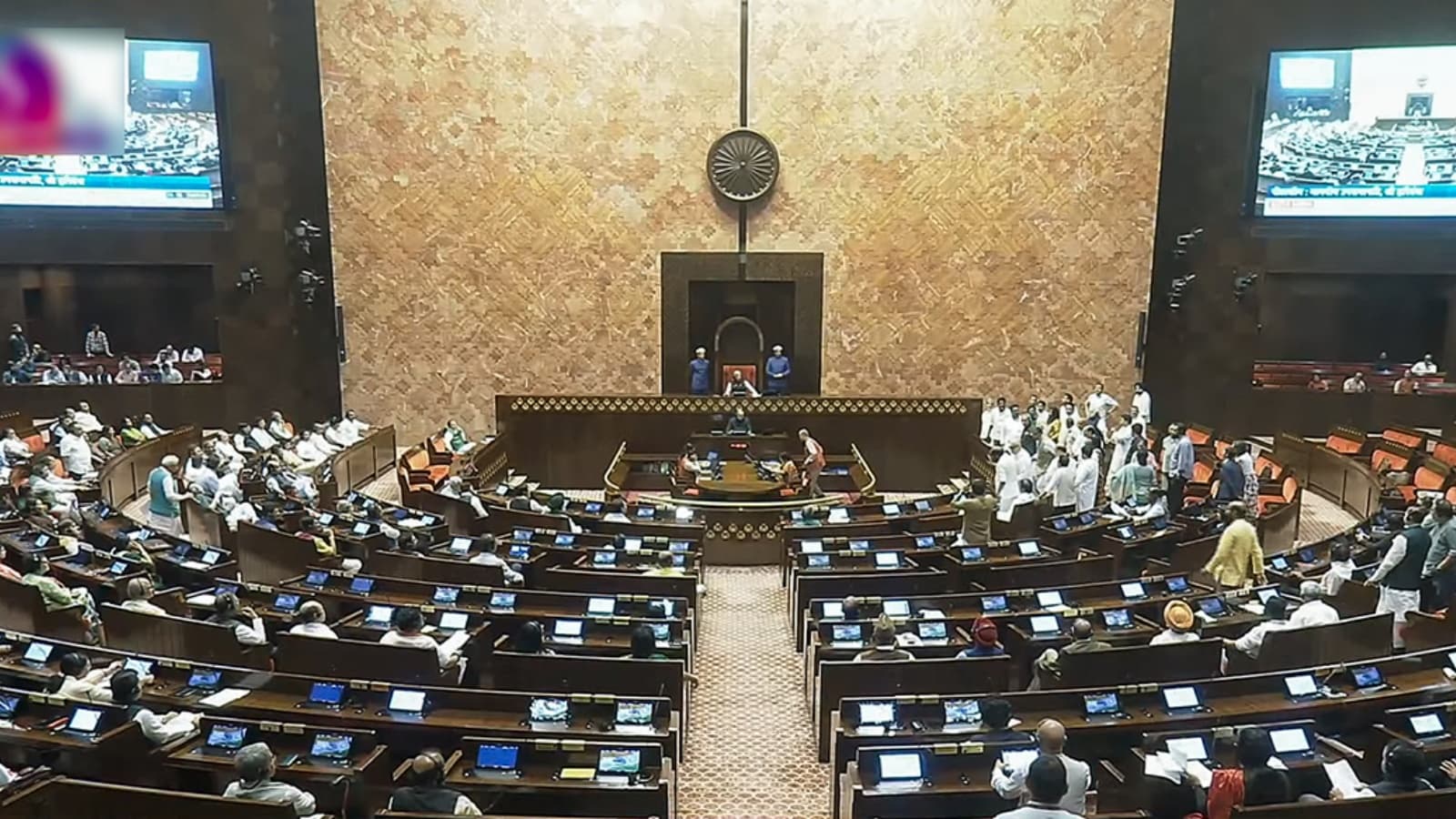
New DelhiJul 30, 2026 03:21 AM IST Rajya Sabha Deputy Chairman Harivansh conducts the proceedings of the House on Wednesday. (ANI)The Rajya Sabha on Wednesday passed a Bill that criminalises intentional disruption or prevention of the singing of the national song, Vande Mataram, thereby according it legal sanctity at par with the national anthem, Jana Gana Mana. The Prevention of Insults to National Honour (Amendment) Bill, 2026, seeks to amend a 1971 law by the same name, which makes insults towards the national anthem, national flag and the Constitution a criminal offence.The Bill was passed through a voice vote following a walkout by nearly all opposition members. When the upper House proceedings resumed at 2pm, Rajya Sabha Deputy Chairman Harivansh invited members to begin a discussion on the Bill. However, opposition members protested and raised slogans, demanding Home Minister Amit Shah’s statement on the recent Delhi Police action against students and youngsters who were protesting against paper leaks at Jantar Mantar. The Bill states that intentionally preventing the singing of the national song or causing disturbance to any assembly engaged in its singing will be punishable with imprisonment for a term which may extend to three years, or fine, or both. Minister of State for Home Affairs Nityanand Rai had introduced the Bill for consideration in the upper House on July 24. Replying to a discussion on the Bill, Nityanand Rai said he could not understand why some members, and especially the Congress party, have a problem with the Bill. “This is not just an amendment but our commitment towards national awareness, cultural heritage and the values of our freedom struggle,” he said. The Union minister said that when Bankim Chandra Chatterjee composed the national song in 1875, he had said that one day it will be on every Indian’s lips “as a mantra”. Rai claimed that as Congress President, Jawaharlal Nehru limited the national song to only two stanzas in 1937. He went on to add that in 1938, Netaji Subhas Chandra Bose, as the Congress president, had urged Timir Baran Bhattacharya to compose the full version of the song.Story continues below this ad “On 24th January, 1950, Dr Rajendra Prasad said in the Constituent Assembly that Vande Mataram should be honoured on par with Jana Gana Mana,” Rai said. “Opposing this (Bill) only means that the Congress wants to adopt appeasement and wants to insult our national pride… the country’s youth, workers, and women will not support this,” Rai added. Earlier, when the Bill was taken up for discussion, there was uproar in the House. Congress’ Ranjit Ranjan was slated to begin the discussion, but as the MP joined her colleagues in protests seeking the Home Minister’s presence, Deputy Chairman Harivansh said the member was not interested in speaking (on the Bill). BJP’s Radha Mohan Das Agrawal, who was given the next opportunity to speak, said that the national song has been insulted for the last 123 years, and added that not just today’s Congress party but even the one during the freedom struggle repeatedly insulted the song. Among opposition members, Deputy Leader of the Opposition Pramod Tiwari, Sagarika Ghose and Tiruchi Siva sought to demand Amit Shah’s presence, but the Deputy Chairman did not allow them to speak on any issue other than the Bill.Story continues below this ad Manoj Kumar Jha of Rashtriya Janata Dal said, “I am witnessing for the first time that our national song and national anthem are being pitted against each other. Reverence cannot be legislated.” Biju Janata Dal’s Sulata Deo said none of the members of the House can sing the national song correctly and urged that it should be played in all state assemblies as well as in Parliament. Aam Aadmi Party’s Sanjay Singh said that while his party supports the Bill, there should also be a Bill against those who insult the National Anthem and the Tricolour. An award-winning journalist with 14 years of experience,
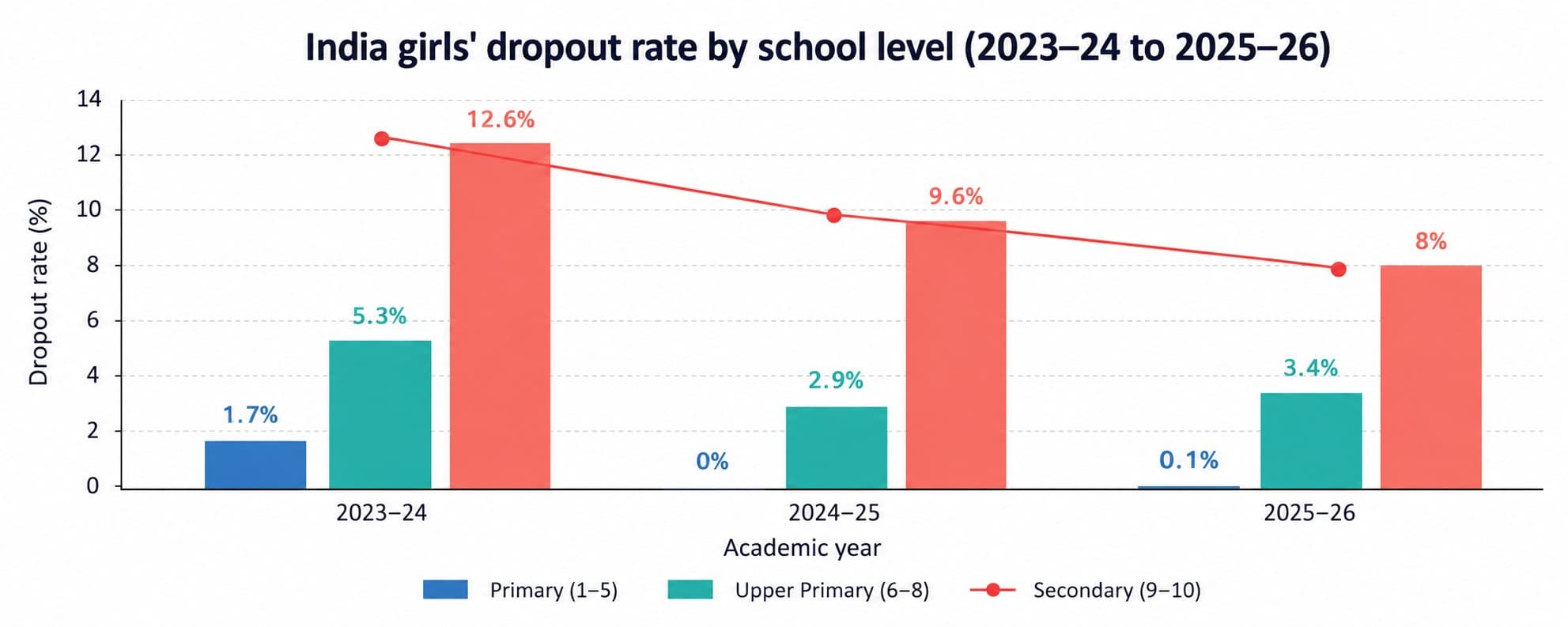
New DelhiUpdated: Jul 28, 2026 05:28 PM IST Union Education Ministry's data shows 8% girl-students in the country have dropped out between class 9 to 10 (AI Image)Eight out of every 100 girls enrolled in secondary school dropped out before completing their education in 2025–26. That is the key takeaway from the Education Ministry’s reply in the Lok Sabha this week. While the secondary school dropout rate for girls fell to 8 per cent — the lowest in the past three years, down from 12.6 per cent in 2023–24 and 9.6 per cent in 2024–25 — it remains starkly higher than at the primary level. Even at its lowest, the secondary school dropout rate for girls is nearly 80 times higher than the primary school dropout rate. The numbers come from UDISE+, the government’s own school database, and were tabled by Minister of State Jayant Chaudhary in response to a question from MP Gurmeet Singh Meet Hayer. The reply breaks dropout rates into three stages: primary, upper primary, and secondary. The pattern across almost every state is the same. Girls barely drop out in the early years; some slippage begins around classes 6 to 8, and then a much bigger share vanishes by class 9 or 10, right around the age when most reach puberty, and families start weighing school against work, marriage, or money. Nationally, primary dropout among girls is close to zero, at just 0.1 per cent. Upper primary sits at 3.4 per cent. Secondary jumps to 8 per cent. The Centre’s own explanation, drawn from the 2023-24 Periodic Labour Force Survey, lists the reasons in plain terms: girls leave to supplement household income, to attend to domestic chores, or because their parents simply do not see further education as necessary. What do state-specific numbers say? State-wise, the secondary-level numbers throw up some surprises. These are not necessarily the poorest states on paper, which suggests the drivers here go beyond income alone and could include distance to secondary schools, safety concerns, or early marriage. Girls’ dropout rates at the secondary level (Classes 9–10) remain the highest across school stages, though they have fallen from 12.6% in 2023–24 to 8% in 2025–26. State-level disparities persist, with Ladakh (15.6%) recording the highest dropout rate, followed by Assam and Karnataka (13.9% each), Gujarat (13.3%), and Arunachal Pradesh and Nagaland (12.4% each), indicating that retention challenges remain concentrated in a handful of states. Toilets, hygiene and the bigger picture The question that prompted this reply was about school toilets, and the numbers there look far healthier. As per UDISE+ 2025-26, 95.4 percent of government schools in India now have separate functional toilets for girls, covering over 9.5 lakh schools. States like Delhi, Goa, and Chandigarh report full coverage, while Arunachal Pradesh, at 67.9 percent, and Mizoram, at 72.7 percent, trail furthest behind. Story continues below this ad But the ministry was careful to note that no central study has directly linked toilet access to female dropout rates. Instead, schemes like the Samagra Shiksha fund sanitary pad vending machines and incinerators, while a separate Health Ministry programme reaches 53.9 lakh adolescent girls a month with sanitary napkins and awareness drives.
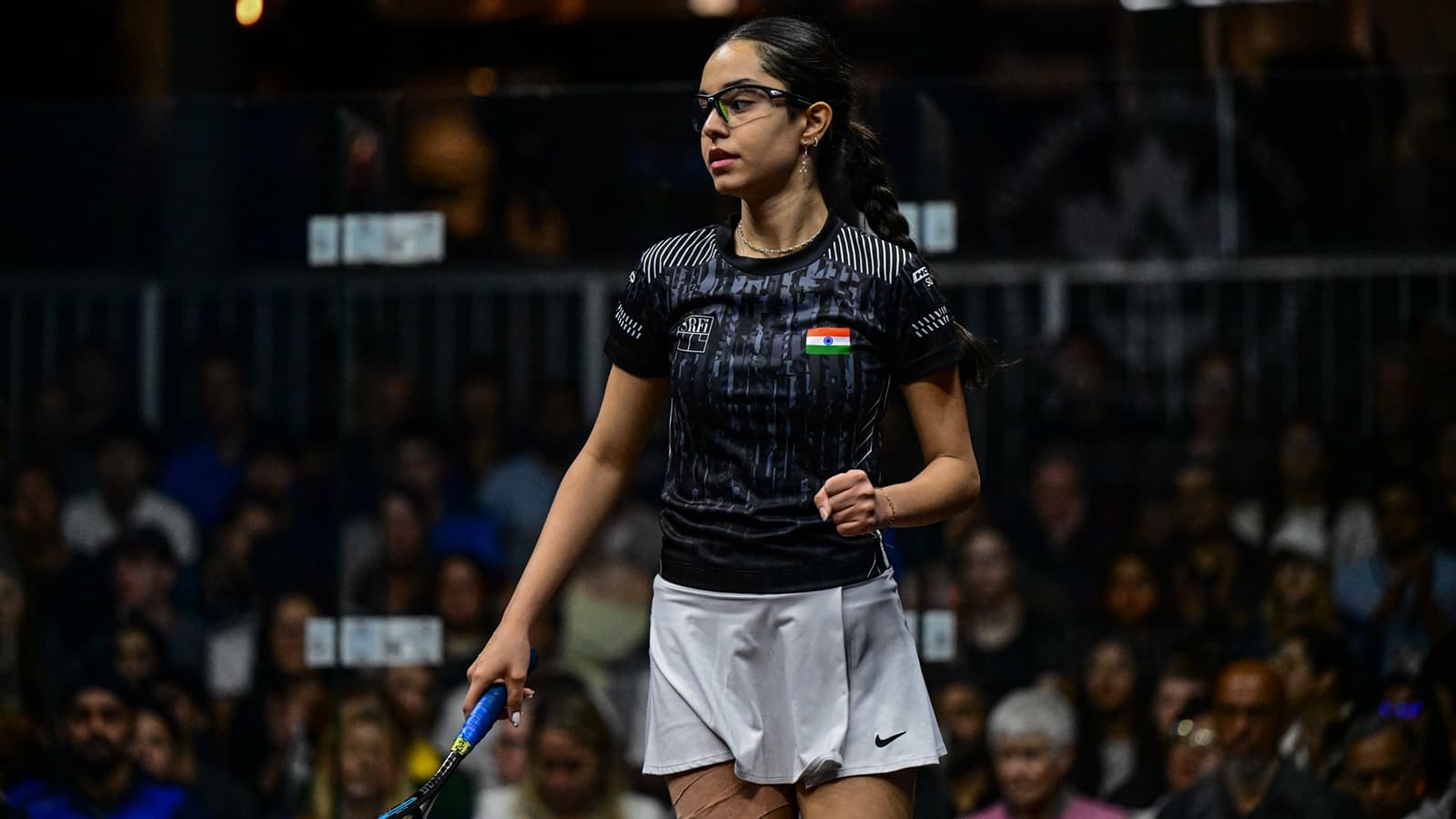
Anahat Singh defeated Egypt’s Ruqayya Salem in the finals. (Image source: PSA)Anahat Singh can’t wait to meet her cousins when she returns home. It’s the only way she feels she could make sense of the past few days. That, and catching the new Spiderman movie releasing at the end of the month. The 18-year-old, in her fifth and final attempt, won the squash Junior World Championship, a feat that ended 16 years of Egyptian dominance in the event, and landed a first-ever singles squash world title for a country that has produced world-level talent, but not quite like the teenager from Delhi.“I don’t think I’ve really had time to just sit down and actually understand what happened or exactly how it happened. I don’t think it’s going to sink in until I’m actually back home with my friends and family, and talking to them about it,” Anahat told The Indian Express from Canada. The word ‘pressure’ being used by her repeatedly is a mark of the load of expectations being carried by the 18-year-old. Ranked 20th in the world, there is a genuine sense in the country that she could be a world-beater in her sport as the performances in the senior circuit start to improve, and the tour titles arrive. In a way, this Junior World Championship was a farewell of sorts for her and a ‘welcome to the big league’ moment. Part of that is also her reluctance to be overawed by the might of the Egyptians, who have dominated the sport. Their presence is not a cause of worry for her. “The way they’ve been brought up since they’ve been kids, for them, it’s like cricket for India. They’ve been brought up hearing about it, looking at squash all the time, playing squash all the time. I was there in Egypt a year ago for the World Juniors and kids almost five years old would be playing from 6 am. I would see them at 11 pm at the squash courts with coaches, and there were 15 different courts around the whole complex,” explained Anahat. Beating the assembly line of Egyptians and their ability to go deep in tournaments requires her to level up physically. In big–ticket tournament with 6-7 games for a chance at a medal, working on her overall fitness – and muscle mass in particular – is something Anahat is looking at.Story continues below this ad “I’m not amazing in the physicality aspect of it. I’m focusing on that right now. Muscle mass is definitely something that I’m working on improving. Going to the gym a little bit more and focusing on the strength aspect, that’s something that can really improve my game a lot more,” she said. In a previous press interaction facilitated by the Sports Authority of India, Anahat had said, “Just learning how to stick with the top players and being able to back up multiple tough matches continuously – not just playing one good match and going flat in the next – that’s really important, especially in platinum events, since they’re quite long. You have to play almost six or seven matches just to reach the finals.” Olympic dreams The JSW athlete will have multiple pathways to reach the 2028 Los Angeles Olympics, where squash will make its debut. But a gold medal at this year’s Asian Games in Aichi-Nagoya offers the clearest route. But along that path are some high-ranked opponents, ones whom the Indian is relishing the idea of taking on. “There are so many top players who are playing this event, like Sivasangari Subramaniam and Satomi Watanabe, number six and number seven in the world respectively. I’ve played them multiple times and always had close games. I’m just really looking forward to playing against them again,” said Anahat, adding, “The stakes are, of course, very, very different now.”Story continues below this ad Anahat won Asian Games team and mixed medals at Hangzhou, but this will be the first time she enters the tournament with a clear shot at a title charge. A gold medal gives her a direct entry into the LA Games, but crucially will aso allow her to put in a two-year focused programm
Anahat Singh defeated Egypt’s Ruqayya Salem in the finals. (Image source: PSA)It was Anahat Singh’s fifth and, importantly, final chance to get it right at the World Juniors Championships in Canada. She had four quarterfinals, one bronze, plenty of deja vu, and even a French coach to match. Gregory Gaultier had been in her tactical corner as coach, the squash legend most famous for losing four Senior World Championship finals before winning the fifth, to teach her precisely how to handle this last week.The 18-year-old from Delhi, whose father is a lawyer and mother an interior designer, had called the World Juniors a “curse” because she kept missing the title. When she broke the curse, she became India’s first-ever world title holder among women. On Saturday in Ontario, finally, the teen prodigy made up for all misses and ended Egypt’s run of 13 straight titles, after beating three from the squash powerhouse in the quarters, semis and finals. The attacking player with Indian flair and Gregorian gumption defeated Ruqaiyya Salem 11-3, 11-7, 11-9 to ensure a non-Egyptian won the World Juniors for the first time since 2011. India’s last finalist was Joshana Chinappa in 2005. Anahat’s Jr in action. (PSA)“I still feel like I’m dreaming,” Anahat told World Squash. “This tournament has been the worst tournament for me. I have been losing in the semis and quarters over the last four years. I have always said, if anyone asked, ‘This tournament’s a curse’, and I have never been able to play well in the event. This is my last year [as a junior] and my only chance to win it. It means the world.” Anahat played badminton in her early years, picked the wristy deception from there and was star-struck by her hero P V Sindhu at the last Commonwealth Games. She is also World No 20 in seniors, and had won her first Professional Squash Association title in Washington earlier. She was preparing for her exams in May. “I’m pushing through school work for exams in May,” she had said. By July, she had passed a bigger test in the glass coliseum.Story continues below this ad Multiple title-winner and her predecessor Dipika Pallikal, just like Joshana, tried many times but always came up against the Egyptians. The powerhouse has set the benchmark in world squash for many decades, creating an incredible ecosystem — world-class coaching, fierce domestic competition and a culture where young players grow up believing they belong at the very top. “So when you play an Egyptian, you are not just playing an individual; you are playing someone who has come through one of the toughest systems in the sport,” Dipika explained. Anahat in action. (PSA)Breaking that stranglehold was extremely difficult because they are technically gifted, tactically smart and mentally very resilient. “Every win against them is earned. That’s why whenever someone from outside Egypt wins a major title, it’s a significant moment for world squash. So for her to beat that streak of Egyptians winning this title and get one for India is fantastic,” Dipika said. India’s best squash brain Saurav Ghosal mentors Anahat, while Stephane Galifi runs her day-to-day training and moulded her mindset — stay attacking, but prepare for Plan B, C and D.Story continues below this ad “Anahat is a good court mover and likes to dominate the volley,” Gaultier had said earlier, adding that the coaching team would help her identify crucial junctures when to attack Egyptians who were skilled, had no fear, and played with a certain stomp. After wins over Lily Wilson (Australia), Pui Yin Chloe (Hong Kong) and Douce Ye San Lee (Malaysia), Anahat dropped only two sets to Egyptians Habiba Rizk and Barb Samah. But her dominance was evident in beating three on the trot from Egypt to win the title. “I’m teaching her solutions instead of dwelling on frustrations,” Gaultier, who had experienced the depths of loss, had said, reminding her, “you are doing what you love. So no compl

Court cases pending in India for over 20 years have crossed 11.73 lakh, with Uttar Pradesh reporting the highest backlog. (Image generated using AI) Union Minister of State for Law and Justice Arjun Ram Meghwal on Thursday said that there are over 11.73 lakh court cases pending for more than 20 years in various courts in the country. In a written reply in Rajya Sabha, Meghwal, quoting data available on the National Judicial Data Grid (NJDG) as of July 16, 2026, said 11,73,509 cases have been pending for over 20 years in the Supreme Court, 25 High Courts, District and Subordinate Courts across the country. Allahabad High Court tops 20-year pendency list with 1.61 lakh cases According to the statement, a total of 4,52,152 cases have been pending for more than 20 years in the Supreme Court and High Courts across India. The Allahabad High Court has the highest number of cases pending for more than 20 years, with 1,61,598 cases.It is followed by the Madras High Court (76,298), Bombay High Court (55,255), Calcutta High Court (34,551), Rajasthan High Court (33,296), Punjab and Haryana High Court (25,247), and Madhya Pradesh High Court (24,938). The High Courts of Meghalaya, Tripura, and Sikkim have no cases pending for more than 20 years. Among the remaining High Courts, the lowest number of such long-pending cases is in the Manipur High Court (5 cases), followed by the Gauhati High Court (81 cases), Himachal Pradesh High Court (90 cases) and Chhattisgarh High Court (94 cases). Supreme Court and High Courts: Cases pending for 1, 5, 10, 20 and 30 years Pending Cases in Supreme Court & High Courts, as on 16.07.2026 65,68,560 Total pending cases, Supreme Court + all High Courts 12,28,353 Highest pendency: Allahabad High Court 96,024 Pending in Supreme Court of India Age-wise Break-up of Pending Cases (All High Courts) Exclusive age bands computed from cumulative "more than X years" figures; total = 64,72,536 64.7L HC cases >30 yrs: 80,660 20-30 yrs: 3,71,492 10-20 yrs: 11,62,505 5-10 yrs: 13,60,504 1-5 yrs: 22,68,167 30 yrs >20 yrs >10 yrs >5 yrs >1 yr Total Supreme Court of India2655810,09424,61149,24896,024 Allahabad HC53,7871,61,5984,88,3597,30,56210,76,28512,28,353 Bombay HC3,90155,2551,85,2613,19,4785,30,0946,57,813 Calcutta HC11,41734,55175,2681,09,4561,72,6442,00,173 Gauhati HC0814,80223,71250,31465,001 Telangana HC632,61036,3191,02,1051,96,4072,42,625 Chhattisgarh HC0946,14923,45455,27074,109 Rajasthan HC2,11133,2961,31,3702,96,2485,51,0386,96,348 Andhra Pradesh HC1,6507,33156,0671,16,3402,12,2662,53,617 Delhi HC1262,12920,51542,32493,0701,25,478 Gujarat HC192,14325,28770,0171,39,7251,75,436 Himachal Pradesh HC3908,52140,77781,0101,04,770 Jammu & Kashmir HC43956,13313,51433,95044,595 Jharkhand HC593,85514,95229,11755,24172,751 Karnataka HC4456922,22178,3332,49,1613,37,159 Kerala HC742,00441,5111,06,1172,03,0022,46,302 Madhya Pradesh HC9224,9381,54,8602,54,7134,14,4654,90,363 Manipur HC051331,1114,4266,230 Meghalaya HC007998211,996 Punjab & Haryana HC30325,2471,32,9242,28,7583,51,7594,23,169 Sikkim HC00416153318 Tripura HC001135331,
New DelhiJul 23, 2026 06:28 PM IST Commonwealth Games 2026 will get underway in Glasgow on Thursday. (Reuters)School Assembly News Headlines for Today, July 23, 2026: Here are the top School Assembly News Headlines for July 24. Today’s highlights include PM Modi’s announcement on paper leak cases, heavy monsoon in several north Indian states, and the Commonwealth Games 2026 begin today in Glasgow. National newsPrime Minister Narendra Modi announced fast-track courts for paper leak cases, saying those responsible for compromising students’ futures will face swift and stringent punishment. The Centre has initiated a fresh round of talks with protest leaders as demonstrations over alleged examination irregularities continue in the national capital. A police officer was shot dead in Anantnag in the first major terror attack in Jammu and Kashmir since the Pahalgam incident, prompting a security review. Heavy monsoon rains continued to affect several northern states, with authorities issuing weather advisories and asking people to remain alert in vulnerable areas. World news Diplomat and climate activist Sonam Wangchuk has expressed willingness to resume talks with the Centre, signalling a possible breakthrough in discussions on Ladakh-related issues. Several countries are monitoring extreme weather events, with heatwaves and floods continuing to impact communities across Europe and parts of Asia. Sports newsStory continues below this ad India’s cricket team continues preparations for its upcoming international fixtures as selectors finalise combinations for the next series. Commonwealth Games 2026 begin today in Glasgow, with a 125-member Indian contingent aiming for a strong medal haul. Olympic champions Neeraj Chopra, Mirabai Chanu and boxer Lovlina Borgohain are among India’s biggest medal hopes. Business news Experts have called for greater focus on manufacturing alongside the rapid growth of Global Capability Centres (GCCs), highlighting the sector’s role in job creation. Education news The National Testing Agency’s income more than doubled in five years, rising from ₹504.16 crore in 2019–20 to ₹1,116.84 crore in 2023–24, according to data shared in Parliament.Story continues below this ad Thought of the Day “Success is the sum of small efforts, repeated day in and day out.” — Robert Collier



Discussion (0)