
Loading dispatches...
← Return to NewsroomPolitics
Full version Vande Mataram: What are the rules for rendition of National Song
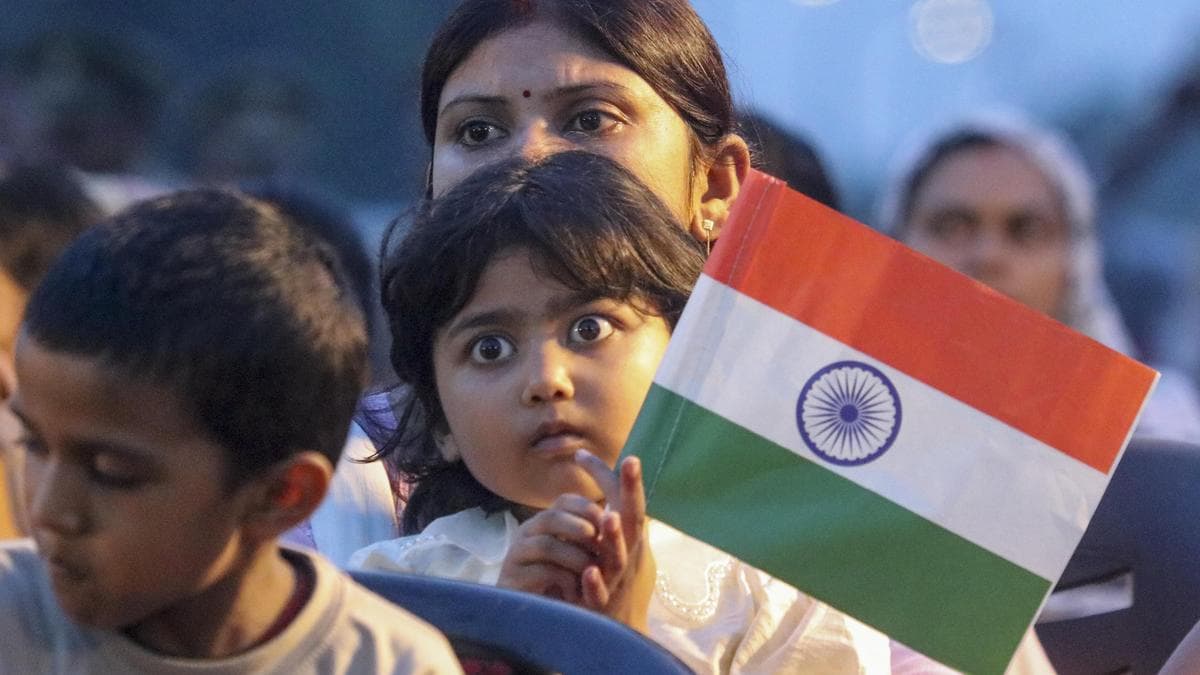
Vande Mataram or the National Song will be sung from the ramparts of the Red Fort in New Delhi for the first time on Independence Day, preceding the National Anthem. It is also the 150th anniversary of the adoption of Bankim Chandra Chatterjee’s Vande Mataram as the National Song. But the original adopted version included only the first two stanzas. Recently, the Centre notified that all six stanzas would have to be sung.The Centre issued guidelines on February 11, 2026, for the rendition of the National Song at public gatherings, schools, and official government functions, among others. This comes after the passing of the Prevention of Insults to National Honour (Amendment) Act, 2026, which amended the Prevention of Insults to National Honour Act, 1971. It is now a criminal offence to intentionally disrupt, obstruct, or prevent the singing of the Vande Mataram.The duration of singing and specific directions for playing by a band, among other rules, have also been mentioned in the circular. Vande Mataram to precede Jana Gana ManaThe circular mentions that the National Song Vande Mataramshall be played or sung before the National Anthem‘Jana Gana Mana’ on all occasions when both are to be played or sung.Vande Mataram durationThe total duration of the National Song must be “approximately 3 minutes 10 seconds.”If played by a band, it should be preceded by a “by a roll of drums to assist the audience to know that the National Song is going to be played, unless there is some other specific indication that the National Song is about to be played, as for example, when fanfares are sounded before the National Song is played.” The circular adds that “the duration of the roll, in terms of marching drill, will be 7 paces in slow march. The roll will start slowly, ascend to as loud a volume as possible and then gradually decreases to original softness, but remaining audible until the seventh beat. One beat rest will then be observed before commencing the National Song.” Vande Mataram: Occasions for rendition Civil Investitures On arrival of the President at formal State functions and other functions organized by the Government and on his departure from such functions Immediately before and after the President addresses the Nation over All India Radio and Television On arrival of the Governor/Lieutenant Governor at formal State functions within his State/Union Territory and on his departure from such functions When the National Flag is brought on parade Rules for mass singingThe National Song shall be played accompanied by mass singing on these occasions: On the unfurling of the National Flag, on cultural occasions or ceremonial functions other than parades On the arrival of the President at any Government or Public function (but excluding formal State functions) and also immediately before his departure from such functions On all occasions when the National Song is sung, the official version shall be recited accompanied by mass singing The National Song may be sung on occasions which, although not strictly ceremonial, are nevertheless invested with significance because of the presence of Ministers etc In all schools, the day’s work may begin with community singing of the National Song Standing mandatory during National SongThe circular mentions specific rules of standing when the National Song is played or sung: Whenever the official version of the National Song is sung or played, the audience shall stand to attention. However, when, in the course of a newsreel or documentary, the National Song is played as part of the film, it is not expected of the audience to stand, as standing is bound to interrupt the exhibition of the film and would create disorder and confusion rather than add to the dignity of the National Song. Vande Mataram: All six stanzasThe directive has given the lyrics for the National Song, and it includes all six stanzas of Vande Mataram. The lyrics to be sung or played are as follows: Vande Mataram!Sujalam
HYDERABADBharat Rashtra Samithi (BRS) working president K.T. Rama Rao has criticised the attitude of Congress and Bharatiya Janata Party (BJP) on the issue of national project status to Palamuru-Rangareddy Lift Irrigation Scheme (PRLIS) and the have proved that their 8 MPs each are nothing but zero when it comes to the interests of Telangana.In a statement issued on Tuesday, he expressed dismay over the silence of eight each MPs of Congress and BJP in Lok Sabha when the issue of national project status to PRLIS had come up. It was unfortunate that nobody tried to speak strongly in support of national project status to PRLIS.He alleged that Congress had done great injustice to Telangana not giving national status to any project of Telangana, while providing the national project status to Polavaram of Andhra Pradesh in the AP Reorganisation Act at the time of bifurcating combined AP. The Centre had told Parliament that it was not giving national project status to PRLIS while stating that Ken-Betwa, Polavaram and Upper Bhadra projects were given the status.The State MPs had no guts to question BJP by citing the promises made by the national leadership of the party in Palamuru (combined Mahabubnagar district) on giving the national project status to PRLIS in the past.On performing Varuna Yagam, he alleged that the government was trying to divert the people’s attention with such acts as they would not bear fruit until the Narlapur (PRLIS) and Kannepalli (KLIP) pump houses were switched to lift the flood water of Krishna and Godavari rivers to fill linked reservoirs and minor irrigation tanks to assure at least one crop this El Nino year. Without human efforts such yagams would not give good results.On the Godavari River Management Board (GRMB) meeting, Mr. Rama Rao reiterated the demand for its boycott if the proposed cancellation of approvals for seven Telangana projects remains on the agenda. He warned that the BRS would launch a “Jala Udyamam” in Telangana and intensify its agitation to protect the State’s irrigation rights, if the issue was not removed from the agenda. Published - August 11, 2026 09:56 pm IST

The ‘Sthree Mart’ is expected to enable women’s Self-Help Groups and small-scale women entrepreneurs to market a range of products, including food items, handicrafts, and household products, under one roof. | The initiative aims to strengthen women’s economic empowerment by providing a dedicated market platform for products made by women and women’s Self-Help Groups, besides encouraging them to take up self-employment.P. Ravikumar Gowda Ganiga, Mandya MLA, visited the proposed site on Monday and inspected the location. He discussed the project’s plan, availability of space, and the infrastructure required with officials.Speaking after the inspection, Mr. Gowda said women’s economic independence would strengthen both families and society. Providing women with opportunities for self-employment and income generation, along with proper market facilities for their products, would further boost their economic activities, he said.The ‘Sthree Mart’ is expected to enable women’s Self-Help Groups and small-scale women entrepreneurs to market a range of products, including food items, handicrafts, and household products, under one roof.The initiative also seeks to enable women to participate not only in the production but also in the sale and marketing of their products. This would promote entrepreneurship among women and create local employment and income-generating opportunities.Mandya Zilla Panchayat Chief Executive Officer Nandini, Mandya City Municipal Council Commissioner Pampashree and other officials were present Published - August 10, 2026 07:27 pm IST

G. RajagopalFor decades, residential real estate in Kerala evolved around the joint family. Homes were designed for multiple generations living under one roof, with elderly parents cared for within the household. Today, that model is changing. Smaller families, migration and longer life expectancy are reshaping housing demand in Kerala.Kerala is already India’s oldest State demographically. According to the Government of India’s Population Projections for India and States 2011–2036, the share of people aged 60 years and above is expected to reach 22.8% by 2036, meaning one in four residents will be a senior citizen. The State’s elderly population is projected to nearly double from 4.2 million in 2011 to around 8.4 million by 2036, creating one of the country’s largest concentrations of older adults.Dedicated budgetUnlike most States that are only beginning to acknowledge this transition, Kerala has started incorporating ageing into public policy and urban planning. In 2026, it became the first Indian State to present a dedicated Elderly Budget, bringing together investments in healthcare, social security, age-friendly infrastructure and community-based services. The State has also strengthened initiatives such as Vayomithram, Vayoraksha and Sayamprabha Homes, while Kochi became the first Indian city to join the World Health Organization’s Global Network for Age-friendly Cities and Communities. These initiatives signal an important shift: ageing is no longer viewed solely as a social welfare issue but as a planning and infrastructure priority.This shift is beginning to influence Kerala’s residential real estate. Housing is gradually moving beyond conventional apartments and villas towards communities that support independent ageing. Developers are increasingly recognising seniors as a distinct homebuyer segment, creating demand for residences that combine accessibility, safety, convenience and opportunities for social engagement. Professionally managed senior living communities, once considered a niche offering, are steadily emerging as a specialised residential category.Other amenitiesEqually important is the evolution of residential design. Homes built for an ageing population require more than cosmetic changes. Wider doorways, step-free entrances, anti-skid flooring, accessible bathrooms, elevators, emergency response systems, better lighting and barrier-free common areas are becoming increasingly relevant. At the community level, walkable layouts, shaded pathways, activity centres, wellness facilities, neighbourhood retail and easy access to healthcare are likely to become defining features of future developments. Technology is also playing a growing role through smart home automation, digital access systems, emergency alerts and remote health connectivity, allowing seniors to live independently for longer.According to the India Ageing Report 2023, India’s population aged 60 years and above will increase from 149 million in 2022 to 347 million by 2050, accounting for nearly 20% of the country’s population. By 2046, older persons are projected to outnumber children below the age of 15 years. These demographic shifts will fundamentally reshape residential demand, requiring developers to think beyond conventional housing formats.The futureThe opportunity extends well beyond retirement communities. Future residential projects are likely to incorporate universal design principles as part of mainstream housing, recognising that accessibility benefits not only seniors but families across all age groups. Mixed-age communities, homes that support ageing in place and integrated townships with healthcare, wellness and hospitality services are expected to become increasingly common. As India’s population aged 80 years and above is projected to grow by nearly 279% between 2022 and 2050, demand for assisted living, rehabilitation, memory care and continuum-of-care communities will also expand.Growth aheadFor the real estate sector, this
Rashtra Sevika Samiti, the women’s parallel of Rashtriya Swayamsevak Sangh (RSS), on Sunday (July 26, 2026) adopted a resolution expressing concern over what it termed “population imbalance” in the country, urging the Centre and State governments to formulate a uniform national population policy applicable to all communities.The resolution was passed at the organisation’s Akhil Bharatiya Pratinidhi Sabha (All India Representative Council), which was held at Samalakha and was headed by Samiti chief V. Shantha Kumari.Arguing that population was not merely a statistical measure but determined a nation’s future and identity, the resolution stated that while India’s population growth rate had declined due to decades of population control measures, demographic changes among religious communities had created an imbalance that warranted a review of the existing population policy.Citing data from the Prime Minister’s Economic Advisory Council, the resolution said the share of the Hindu population declined from 84.68% in 1951 to 78.06% in 2015, while the Muslim population increased from 9.84% to 14.09% during the same period. It said these demographic trends required policymakers to revisit the country’s population strategy.“The growing demographic imbalance in India is not only eroding the country’s identity but is also posing a threat to India’s very existence,” the resolution read.The Rashtra Sevika Samiti urged the government to enact stringent laws to curb illegal immigration, religious conversions and “love jihad”, strengthen border management, identify and deport illegal foreign nationals, and implement a uniform national population policy across the country.It also reiterated its demand for the implementation of a Uniform Civil Code nationwide, arguing that such a measure would help address challenges arising from what it described as demographic imbalance.The organisation further called for greater emphasis on education, women’s empowerment and economic development across all communities, while urging society to remain alert to demographic changes and their perceived long-term consequences.It’s not just Rashtra Sevika Samiti which has expressed concern for demographic imbalance. Even the RSS, on several occasions in the past, has repeatedly linked its demand for a national population policy to what it described as “demographic imbalance” through resolutions passed by its Akhil Bharatiya Karyakari Mandal in 2004 and 2015. Published - July 26, 2026 10:21 pm IST
Discussion (0)