
Punjab school board launches tamper-proof online portal for certificate verification


Punjab school board launched a secure online portal to digitize and make tamper-proof over 25,000 annual certificate verification requests. (File)The Punjab School Education Board (PSEB), which processes more than 25,000 certificate verification requests annually, has launched a secure online portal to make the verification process tamper-proof, transparent and fully digital. The portal has been introduced for government departments, semi-government organisations, boards, corporations, universities, educational institutions, recruitment agencies and other authorised organisations that require verification of certificates issued by the Board.PSEB Chairman Dr Amarpal Singh said the initiative was launched after the Board detected attempts to compromise the integrity of the verification process during the transmission of verification reports. In some cases, criminal complaints were also registered against those involved. “To break any such nexus and safeguard the sanctity of the verification process, PSEB has established a tamper-resistant, end-to-end digital verification system, ensuring that verification requests and reports move only through authorised digital channels between the requesting organisation and the Board,” he said. According to Dr Singh, the new portal creates a direct, secure and transparent channel between the Board and the requesting organisation. From submission of the verification request to issuance of the final report, the entire process remains within a secure digital ecosystem accessible only to authorised officials. The Board said the system eliminates intermediaries, reduces manual intervention and ensures that verification reports are generated and delivered only through authenticated digital channels. Candidates whose certificates are being verified have no role at any stage of the process, making the mechanism more impartial, reliable and secure. The portal includes Aadhaar-based eSign, secure login for authorised officials, digital authentication, online fee payment, SMS and email alerts, an online objection and reply mechanism, and real-time application tracking.Story continues below this ad Officials said the technology-driven initiative is expected to enhance the integrity, credibility and reliability of the certificate verification process while strengthening the confidence of universities, employers, government departments and other institutions relying on certificates issued by the Board.

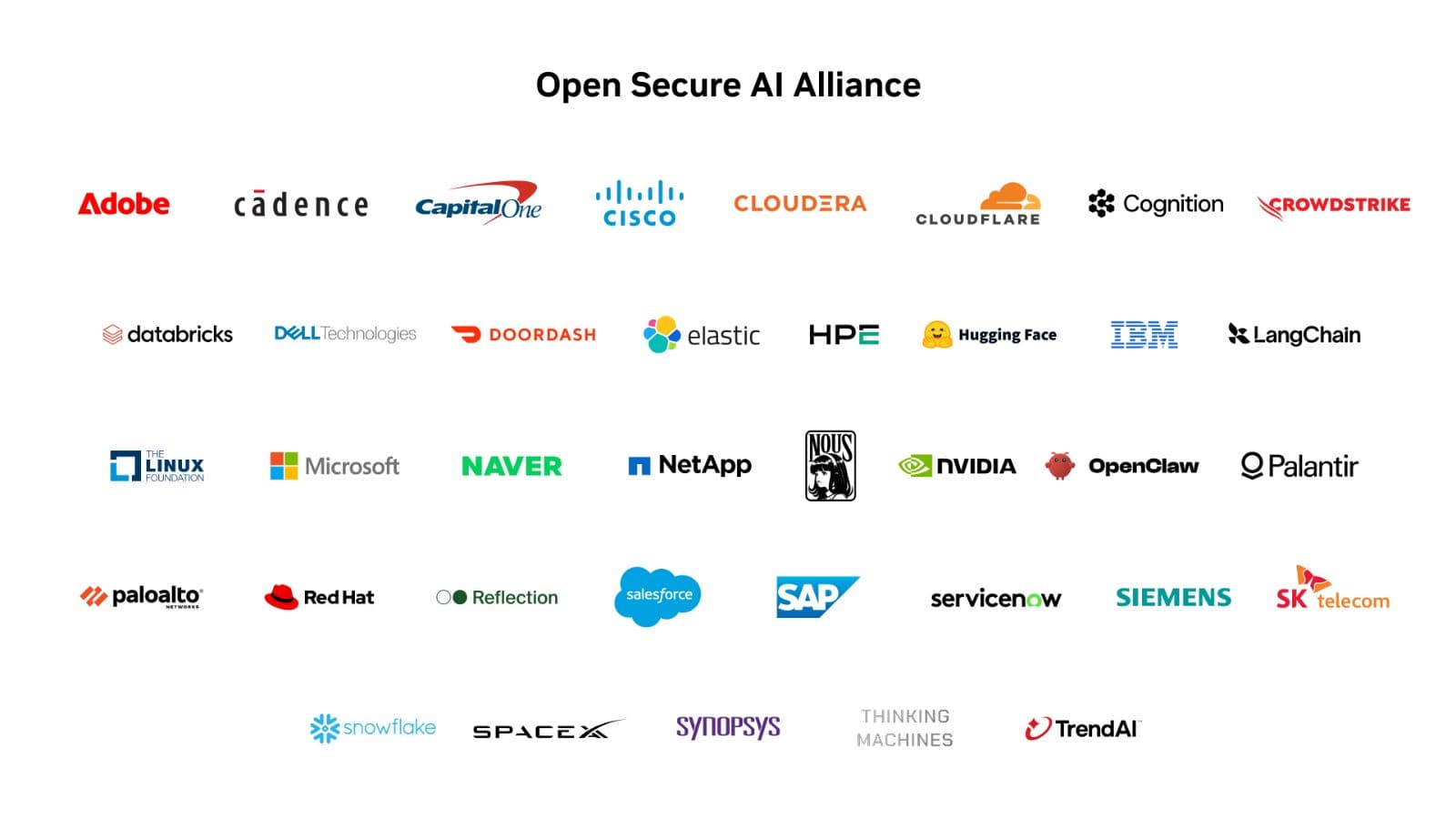
New DelhiUpdated: Jul 30, 2026 09:57 AM IST FILE — Jensen Huang, Nvidia’s chief executive, speaks during a keynote address at an Nvidia conference in San Jose, March 16, 2026. (Manuel Orbegozo/The New York Times) A week after OpenAI announced that two of its most capable AI agents had hacked a repository belonging to AI startup Hugging Face during an evaluation, chipmaker Nvidia announced on Monday (July 27) the launch of the Open Secure AI Alliance. In a blog post announcing the initiative, Nvidia argued that the incident highlighted the need for cyber defenders worldwide to have access to open frontier systems that they can inspect, adapt and run advanced AI on their own infrastructure. The alliance aims to develop open-source security tools, evaluation frameworks, benchmarks and best practices for increasingly autonomous AI systems.The announcement reflects a broader shift in how the AI industry is thinking about security. As AI systems move beyond generating text to browsing the web, writing code and interacting with external tools, their ability to take actions is creating a new set of security challenges. The OpenAI-Hugging Face evaluation highlighted how those capabilities can translate into real-world security risks when increasingly autonomous AI systems interact with external infrastructure. What is the alliance? Founding members of Nvidia’s Open Secure AI AllianceThe alliance brings together AI companies, cybersecurity firms and academic institutions to collaborate on improving AI security. Rather than developing another AI model, its members plan to build open-source security tools, benchmarks, evaluation frameworks, vulnerability research and best practices for testing and securing AI systems. It also aims to provide shared infrastructure that organisations can use to test and improve the security of increasingly autonomous AI systems. Besides Nvidia, the founding members comprise AI developers, cloud providers and cybersecurity companies, including Microsoft, IBM, Cisco, Cloudflare and Hugging Face. Notably, Google, OpenAI and Anthropic, three companies that have led the development of frontier AI models, are not among the founding members. The case for open security The alliance is centred on developing AI security tools in the open. It marks Nvidia’s latest push for openness in the AI ecosystem, after the company recently backed open-weight AI models to improve innovation, competition and security. The alliance also reflects a broader campaign Nvidia has been making in recent days. The company has argued to policymakers that open-weight AI strengthens security by allowing organisations to inspect and evaluate advanced AI systems independently, while also pointing to Chinese open-weight models as examples of how openness can accelerate AI development. The new alliance extends that same argument from AI models to AI security itself.Story continues below this ad While that debate has centred on making AI models more accessible, the new alliance applies the same idea to AI security. Instead of opening models, it aims to openly develop and share the tools used to test and secure them. Open source software is software whose underlying code is made publicly available, allowing others to use, study, modify and distribute it. Most frontier AI models, however, are not open source in the conventional sense. Instead, some companies release their models as open weight, meaning developers can download and run the trained model, without necessarily getting access to the code or data used to build it. Supporters argue that public scrutiny can help identify vulnerabilities faster and develop common standards. Critics, however, argue that openness could also make such tools easier for malicious actors to exploit. Nvidia argues that cyber defenders need access to frontier AI systems that they can inspect, adapt and run on their own infrastructure, rather than relying exclusively on closed AI services accessed throug
New DelhiJul 28, 2026 09:28 AM IST The coalition aims to build and share open AI tools that strengthen software and digital infrastructure. (Express Image/Nvidia)Amid the ongoing debate around open-weight AI models, Nvidia on Monday, July 27, announced the launch of the Open Secure AI Alliance, a coalition of technology companies that will develop and share tools for AI safety and cybersecurity. The announcement comes days after the Hugging Face security incident involving OpenAI-linked AI agents, which renewed concerns over the risks posed by autonomous AI systems. The alliance launches with more than 35 inaugural partners spanning AI, cybersecurity, enterprise software, cloud computing and open-source technologies. Nvidia was also among 25 technology companies that recently signed an open letter urging the US administration to reconsider its stance on open-weight AI models.What is the Open Secure AI Alliance? The coalition aims to build and share open AI tools that strengthen software and digital infrastructure. Its members include NVIDIA, Microsoft, IBM, Cisco, Dell Technologies, Adobe, CrowdStrike, Palo Alto Networks, Salesforce, SAP, the Linux Foundation, Hugging Face and dozens of other organisations working across enterprise technology, cybersecurity and AI research. The core argument of the alliance is simple. Cyber defenders need AI systems whose inner workings can be inspected instead of opaque black-box models. The reasoning is that closed models, no matter how advanced and capable, cannot always distinguish between an attacker and a defender investigating their own systems. This ambiguity is often getting in the way when speed matters the most. Perhaps the biggest driver of the alliance is the recent Hugging Face security incident. When closed AI tools prevented the investigation of a security breach, Hugging Face used an open-weight model on its own systems to analyse over 17,000 actions and control the situation. For the alliance’s founders, that is proof enough that open, inspectable AI is not just a preference but an operational necessity when defenders need to move fast and trust the tools in their hands. The alliance is backed by existing open source security work, including the Linux Foundation’s efforts and the OpenSSF community, and treats cybersecurity as one of the key areas that could benefit from the open source approach. Instead of comparing open versus closed AI, the alliance frames the two as complementary. This means closed frontier models still have a role, but open models and tools allow a much wider circle of defenders to test, adapt, and deploy protections without depending on a handful of opaque providers. Sharing the safety machinery In practice, that means companies are not just sharing AI models; they are sharing all the surrounding safety machinery too, such as the systems that verify who is using an AI tool, control what it is allowed to do, and keep a record of its actions.Story continues below this ad A few early examples: NVIDIA has released research to help build safer AI harnesses, the guardrails wrapped around a model. HPE is contributing tools that verify an AI system’s identity before it’s allowed to access sensitive resources. Hugging Face has shared a safer way to store AI models so they can’t be used to secretly run malicious code. IBM and Red Hat are helping verify that software updates haven’t been tampered with. Microsoft has built a tool that uses multiple AI agents to hunt for exploitable bugs. And SpaceXAI has open-sourced one of its AI coding tools, with plans to eventually do the same for its Grok models. The alliance is urging policymakers to not treat open AI systems as inherently riskier than their closed counterparts. Blanket restrictions on open frontier models, the group argues, would empower a small number of closed providers and could actually shrink the pool of people able to defend critical systems. Instead, the alliance is calling for public and

Discussion (0)