
Loading dispatches...
← Return to NewsroomPolitics
E20 petrol can reduce fuel economy by 2-6%: Nitin Gadkari
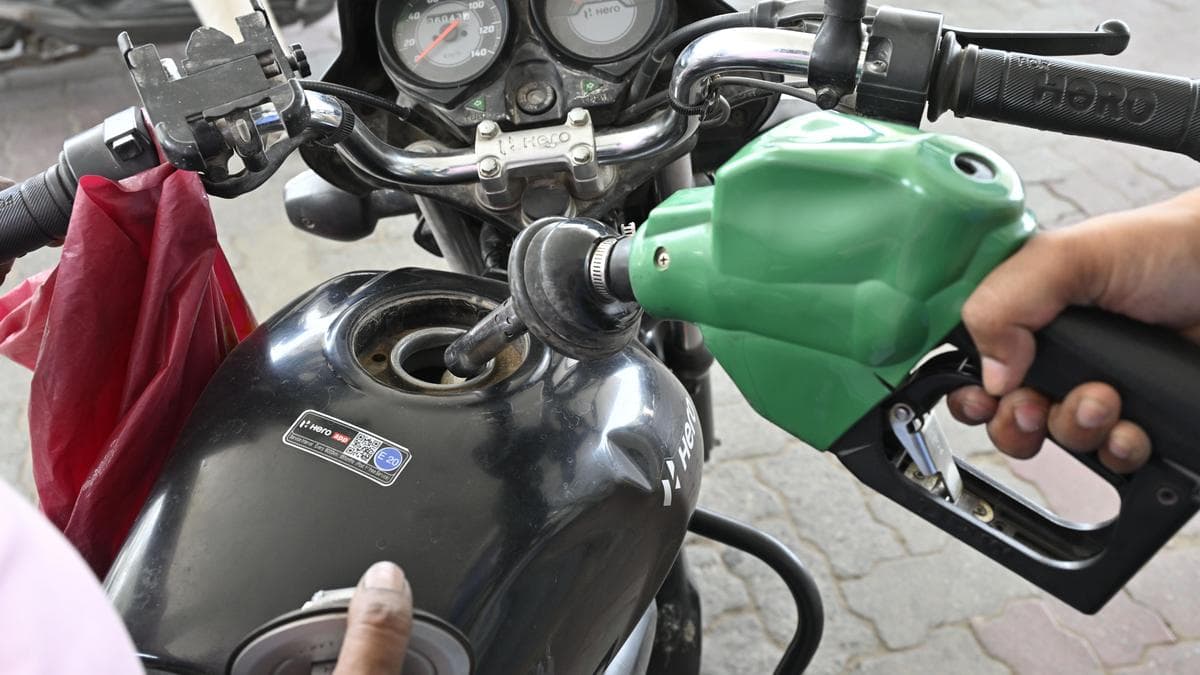
Petrol blended with 20% ethanol (E20) can reduce fuel economy by 2 to 6% depending on the vehicle category and vintage, Road Transport and Highways Minister Nitin Gadkari informed Parliament on Thursday (July 30, 2026). File | The fuel efficiency of vehicles may be reduced by 2 to 6% depending on the vehicle category and vintage, Minister of Road Transport and Highways Nitin Gadkari informed the Lok Sabha.It added that “tests for engine durability on dynamometer and vehicle tests on road have not shown any failures due to E20.”The study for evaluation of the effect of E20 on BS-III, BS-IV and BS-VI E10 (Gasoline) two-wheelers and four-wheelers was carried out jointly by ARAI, SIAM and Indian Oil Corporation Limited (IOCL).This study also found that E20 fuel provides better acceleration, improved ride quality and approximately 30% lower carbon emissions compared to E10 fuel. “Higher ethanol blends also enable cleaner and more complete combustion,” Minister Gadkari’s reply stated.The Minister had earlier informed Parliament that BS-III vehicles introduced from 1st April, 2005 and manufactured prior to 2016, some rubber parts and gaskets may require replacement, which can be easily managed during routine servicing regime of the vehicle.The replies were given in response to questions raised by Lok Sabha MP Adv. Chandra Sekhar. However, the Minister did not answer queries on why the study has not been placed in the public domain or whether the government plans to issue an advisory on the impact of E20 fuel on vehicles that may require component replacements. Published - July 30, 2026 05:28 pm IST
The government on Wednesday (July 29, 2026) said some rubber parts and gaskets in BS-III vehicles, introduced from April 1, 2005, and manufactured before 2016, may need to be replaced when operated with E20 fuel (petrol containing 20% ethanol).In a written reply to the Rajya Sabha, Road Transport and Highways Minister Nitin Gadkari said that with regard to the concern of vehicle mileage due to the use of E20 fuel, automobile manufacturers and vehicle/engine testing agencies have clarified that vehicle mileage is influenced by a host of factors beyond just fuel type.Mr. Gadkari said a study for the evaluation of effects of E20 on two-wheelers and four-wheelers was carried out jointly by Indian Oil Corporation Limited (IOCL), Indian Institute of Petroleum (IIP) Dehradun, Society of Indian Automobile Manufacturers (SIAM) and Automotive Research Association of India (ARAI).He said studies have not shown any need to modify the car and two-wheeler engines.According to him, these studies confirmed that even legacy vehicles did not exhibit any significant variations in performance, nor do they show abnormal wear-and-tear when operated with E20 fuel.The Minister said no issues were reported in parameters such as drivability, startability, metal compatibility, and plastic compatibility."Only in case of testing done on BS-III vehicles introduced from 1st April, 2005, and manufactured prior to 2016, some rubber parts and gaskets may require replacement, which can be easily managed during routine servicing regime of the vehicle," he said.The rollout of E20 petrol (80% petrol, 20% ethanol) has drawn criticism from opposition parties and some consumer groups, who have raised concerns about its impact on older vehicles not specifically designed for 20% ethanol blends.Critics have questioned whether all vehicles are fully compatible with E20, flagged the possibility of reduced fuel efficiency and higher maintenance costs, and sought clarity on liability if engine or fuel-system problems arise. Opposition parties have repeatedly sought greater transparency on vehicle compatibility and consumer safeguards.The Minister explained that an Inter-Ministerial Committee (IMC), constituted on December 26, 2020, under the Niti Aayog, comprehensively examined vehicle compatibility and mileage/efficiency aspects of ethanol blending. This assessment was supported by research conducted by Indian Oil Corporation Ltd (IOCL), Automotive Research Association of India (ARAI), and Society of Indian Automobile Manufacturers (SIAM).The committee's "Roadmap for Ethanol Blending in India 2020-25", released in June 2021, was prepared after extensive consultation with automobile manufacturers, oil companies and agricultural experts, and examined material compatibility, engine calibration, fuel systems, drivability, durability, emissions and fuel efficiency.The committee's report preceded the introduction of E-20 fuel.The Ethanol Blended Petrol (EBP) Programme has been implemented through a phased, calibrated, scientifically validated and consultative approach.It has been used globally for over a century, with countries such as Brazil operating higher ethanol blends for decades.In India, the Ethanol Blended Petrol (EBP) Programme commenced with a pilot in 2001, and E5 was introduced in 2006. Although blending remained around 1.53 per cent till 2013-14, it has since been increased progressively in a calibrated manner after creating the necessary production capacity, infrastructure and regulatory framework.Before the introduction of E20 in April 2026, extensive laboratory studies, durability trials, and field validation were undertaken covering engine durability, material co



Discussion (0)