
Loading dispatches...
← Return to NewsroomPolitics
Supreme Court Collegium’s unexplained recommendations risk bad appointments: Justice Bhuyan
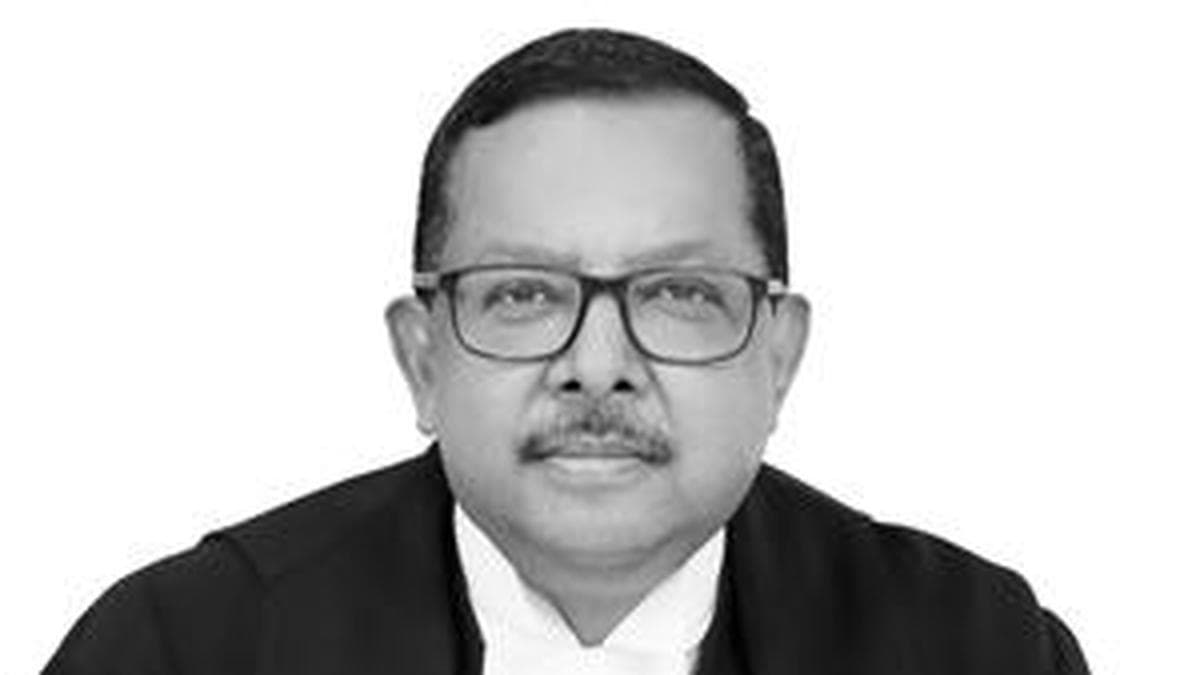
Justice Ujjal Bhuyan. Photo: Special Arrangement Supreme Court Judge, Justice Ujjal Bhuyan, stated on Saturday (August 1, 2026) that the SC Collegium’s lack of transparency in judicial appointments creates a loophole, allowing individuals who make unconstitutional or derogatory remarks to enter the judiciary.Justice Bhuyan pointed to a former Allahabad High Court Judge’s reported reference to a minority community as ‘ants’ in a speech he had made while serving on the Bench as an example. He said this during an interaction after delivering the keynote address at Vidhi Centre for Legal Policy’s launch of its report ‘The Judicial Transparency Index: Assessing Disclosure of Information by the Supreme Court and the High Courts’.He said that by not providing reasons for its recommendations to constitutional courts, the Collegium, on the other hand, was also keeping the public in the dark about the achievements of some deserving candidates.Justice Bhuyan said the return to opacity by the Collegium has been a relatively recent phenomenon.“Deliberations over the elevation and transfer of judges remain confidential; reasons for rejecting or deferring a recommendation are rarely disclosed in full; and the criteria applied are not codified in any publicly accessible instrument comparable to the Memorandum of Procedure’s own limited disclosure. I have seen that the last three statements of the Supreme Court Collegium do not contain any reason at all for recommending elevation as opposed to the earlier statements where each of the recommendations was supported by some reason,” Justice Bhuyan said in his keynote speech.Memorandum of Procedure (MoP) provides the procedure for appointment and transfer of judges to the Supreme Court and State High Courts. The MoP was evolved through a series of Supreme Court decisions, called Three Judges Cases, which introduced the Collegium system of judicial appointments. In 2015, following the Supreme Court’s rejection of the National Judicial Appointments Commission, which was meant to replace the Collegium system, the court had called upon the government to work together and revise the MoP to make judicial appointments transparent and accountable. However, the process, as last known, is still in limbo.Misuse of livestreamingJustice Bhuyan said a July 24 order passed by a Bench headed by Chief Justice of India Surya Kant has drawn a fine, clear line between transparency through livestreaming of court proceedings and preventing misuse and commercial exploitation of that process.“The court’s concern is that decontextualised fragments of oral exchanges, observations made by judges in the course of argument, not findings, are being circulated with sensational captions, causing reputational harm to judges, advocates, and litigants alike, and distorting public understanding of what had actually happened in court. The order does not retreat from live streaming; it draws a distinction between transparency of the process and the licence to manufacture a misleading narrative from that process,” the Supreme Court Judge explained.Addressing apprehensions whether the abuse of livestreamed content may prompt the court to do away with the facility, Justice Bhuyan said the livestreaming of court proceedings has been the “most visible transparency development of the last decade”. The Judge underscored that the principle of open justice was quintessential for the Indian judiciary to retain public faith in it.“Open courts effectively foster public confidence. The court of justice is a public forum. Open courts make it possible for the public to develop reasonable perceptions about the judiciary… Allowing the litigants and members of the public to view courtroom proceedings, ensures that judges apply the law in a fair and impartial manner,” Justice Bhuyan said.The Judge referred to the 2018 Swapnil Tripathi judgment of the Supreme Court, which had held that livestreaming expanded the courtroom beyond its physical four walls

The directions came while hearing a petition filed by family members of those who allegedly died or went missing after being recruited to fight in the ongoing Russia-Ukraine conflict. File image: Special Arrangement The directions came while hearing a petition filed by family members of those who allegedly died or went missing after being recruited to fight in the ongoing Russia-Ukraine conflict. File image. | A three-judge Bench headed by Chief Justice of India Surya Kant asked the Ministry to forward the details of the nodal officer to the family members of the deceased once the appointment is made.The court was hearing a petition filed by families alleging their kin were victims of illegal overseas recruitment, trafficking, and exploitation. According to the petitioners, the youths were lured by recruiters with promises of high-paying jobs, only to have their passports seized and be pushed into the war zone.The petitioners sought the whereabouts of Indian nationals believed to be dead or missing, urging the court to intervene for the repatriation of bodies and the payment of monetary compensation by Russian authorities.Compensation claimsThe court on Friday (July 31) ruled that complete records for filing compensation claims with Russian authorities must be provided to the families, who can submit their claims through the Ministry. The Bench added that families should receive legal aid for these filings, along with DNA verification certificates and translated versions of any Russian documents.The court clarified that compensation claims should not become a ground for delaying the handing over of mortal remains or the performance of funeral rituals.Diplomatic effortsThe Union government informed the court that nearly 220 Indians had joined the Russian Armed Forces during the conflict, with 139 released from contractual agreements.Additional Solicitor General Aishwarya Bhati, appearing for the Centre, stated that the government successfully negotiated with Russian authorities for the discharge of Indian nationals. Out of the 51 Indians died in the battleground, the remains of 29 individuals have been brought back to India, she added.The petitioners also highlighted the necessity of identifying and prosecuting illegal overseas recruitment rackets that exploit vulnerable citizens with false promises of foreign employment. Published - July 31, 2026 01:33 pm IST
National Commission for Scheduled Castes. File The story so far: The Supreme Court on Tuesday (July 28, 2026) has clarified that the National Commission for Scheduled Castes (NCSC) does not have adjudicatory powers under Article 338 of the Constitution and cannot issue a binding order in service disputes. While the Commission has powers similar to those of a civil court to summon witnesses, call for documents and receive evidence during an inquiry, these powers are only meant to facilitate investigations. The ruling came in a case involving promotional benefits claimed by an employee of the Mumbai Port Authority.What was the case about?The case arose from the service dispute of a stenographer, who joined the Mumbai Port Authority in 1997. She was promoted as Stenographer Grade-I from Grade II after being granted consequential seniority under a 2002 Office Memorandum relating to reservation in promotions for Scheduled Caste and Scheduled Tribe employees. Nagaraj v. Union of India (2006) and subsequent government instructions, the benefit of consequential seniority was withdrawn, leading to her reversion to a lower post. After the Central Administrative Tribunal dismissed her challenge, she approached the NCSC.The Commission directed the Port Authority to reinstate her promotion and extend all consequential monetary benefits. The Bombay High Court declined to interfere with the Commission’s order, prompting the Port Authority to approach the Supreme Court.What did the Supreme Court rule?The Court held that Article 338 does not confer adjudicatory powers on the NCSC.The Division Bench of Justice Sanjay Karol and Justice Augustine George Masih held, “The powers entrusted to NCSC are limited in nature. Clearly NCSC and its other compatriots under Articles 338A and 338B are Constitutional Bodies with a socially beneficent purpose but quite apparently, the Legislature has prescribed a role that is recommendatory and advisory, but certainly not adjudicatory. They are not meant to be bodies taking over adjudicatory functions.”It examined Article 338(5), which lists the Commission’s functions, including investigating constitutional safeguards, inquiring into complaints, monitoring implementation of safeguards, advising governments and submitting reports to the PresidentThe Bench noted that Article 338(8) grants the Commission certain powers of a civil court, such as summoning witnesses, receiving evidence and requisitioning documents.The Court said that “The legislature has been quite categorical in the powers of the Civil Court that have been extended to the NCSC. The word used is “namely” whereunder certain powers have been enumerated. That indicates the limited scope of the powers granted to it. It is therefore clear that while it has powers to requisition documents and receive evidence it does not have the power to make an order in furtherance of that evidence. In other words, NCSC can record a factual finding and then ask the concerned Government, either the Centre or the State to act thereupon”, it added.The Bench looked into Sub-clauses (a) and (d). The Bench noted that Sub-clause (a) gives the power to the NCSC to investigate and monitor all matters regarding safeguards provided for the Scheduled Castes under the Constitution or in any other law. “It flows from this that the provision of safeguards is a function of the Legislature, and the NCSC’s role is to monitor that the true intent of the safeguards is being implemented and met with as a ground reality. Sub-clause (d) provides that the Commission will present annually or at other times as seen fit, reports to the President regarding the working of their safeguards. This implies that safeguards are those recommendations made to the State or the Union Government that are in furtherance of its functions”,
A view of Supreme Court in New Delhi. File. | A Bench headed by Chief Justice of India Surya Kant issued notice to the Union government on a petition filed by activist Zakia Soman and others, represented by advocates Shriya Maini and Rajive Maini, for an order to apply Section 82 of the Bharatiya Nyaya Sanhita (BNS), which punishes bigamy, uniformly and by removing any exemptions under Muslim Personal Law.The petition sought the compulsory registration of Muslim marriages and divorces with State authorities to prevent the secret subsequent marriages. In cases of polygamous attempts, the petition said the first wife and children should have an absolute and immediate right to the matrimonial home and a fast-tracked mechanism for financial maintenance.The petitioners also sought the court to direct the Law Commission of India or the Union government to prepare a draft for the codification of Muslim Personal Law that aligns marriage, divorce, and succession with constitutional principles of gender equality.The petition said that the Quran’s intent was the eventual elimination of the practice of polygamy over time.“Many Muslim-majority countries have moved away from unrestricted polygamy, using Quranic interpretation or state necessity to prioritise monogamy as the ideal social state. Several Muslim-maiority jurisdictions have demonstrated that polygamy is neither essential to the practice of Islam nor immune from legislative reforms,” the plea said.The petitioners said a survey submitted last year across seven States, including Maharashtra, Gujarat, West Bengal, Kamataka, Tamil Nadu, Delhi, and Rajasthan had found that 88% of husbands did not seek consent for a second maniage, and 79% did not even inform their first wives, proving that the practice was now “characterised by fraud rather than ‘justice’.The petitioners contended in court that poIygamy was a “primary driver of female destitution”.It said that while bigamy was a criminal offence for Hindus, Cliristians, and Parsis under their respective personal laws and the penal law, Muslim men were permitted to take up to four wives under the Muslim Personal Law (Shai’iat) Application Act. 1937.“Indian Constitution neither grants any absolute protection to personal law of any community that is arbitrary or unjust, nor exempts personal laws from jurisdiction of the legislature or the judiciary,” the petition said.The plea said the Uniform Civil Code remains an elusive Constitutional goal despite repeated apex court orders.“However, Uttarakhand’s UCC implementation and Gujarat’s impending adoption demonstrate feasibility, followed by Assam’s distinct stand on polygamy,” the petition noted. Published - July 31, 2026 01:06 pm IST
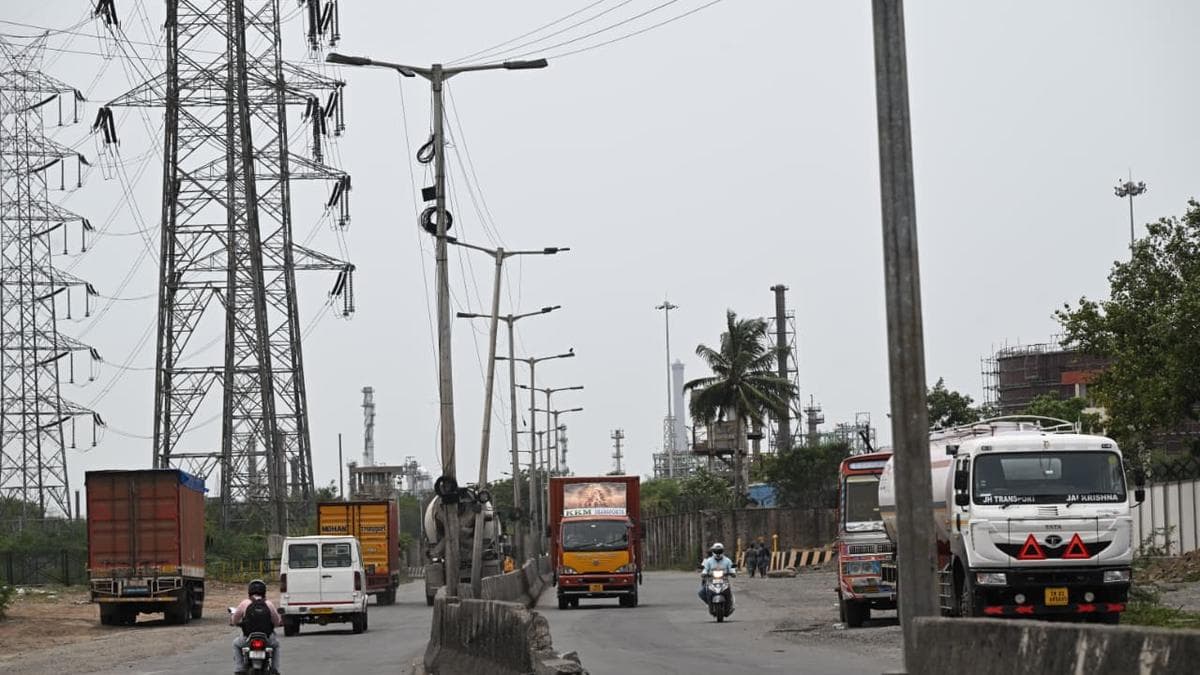
The NHAI has called for tenders to install smart lighting systems on 31 highways | Jothi Ramalingam Driving after dark on National Highways (NHs) across northern and parts of central Tamil Nadu is set to become safer and more comfortable for motorists. The National Highways Authority of India (NHAI) has called for tenders to install smart lighting systems on 31 highways.The existing lighting systems, which are currently operated manually, will become fully automated. “The lights will turn on at sunset and remain on until daybreak. The timings will change according to the season. We will be able to identify when a bulb or switch stops working and replace it immediately,” an official said.A single tender has been floated for all the stretches. The company offering the best products at the lowest price will be selected. “The tender process has been structured in such a way that the work is expected to commence in October. The selected contractor will have one year to complete the installation and testing,” another official said.This follows the successful implementation of a pilot project from Tambaram to Tindivanam, where lighting and visibility have improved following the installation of an Internet of Things (IoT)-based lighting system along the 95-km stretch of the Chennai-Tiruchi National Highway. “Everyone, from maintenance personnel and NHAI officials to supervisors, can now monitor the lights online. Lighting is provided at junctions and settlements along the National Highways,” the official added.Narayanan Ram, a resident of Sholinganallur who recently travelled to Tiruchi, said the smart lights were a welcome addition and provided exactly what was needed. “Lighting installations that are more than 20 years old should also be replaced as part of this initiative. Lights should also be installed at cattle crossings and at places where people cross the highway late at night. Perhaps it is time to install such lighting systems within cities as well, where street lighting is often inadequate,” he said. Published - July 31, 2026 12:13 pm IST
VISAKHAPATNAMGITAM School of Law at GITAM Deemed to be University has announced the seventh edition of the Dr. M.V.V.S. Murthi Moot Court Competition, a national-level event scheduled to be held from October 7 to 10 at the university’s Visakhapatnam campus.The announcement was made following the release of the official event poster by Director of GITAM School of Law Moumita Sen Chakraborty. Dean A. Rajendra Prasad, faculty convenors L. Ashish Kumar and S. Naveen Teja, and members of the GITAM Moot and Advocacy Committee were present.According to the university, the competition will centre on a criminal law proposition based on the Bharatiya Nyaya Sanhita, 2023, Bharatiya Nagarik Suraksha Sanhita, 2023, and Bharatiya Sakshya Adhiniyam, 2023. The moot problem will cover issues relating to homicide, criminal conspiracy, electronic evidence, forensic science, constitutional safeguards during arrest, and appellate criminal jurisprudence.The competition is expected to attract participants from leading law schools and universities across the country. Published - July 30, 2026 12:53 am IST



Discussion (0)